Published by: AutodromeF1 Editorial Team
The 2026 Formula 1 season has ushered in one of the most profound regulatory overhauls in the sport’s modern history, fundamentally altering the technical DNA of the cars and, in turn, exposing stark philosophical divides among the grid’s leading protagonists. At the heart of this transformation lies a deliberate pivot toward sustainability, efficiency, and closer competition—ambitions realized through lighter chassis, radically revised aerodynamics, active aero systems, and a power unit architecture that elevates electrical energy to near parity with the internal combustion engine. Yet, as the early races of the season have unfolded, these changes have not merely reshaped machinery; they have recalibrated the very essence of driving dynamics, rewarding certain pilot styles while challenging others with unprecedented demands.
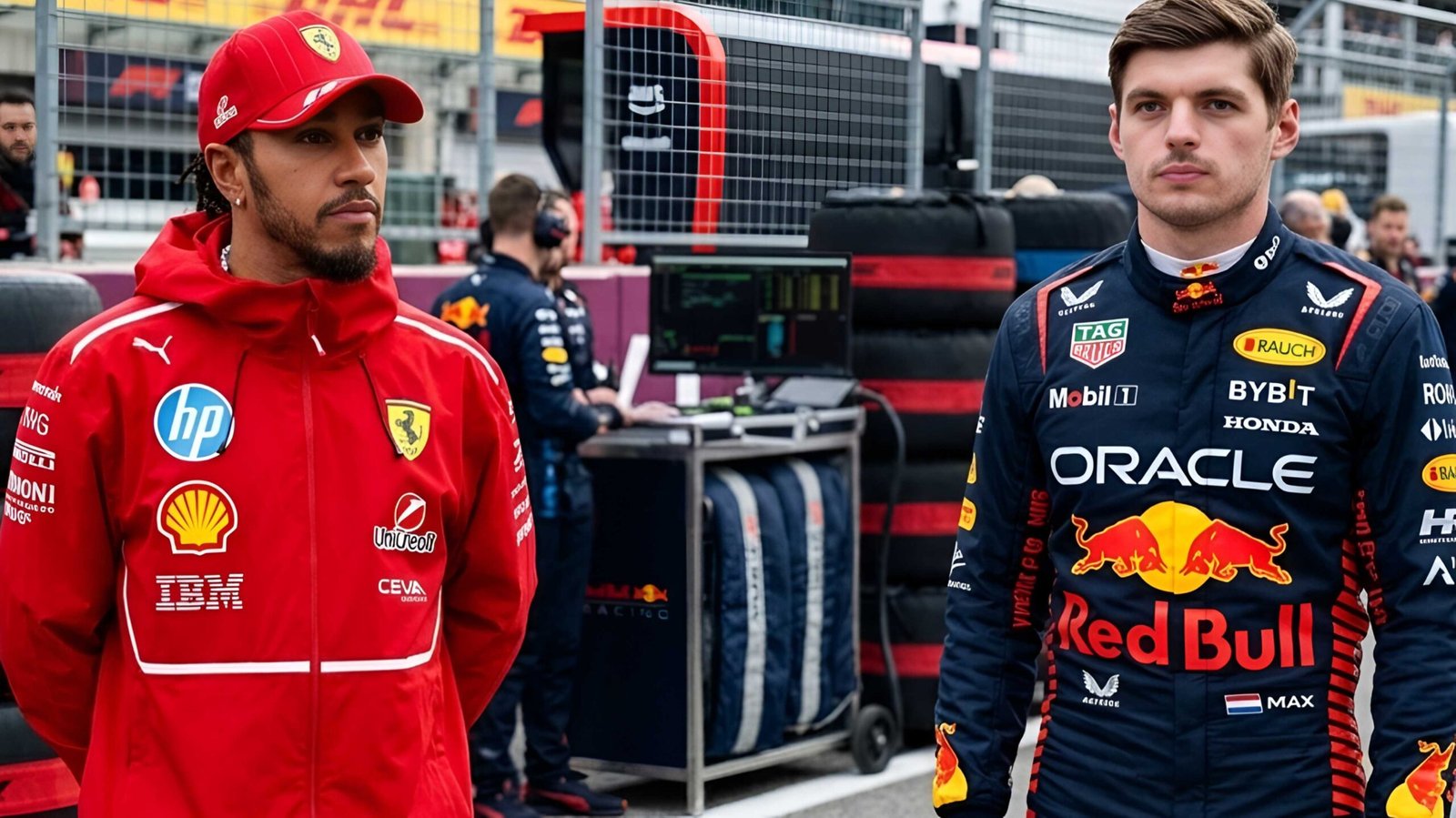
No two drivers embody this dichotomy more vividly than Lewis Hamilton and Max Verstappen. The seven-time World Champion, now resplendent in Ferrari scarlet, has embraced the new generation of machinery with visible enthusiasm, while the four-time title holder at Red Bull has voiced deep-seated frustrations that have reverberated across the paddock and beyond. Their contrasting perspectives offer a compelling lens through which to examine not only the technical merits of the 2026 regulations but also the human element that continues to define Formula 1’s enduring appeal.
Hamilton’s Renaissance: A Symbiotic Union with the Ferrari SF-26
Lewis Hamilton arrived at Ferrari in 2025 following a challenging transitional campaign, one that tested his resilience after two decades of unparalleled success. The move to Maranello carried immense symbolic weight—the first British driver to race full-time for the Scuderia in the modern era—but the initial adaptation proved demanding. The 2026 regulations, however, have provided a platform upon which Hamilton’s experience, adaptability, and feedback have borne tangible fruit.
During extensive simulator sessions throughout 2025, Hamilton contributed meaningfully to the development of the Ferrari SF-26. He has spoken openly about the car bearing “a bit of my DNA,” a sentiment that reflects the integration of his long-honed preferences for responsive front-end grip and late-braking prowess. The result is a machine that feels intuitively aligned with his driving idiom.
In testing at Barcelona and subsequent shakedowns, Hamilton described the SF-26 as markedly more enjoyable than the high-downforce ground-effect cars of the previous era. “It’s oversteery and snappy and sliding, but it’s a little bit easier to catch,” he noted after completing over 200 laps across the initial runs. The reduced overall downforce—estimated at 15-30% less than 2025 levels—combined with a shorter wheelbase and narrower track, has produced a lighter, more agile chassis that encourages rotation and rewards precise throttle and steering inputs. Hamilton has likened aspects of its behavior to rallying, where rear-end manageability allows drivers to exploit slip angles with greater confidence.
This nimble character suits Hamilton’s classical style perfectly. His ability to carry speed into corners on the brakes, maintain front-end bite, and then modulate the rear through delicate right-foot work has translated into competitive early-season performances. The vibrant, compact design of the SF-26, with its distinctive livery echoing historical Ferrari aesthetics, has not only looked the part but delivered the connection he sought after a difficult prior year. Hamilton has repeatedly emphasized the emotional recharge the project has provided: waking in the Ferrari environment, witnessing the car take shape, and feeling the new power unit’s vibrations through the cockpit have reignited a passion he openly admits had waned in recent seasons.
Beyond pure driving enjoyment, Hamilton has highlighted the potential for closer on-track battles. The regulations’ emphasis on efficiency and active aerodynamics promises to reduce the “train-like” following that plagued earlier ground-effect packages, fostering genuine overtaking opportunities through strategic energy deployment rather than mere aerodynamic tricks. For a driver whose career has been defined by relentless wheel-to-wheel combat, this represents a welcome return to racing’s raw essence.
Verstappen’s Discontent: Precision Undermined by Instability and Energy Theater
In stark contrast stands Max Verstappen, whose dominance in recent seasons was built upon cars that offered exceptional stability, high aerodynamic loads, and a planted feel through high-speed corners. The 2026 package has disrupted that equilibrium in ways that have clearly unsettled the Dutchman.
Verstappen has been characteristically forthright in his assessments. He has described the new cars as feeling “not very Formula 1-like,” likening the heavy emphasis on battery energy management to “Formula E on steroids.” The near 50/50 split between internal combustion and electrical power demands constant driver intervention—lifting and coasting on straights to harvest energy, judicious deployment of the enhanced MGU-K (now delivering nearly triple the previous output at 350 kW), and tactical use of the new overtake mode that replaces DRS. These requirements, Verstappen argues, introduce an artificial layer to racing that prioritizes energy theater over outright speed and skill.
Cornering confidence has been a particular pain point. With reduced downforce, flatter floors, and a lighter overall minimum weight (now 768 kg), the cars exhibit greater rotation and less inherent stability. For a driver whose technique thrives on predictability and razor-sharp precision, this has manifested in tentative entries and a lack of the planted rear that defined Red Bull’s recent machines. Verstappen has spoken of struggling to build the necessary trust in the balance, particularly in high-commitment sections of circuits like Suzuka.
His frustrations reached a notable pitch following the Japanese Grand Prix, where he recovered from a difficult qualifying to finish eighth. The result, while respectable given the circumstances, underscored the challenges. “It’s not fun at all. It’s playing Mario Kart,” he remarked on multiple occasions, referring to the boost-and-drain cycles that see drivers surge past one another only to lose momentum on subsequent straights as energy reserves deplete. Such comments have sparked debate within the paddock, with some veterans defending the need for drivers to adapt while others acknowledge the validity of questioning whether the regulations have inadvertently diluted the sport’s core DNA.
Verstappen’s contract with Red Bull extends to 2028, yet he has tied his long-term commitment to continued enjoyment. The early-season discourse has inevitably fueled speculation about his future, though such talk remains premature given the developmental curve teams face in any major regulatory shift.
Dissecting the 2026 Technical Framework
To appreciate the depth of this driver divide, one must examine the regulations themselves with technical precision.
Chassis and Dimensions:
The new cars are more compact, with a maximum wheelbase reduced by 200 mm to 3.4 meters. Track widths have narrowed, and the minimum weight has dropped by approximately 30-32 kg. These changes enhance agility and responsiveness but reduce the planted feel of prior generations. The return toward flatter floor concepts—diminishing the aggressive ground-effect tunnels of 2022-2025—has lowered overall aerodynamic drag (by up to 40% in some estimates) while sacrificing some downforce. This trade-off was intentional to accommodate the energy demands of the revised power units.

Aerodynamics and Active Systems:
Downforce levels have been deliberately moderated. Active aerodynamics now govern both front and rear wings, allowing drivers to switch between “corner mode” (higher downforce for grip) and “straight mode” (lower drag for efficiency and top speed). This replaces the passive DRS system and introduces new strategic layers. The FIA’s design philosophy aims to make following cars less sensitive to dirty air, promoting overtaking without reliance on a single drag-reduction button.
Power Unit Revolution:
Perhaps the most transformative element is the powertrain. The 1.6-liter turbocharged V6 internal combustion engine persists but with reduced output (around 400 kW). The MGU-H has been eliminated, while the MGU-K has been dramatically uprated. Electrical power now accounts for nearly 50% of total output, with the battery playing a far more central role in both qualifying and race performance. Drivers must master sophisticated energy harvesting and deployment strategies, balancing recovery under braking with deployment for acceleration and overtaking. An “overtake mode” provides temporary boosts when within one second of a rival, adding tactical depth but also the potential for the “boost past, then run out” scenarios Verstappen has criticized.
These elements collectively demand a new skill set: not only mechanical sympathy and car control but also acute energy management and adaptability to shifting balance as battery state-of-charge fluctuates.
A Philosophical Schism in Driving Styles
The contrasting reactions of Hamilton and Verstappen illuminate a deeper truth about motorsport evolution. Hamilton, at 41, brings the wisdom of nearly two decades at the pinnacle, including multiple regulatory transitions. His adaptability—honed through eras of V8s, V10s, hybrid introductions, and ground-effect returns—allows him to view the 2026 cars as an exciting challenge rather than a disruption. The oversteery, rotatable nature plays to his strengths in car control and late braking, while the emphasis on battles aligns with his competitive ethos.
Verstappen, by contrast, rose to prominence in an era of highly sophisticated, stable ground-effect machinery that rewarded his exceptional feel for limits and consistency under load. The lighter, more nervous 2026 breed demands a recalibration that appears less intuitive for his precision-oriented approach. His criticisms, while blunt, reflect a legitimate concern that excessive focus on sustainability metrics may have compromised the visceral, high-commitment driving that traditionally distinguishes Formula 1 from other formulas.
This is not merely a matter of personal preference but a reflection of how regulations inevitably favor certain characteristics. History shows that major rule changes often produce temporary imbalances before teams and drivers converge through development. Early indications suggest Ferrari has extracted strong performance from the SF-26 in areas of handling and driver confidence, while Red Bull continues to refine its RB22 package amid the new constraints.
Broader Implications for the Sport
The 2026 regulations were conceived with noble intent: to enhance sustainability through advanced sustainable fuels and greater electrification, to improve spectacle through closer racing, and to align F1 more closely with road-relevant technologies. Active aero and energy management introduce fresh strategic variables that could enrich the chess match between drivers and engineers.
Yet they also risk alienating core audiences if the racing devolves into predictable energy cycles rather than pure velocity and skill. The early season has already delivered mixed signals—encouraging battles in some sessions, frustration in others. Lap times remain broadly competitive, but the “feel” of the cars has diverged significantly from recent norms.
As the season progresses, development will be critical. Teams with superior simulation, power unit efficiency, and driver feedback loops will likely pull ahead. Ferrari’s early promise under Hamilton’s input offers an intriguing narrative of renewal, while Red Bull’s historical resilience suggests they will not remain sidelined for long.
For the drivers themselves, the divide underscores Formula 1’s timeless beauty: it is never just about the cars, but about the men and women who tame them. Hamilton appears revitalized, his passion rekindled by a machine that sings to his strengths. Verstappen, ever the purist, demands a return to racing that prioritizes unadulterated speed and control.
Whether the 2026 regulations ultimately deliver on their promise of sustainable, exciting competition remains an unfolding story. What is already evident is that they have created a compelling human drama—one in which adaptability, philosophy, and raw talent collide in the most public arena motorsport has to offer.
The coming months will reveal whether the script favors the nimble renaissance of a veteran champion or the precision-driven fightback of a modern great. In either case, Formula 1’s capacity to reinvent itself while preserving its soul will once again be put to the test. The grid, the fans, and the sport itself stand to benefit from this honest, passionate discourse between its leading figures.


