Published by: AutodromeF1 Editorial Team
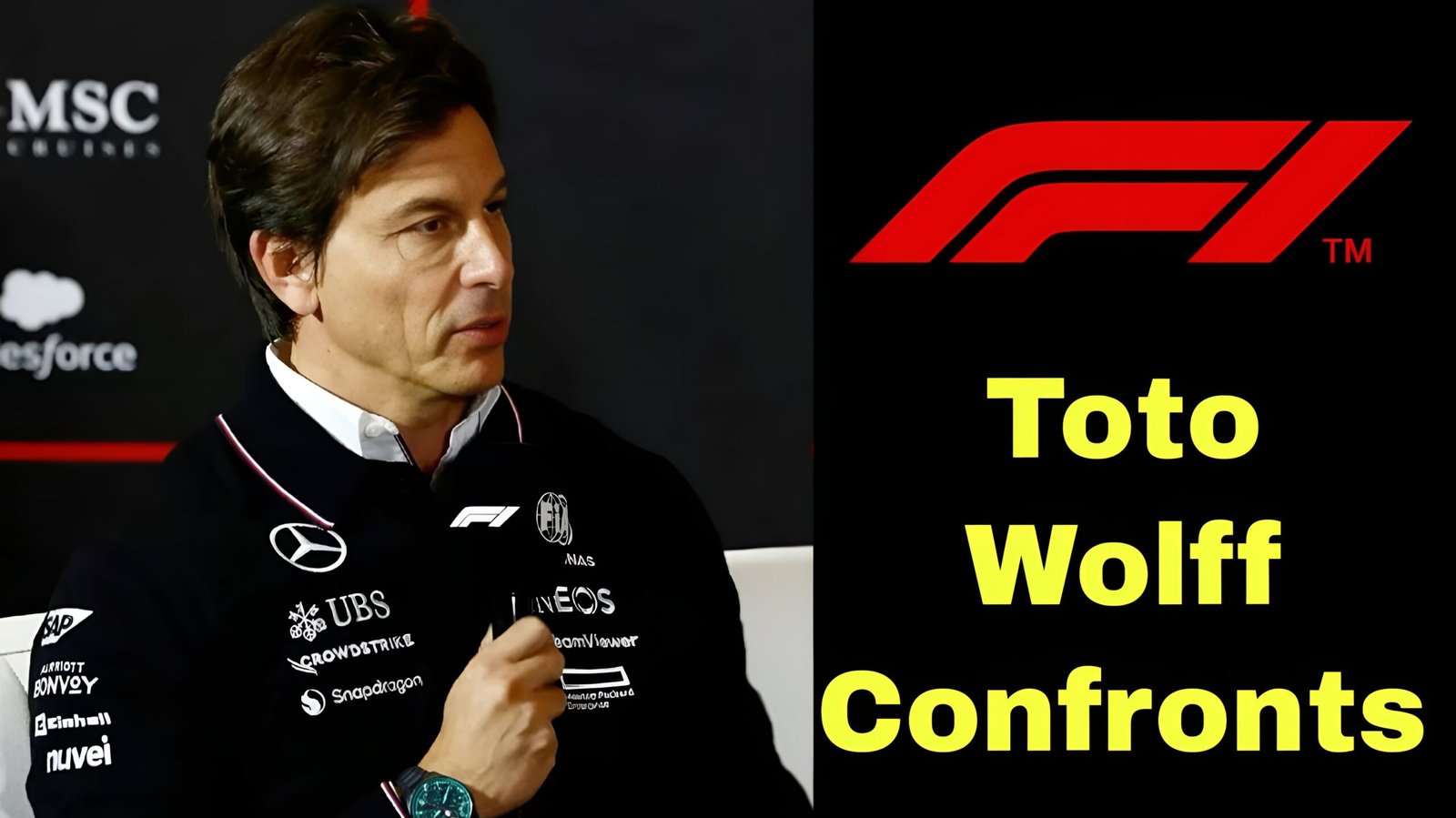
The 2026 Formula 1 Reckoning: Toto Wolff Confronts the Complexities of Radical Regulation Change While Mercedes Claims Early Supremacy
In the sun-drenched confines of Melbourne’s Albert Park Circuit, where the Australian Grand Prix traditionally heralds the beginning of a new season, Formula 1 found itself confronting not merely the promise of innovation but the immediate friction that accompanies profound transformation. Mercedes-AMG Petronas, under the steadfast leadership of Toto Wolff, delivered a commanding one-two finish, with George Russell securing victory ahead of rookie teammate Kimi Antonelli. Yet behind the champagne sprays and podium celebrations lay a candid admission from the Austrian team principal: the sport’s ambitious 2026 technical regulations, designed to usher in a new era of sustainable high-performance racing, are already revealing structural vulnerabilities that demand measured recalibration.
Wolff’s remarks, delivered with characteristic precision during post-race media engagements, framed these challenges as “early growing pains” — a phrase that simultaneously acknowledges imperfection and signals confidence in the long-term trajectory. “We knew this regulation set would be the most significant in a generation,” he observed. “What we are witnessing is not failure but the inevitable friction that arises when engineering boundaries are pushed to their absolute limits. Adjustments will be required, and the framework exists to make them responsibly.”
This measured tone stands in deliberate contrast to the sharper critiques emanating from the cockpit. Reigning world champion Lando Norris, fresh from his title-clinching campaign with McLaren, described the opening race as “a step into uncharted territory that feels, at times, uncomfortably artificial.” His concerns, echoed by Red Bull’s Max Verstappen and several other leading drivers, centre on the dramatically altered power-unit architecture. The 2026 regulations mandate a near-equal split between internal-combustion and electrical energy deployment — a deliberate shift toward electrification that has produced lap times noticeably slower than 2025 benchmarks and introduced battery-management protocols that dictate strategic decisions in ways drivers find intrusive rather than intuitive.
The technical pivot is not accidental. Formula 1’s governing body, the FIA, alongside the commercial rights holder, engineered the new power units to align with global sustainability imperatives while preserving the spectacle that defines the sport. Yet the early evidence from Australia suggests that the transition has introduced variables — energy recovery system limitations, deployment constraints under braking zones, and a reliance on electrical torque fill that can feel disconnected from traditional driver input — whose cumulative effect is altering the visceral character of grand-prix racing.
Wolff, however, refuses to view these issues through the narrow lens of driver dissatisfaction alone. In a series of interviews that blended candour with strategic foresight, he articulated a philosophy that places fan experience at the apex of decision-making hierarchies. “Formula 1 has always been nostalgic,” he remarked. “We romanticise the past because it is safe. But our responsibility is not to preserve yesterday’s sensations at the expense of tomorrow’s relevance. The ultimate metric must be whether the millions watching — in the grandstands, on screens, across continents — feel the drama, the tension, and the human endeavour that makes this sport unique.”
This stance represents a subtle but significant evolution in Wolff’s public posture. Throughout his tenure at Mercedes, the 53-year-old has demonstrated an acute understanding that regulatory upheaval, while painful in the short term, often precedes periods of intense competition. He referenced the 2014 hybrid era — a transformation many predicted would sterilise the sport — which ultimately produced a decade of engineering excellence and, eventually, breathtaking on-track battles once the initial convergence phase concluded.
The 2026 regulations, however, are more radical still. The abolition of the MGU-H, the introduction of a more powerful MGU-K capable of delivering sustained electrical boost, and the requirement for sustainable fuels have collectively shifted the performance envelope. Early telemetry from Melbourne indicated that teams are expending significant computational resources simply to manage energy deployment windows rather than optimising aerodynamic efficiency or tyre management — traditional pillars of grand-prix strategy.
Mercedes’ ability to extract a one-two result despite these complexities is noteworthy. Russell’s controlled drive, managing battery temperatures and deployment curves with clinical precision, suggested that the Brackley-based squad has already begun decoding elements of the new power-unit puzzle. Antonelli, making his full-season debut at just 18, displayed composure beyond his years, navigating the energy-management demands without compromising race pace. Their combined performance offers empirical evidence that the regulations are not inherently uncompetitive; rather, they reward early mastery of complex systems.
Yet Wolff is under no illusion that a single dominant weekend defines the narrative. “Convergence will come,” he predicted. “History teaches us that when the regulations are this comprehensive, the performance delta narrows rapidly once the fundamental architecture is understood. What matters now is ensuring that the spectacle remains compelling while that convergence occurs.”
The FIA has already signalled flexibility. Informal discussions among the ten teams and the governing body have reportedly identified the battery-management protocols as the most pressing area for potential refinement. Sources close to the process indicate that technical directives or even minor regulatory amendments could be tabled as early as the Chinese Grand Prix weekend, provided consensus exists that such changes enhance rather than undermine the core objectives of the 2026 framework.
Critically, Wolff’s intervention appears calibrated to steer the conversation away from reactionary sentiment and toward constructive dialogue. By prioritising fan enjoyment as the lodestar, he implicitly challenges the notion that driver feedback should be the sole determinant of regulatory direction. This perspective is not without precedent; motor-sport history is replete with examples where initial driver resistance to new technologies — from ground-effect aerodynamics to carbon-fibre chassis — eventually yielded to acceptance once the competitive landscape matured.
Nevertheless, the concerns raised by Norris and his peers cannot be dismissed lightly. The perception of “artificial” racing stems not merely from subjective preference but from observable shifts in race dynamics. Overtaking opportunities that once arose organically from superior corner speed or braking prowess now appear increasingly dependent on carefully timed energy-deployment windows. In an era when Formula 1 markets itself as the pinnacle of human and machine synergy, any suggestion that technology is superseding driver agency risks alienating the very constituency the regulations were intended to inspire.
Wolff’s response to this tension is characteristically layered. He acknowledges the validity of driver feedback while contextualising it within the broader evolutionary arc of the sport. “Every major regulation change has produced a period of adaptation,” he noted. “The drivers who master these new parameters fastest will ultimately define the era. Our task as team principals is to provide them with the tools to do so, and as custodians of the sport to ensure the regulations themselves evolve intelligently.”
Beyond the immediate technical adjustments lies a deeper philosophical question about Formula 1’s identity in the 21st century. The 2026 regulations represent the most explicit attempt yet to reconcile the sport’s carbon-neutral ambitions with its entertainment mandate. Wolff’s willingness to contemplate refinements — without compromising the sustainability goals — positions Mercedes as both innovator and pragmatist. His emphasis on fan-centric outcomes also subtly reframes the debate: the sport’s future legitimacy will be measured not by lap times or decibel levels alone, but by its capacity to captivate a global audience increasingly attuned to both spectacle and environmental responsibility.
As the paddock prepares for the second race of the season, the prevailing sentiment is one of cautious optimism tempered by operational realism. Mercedes’ early dominance provides a compelling narrative thread, yet Wolff’s public acknowledgment of necessary adjustments ensures the story remains nuanced. The coming weeks will reveal whether the 2026 regulations prove to be a temporary disruption or a permanent redefinition of Formula 1’s competitive essence.
For now, the sport finds itself in that rarest of states: simultaneously triumphant and introspective. George Russell’s victory trophy gleams under the Australian sun, Kimi Antonelli’s podium smile radiates youthful promise, and Toto Wolff’s measured words echo a deeper truth — that true progress in Formula 1 has never been linear. It has always required the courage to confront imperfection, the wisdom to adapt, and the vision to recognise that every growing pain, if addressed with intelligence and integrity, ultimately strengthens the sport’s enduring legacy.
The 2026 season has barely begun, yet its defining narrative is already taking shape: not as a revolution without consequence, but as a carefully calibrated evolution in which technical ambition, commercial pragmatism, and sporting tradition must find harmonious equilibrium. Toto Wolff, ever the strategist, appears determined to ensure that equilibrium is achieved — not through nostalgia, but through forward-thinking leadership that places the long-term health of Formula 1 above any single weekend’s result.


