Published by: AutodromeF1 Editorial Team
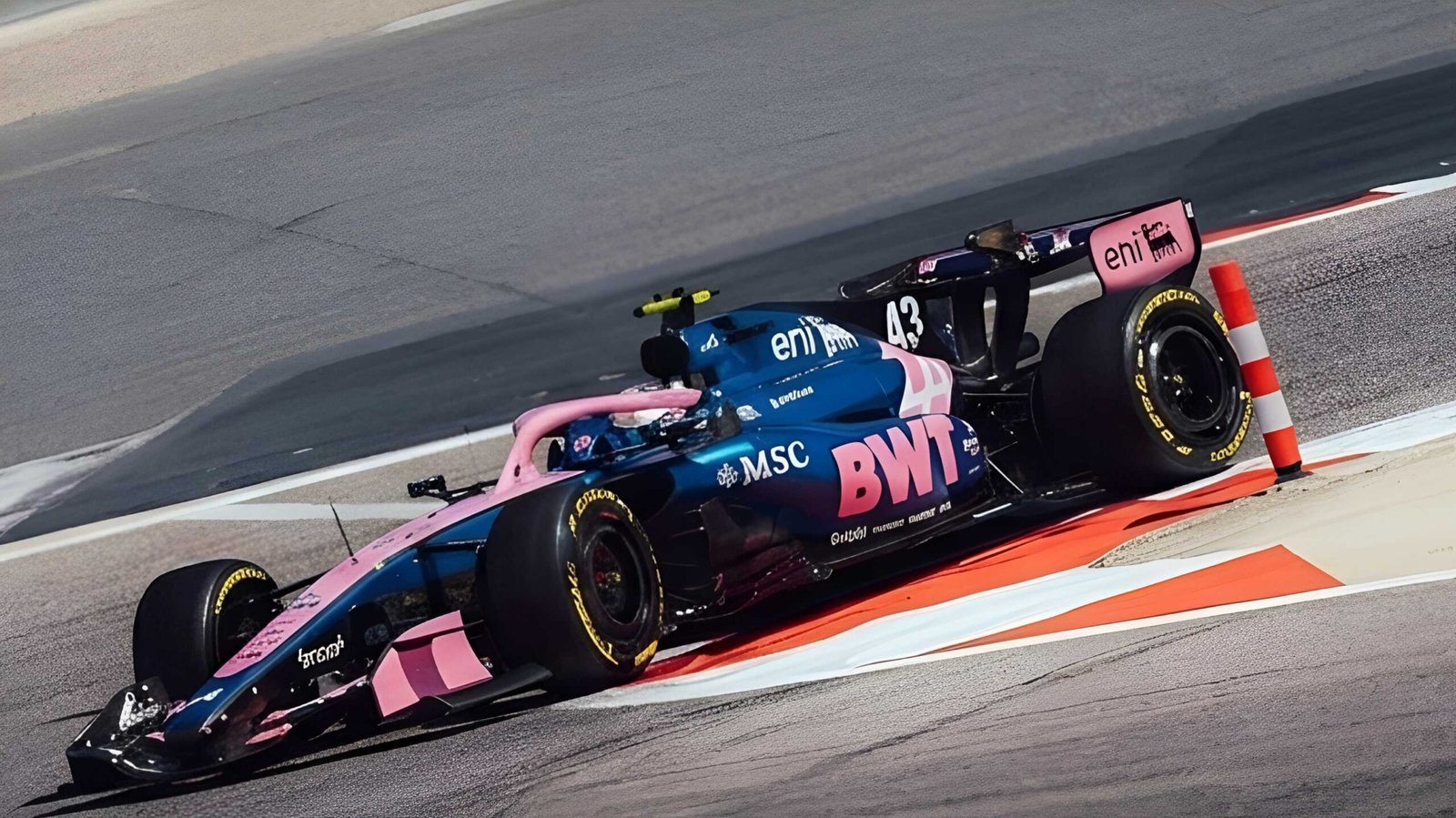
London. United Kingdom April 10 Alpine F1 Team’s A526 has emerged as one of the most compelling stories of the early 2026 Formula 1 season, delivering a marked transformation that stands in stark contrast to the team’s struggles throughout the previous campaign. After accumulating 16 points across the opening three Grands Prix in Australia, China, and Japan, the Enstone-based outfit now occupies fifth place in the Constructors’ Championship, level on points with Red Bull Racing and trailing fourth-placed Haas by a mere two points. This early-season haul already rivals or surpasses much of Alpine’s entire 2025 tally, underscoring the tangible benefits of a deliberate, forward-looking strategy centered on the radical regulatory overhaul.
The 2026 regulations introduced shorter, narrower chassis designs alongside active aerodynamic elements and a revised power unit architecture emphasizing sustainable fuels and significantly higher electrical deployment. Alpine’s decision to pivot resources toward these changes well in advance of most competitors has yielded a more balanced and developable platform. Managing Director Steve Nielsen has been unequivocal in his assessment, describing the A526 as “a much better car than last year” with a solid all-round character that has demonstrated encouraging consistency across varied circuit layouts.
This progress is not accidental but the result of meticulous preparation. By sacrificing immediate competitiveness in 2025, Alpine secured additional aerodynamic testing allowances, granting the team greater wind-tunnel and CFD capacity than several midfield rivals. The integration of a Mercedes power unit—replacing the in-house Renault unit—has provided another critical uplift. Nielsen highlighted “big gains” from the German manufacturer’s propulsion system, citing improved power delivery, thermal efficiency, and seamless chassis integration that have enhanced both outright performance and race-day reliability.
Driver Performances and Team Cohesion
On track, the A526 has enabled both drivers to extract meaningful results. Pierre Gasly, the team’s experienced leader, has described the car as “the best I have had in my career,” a significant endorsement from a driver who has sampled machinery across multiple top teams. Gasly’s consistent point-scoring— including a resilient seventh place in Japan where he held off Max Verstappen for much of the race—has formed the backbone of Alpine’s tally. His feedback emphasizes the car’s responsive nature in qualifying trim and its respectable long-run pace, even as the team navigates the learning curve of the new active aero systems.
Franco Colapinto, in his second full season, has shown flashes of raw speed and maturity, contributing to the points haul with a tenth-place finish in China. While occasional operational challenges have arisen, the team has publicly affirmed its equal treatment of both drivers, issuing a detailed open letter to dispel unfounded speculation and reaffirm commitment to providing identical equipment wherever possible. This stability in the driver lineup, paired with a more settled technical and operational structure, has fostered an environment conducive to incremental gains rather than reactive firefighting.
Long-run simulations and high-fuel performance have emerged as particular strengths. The A526 appears gentle on its tires, allowing drivers to maintain competitive pace deep into stints—an attribute that proved valuable during the sprint-format weekend in Shanghai. This tyre management, combined with solid straight-line speed courtesy of the Mercedes unit, positions Alpine as a credible contender for regular points rather than occasional flashes.
Technical Analysis
The High-Speed Understeer Challenge
Yet, no car is without imperfections, and Nielsen has been characteristically transparent about the A526’s primary limitation. Speaking after the Japanese Grand Prix, he identified high-speed understeer—particularly during rapid direction changes—as “the biggest single weakness” on the current package. This characteristic manifested noticeably in Suzuka’s demanding Sector 1, a high-speed complex requiring precise turn-in and responsive weight transfer. Similar traits were observed during pre-season testing in Bahrain, suggesting it is an inherent balance issue rather than a circuit-specific anomaly.
In technical terms, the understeer appears linked to the interplay between the reduced downforce levels mandated by the 2026 rules and the car’s aerodynamic philosophy. While the A526 has shown competence in slow- and medium-speed corners as well as on straights, the quick transitions in high-speed sections expose a momentary lack of front-end grip and directional agility. This limits qualifying potential on certain layouts and constrains the drivers’ ability to attack more aggressively in traffic or during decisive race phases.
Nielsen emphasized that the team anticipated challenges at Suzuka and is treating the issue as a priority. “We have high-speed understeer… we need to fix,” he stated, framing it as the overriding factor currently capping the car’s ceiling within the midfield. Importantly, this acknowledgment comes from a position of strength: the A526 is otherwise regarded as “pretty good” as an all-round machine, with competitive traits that allow it to fight effectively when the track characteristics align.
Upgrades and Development Trajectory
Alpine introduced targeted aerodynamic upgrades at the Japanese Grand Prix to begin addressing these shortcomings. Modifications to the front deflector focused on improved local flow management, while revisions to the rear wing—including reprofiled elements, updated endplates with outward curvature, and subtle fairings around the Straight Line Mode (SLM) actuator—sought to enhance downforce efficiency and reduce turbulence from the rear wheels. These changes, some exploiting regulatory grey areas for marginal gains, reflect the team’s creative approach to the new active aero framework.
The upgrades debuted in Suzuka with promising initial feedback, though full evaluation will require assessment across a broader range of circuits. With additional development items already in the pipeline for the Miami Grand Prix and beyond, Alpine benefits from its advantageous testing allocation. The short break between early races provides a valuable window for simulation work and component validation at the Enstone factory.
The power unit partnership with Mercedes further bolsters this development momentum. Beyond raw performance, the collaboration offers engineering synergies that extend to cooling, electronics, and energy deployment strategies—areas where the 2026 regulations place a premium on integration. Early indications suggest the Mercedes unit has delivered not only competitive power but also a more predictable thermal window, aiding tyre management and strategic flexibility.
Broader Context Within the 2026 Landscape
Alpine’s resurgence carries implications for the wider championship. By tying Red Bull on points after just three rounds and pressuring Haas, the team has injected fresh competitiveness into the midfield battle. This shift challenges assumptions about the post-regulation-reset order and highlights how early investment in new rules can yield disproportionate rewards.
Compared to 2025’s nadir—marked by frequent back-row starts and minimal points—the current trajectory signals a return to the ambitious mindset that once saw Alpine regularly contesting top-six finishes. Flavio Briatore’s oversight and the technical direction under key personnel have instilled a renewed sense of purpose. Gasly has spoken of a “light at the end of the tunnel,” expressing confidence that sustained development could enable the team to eye fights against higher-placed squads by mid-season or later.
Of course, the 2026 season remains in its infancy. The revised cars demand new driving techniques, particularly in managing active aero transitions and energy recovery under the sustainable fuel regime. Circuits yet to come—ranging from the street-circuit demands of Miami and Monaco to the high-speed sweeps of Imola and beyond—will test different facets of the A526. The high-speed understeer must be mitigated if Alpine is to convert its solid baseline into consistent top-eight or better results.
Reliability has so far been encouraging, with the Mercedes unit integrating smoothly and few major mechanical interruptions reported. This allows the team to focus on performance rather than survival. Driver feedback loops between Gasly and Colapinto have proven constructive, providing complementary insights that accelerate setup optimization.
Strategic Outlook and Long-Term Implications
Looking ahead, Alpine’s approach exemplifies prudent championship management. By prioritizing a competitive 2026 foundation over short-term 2025 results, the team has positioned itself to capitalize on the regulatory reset. Continued exploitation of aerodynamic testing advantages, combined with the Mercedes technical alliance, offers a pathway for progressive upgrades throughout the year.
Challenges persist: closing the gap to the leading trio of Mercedes, Ferrari, and McLaren will require not only fixes to the current weakness but also bold innovation in active aero deployment and power unit mapping. The midfield remains tightly packed, with Haas, Racing Bulls, and others equally determined to advance. Yet Alpine enters this fight with momentum, a clearer technical direction, and drivers capable of maximizing the car’s potential.
In an era where Formula 1 increasingly rewards holistic preparation—chassis, power, operations, and people—Alpine’s early 2026 showing serves as a case study in resilience and strategic foresight. The A526 is not yet a front-running machine, but it represents a substantial leap forward: more predictable, more rewarding to drive, and fundamentally more competitive than its predecessor.
As the season unfolds, the team’s ability to resolve the high-speed understeer while layering on further developments will determine whether this promising start evolves into sustained midfield dominance or even occasional podium challenges. For now, after three races, Alpine has re-established itself as a team worthy of close attention—one that has transformed adversity into opportunity through expertise, commitment, and clear-eyed analysis of its own strengths and remaining hurdles.
The coming races, beginning with the Miami Grand Prix, will offer the next crucial data points. With upgrades in gestation and a factory focused on iterative gains, the Enstone squad approaches the next phase with quiet confidence. In Formula 1, where margins are measured in tenths and momentum can shift rapidly, Alpine’s measured progress stands as a testament to the value of long-term vision over reactive short-termism.


