Published by: AutodromeF1 Editorial Team
Aston Martin at a Crossroads: Newey’s Veto Halts Horner’s High-Stakes Return to F1
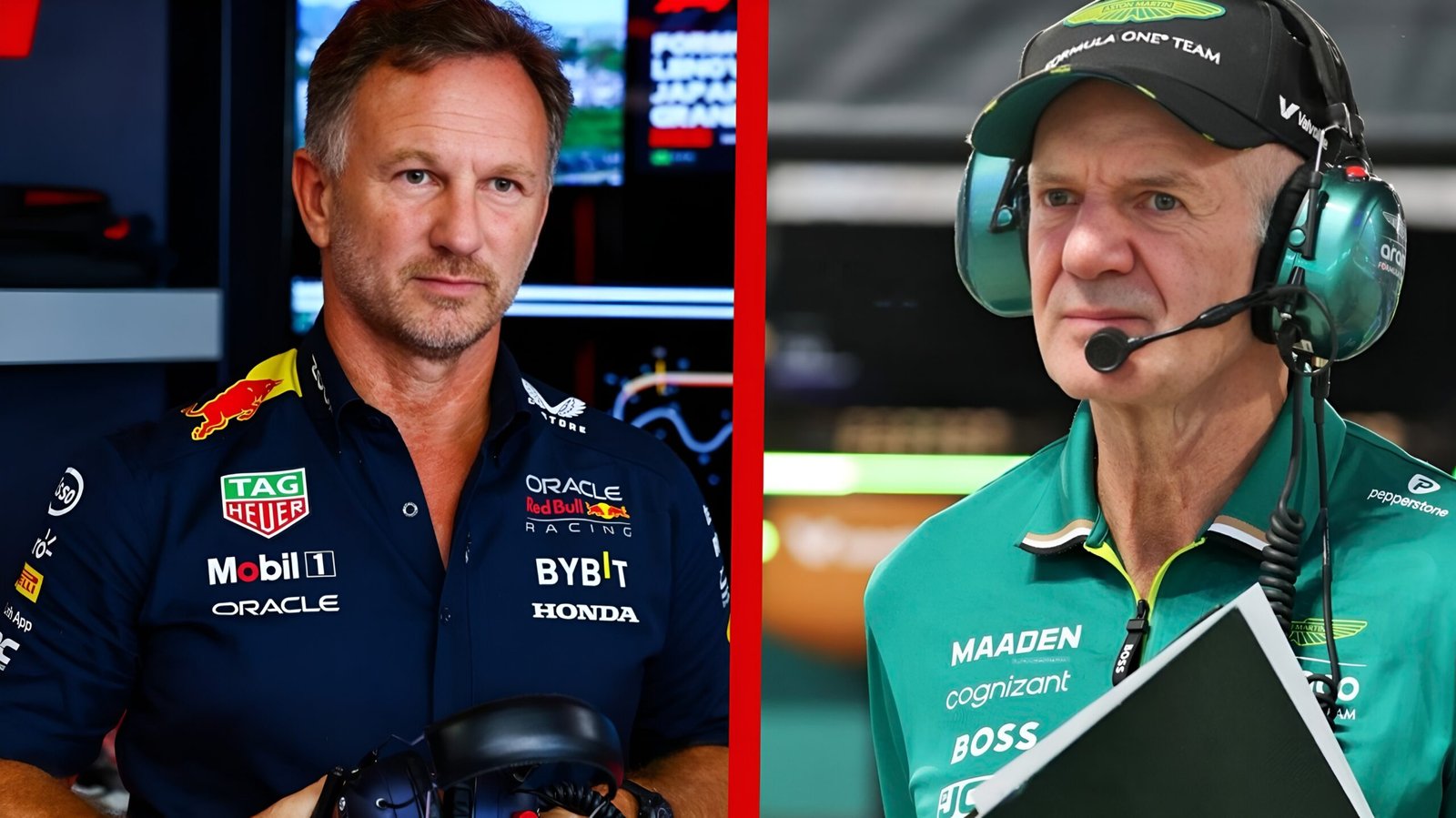
Silverstone, UK – March 22, 2026 – In a move sending shockwaves through the Formula 1 paddock, Aston Martin executive chairman Lawrence Stroll held a high-stakes meeting this week with Christian Horner, the deposed former principal of Red Bull Racing. The discussions, confirmed by sources close to the team, centered on a potential leadership role for Horner within the ambitious Aston Martin F1 project. However, the audacious bid to recruit one of the sport’s most successful and controversial figures has been brought to an immediate and grinding halt by an internal power play: a firm and unequivocal veto from Aston Martin’s own technical visionary, Adrian Newey.
The stalemate plunges the burgeoning team into its first major political crisis, pitting the immense financial and strategic ambition of its billionaire owner against the unshakeable authority of the sport’s most revered designer. At the heart of the conflict lies the fractured, toxic legacy of Newey and Horner’s final years at Red Bull Racing—a partnership that once bred unprecedented dominance but ultimately dissolved amidst a well-documented internal power struggle and a scandal that cost Horner his career. For Lawrence Stroll, who has invested hundreds of millions to transform his team into a championship contender, the situation presents an unwelcome dilemma: back the legendary architect he hired to deliver a title-winning car, or pursue the aggressive managerial force he believes can elevate the team’s operational might.
The Architect’s Unyielding Stance: A Relationship Beyond Repair
Adrian Newey’s opposition to Horner’s arrival is not merely a preference; it is a line in the sand drawn from years of mounting tension. Newey, who officially joined Aston Martin in late 2025 to spearhead their 2026 regulations car, made his exit from Red Bull in April 2024 after a historic near-two-decade tenure. While Horner publicly insisted at the time that the two remained “friends” and that the split was amicable, paddock insiders widely reported that Newey’s decision was a direct result of the increasingly untenable atmosphere within the team.
The environment had been poisoned by the 2024 investigation into Horner over allegations of inappropriate behavior by a female colleague. Though an internal inquiry by Red Bull’s Austrian parent company dismissed the grievance, the fallout was catastrophic. Leaked messages fueled a media firestorm, and the visible power struggle—which saw Max Verstappen’s father, Jos Verstappen, publicly call for Horner’s removal—destabilized the once-invincible organization. Newey, a designer who thrives on focus and engineering purity, found himself increasingly disillusioned by the internal politics and the cloud of scandal that enveloped his team principal. He later admitted to feeling “a little bit tired” from the events, a subtle but telling confirmation that the corporate drama had become a significant factor in his departure.
Having found a new home at Aston Martin—a project built around his technical authority—Newey is reportedly unwilling to allow the same dynamic to permeate his new environment. Sources indicate he has made his position clear to Stroll: the arrival of Horner would be a non-starter. Instead, Newey is championing alternatives, with former Red Bull Sporting Director Jonathan Wheatley emerging as a preferred candidate—a figure known more for his operational acumen and less for the brand of autocratic, political leadership that came to define Horner’s later years.
The Deposed King’s Gambit: Horner’s Quest for a New Empire
For Christian Horner, the meeting with Stroll represents a calculated move in his quest for a dramatic return to the sport. Sacked from Red Bull in the summer of 2025, Horner walked away with a settlement reported to be in the region of $100 million but with his reputation in tatters. The official reason for his dismissal was cited as the team’s performance dip, but the paddock universally understood it as the delayed consequence of the 2024 scandal and the irreparable internal fractures it had caused.
Horner is not seeking a simple paycheque. His ambitions are far grander. Reports suggest he is backed by a consortium of investors and is looking for a pathway back into Formula 1 that includes a significant ownership stake, not merely a managerial role. This ambition aligns perfectly with Lawrence Stroll’s model of operation and Aston Martin’s recent moves. In March 2025, Stroll orchestrated the sale of the car company’s stake in the F1 team to secure its long-term future and bring in new strategic investors, demonstrating a willingness to dilute ownership for the right partner.
Horner, who helmed Red Bull through thirteen world championships, sees an opportunity in Aston Martin. He brings a track record of building a team from a midfield runner into a dominant force—the very trajectory Stroll envisions for his own team. However, he also carries the baggage of his acrimonious Red Bull exit, a factor that Newey is now using as powerful ammunition against him.
The Billionaire’s Grand Design Meets an Immovable Object
Lawrence Stroll’s vision for Aston Martin is nothing short of monolithic. Since taking over the team, he has repeatedly stated his goal is to win championships. His investment has been staggering, highlighted by the construction of a state-of-the-art “campus” at Silverstone, complete with a new factory and wind tunnel designed to put the team on an even footing with giants like Mercedes and Ferrari under the sport’s budget cap. He has declared the F1 team the “foundation” of the entire Aston Martin brand, a marketing halo intended to drive road car sales with the mantra, “race on Sunday, sell on Monday.”
The masterstroke in this plan was the signing of Adrian Newey, secured to lead the team into the radical 2026 regulation changes. This was followed by securing an exclusive works power unit deal with Honda, beginning the same year. In Stroll’s eyes, he has assembled the key ingredients for success: world-class facilities, a legendary designer, and a dedicated works engine partner. The final piece of the puzzle is a proven, ruthless leader to steer the ship.
In that context, Christian Horner is, on paper, the perfect candidate. He is a proven winner with unparalleled experience in managing a top-tier team. Yet, in pursuing him, Stroll has collided with the immovable conviction of his most important asset. The very man hired to design the future has vetoed the man Stroll wants to run it.
This leaves Stroll at a critical juncture. Overruling Newey could be catastrophic, potentially alienating the design genius before he has even delivered his first car and validating the very concerns about toxic leadership that drove Newey from Red Bull. Bowing to Newey’s demand preserves harmony but forces Stroll to abandon his pursuit of a high-profile, aggressive leader in favor of a more consensus-driven figure like Jonathan Wheatley—who, ironically, has already been tapped to lead Audi’s F1 entry from 2026.
As the 2026 season unfold, a year set to completely reset the competitive order, Aston Martin finds itself wrestling with a fundamental question of identity. Will it be a team defined by the singular genius of its chief designer, or by the aggressive, win-at-all-costs ambition of its owner? The resolution of the Horner-Newey standoff will provide the answer and, in doing so, will undoubtedly shape the future of one of Formula 1’s most ambitious projects.


