Published by: AutodromeF1 Editorial Team
Cadillac’s Measured Ascent: Reliability, Refinement, and Strategic Patience Define the American Newcomer’s Promising 2026 Formula 1 Debut
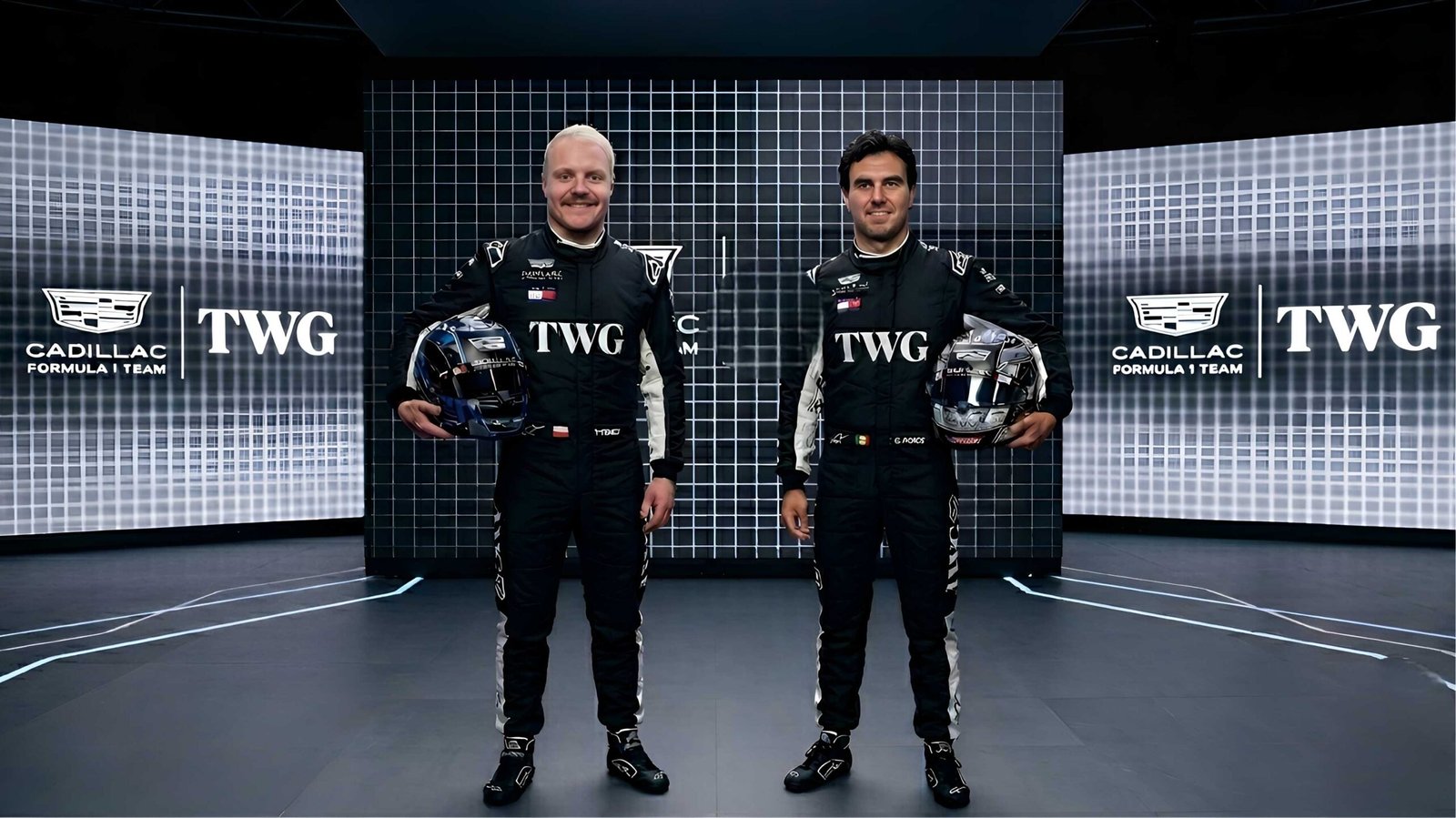
New York. United States 2 April – In the high-stakes arena of Formula 1, where new entrants historically face a brutal baptism of fire, Cadillac’s early-season performance stands as a masterclass in disciplined execution. As the grid prepares for the fourth round of the 2026 championship in Miami, the General Motors-backed squad has quietly compiled a record that belies its rookie status. With five out of six possible race finishes across the opening trio of Grands Prix in Australia, China, and Japan, the team has demonstrated the kind of operational maturity more commonly associated with established midfield stalwarts. Powered by customer Ferrari engines and guided by the experienced hands of Valtteri Bottas and Sergio Pérez, Cadillac has prioritised survival and data acquisition over headline-grabbing results—an approach that is already yielding tangible incremental gains and narrowing the performance chasm to more seasoned competitors.
This is no accident. From the moment Cadillac secured its place on the 2026 grid following protracted regulatory and commercial negotiations, the organisation signalled a long-term commitment to sustainable growth rather than short-term spectacle. The decision to field two battle-hardened veterans—Bottas, the Finnish stalwart with over 250 Grand Prix starts, and Pérez, the Mexican driver renowned for his race-day tenacity—has proven prescient. Their combined institutional knowledge has accelerated the team’s learning curve, allowing Cadillac to extract maximum value from every kilometre while minimising the costly mistakes that have derailed previous debutants.
The Foundation of Reliability: Five Finishes from Six Starts
Reliability remains the bedrock of any successful Formula 1 campaign, particularly for a constructor navigating its maiden season amid the sport’s most stringent technical regulations in a generation. Cadillac’s record through the first three races is exemplary: only a single retirement—Bottas’s DNF in Australia—has interrupted an otherwise flawless completion rate. The Australian setback, attributed to an isolated electronic gremlin in post-race analysis, appears to have been an anomaly rather than a systemic vulnerability. In the subsequent rounds in China and Japan, both Cadillac entries crossed the finish line intact, culminating in a confident double finish at Suzuka that team principals described internally as “the strongest race yet.”
The metrics underscore this progress. In Japan, Pérez delivered Cadillac’s most significant milestone to date by completing the 53-lap distance on the lead lap for the first time in the team’s short history. Finishing 17th, with Bottas slotting into 19th, the result reflected not merely survival but genuine endurance. The cars maintained consistent tyre management and power-unit efficiency across extended stints, a testament to the seamless integration of the Ferrari-supplied powertrain. Engineers have credited the customer unit’s inherent robustness, combined with Cadillac’s conservative mapping strategy, for the absence of the thermal or hybrid-system failures that plagued several rival new or revised packages.
Such reliability is far from guaranteed. Historical precedents—Haas’s turbulent 2016 debut, or the early struggles of Manor and Caterham—illustrate how even modest mechanical fragility can erode confidence and drain resources. By contrast, Cadillac’s 83 percent finish rate in these early encounters has enabled uninterrupted data collection, providing the aerodynamicists and chassis specialists at the team’s expanded North American base with a rich dataset to inform development. This methodical approach has already paid dividends in race-day consistency, positioning the squad ahead of expectations for a constructor that finalised its operational structure comparatively late in the preparatory cycle.
Intra-Team Dynamics: A Tightening Qualifying Duel
While race finishes provide the foundation, qualifying performance offers the clearest window into raw pace. Here, Cadillac’s progress is equally noteworthy. The head-to-head qualifying record between Pérez and Bottas currently stands at 2-1 in favour of the Mexican driver, yet the average time gap across the three events has compressed to a mere 0.236 seconds, with Bottas holding a slender edge in the aggregate. Such proximity is remarkable for a debut team; it signals that neither driver is operating in isolation, and that the Caddy chassis responds predictably to setup adjustments.
The Japan qualifying session epitomised this evolution. Despite encountering minor technical issues—later identified as sensor anomalies in the brake-by-wire system—Cadillac outqualified the Aston Martin outfit, a squad with far greater institutional continuity. This result, achieved under damp and variable conditions at Suzuka, highlighted the team’s growing adaptability. Early-season sessions had been hampered by “gremlins,” including intermittent software glitches and aerodynamic correlation discrepancies between simulation and track. Yet the trajectory is unmistakably upward: the gaps to the lower midfield are shrinking, and the cars are no longer automatic back-row residents.
Bottas’s measured feedback and Pérez’s instinctive race-craft have proven complementary. The Finn’s precision in extracting qualifying performance has been balanced by Pérez’s ability to manage tyre degradation and traffic in the race. Their intra-team battle is healthy and constructive, devoid of the acrimony that has destabilised other pairings. Post-Japan, Pérez remarked that the car’s pace felt “closer” to the cars ahead—a statement echoed by telemetry and sector-time analysis. For a team powered by Ferrari engines, this synergy is critical; the power unit’s characteristics demand precise calibration, and both drivers have demonstrated the requisite technical dialogue to refine it.
Data Harvest and Strategic Horizon: Miami as the Next Litmus Test
Positioned 10th in the constructors’ championship with no points to their name, Cadillac’s standing accurately reflects a debutant’s reality: respectability without reward. Yet the absence of silverware masks substantial progress. Every completed lap has fed into a comprehensive reliability-focused development programme. Wind-tunnel and simulator hours have been prioritised toward durability rather than outright speed, a deliberate choice aligned with the 2026 regulatory emphasis on sustainable power and cost-cap compliance.
The data gathered thus far—encompassing tyre wear profiles, aerodynamic efficiency, and power-unit energy deployment—has already informed the first major upgrade package scheduled for introduction at the Miami International Autodrome. Team insiders describe the Miami kit as “evolutionary rather than revolutionary,” focusing on front-wing efficiency, floor-edge sealing, and suspension geometry tweaks to improve ride quality over kerbs. Should these modifications translate cleanly, Cadillac could transition from back-marker status to genuine midfield disruptors.
The broader outlook is optimistic. Ferrari’s customer powertrain has proven a reliable ally, delivering consistent output without the thermal management headaches reported by some rivals. With the 2026 season still in its infancy, the championship’s competitive order remains fluid. Midfield battles are intensifying, and the gap between 10th and 6th is narrower than in previous seasons. Cadillac’s strategy of incremental gains—rather than risky leaps—mirrors the successful trajectories of teams like Racing Point (now Aston Martin) in their formative years. By avoiding the pitfalls of over-ambition, the American squad has preserved its operational bandwidth for sustained development through the European leg of the calendar.
Contextualising the Achievement: Lessons from Formula 1 History
To fully appreciate Cadillac’s start, one must contextualise it against the sport’s history of new entrants. The 2010 influx of teams (Lotus, Virgin, Hispania) yielded mixed results, with most folding within seasons due to financial strain and technical inadequacy. More recently, Haas’s 2016 entry benefited from a Ferrari technical partnership but still required several seasons to establish consistent points-scoring form. Cadillac, operating under stricter cost-cap regulations and a more mature hybrid-era framework, has avoided the early volatility that characterised those campaigns.
The choice of an American industrial powerhouse as title sponsor brings additional layers of significance. General Motors’ re-entry into top-tier motorsport—decades after its previous forays—carries national prestige and commercial ambition. Yet the team has wisely insulated its racing operations from external hype, allowing engineers and drivers to focus on the fundamentals. Bottas and Pérez, both free of championship pressure, have embraced the role of development pilots with professionalism that enhances the entire programme.
Pérez’s comments after Japan encapsulate the mood: pace is “getting closer,” and the team is “learning every lap.” Such pragmatism, backed by empirical data, distinguishes Cadillac from more vocal newcomers who have promised revolutions only to deliver regressions. The squad’s current 10th-place standing is not a ceiling but a launchpad.
Looking Ahead: The Road to Competitiveness
As the paddock converges on Miami, Cadillac enters its first true test of adaptability. The Miami circuit’s combination of long straights, tight corners, and variable weather will demand precise energy management and aerodynamic balance—precisely the areas targeted by the forthcoming upgrades. A clean weekend could see the team register its first points or, at minimum, further compress the gap to established rivals.
Beyond Miami, the European swing (Imola, Monaco, Barcelona) will provide the ultimate proving ground. If Cadillac maintains its reliability streak while integrating the new package, the narrative will shift from “promising debutant” to “emerging threat.” The drivers’ experience will be pivotal in navigating the inevitable teething issues that accompany any upgrade cycle.
In an era where Formula 1 demands both innovation and fiscal prudence, Cadillac’s early 2026 campaign exemplifies the virtues of patience and precision. Solid reliability, tightening intra-team margins, and a data-driven ethos have laid a robust foundation. While points remain elusive for now, the trajectory is clear: this is a team building for longevity, not fleeting glory.
The sport has witnessed many hyped arrivals that faded into obscurity. Cadillac, by contrast, appears intent on writing a different story—one measured in consistent finishes, incremental lap-time gains, and the quiet accumulation of competitive intelligence. For fans of the American marque and enthusiasts of methodical engineering, the opening chapters of this 2026 saga offer genuine encouragement. The best, it seems, is yet to come.


