Published by: AutodromeF1 Editorial Team
Cadillac Formula 1: Engineering Momentum Builds After Historic Double Finish in China as Team Commits to Relentless Upgrade Cadence
NEW YORK, March 2026 — In the high-stakes crucible of modern Formula 1, where milliseconds separate survival from supremacy, the Cadillac works team has signalled a decisive shift in its debut-season philosophy. Following its maiden double finish at the Chinese Grand Prix, the American manufacturer squad has confirmed an accelerated development programme that will see fresh aerodynamic and mechanical components introduced at nearly every remaining round of the 2026 calendar. This “upgrade blitz,” as described internally, represents far more than incremental tinkering; it embodies a calculated, resource-intensive strategy designed to transform early-season resilience into sustained midfield competitiveness.
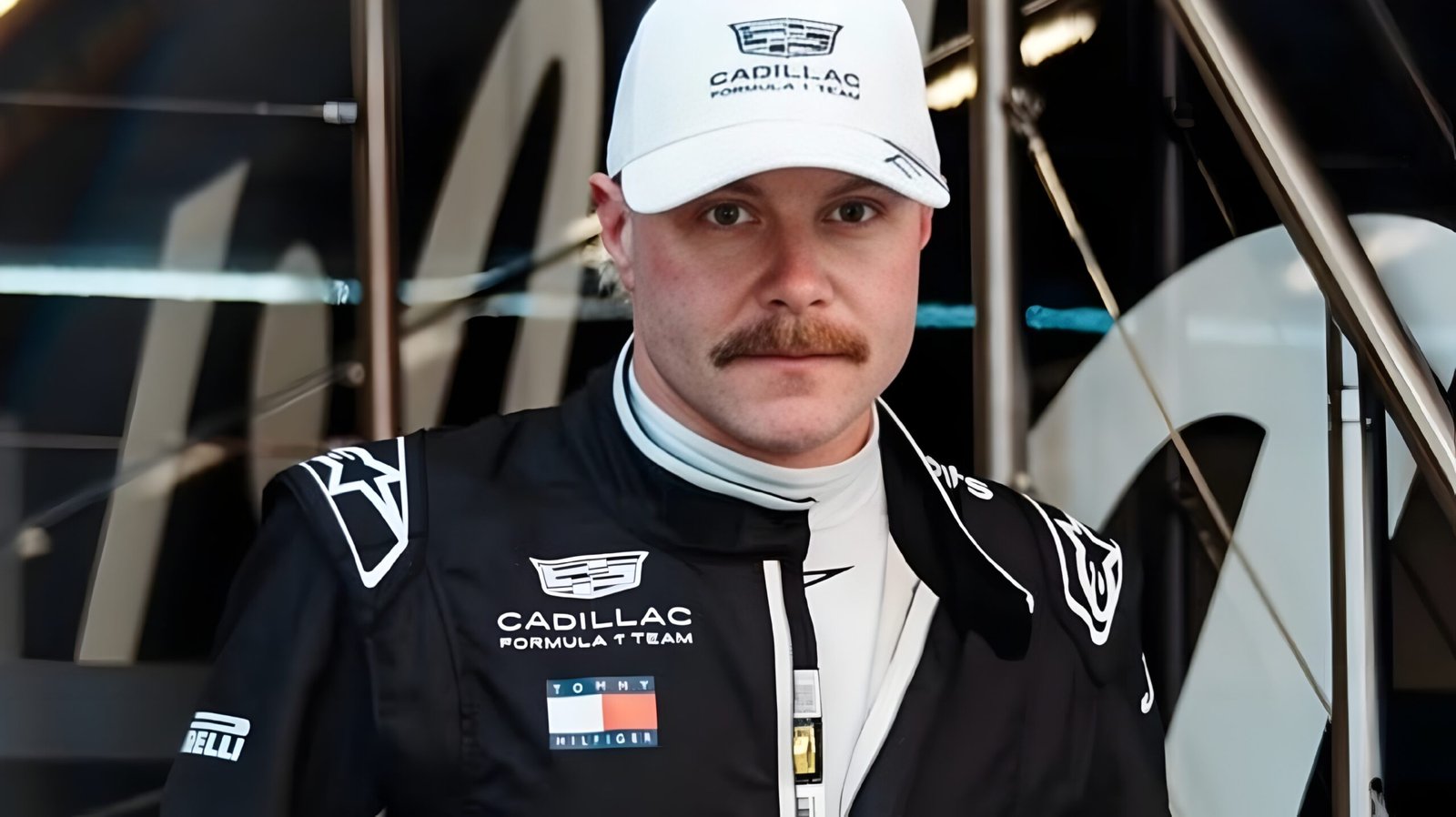
The achievement in Shanghai was modest in absolute terms yet profound in symbolic weight. Valtteri Bottas crossed the line in 13th position, with teammate Sergio Pérez in 15th, after both cars successfully navigated a first-lap collision between the pair. For a squad whose sole prior outing in Australia yielded no classified finishes, the completion of a full Grand Prix distance by both entries marked the first tangible proof that the Cadillac C26 chassis possesses the structural integrity and systems reliability demanded by the new-generation power-unit regulations. Bottas, the Finnish veteran whose experience spans multiple championship campaigns, was unequivocal in post-race assessments. Reliability, he stated, has now become “a realistic baseline.” The remaining deficit, he emphasised, lies squarely in aerodynamic efficiency and outright pace relative to the lower reaches of the midfield.
This candour from a driver of Bottas’s calibre underscores the maturity of Cadillac’s internal communications. Unlike many rookie operations that mask shortcomings behind corporate platitudes, the team has chosen transparency as a strategic asset, signalling to partners, sponsors and the wider paddock that its trajectory is both deliberate and data-driven. The decision to pursue an aggressive upgrade schedule — fresh parts for “most or every” remaining Grand Prix — is not born of desperation but of confidence in the organisation’s engineering bandwidth. With General Motors’ full industrial and financial backing, the factory in Charlotte has reportedly maintained near-continuous wind-tunnel occupancy since pre-season testing, prioritising rear downforce generation and mechanical balance optimisation.
The technical roadmap is multifaceted. Aerodynamic revisions will focus initially on floor-edge modifications and diffuser geometry to extract additional load without compromising the car’s porpoising tendencies under the revised 2026 chassis regulations. Mechanical components, meanwhile, will target suspension kinematics and power-unit integration points to improve traction out of low-speed corners — a persistent weakness identified in early telemetry. Each package, while individually modest, is engineered to compound. The cumulative effect, the team believes, will deliver a measurable uplift in qualifying pace and race-long tyre management, prerequisites for consistent points accumulation.
Central to this acceleration is the forthcoming spring break, a mandated two-week hiatus that many established squads treat as an administrative pause. Cadillac, by contrast, has designated the interval as a critical inflection point. Engineers and mechanics will address residual reliability niggles — minor sensor calibration issues and cooling-system refinements — while finalising the first substantial evolutionary step. Particular emphasis is being placed on the package destined for the Japanese Grand Prix at Suzuka, a circuit whose high-speed demands and technical complexity have historically exposed aerodynamic shortcomings. The objective is unambiguous: convert the newfound reliability into tangible race pace capable of challenging the likes of Alpine, Williams and the lower-order Aston Martin entries by the European leg of the season.
This internal target — progression from backmarker to genuine midfield contender — is ambitious yet grounded in precedent. Historical analysis of previous manufacturer debuts reveals that sustained development momentum, rather than a single revolutionary leap, is the most reliable predictor of rapid ascent. Cadillac’s leadership has studied the trajectories of teams such as Racing Point (formerly Force India) and Haas in their formative years, extracting lessons on resource allocation and iterative improvement. The presence of Pérez alongside Bottas further strengthens this approach; the Mexican driver’s race-craft and tyre-management expertise provide invaluable feedback loops that accelerate the correlation between simulator data and on-track reality.
Beyond the immediate technical horizon, Cadillac’s strategy carries broader geopolitical and commercial significance. The re-entry of an American manufacturer into Formula 1 after decades of absence represents more than sporting ambition; it is a statement of industrial resurgence. General Motors’ investment, rumoured to exceed $500 million in the first three seasons alone, is predicated on leveraging the series’ global platform to showcase next-generation electrification and advanced materials technologies. Success on track will directly influence the brand’s marketing narrative across North American and Asian markets, where Formula 1 viewership continues its upward trajectory.
The upgrade blitz also reflects a nuanced understanding of the 2026 regulatory framework. With power units transitioning toward sustainable fuels and increased electrical deployment, chassis development has assumed heightened importance. Cadillac’s aerodynamics department, bolstered by recruitment from leading European technical centres, has prioritised adaptability. Rather than committing to a single philosophy, the team has designed modular components that allow rapid reconfiguration between events — a flexibility that could prove decisive in a season punctuated by multiple sprint weekends and variable weather conditions.
Financial prudence underpins the programme. While the development cadence appears aggressive, internal modelling demonstrates that spreading upgrades across multiple races is more cost-effective than concentrating resources into fewer, larger packages. This approach also mitigates risk: should a particular update underperform, the team retains sufficient runway to course-correct before the next event. Bottas himself has highlighted this pragmatism, noting that the factory’s “flat-out” wind-tunnel operation is calibrated to deliver “more downforce each race” without compromising long-term chassis evolution.
Looking further ahead, the squad’s summer objective is explicit. Pérez has articulated a measured aspiration to secure “a few points already” before the mid-season break, an outcome that would validate the entire development philosophy. Achieving this would require not only technical progress but also operational excellence in pit-lane execution and strategic decision-making — areas where the team’s relative inexperience remains a variable. Yet the early evidence from China suggests that the foundational systems are already in place.
The wider paddock has taken notice. Rival team principals, while guarded in public commentary, have privately acknowledged Cadillac’s methodical approach as a credible threat to the established order. In an era where regulatory stability is intended to curb spending disparities, a well-funded new entrant with clear technical direction can disrupt traditional hierarchies. Cadillac’s trajectory, should it continue unabated, may force mid-grid squads to re-evaluate their own development priorities.
Of course, challenges remain. The 2026 grid is exceptionally competitive at the lower end, with several teams benefiting from decades of institutional knowledge. Weather variability, driver errors and the unpredictable nature of safety-car deployments could still derail individual results. Moreover, the psychological pressure of operating under intense media scrutiny — particularly as an American entity in a European-dominated sport — cannot be underestimated. Yet Bottas’s calm demeanour and Pérez’s tactical acumen provide a stabilising influence that many rookie line-ups have historically lacked.
As the season unfolds, the narrative around Cadillac will evolve from curiosity to calculation. Each new component introduced will be scrutinised not merely for lap-time gains but for its contribution to the overarching ambition: establishing the team as a permanent, respected fixture within Formula 1. The spring break, therefore, assumes outsized importance. It is not merely a period of rest but a laboratory of ambition where the next chapter of the C26’s story will be written.
In the final analysis, Cadillac’s post-China posture represents a textbook example of modern F1 project management. By converting a modest reliability milestone into a platform for relentless iteration, the team has demonstrated both humility and hubris in equal measure — humility in recognising its current limitations, and hubris in believing it can overcome them within a single season. Whether that belief proves justified will be determined on the asphalt of Suzuka and beyond. For now, however, the American squad has earned the right to be taken seriously. In a championship defined by perpetual evolution, Cadillac has chosen not to wait for progress. It is engineering its own.


