Published by: AutodromeF1 Editorial Team
Carlos Sainz Jr. at a Career Crossroads: Williams’ 2026 Struggles Expose the Limits of Experience in Formula 1’s New Regulatory Era
London, United Kingdom April 5- In the high-stakes arena of Formula 1, where split-second decisions and milliseconds of lap time separate champions from also-rans, few narratives resonate more poignantly than that of a battle-hardened veteran confronting the harsh realities of an uncompetitive machine. As the 2026 season unfolds under the sport’s most radical technical overhaul in decades, Carlos Sainz Jr.—the 31-year-old Spaniard whose precision and racecraft have earned him universal respect—finds himself navigating uncharted territory at Williams Racing. His multi-year contract, signed with considerable optimism ahead of the 2025 campaign, was intended to provide stability and a platform for resurgence following stints at Toro Rosso/Red Bull, McLaren, and Ferrari. Instead, three races into the new season, it has become a stark illustration of how even the most accomplished driver can be rendered powerless by fundamental engineering shortcomings.
Williams currently languishes in ninth position in the constructors’ championship, a solitary tally of two points—both courtesy of Sainz’s ninth-place finish in the Chinese Grand Prix—standing as the team’s meagre reward for its efforts. This meagre haul underscores a broader malaise: the FW46 (or whatever internal designation the 2026 challenger carries) has proven conspicuously off the pace, mired near the rear of the grid despite the promise of fresh aerodynamic and power-unit regulations designed to reset the competitive order. Sainz himself sits 14th in the drivers’ standings, his two points a testament not to any lack of personal endeavour but to the car’s inability to translate his considerable experience into tangible results.
The roots of Williams’ early-season difficulties run deep and are both structural and procedural. The team failed to clear initial FIA crash tests, a mandatory hurdle that delayed the car’s homologation and forced a truncated development window. Compounding this was the complete absence from pre-season testing, an omission that left engineers and drivers alike deprived of the critical data required to calibrate a machine built to the all-new 2026 specifications. These regulations—encompassing revised chassis architecture, altered aerodynamics, and sustainable power-unit architecture—demanded an unprecedented degree of integration between chassis, suspension, and hybrid systems. Without the benefit of meaningful track time in Bahrain or subsequent shakedowns, Williams arrived at the season-opener in Australia already operating at a deficit that subsequent races have only exacerbated.
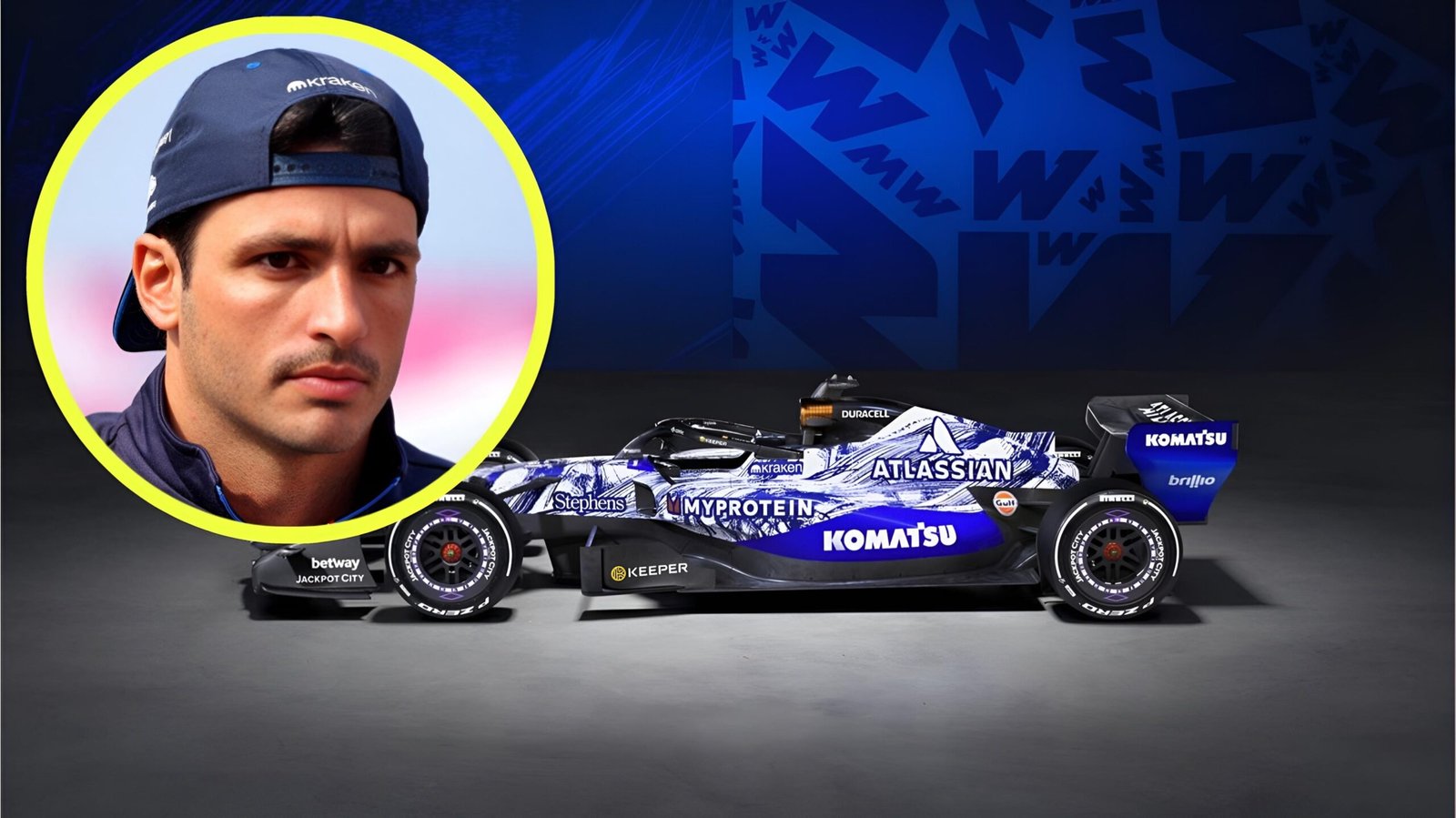
Sainz, a driver whose reputation for adaptability was forged through seamless transitions across disparate team cultures, has not shied away from articulating the scale of the challenge. In measured yet pointed post-race comments, he has highlighted “too many issues in too many areas,” a phrase that encapsulates the cumulative effect of aerodynamic inefficiency, power-unit reliability concerns, and tyre-management limitations. While the livery unveiled in pre-season renders projected an image of renewed ambition—sleek, heritage-infused graphics evoking Williams’ storied past—the on-track reality has delivered a sobering counterpoint. The car’s lack of downforce in high-speed corners, combined with persistent balance issues under braking, has left Sainz fighting a defensive battle rather than pressing for the higher grid positions his pedigree would otherwise command.
This situation invites a deeper examination of Sainz’s place within the contemporary driver ecosystem. Having progressed through the Red Bull Junior programme, delivered consistent podiums at McLaren, and contributed to Ferrari’s renaissance before yielding his seat to Lewis Hamilton, Sainz has demonstrated an uncommon versatility. His ability to extract maximum performance from midfield machinery is well-documented; yet the transition to Williams represents a qualitatively different test. Where previous employers offered at least periodic flashes of competitiveness, the current Williams package appears systemically compromised by the late start and unresolved development bottlenecks. The result is a driver of proven championship calibre effectively operating in survival mode, his inputs constrained by a chassis that refuses to respond with the predictability demanded at this level.
Martin Brundle, the veteran Sky Sports analyst and former Grand Prix driver whose observations carry the weight of decades immersed in the sport’s technical and political nuances, has offered a characteristically forthright assessment. Speaking in the aftermath of the Japanese Grand Prix, Brundle warned that Sainz is “up against it” and risks becoming “stuck” in a professional cul-de-sac. The analysis is not mere hyperbole. Having already sampled the environments of four distinct constructors—each with its own engineering philosophy and competitive ceiling—Sainz now confronts a market in which top-tier opportunities are vanishingly scarce. Red Bull has committed to its established pairing of Max Verstappen and the highly touted rookie Isack Hadjar, a duo locked in for the foreseeable future. Mercedes, similarly, has stabilised around George Russell and the precocious Kimi Antonelli, signalling a clear developmental pathway that leaves no immediate vacancy for an external candidate of Sainz’s seniority.
The driver market’s rigidity is further compounded by Sainz’s contractual architecture. The multi-year agreement with Williams, while providing financial security, appears to lack the straightforward exit mechanisms that might facilitate a mid-season or end-of-year relocation. In an era when performance clauses and mutual-option triggers have become standard, the absence of such levers places Sainz in a position of relative immobility. Brundle’s rhetorical question—“Where would Carlos go?”—encapsulates the dilemma with surgical precision. At 31, Sainz remains at the peak of his physical and mental powers, yet the window for securing a seat capable of delivering regular podiums or championship contention is narrowing. The sport’s inexorable march toward youth, coupled with the strategic entrenchment of existing line-ups, leaves him dependent on either a dramatic Williams resurgence or an unforeseen contractual rupture elsewhere.
From a broader strategic perspective, Williams’ predicament raises legitimate questions about the efficacy of the 2026 regulatory framework in delivering its stated objective of parity. The regulations were conceived to compress the performance envelope, rewarding innovative thinking rather than budgetary dominance. Yet early evidence suggests that teams with superior simulation capabilities and uninterrupted testing programmes have leveraged that advantage to establish an early stranglehold. Williams, historically a constructor reliant on shrewd resource allocation and opportunistic recruitment, now finds itself penalised by the very procedural rigours designed to ensure safety and fairness. The crash-test failure, in particular, highlights the unforgiving nature of the new safety protocols, where even minor deviations in structural integrity can cascade into months of lost development time.
For Sainz, the psychological dimension cannot be overlooked. A driver who has repeatedly demonstrated resilience—most notably in his recovery from appendicitis during the 2024 season—must now summon that same fortitude to maintain motivation amid persistent rear-of-field finishes. His engineering feedback, delivered with the clarity and technical literacy that have long distinguished him from less articulate peers, will be pivotal if Williams is to arrest its slide. Team principal James Vowles and technical director Pat Fry have publicly acknowledged the scale of the task, framing the season as a “learning year” rather than a competitive one. Such pragmatism is understandable, yet it does little to assuage the frustration of a driver whose recent history includes victories at Silverstone and Monza.
Looking ahead, several scenarios merit consideration. Should Williams’ development curve accelerate—facilitated by upgraded wind-tunnel correlation and targeted aerodynamic packages—Sainz could yet extract points finishes that validate his decision to join the Grove-based outfit. Conversely, continued struggles may prompt internal discussions about driver line-up adjustments for 2027, though the team’s commitment to long-term stability suggests Sainz’s seat is secure for the duration of his contract barring extraordinary circumstances. External opportunities remain hostage to the decisions of rival squads; an injury to a frontrunner or a sudden strategic pivot by Audi-Sauber (should their project crystallise ahead of schedule) could theoretically open a door, but such contingencies remain speculative.
In the final analysis, Carlos Sainz Jr.’s 2026 campaign with Williams transcends the individual. It serves as a microcosm of Formula 1’s perennial tension between driver talent and machine capability, between contractual obligation and competitive ambition. The Spaniard’s professionalism remains unimpeachable; his lap times, when isolated from the car’s deficiencies, continue to reflect the class that once positioned him as a legitimate title contender. Yet the sport’s unforgiving arithmetic—points, positions, and podiums—paints a more sobering picture. For a driver who has navigated every rung of the ladder with dignity and determination, the current chapter at Williams may ultimately define whether experience alone can overcome systemic adversity, or whether even the most gifted talents require the right machinery to shine.
As the European leg of the season approaches, the paddock will watch with keen interest to see whether Sainz and Williams can engineer a narrative pivot. In a championship defined by incremental gains and collective endeavour, the coming months will test not only the team’s technical ingenuity but also the resolve of one of its most accomplished servants. Formula 1 has rarely been kind to those caught between eras of transition; Sainz’s ability to transcend the current limitations may yet prove the ultimate measure of his enduring legacy.


