Published by: AutodromeF1 Editorial Team
The $2.5 Billion Paddock War: Horner’s Return and the Battle for the Alpine F1 Stake
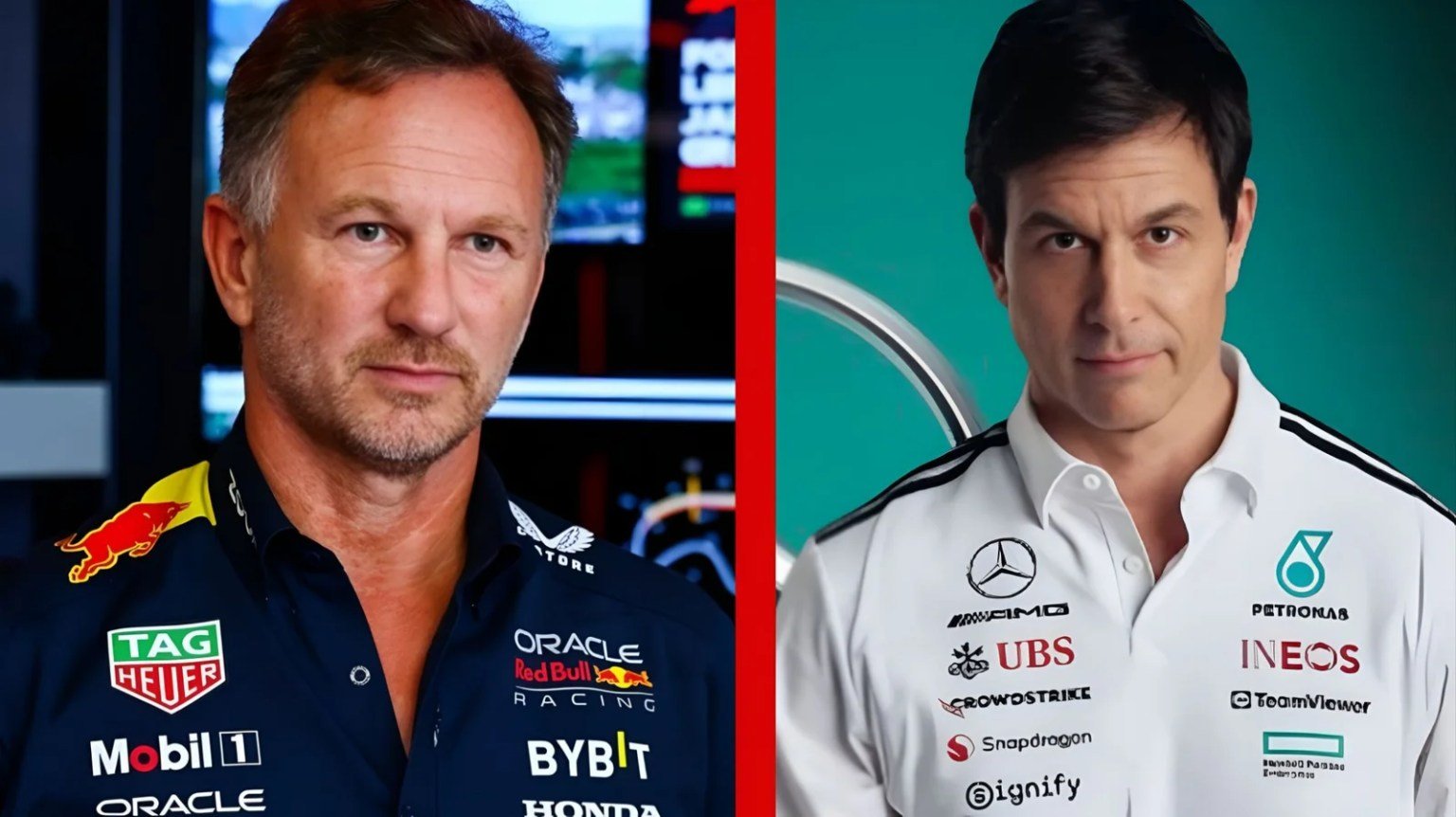
The Formula 1 paddock has always been a theater of high-speed drama, but as the 2026 season kicks off, the most explosive battles are happening behind closed doors in the world of elite corporate finance. A “blockbuster rivalry” is currently reshaping the sport’s power dynamics, centered on a 24% minority stake in the Alpine F1 Team. This is no longer just a race for points; it is a billion-dollar chess match involving some of the most powerful names in motorsport history: Christian Horner, Toto Wolff, and the veteran powerbroker Flavio Briatore.
At the heart of this contest is the share currently held by Otro Capital, the private equity firm that led a star-studded consortium—including Ryan Reynolds, Rob McElhenney, and Patrick Mahomes—to acquire a nearly quarter-stake in the team back in June 2023. At the time, the deal was valued at approximately €200 million, pegging the team’s total worth at $900 million. Fast forward to early 2026, and the financial landscape has transformed. Recent reports suggest the team is now valued between $2.1 billion and $2.5 billion, making the potential sale of that 24% stake one of the most lucrative “exits” in the history of the sport.
The Resurrection of Christian Horner: A Strategic Return

Perhaps the most shocking element of this saga is the reported involvement of Christian Horner. After his abrupt and headline-grabbing departure from Red Bull Racing in July 2025, Horner’s future in the sport was the subject of endless speculation. For 20 years, he was the architect of the Red Bull dynasty, but 2026 finds him in a radically different position: as a potential owner.
Reports from early 2026 indicate that Horner is spearheading an investor group, reportedly backed by MSP Sports Capital—the firm that previously held a significant stake in McLaren. For Horner, acquiring a piece of Alpine is not just a financial investment; it is “unfinished business.” By securing a foothold in a manufacturer-backed team like Alpine (owned by the Renault Group), Horner could leverage his championship-winning pedigree to influence a new project from the top down.
His involvement brings immediate credibility and operational vision, but it also creates a narrative of redemption. After being ousted from the team he built, returning to the grid as a rival owner would be the ultimate power move in a career defined by competitive fire.
The Toto Wolff “Three Sharks” Speculation
While Horner’s interest has been confirmed by team insiders, the role of Toto Wolff remains the subject of intense “paddock whispers.” As the CEO and co-owner of the Mercedes-AMG Petronas F1 Team, Wolff is in a unique position. Unlike Horner, Wolff is already a titan of the sport with a major stake in his own team.
However, Wolff has been making significant financial moves. In late 2025, he sold a portion of his Mercedes stake to American billionaire and CrowdStrike CEO George Kurtz in a deal that valued the Mercedes team at a record $6 billion. This massive liquidity event has led many to wonder where Wolff will park his capital next.
The prospect of Wolff investing in a direct competitor like Alpine—which, notably, has just switched to Mercedes Power Units for the 2026 season—is a paradigm-shifting proposition. Critics and rivals, including the aforementioned “Three Sharks” consortium (a nickname coined for the rumored alliance of Horner, Briatore, and Bernie Ecclestone), have pointed to the potential for a massive conflict of interest. Would the FIA allow the head of Mercedes to hold a significant stake in a team using his own engines? This governance hurdle is the primary reason many believe Wolff’s “interest” may be more about strategic influence than a direct takeover.
Why Now? The Explosion of Formula 1 Valuations
The urgency behind this bidding war is driven by the sheer appreciation of F1 franchises. Several factors have converged to make team ownership a “blue-chip” asset:
The 2026 Technical Reset: With brand-new chassis and power unit regulations debuting this year, every team has a “clean sheet” opportunity. Alpine’s decision to abandon its own Renault engine program in favor of Mercedes power has made the team an even more attractive prospect for investors.
The Cost Cap Success: The FIA’s financial regulations have turned F1 teams from “money pits” into “profit centers.” Teams are no longer required to spend $400 million a year to be competitive, allowing for healthy margins and sustainable growth.
The “Drive to Survive” Effect: The sport’s expansion into the North American market has reached a fever pitch. With multiple races in the U.S. and a global audience that skews younger and more affluent, sponsorship revenue is at an all-time high.
Peers such as Aston Martin F1 have seen their valuations soar to figures reportedly as high as $3.3 billion in late 2025. For the investors at Otro Capital, the math is simple: their initial investment could now be worth north of $600 million. The incentive to “cash in” during this 2026 peak is overwhelming.
The Gatekeeper: Renault and Flavio Briatore
Despite the noise from potential buyers, the ultimate fate of the 24% stake rests with the Renault Group, which retains a 76% majority share. Renault CEO Luca de Meo has been steadfast in his commitment to the F1 project, but he has also empowered Flavio Briatore—the team’s Executive Advisor—to modernize the team’s structure.
Briatore, the veteran powerbroker who led the Enstone-based team to titles with Schumacher and Alonso, has publicly confirmed that Otro Capital is in “exploratory talks” with multiple groups. His role is to ensure that whoever buys into the team brings more than just money; they must bring a path back to the podium.
Renault must decide: do they want a partner with the hands-on, championship-winning experience of Christian Horner, or do they look toward a more traditional private equity model that keeps the team’s management independent?
Conclusion: A New Era of F1 Ownership
As of March 2026, the discussions remain fluid. No definitive agreement has been signed, and the process is expected to be as methodical as a pit stop. Yet, the battle lines are clearly drawn. The potential face-off between the camps of Wolff and Horner for a piece of the Alpine F1 team is more than a financial transaction; it is a captivating narrative about legacy and the future configuration of power in the world’s most elite racing series.
The outcome of this high-stakes bidding war will send shockwaves through the paddock. Whether Horner makes his triumphant return as an owner or a new group of tech-billionaires takes the reins, the “Enstone team” is no longer the underdog of the grid—it is a crown jewel of the F1 marketplace.


