Published by: AutodromeF1 Editorial Team
Colapinto Management Issues Emphatic Call for Restraint as Online Vitriol Overshadows Sportsmanship in Aftermath of 2026 Chinese Grand Prix Collision
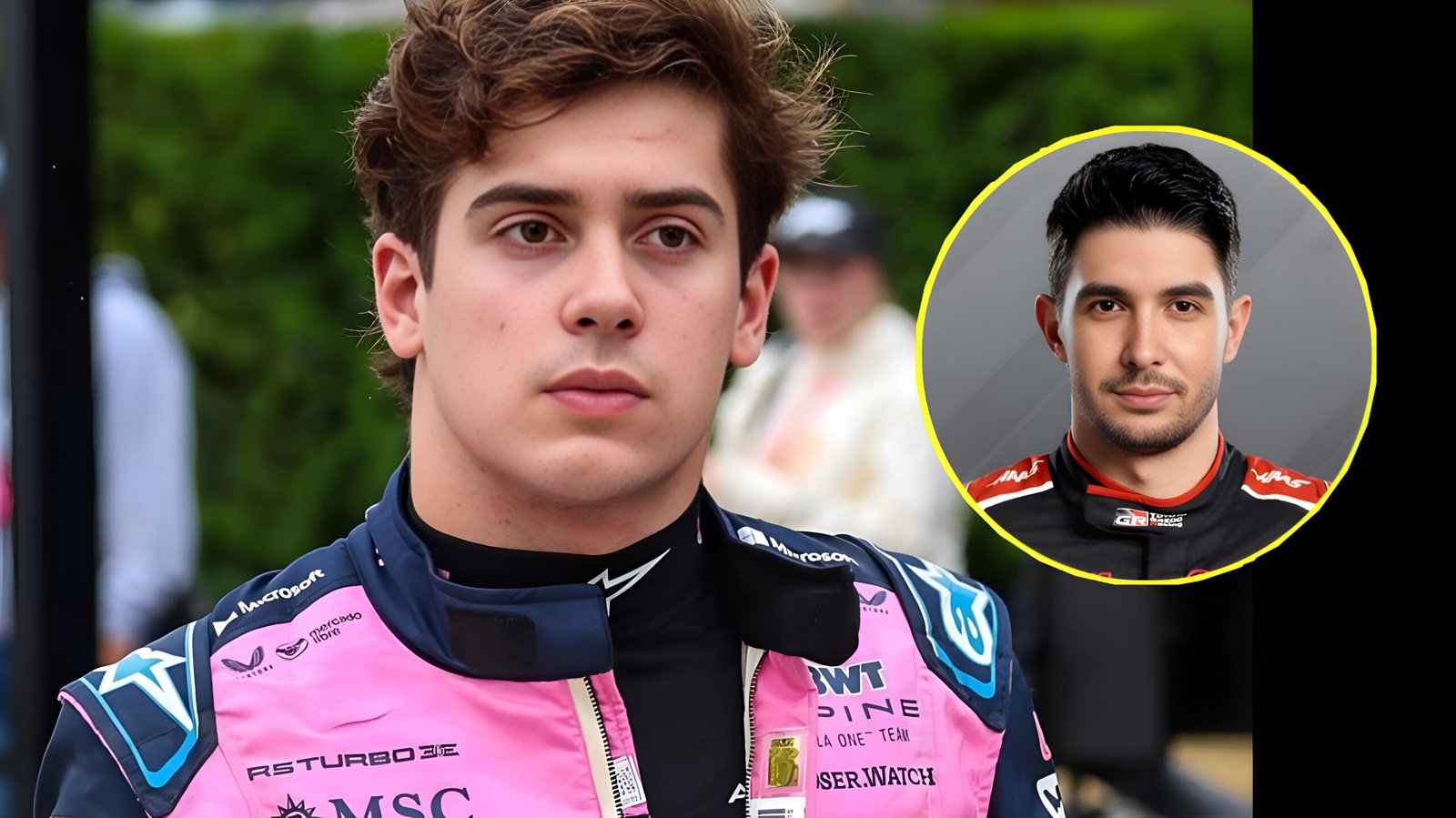
Shanghai, 18 March 2026 – In a racing incident that encapsulated both the razor-sharp competitiveness and the enduring fragility of Formula 1’s public image, Franco Colapinto’s management team has taken the unprecedented step of issuing a public appeal for civility directed squarely at sections of his own fanbase. The statement, released within hours of the chequered flag at the Shanghai International Circuit, urges supporters to refrain from directing abuse or death threats toward Esteban Ocon, his family, or the Haas F1 Team following a high-stakes collision that eliminated both drivers’ immediate points ambitions on lap 32 of the Chinese Grand Prix.
The episode itself unfolded with clinical precision typical of modern Formula 1 wheel-to-wheel combat. Esteban Ocon, driving for Haas, attempted an ambitious inside-line overtake on Colapinto’s Alpine at the demanding Turn 2 complex. Colapinto, adhering strictly to the conventional racing line, maintained his position through the apex. The resultant contact—Ocon’s front wing clipping the rear of the Alpine—proved decisive. Both cars spun in unison, their trajectories arrested only by the gravel trap beyond the exit kerb. Stewards, after reviewing telemetry and onboard footage, deemed Ocon predominantly at fault for the manoeuvre executed with what the Frenchman himself later described as excessive optimism. A 10-second time penalty was duly applied, consigning Ocon to a 14th-place finish and extinguishing any realistic hope of points. Colapinto, demonstrating remarkable resilience, recovered through disciplined tyre management and strategic pit timing to salvage tenth position and a solitary championship point.
Far from descending into acrimony, the immediate aftermath between the protagonists reflected the maturity that Formula 1 has increasingly cultivated among its drivers. Ocon sought out Colapinto in the paddock and offered a candid apology during media pen duties, acknowledging that his move had been “over-optimistic” and that he bore responsibility for the contact. Colapinto’s response, disseminated via social media shortly thereafter, was characteristically gracious: “All good mate! Thanks for the apology.” The exchange, captured by multiple broadcast networks and circulated widely online, appeared to signal closure on a professional level. Yet the digital sphere told a different story.
Within minutes of the incident replaying across global television feeds, a vocal minority of Colapinto’s supporters—particularly within the fervent Argentine online community—began inundating Ocon’s personal accounts, those of his family members, and the official Haas team channels with messages ranging from sustained verbal abuse to explicit threats of violence. Such reactions, while statistically confined to a small subset of followers, nevertheless triggered immediate concern within Colapinto’s inner circle. Bullet Sports Management, the driver’s official representation agency, moved with notable alacrity to pre-empt escalation. Their statement, disseminated across major social platforms, read in full:
“Public service announcement: please do not send hateful messages or death threats to Esteban, his family, or the Haas team. It won’t undo the crash and only reflects poorly on Franco’s fandom. Thank you for keeping the support positive and respectful!”
The wording was deliberate and measured, eschewing condemnation in favour of an appeal to shared values. By framing the issue as detrimental to the very reputation of Colapinto’s growing supporter base, the agency underscored a sophisticated understanding of fan dynamics in the social-media era. This was no generic disclaimer; it was a proactive intervention designed to protect not merely Ocon’s wellbeing but the broader integrity of the sport and, crucially, the mental health of its participants.
To appreciate the significance of this intervention, one must contextualise the drivers involved. Franco Colapinto, the 23-year-old Argentine rising star, has rapidly established himself as one of Formula 1’s most compelling narratives. Transitioning from Williams to Alpine ahead of the 2026 season, he has brought with him not only prodigious talent but also a passionate national following that mirrors the fervour once reserved for Juan Manuel Fangio and more recently for compatriots in other sporting arenas. His ability to extract performance from machinery that has historically challenged the Enstone-based outfit has earned him plaudits from seasoned observers. Esteban Ocon, by contrast, is a veteran of 150-plus Grands Prix, a race winner with Alpine in 2021, and now navigating the challenges of a Haas project still in its developmental infancy. At 29, Ocon represents the archetype of the resilient midfield warrior whose career has been defined by perseverance through adversity.
The collision at Turn 2, while costly in immediate terms, occurred at a pivotal juncture in the race. Both drivers were contesting positions inside the top ten, a battle rendered all the more significant by the aerodynamic sensitivity of the 2026 regulations. The revised chassis and power-unit specifications have placed renewed emphasis on precise car placement and risk-reward decision-making. Ocon’s attempt, though ultimately penalised, was emblematic of the aggression that Haas principal Ayao Komatsu has openly encouraged as the team seeks to escape the lower reaches of the constructors’ standings. Colapinto’s recovery drive, meanwhile, showcased the tactical acumen that Alpine team principal Bruno Famin has highlighted as a cornerstone of the French constructor’s revival strategy.
Beyond the technical minutiae, however, the management statement illuminates a deeper malaise afflicting elite sport in 2026. The proliferation of instant-replay culture, coupled with the anonymity afforded by digital platforms, has normalised behaviour that would be unthinkable in the paddock itself. Formula 1 has, in recent seasons, invested considerable resources in campaigns addressing online abuse—initiatives ranging from the #WeRaceAsOne programme’s digital extensions to partnerships with mental-health organisations. Yet incidents such as this demonstrate that enforcement and education remain works in progress. The fact that Colapinto’s own representatives felt compelled to issue such a directive, rather than relying on platform moderation or FIA protocols, speaks volumes about the perceived inadequacy of existing safeguards.
Psychologists specialising in sports fandom have long warned that parasocial relationships between supporters and athletes can blur boundaries dangerously when competitive disappointment intersects with national or personal identity. In Colapinto’s case, the Argentine diaspora’s investment in his success carries echoes of football’s most passionate ultras, where loyalty sometimes manifests as protectiveness bordering on aggression. That this protectiveness should extend to issuing death threats against a rival driver—who had already tendered a public apology—represents a distortion of fandom that serves neither the athlete nor the sport.
Esteban Ocon’s post-race media comments further humanised the episode. Speaking with composure that belied the physical and emotional toll of the spin, he reiterated his contrition while expressing understanding for the intensity of the moment. “In the heat of battle you sometimes see an opening that, on reflection, wasn’t there,” he told assembled journalists. “Franco was fair. I was the one who misjudged it.” Such candour is rare in an era when drivers are often counselled toward corporate neutrality. Ocon’s willingness to accept culpability without qualification stands in instructive contrast to the toxic rhetoric emanating from certain online quarters.
For Alpine, Colapinto’s solitary point represented a modest but morale-boosting return on a weekend that had otherwise been defined by tyre-degradation issues and aerodynamic inefficiencies. The team’s technical director, having reviewed the data, indicated that the recovery drive yielded valuable information for upcoming European rounds. Haas, conversely, departed Shanghai empty-handed in the drivers’ championship yet enriched by telemetry that may inform future development directions. Both outfits, however, now face the ancillary challenge of managing reputational fallout from an episode that has dominated paddock conversation as much as the race result itself.
The broader implications extend beyond the immediate points tally. With the 2026 championship still in its embryonic phase—only three rounds completed—the psychological dimension of driver welfare assumes heightened importance. Young talents such as Colapinto, already navigating the pressures of elevated expectations, benefit immeasurably from supportive rather than suffocating fandom. Similarly, established drivers like Ocon, who have spoken publicly in the past about the mental-health challenges of the profession, deserve protection from collateral damage arising from incidents beyond their control.
Formula 1’s governing body, the FIA, has yet to comment formally on the management statement, though insiders suggest that the governing body views such proactive measures favourably. The organisation has, in recent years, enhanced its social-media monitoring capabilities and introduced stricter penalties for teams or drivers found to incite fan misconduct indirectly. Whether these mechanisms will prove sufficient remains to be seen; what is already evident is that responsibility for fostering respectful discourse increasingly falls upon the drivers’ personal representatives.
In issuing their appeal, Bullet Sports Management has performed a dual service. They have shielded an opposing driver and team from unwarranted harassment while simultaneously modelling the standard of conduct they expect from those who claim to support Franco Colapinto. The statement’s closing exhortation—“Thank you for keeping the support positive and respectful”—serves as both gratitude and gentle admonition. It reminds enthusiasts that true allegiance manifests not in defensive aggression but in dignified celebration of one’s chosen athlete.
As the Formula 1 caravan prepares to depart Shanghai for the forthcoming Australian Grand Prix, the narrative surrounding the Chinese encounter has shifted from mechanical analysis to ethical reflection. The collision at Turn 2 will fade from technical briefings within days; the management intervention, however, may resonate far longer. It stands as a timely reminder that while rivalries on track fuel the sport’s enduring appeal, the relationships cultivated off it—between drivers, teams, and supporters—define its character.
In an age where digital immediacy amplifies every emotion, the measured professionalism displayed by both Colapinto and Ocon, coupled with the decisive action of the former’s management, offers a template for how Formula 1 might navigate its increasingly complex intersection with online culture. The solitary point Colapinto secured may prove statistically minor by season’s end. The precedent established by his team’s statement, however, carries the potential to influence the sport’s cultural trajectory in ways far more profound than any championship table could quantify.


