Published by: AutodromeF1 Editorial Team
Daniel Ricciardo’s Graceful Reckoning: Gratitude, Exhaustion, and the Quiet Dignity of an F1 Exit
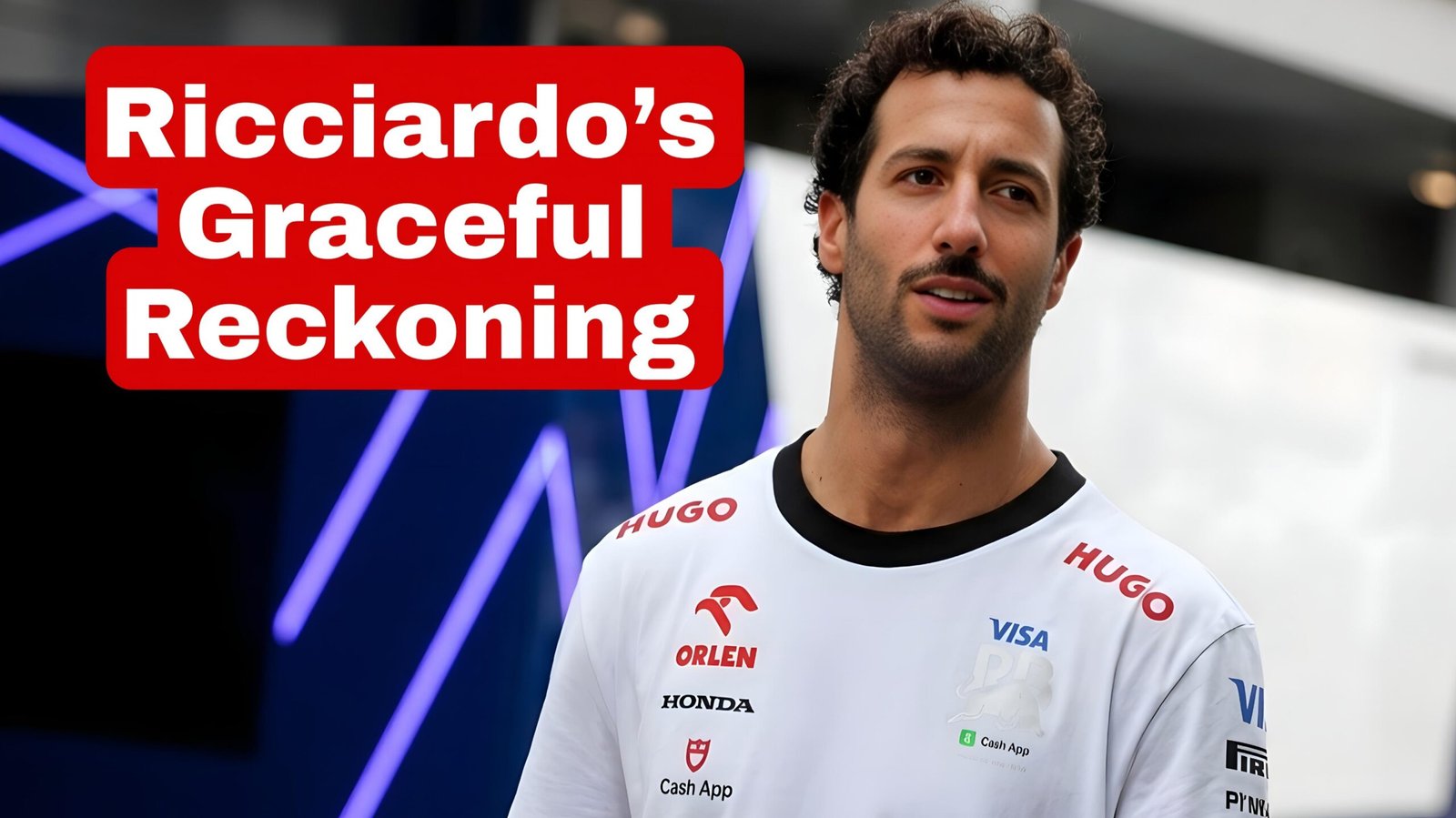
London, United Kingdom 2 April – In the high-stakes arena of Formula 1, where careers are often measured in tenths of a second and decisions are forged under unyielding pressure, few departures have carried the emotional weight of Daniel Ricciardo’s. The eight-time Grand Prix winner, a figure whose infectious charisma once illuminated the paddock, stepped away from the sport abruptly in September 2024 following Red Bull’s decision to replace him at its junior team, RB (then Visa Cash App RB), with rising talent Liam Lawson after the Singapore Grand Prix. Now, more than 18 months removed from that pivotal moment, the 36-year-old Australian has offered a rare, unfiltered perspective on the toll of elite competition—one marked not by bitterness, but by profound gratitude that the team “made the decision for me.”
This reflection, shared in recent in-depth conversations, underscores a truth often obscured by the sport’s glamour: the relentless demands of Formula 1 can erode even the most resilient spirits. Ricciardo’s exit, while sudden, was the culmination of a challenging 2024 campaign at RB, where expectations rooted in his Red Bull junior pedigree clashed with the harsh realities of declining pace. Despite the high hopes invested in his return to the Red Bull family, he struggled to consistently match the speed of teammate Yuki Tsunoda, a driver whose precision and adaptability highlighted the widening gap. Insiders noted that Red Bull motorsport adviser Helmut Marko had advocated for Ricciardo’s removal as early as the Spanish Grand Prix in June, viewing the move as essential for evaluating younger prospects. Team principal Christian Horner, however, intervened to grant additional time, a gesture that spoke to the respect Ricciardo commanded within the organization. By Singapore, the verdict was unequivocal: Lawson would assume the seat for the season’s remainder, bringing Ricciardo’s record of 257 starts to a close without fanfare or farewell lap.
Yet, far from resentment, Ricciardo has articulated a sense of relief. “I was grateful that they made the decision for me,” he reflected, acknowledging the exhaustion that had quietly accumulated. Publicly, he maintained the composed demeanor that defined his career—the trademark smile, the affable interviews, the “brave face” that masked deeper struggles. Privately, however, the weight proved immense. Once the spotlight dimmed and the paddock’s chaos receded, the need for introspection became inescapable. “I needed some soul searching,” he admitted, describing the period immediately following his departure as one of necessary isolation. The prospect of re-entering the sport’s “intense lifestyle” now fills him with a quiet terror, a stark admission from a driver once celebrated for his fearless overtakes and unyielding optimism.
To fully appreciate the significance of this chapter, one must contextualize Ricciardo’s trajectory within the broader narrative of Formula 1. Born in Perth to Italian immigrant parents, Ricciardo burst onto the scene as a Red Bull junior, debuting for the team in 2014 after stints at Toro Rosso (now RB’s predecessor). His breakthrough came swiftly: eight victories, including iconic triumphs at Monaco in 2016 and 2018, where his wet-weather mastery and late-braking audacity etched him into motorsport lore. At his peak, he embodied the sport’s joyful potential—overtaking with panache, celebrating with shoeys, and injecting levity into a pressure-cooker environment. By 2018, however, cracks emerged. A high-profile departure from Red Bull proper, driven by a desire for leadership and stability, ushered in a more turbulent phase. Stints at Renault and McLaren yielded flashes of brilliance but were overshadowed by inconsistency, mechanical misfortunes, and the psychological burden of chasing former glory. A brief reserve role with Red Bull preceded his 2023 return to the junior squad, where initial promise gave way to the performance struggles that defined 2024.

Analysts have long attributed this post-2018 downturn to a confluence of factors: the sport’s evolving technical demands, the psychological “baggage” of unmet expectations, and the emotional residue of navigating team politics. Ricciardo himself has alluded to these pressures without assigning blame, framing them instead as an inevitable byproduct of a career spent at the pinnacle. His inability to match Tsunoda’s consistency in 2024—despite RB’s competitive machinery—served as a poignant reminder that age, form, and opportunity rarely align indefinitely. Marko’s early push for change reflected the organization’s uncompromising philosophy: talent development over sentiment, results over tenure. Horner’s measured approach, by contrast, highlighted a more nuanced appreciation for Ricciardo’s contributions, not merely as a driver but as a mentor and cultural anchor.
What distinguishes Ricciardo’s narrative is its humanity amid the machinery. In an era when F1 drivers are increasingly scrutinized through data dashboards and simulator metrics, his candor about mental fatigue resonates deeply. The “brave face” he wore publicly—fielding questions with grace even as his future hung in the balance—masked a profound internal recalibration. Post-Singapore, the abrupt severance from the grid forced a confrontation with identity. “When everything quieted down and the lights were turned off,” he recalled, the absence of structure compelled genuine self-examination. This soul-searching extended beyond racing lines and telemetry; it encompassed family, solitude, and the rediscovery of agency unencumbered by external voices. He has spoken of embracing alone time—hours on the family farm, free from the paddock’s perpetual motion—as transformative. Such insights illuminate a rarely discussed facet of elite athletics: the erosion of personal boundaries under constant performance scrutiny. Ricciardo’s experience echoes those of predecessors like Sebastian Vettel, who likewise sought fulfillment outside the cockpit, yet it carries a distinctly contemporary edge in an era of heightened awareness around athlete well-being.
The decision to replace him with Lawson, a 22-year-old prodigy groomed within the Red Bull stable, exemplifies the team’s forward-looking strategy. Lawson’s promotion aligned with broader ambitions, including preparations for the 2026 regulatory overhaul and Ford’s return as Red Bull’s power-unit partner. Ricciardo, fittingly, has since channeled his expertise into this very ecosystem as a global ambassador for Ford Racing. His role extends beyond symbolism; it leverages his unparalleled insight into driver dynamics, vehicle development, and the human element that data alone cannot capture. Observers note that this transition has allowed him to remain connected to the sport on his terms—without the physical and mental demands of race weekends—while contributing to its evolution.
From a wider vantage, Ricciardo’s exit invites reflection on Formula 1’s talent ecosystem. The sport’s meritocracy, while essential for innovation, exacts a heavy personal price. Drivers enter as prodigies and exit as veterans often before their 40s, their bodies and minds shaped by G-forces, travel, and unremitting competition. Ricciardo’s case underscores the value of timely intervention: by acting decisively, Red Bull spared him the protracted uncertainty that has plagued others. His gratitude, far from resignation, signals acceptance—a recognition that forcing continuation amid waning form might have exacted greater damage. In interviews, he has emphasized peace over prolongation, describing the timing as “right” after a career spanning more than a decade at the front.
Ricciardo’s legacy transcends statistics. With 32 podiums, three pole positions, and those eight wins—many secured through raw talent and instinct—he leaves an indelible mark on a generation of fans drawn to his authenticity. The “Honey Badger” persona, resilient yet approachable, humanized a sport often perceived as aloof. His influence persists in the paddock’s culture: younger drivers like Lawson have publicly lauded his grace during the handover, recounting words of encouragement exchanged in Singapore’s tense aftermath. “Good luck—you only get one crack at Formula One; make the most of it,” Ricciardo reportedly advised, embodying the mentorship that defined his later years.
As the 2026 season unfolds amid new chassis, aerodynamics, and power-unit regulations, F1 stands at a crossroads. Teams like Red Bull, with Ford’s technical infusion, prioritize youth and adaptability. Yet Ricciardo’s story serves as a counterbalance: a reminder that sustainable success requires safeguarding the individuals who propel the machines. His post-racing equilibrium—marked by relaxation, family, and purposeful contribution—offers a model for graceful transition. The terror he once felt at the thought of return has yielded to contentment, a testament to resilience forged not in victory laps, but in quiet reflection.
In the end, Daniel Ricciardo’s departure was neither tragedy nor defeat, but evolution. By confronting exhaustion head-on and embracing the team’s resolve, he has modeled a rare virtue in professional sports: the courage to release what no longer serves. Formula 1, for all its speed and spectacle, is richer for his presence—and wiser for his honest reckoning. As the grid prepares for its next chapter, the Honey Badger’s smile lingers not in the rear-view mirror, but as a beacon of what it means to race—and ultimately, to rest—with dignity.


