Published by: AutodromeF1 Editorial Team
The Phoenix Window: How Geopolitical Disruption is Forging an Unprecedented Era of Innovation in Formula 1’s 2026 Season
In the rarefied arena of Formula 1, where split-second margins define legacies and technological leaps are meticulously choreographed across meticulously planned calendars, external forces seldom intrude with such transformative potency. Yet the abrupt cancellation of the 2026 Bahrain and Saudi Arabian Grands Prix—events originally scheduled for early April—has precipitated precisely such a paradigm shift. Triggered by the escalating conflict in the Middle East, these cancellations have excised two marquee rounds from the calendar, reducing the season to 22 races and inserting a five-week hiatus between the Japanese Grand Prix on 27-29 March and the Miami Grand Prix on 1-3 May. Far from a mere logistical inconvenience, this unforeseen interlude has become a strategic crucible, granting teams an extraordinary window to accelerate development programmes that were hitherto constrained by the relentless rhythm of back-to-back weekends.
The decision, confirmed by Formula 1 and the FIA after exhaustive safety assessments, underscores the sport’s pragmatic adaptation to global realities. Bahrain’s circuit, perilously proximate to regional military targets, and Saudi Arabia’s event, similarly vulnerable amid heightened tensions, could no longer proceed without imperilling personnel or spectators. No replacements have been announced, preserving the integrity of the remaining schedule while inadvertently bestowing upon the paddock a developmental reprieve of historic proportions. This is not the first time geopolitics has redrawn F1’s map—consider the postponed races of prior decades—but rarely has such disruption aligned so serendipitously with the technical demands of a new regulatory epoch.
The 2026 regulations, with their revolutionary power units and aerodynamically stringent frameworks, demand unprecedented iteration. Teams entered the season anticipating incremental upgrades at Bahrain, a traditional early-season proving ground where data from opening races could be swiftly translated into tangible performance gains. Now, that timeline has been upended. The extended preparation period—encompassing not merely physical testing but exhaustive simulation, wind-tunnel validation, and cross-departmental integration—promises to compress months of conventional progress into weeks of focused refinement.
Ferrari’s Calculated Deferral: From Bahrain Blueprint to Miami Ambition
Ferrari Team Principal Fred Vasseur has been characteristically forthright in articulating the strategic pivot. “We were planning to introduce a good package for Bahrain, so it will be postponed for Miami,” he confirmed in recent media briefings. “We’ll try to see if we can introduce parts that were supposed to arrive later. We might be able to do a package and a half for Miami.” This is no incremental tweak; it represents a deliberate bundling of aerodynamic, mechanical, and power-unit enhancements originally phased across multiple rounds. The additional time allows Ferrari’s Maranello-based engineers to validate interactions between new components—particularly the complex 2026 power-unit architecture—with greater fidelity, mitigating the risk of unforeseen reliability issues under race conditions.
Crucially, no substantial upgrades are anticipated at the forthcoming Japanese Grand Prix at Suzuka. The decision stems from pragmatic considerations of cost and logistics: transporting sensitive aerodynamic components across continents, recalibrating factory workflows, and integrating them into cars already en route to Asia would incur prohibitive expenses and disrupt operational cadence. Suzuka, with its demanding high-speed layout, will instead serve as a data-gathering exercise, allowing teams to baseline current performance before unleashing Miami’s comprehensive upgrades. Vasseur’s assessment resonates across the grid; most outfits had aligned their development roadmaps around the original Bahrain window, rendering a rushed Japanese deployment inefficient at best and counterproductive at worst.
This deferral, while uniform in principle, will manifest differently across the pecking order. Established frontrunners like Ferrari possess the infrastructure to maximise the hiatus through parallel simulation streams and iterative wind-tunnel campaigns. Yet the true differentiator may lie in how smaller or newly arrived entities leverage the same temporal bounty.
Cadillac’s Relentless Iteration: The Rookie Imperative Amplified
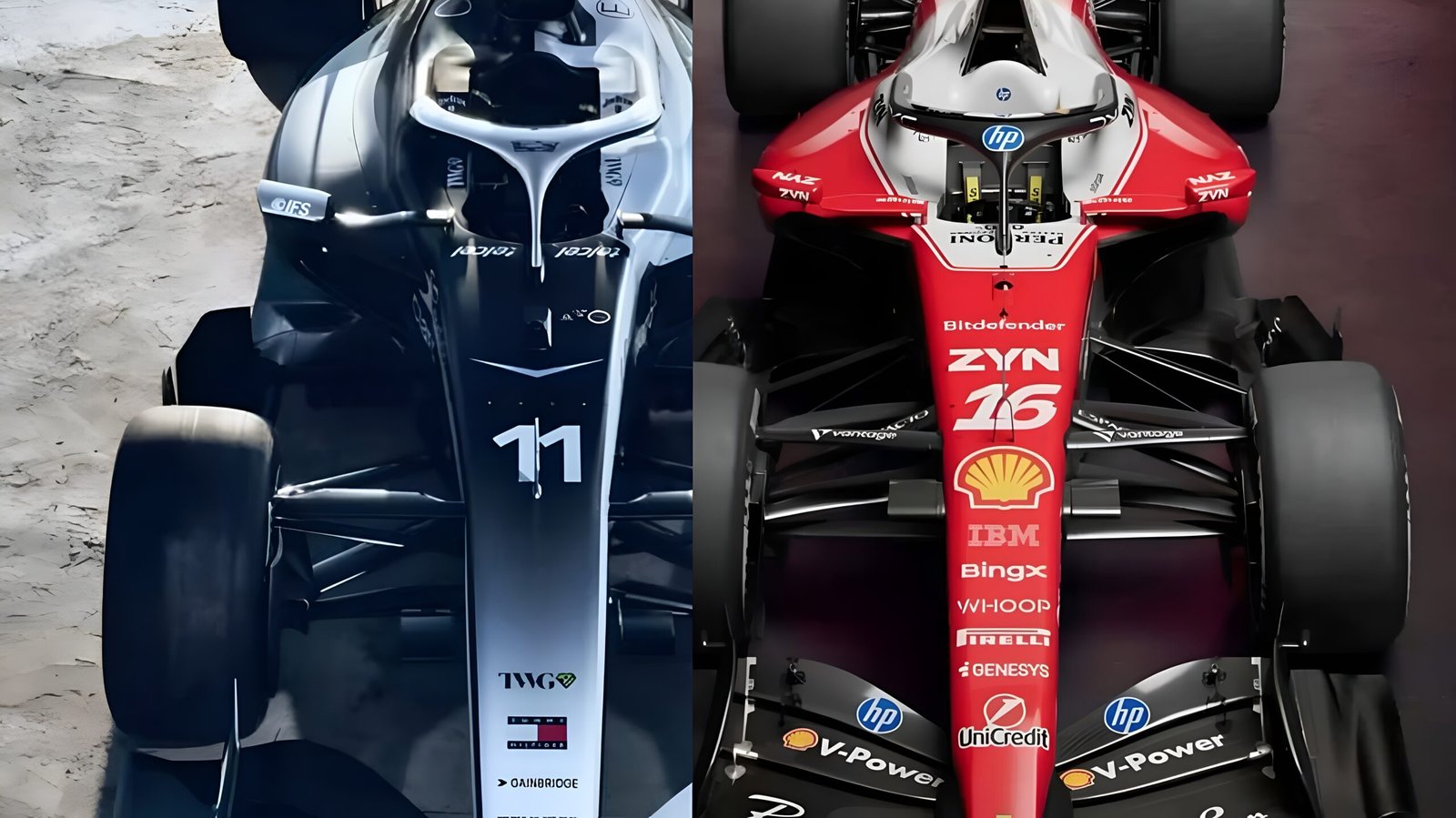
Enter Cadillac, Formula 1’s eleventh entrant and a symbol of American ambition in the sport’s new era. Powered by Ferrari customer units, the team—boasting the experienced pairing of Valtteri Bottas and Sergio Perez—has adopted an unequivocally aggressive upgrade philosophy from the outset. Bottas, drawing on his extensive pedigree, has outlined a cadence of near-constant evolution: “I think in the first four or five races we’re always getting something to the track aero-wise, more downforce each race.” New aerodynamic components are slated for introduction at virtually every early-season event, a strategy born of necessity for a squad commencing at the rear of the grid and compelled to close the experience chasm rapidly.
The five-week interlude transforms this ambition from aspirational to eminently executable. Without the pressure of consecutive Middle Eastern rounds, Cadillac’s engineers can dissect data from Australia, China, and Japan with unprecedented depth—refining computational fluid dynamics models, correlating simulator outputs against real-world telemetry, and validating incremental downforce gains before committing to Miami’s potentially decisive step. For a rookie operation, this represents a rare alignment of circumstance and strategy: the hiatus affords the luxury of methodical validation that established teams might take for granted, yet which Cadillac must exploit to translate raw potential into tangible points by mid-season.
The choice of Ferrari power units further synergises with this approach. Shared architecture facilitates seamless integration of aero and propulsion upgrades, allowing Cadillac to piggyback on Maranello’s validation protocols while pursuing bespoke aerodynamic solutions tailored to their chassis philosophy. Bottas’s emphasis on consistent downforce increments underscores a philosophy of marginal gains compounded over time—a hallmark of successful underdogs throughout F1 history, from Force India’s rise to Haas’s early competitiveness.
Logistical Realities and the Broader Competitive Calculus
The absence of major upgrades at Suzuka is not merely a Ferrari or Cadillac story; it reflects a grid-wide consensus shaped by immutable practicalities. Shipping crates of composite components from European factories to Japan, securing customs clearances, and recalibrating under the scrutiny of a compressed timetable exacts a toll in both financial and human resources. Teams have collectively prioritised quality over haste, recognising that a compromised upgrade package risks introducing instability precisely when reliability under the new regulations remains paramount.
This collective restraint, paradoxically, amplifies the Miami upgrade’s potential impact. The Miami International Autodrome—characterised by its mix of street-circuit tightness and stadium-section spectacle—will serve as the arena where the accumulated developmental dividend is unveiled. Performance deltas could prove seismic: a well-executed “package and a half” might propel midfield runners into podium contention or enable frontrunners to consolidate advantages. For Cadillac, the leap could accelerate their transition from developmental curiosity to credible point-scorer, altering the constructors’ championship narrative far earlier than anticipated.
Beyond immediate performance, the hiatus invites deeper reflection on F1’s evolving ecosystem. The 2026 regulations were conceived to foster closer competition and sustainable innovation; this unplanned extension of preparatory time may inadvertently accelerate that vision. Teams can now invest more thoroughly in sustainable materials, advanced simulation algorithms, and cross-disciplinary collaboration—areas traditionally sacrificed to race-weekend exigencies. From a governance perspective, the episode highlights F1’s growing resilience: the ability to pivot without compromising the championship’s integrity while safeguarding stakeholder interests.
Strategic Implications: Levelling the Field or Entrenching Advantages?
Critically, the developmental windfall does not distribute evenly. Resource-rich outfits benefit disproportionately from extended simulation and testing windows, yet the very structure of the regulations—capped wind-tunnel time, standardised components—imposes constraints that reward ingenuity over expenditure. Cadillac’s approach exemplifies this: by committing to iterative aero upgrades irrespective of calendar flux, the team embodies the disruptive ethos of a newcomer unbound by legacy conservatism.
One might posit that this interlude functions as an equaliser. The extra weeks afford smaller teams the bandwidth to close relative gaps in computational capability and human expertise. Conversely, frontrunners like Ferrari, already operating at the cutting edge, can refine marginal efficiencies that compound over a season. The net effect? A championship whose early contours remain fluid, with Miami poised as a de facto reset point where the true 2026 hierarchy may crystallise.
From a driver perspective, the hiatus offers physiological and psychological respite. The compressed early schedule—Australia, China, Japan—demands peak fitness; the subsequent break permits recovery, strategic review, and mental recalibration ahead of the North American leg. For veterans like Bottas, it represents an opportunity to embed team processes more deeply, ensuring that upgrades translate not merely into lap-time gains but into operational seamlessness.
A Catalyst for Long-Term Evolution
Ultimately, what began as an unwelcome geopolitical necessity has metamorphosed into a catalyst for innovation. Formula 1 has long prided itself on adaptability—witness the sport’s navigation of pandemics, regulatory overhauls, and commercial reinventions. The 2026 Bahrain and Saudi cancellations exemplify this ethos on a grander scale: adversity reframed as opportunity, disruption distilled into developmental momentum.
As the grid converges on Suzuka for a data-focused interlude before the Miami crucible, the paddock stands at the threshold of a redefined competitive landscape. The five-week window is more than downtime; it is a strategic phoenix rising from regional turmoil, promising performance leaps that could reshape not only the immediate season but the very trajectory of the 2026 championship. In an era where external shocks increasingly intersect with sporting calendars, Formula 1’s response—measured, innovative, and forward-looking—affirms its enduring capacity to transform challenge into competitive excellence.
The true measure of this episode will unfold under Miami’s floodlights in early May. Until then, the sport’s laboratories hum with intensified purpose, its engineers harnessing an improbable gift of time to push the boundaries of what is possible at 350 kilometres per hour. In motorsport, as in life, the most profound advancements sometimes emerge not from meticulous planning, but from the graceful navigation of the unforeseen.


