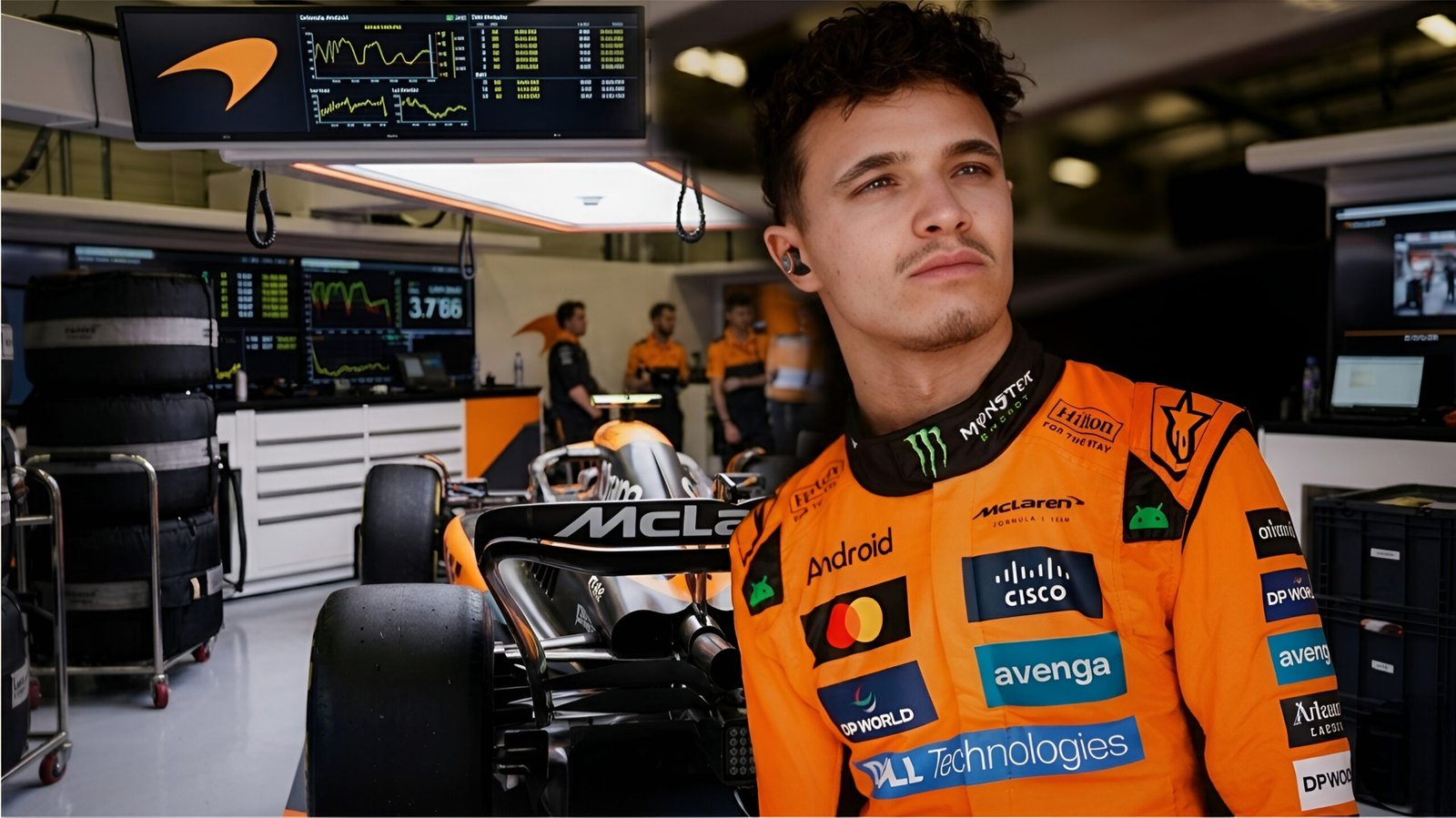
Lando Norris in the McLaren garage expressing concerns over the 2026 F1 technical regulations and energy management.
Published by: AutodromeF1 Editorial Team
London, 30 March – In an era defined by unprecedented growth and a burgeoning global fanbase, Formula 1 finds itself at a critical juncture. Long before the first 2026-spec power unit has fired in anger, the very blueprint for the sport’s next regulatory epoch is facing intense scrutiny and provoking a level of driver dissent not seen in years. As the current season unfolds, a parallel, more consequential battle is being waged not on the tarmac, but in the corridors of power. With pivotal discussions slated for April, the fundamental philosophy of Grand Prix racing’s future is being debated, and the voices from the cockpit are sounding a clear, resonant alarm.
At the heart of this brewing storm is a profound disconnect between the rule-makers and the racers. The regulations, meticulously crafted by the FIA and Formula 1 to usher in an era of sustainable technology and enhanced spectacle, are being viewed by the athletes as a step toward an overly artificial and potentially perilous form of competition. This sentiment was articulated with stark pessimism by McLaren’s Lando Norris following the Japanese Grand Prix. His words, delivered with a sense of weary resignation, cut through the usual post-race pleasantries and exposed a deep-seated frustration.
“It doesn’t matter what we say,” Norris stated, effectively summarizing the perceived futility of driver input. He posited that the primary objective of the new rules is to engineer a specific brand of entertainment, a spectacle tailored for broadcast, rather than to create a pure sporting challenge that satisfies the world’s 20 elite drivers. The notion that driver satisfaction should be a co-equal priority was dismissed with a laugh, a moment of candor that revealed the chasm between the drivers’ desires and the commercial and political imperatives of the stakeholders. This is not the isolated opinion of one driver; it is a symptom of a wider malaise within the Grand Prix Drivers’ Association (GPDA), a body that, despite its mandate, often feels marginalized in the decision-making process. Seven-time World Champion Lewis Hamilton has repeatedly echoed this sentiment, highlighting the structural deficiency that leaves drivers without a formal vote or a permanent seat on the committees that dictate their fate.
The context for the upcoming April talks—strategically positioned in the calendar break between the Asian leg and the championship’s return to the Americas—is therefore charged with significance. These discussions are not merely a routine check-in; they represent a crucial opportunity for the FIA and Formula 1 to either assuage the growing concerns or to push forward, potentially alienating their most vital assets. While recent history shows some evidence of responsiveness, such as the FIA’s recent adjustments to penalty guidelines following driver feedback, the scale and scope of the 2026 issues are of an entirely different magnitude. Norris’s skepticism, therefore, is not born of cynicism, but of experience.
To comprehend the depth of the drivers’ concerns, one must dissect the key pillars of the 2026 regulations. The technical revolution is centered on a radical new power unit, one that mandates a near 50/50 power distribution between the downsized internal combustion engine (ICE) and its electrical counterpart. This dramatic shift toward electric power, coupled with the complete removal of the complex and expensive Motor Generator Unit-Heat (MGU-H), is intended to align the sport with automotive industry trends and attract new manufacturers like Audi. While noble in its sustainable intent, the execution of this concept on track is what has drivers deeply worried.
The primary point of contention is the new “Manual Override” mode, a driver-activated electrical boost designed to replace the current Drag Reduction System (DRS) as the main overtaking aid. In theory, this puts more control in the hands of the driver, allowing them to strategically deploy a surge of battery power to attack a rival or defend a position. However, the reality, as feared by drivers like Norris, is far more problematic. He has lambasted the concept as “very artificial,” warning of chaotic scenarios where massive closing speeds create a dangerous and unpredictable racing environment.
The issue stems from the immense energy demands of the new power units. To generate the requisite 350kW of electrical power for a full deployment, drivers will be forced into extreme energy harvesting, or “de-rating,” on the straights. This means they will have to intentionally slow down, lifting off the throttle far earlier than they normally would, in order to regenerate the battery. This creates a bizarre and counter-intuitive dynamic: drivers going deliberately slow in order to have the potential to go fast. The consequence is the emergence of colossal speed differentials between a car that is harvesting and one that is deploying the override boost. Early simulations have suggested closing speeds could exceed those seen in incidents like Oliver Bearman’s high-impact F2 crash in Jeddah, a stark reminder of the kinetic forces at play.
This transforms the art of racing. It moves the focus away from a driver’s ability to brake later, carry more speed through a corner, or manage tire degradation, and shifts it toward becoming, in Norris’s scathing critique, a “battery manager.” The driver becomes less of a pure racer and more of a systems operator, their performance dictated not just by raw talent but by their adherence to an optimized, and likely prescribed, energy management profile. The fear is that this will not only homogenize driving styles but also detract from the visceral, flat-out thrill that is the very essence of Formula 1. The cars, Norris lamented, could be the “worst” to drive, demanding a style that runs contrary to every instinct a racing driver possesses.
As the April discussions approach, the FIA, Formula 1, and the teams find themselves in a delicate position. They are balancing a complex equation of technical innovation, commercial interests, sustainability goals, and the fundamental sporting integrity of the championship. The drivers, for their part, are not Luddites resisting change. They are the ultimate arbiters of what makes a Formula 1 car challenging and rewarding to drive. Their collective experience is an invaluable resource that, if ignored, could lead to a future for the sport that is technically impressive but spiritually hollow.
The outcome of these talks will reverberate for the next decade. A failure to meaningfully address the drivers’ concerns risks forging ahead with a set of rules that may produce a television-friendly product but fails the ultimate test of motorsport authenticity. True, lasting success for the 2026 regulations will not be measured solely in audience figures or manufacturer participation, but in the passion and commitment of the athletes in the cockpit. The challenge now is for the governing bodies to prove that Lando Norris’s pessimism is misplaced, and to demonstrate that in the blueprint for Formula 1’s future, the driver’s voice truly does matter.


