Published by: AutodromeF1 Editorial Team
In an era poised to redefine the very DNA of Formula 1, seven-time world champion Lewis Hamilton has cast a stark light on the monumental challenge awaiting the grid in 2026. The forthcoming regulations, centered on a revolutionary 50/50 power distribution between the internal combustion engine (ICE) and electrical systems, are set to introduce a level of strategic complexity so profound that Hamilton himself has labeled it one of the most demanding technical puzzles of his illustrious career. This is not merely an evolution of the current hybrid era; it is a fundamental paradigm shift, transforming the cockpit into an epicenter of real-time, high-stakes energy calculus.
The Cerebral Racer: Mastering the Art of Energy Warfare
At the heart of the 2026 regulations lies a sophisticated and demanding energy management philosophy. The mandated equilibrium between fossil fuel and electric power necessitates an unprecedented mastery of what is known in the paddock as “lift and coast”—a technique where a driver lifts off the throttle before a braking zone, allowing the car to coast and simultaneously regenerate electrical energy. However, the new rules elevate this from a simple fuel-saving tactic to a primary pillar of performance.
As Hamilton articulated, the application of this technique will be anything but uniform. It will become a track-specific, moment-to-moment strategic decision. On some circuits, drivers may be required to perform extensive lifts, sacrificing entry speed into corners to aggressively replenish the battery reserves. On others, where overtaking opportunities are scarce and track position is paramount, such a strategy would be untenable. This dynamic creates a cerebral layer to wheel-to-wheel combat, where a driver’s cognitive load will be immense. The act of racing will transcend pure instinct and raw pace, becoming a high-speed chess match where predicting an opponent’s energy state and optimizing one’s own deployment and recovery strategy will be the key to both defense and attack.
Hamilton’s comment that a driver might need “a degree” to fully comprehend the intricacies of the system is telling. While the cars will feature advanced, self-learning software that analyzes performance lap after lap to suggest optimal strategies, the ultimate responsibility will rest with the driver. In the heat of battle, with variables changing every second, the driver must possess the intellectual bandwidth to override, adapt, and execute with studious precision. The difference between a podium finish and a midfield obscurity could hinge on a single, well-timed decision to deploy a burst of electrical power or, conversely, to harvest energy when a rival is vulnerable. It is a delicate, intricate ballet between man and machine, demanding a new breed of racer who is as much a strategist and an engineer as a pilot.
A Tale of Two Philosophies: Ferrari’s Straight-Line Struggle
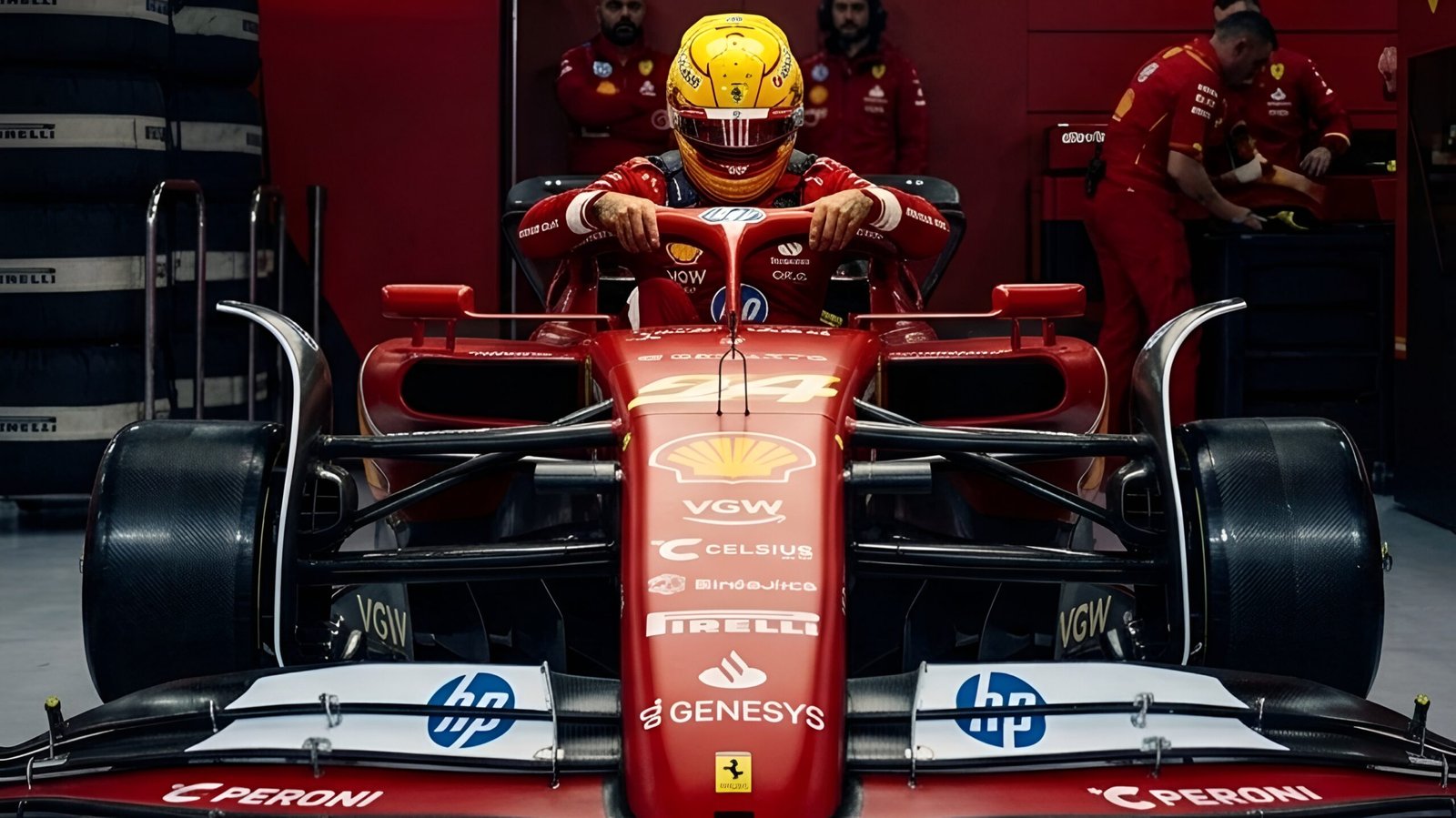
As teams grapple with this new frontier, the initial development phase has already begun to reveal a divergence in design philosophies and, consequently, in performance. While Hamilton’s insights from within the Mercedes camp suggest a deep and nuanced understanding of the challenge, telemetry and paddock whispers indicate that Scuderia Ferrari is facing a significant hurdle with its early-stage SF-26 prototype.
The core of Ferrari’s issue appears to be a deficit in two critical areas: the rate of energy generation post-apex and the efficiency of converting that stored electrical power back into raw, straight-line speed. In modern Formula 1, the ability to rapidly recover energy through the Motor Generator Unit-Kinetic (MGU-K) during braking and acceleration phases is crucial. Analysis from recent test sessions suggests that the SF-26 is currently slower to replenish its energy stores after navigating the apex of a corner compared to its key rivals.
This initial inefficiency creates a cascading problem. A slower rate of energy harvesting means the battery is in a suboptimal state of charge for the subsequent straight. This, compounded by a less-than-perfect conversion of electrical energy into forward momentum, results in a noticeable and costly lack of straight-line velocity. This performance gap is not theoretical; it is a measurable deficit that forces the team into difficult strategic compromises. In qualifying, a Ferrari driver might be forced to choose between a single, all-out lap with maximum energy deployment, potentially leaving them vulnerable in the opening stages of a race, or a more conservative approach that sacrifices ultimate grid position for better energy management in the long run.
This early struggle underscores the sheer scale of the engineering challenge. The 2026 power unit is not just an engine; it is an integrated ecosystem where the combustion engine, turbocharger, battery, and electric motors must work in perfect, seamless harmony. A weakness in any single component can unravel the entire performance envelope. For Ferrari, the path forward involves a deep dive into their energy recovery systems, power electronics, and software algorithms to bridge the gap and unlock the full potential of their power unit. The battle for the 2026 championship will be won not just on the asphalt, but in the dyno rooms and simulation suites of Maranello and Brackley. It is a testament to the fact that in this new Formula 1, power is not just about horsepower; it is about intelligent, efficient, and strategically deployed energy.


