Published by: AutodromeF1 Editorial Team
FIA and Formula One Management Initiate High-Level Review of 2026 Regulations as Teams Seek Targeted Refinements to Preserve Qualifying Integrity
London. United KingdomIn April 4 – in a meticulously orchestrated gathering scheduled for the April 2026 international break, representatives from all ten Formula 1 teams will convene with senior officials from the Fédération Internationale de l’Automobile (FIA) and Formula One Management (FOM). The purpose of these discussions, set to take place in the days immediately preceding the Miami Grand Prix, is to conduct a comprehensive post-launch evaluation of the new technical regulations that have governed the championship since the season’s opening round. This review process, while anticipated in the regulatory framework, has acquired added urgency following early-season observations that have exposed nuanced performance characteristics—particularly in qualifying sessions—requiring potential calibration to maintain the sport’s competitive and entertainment DNA.
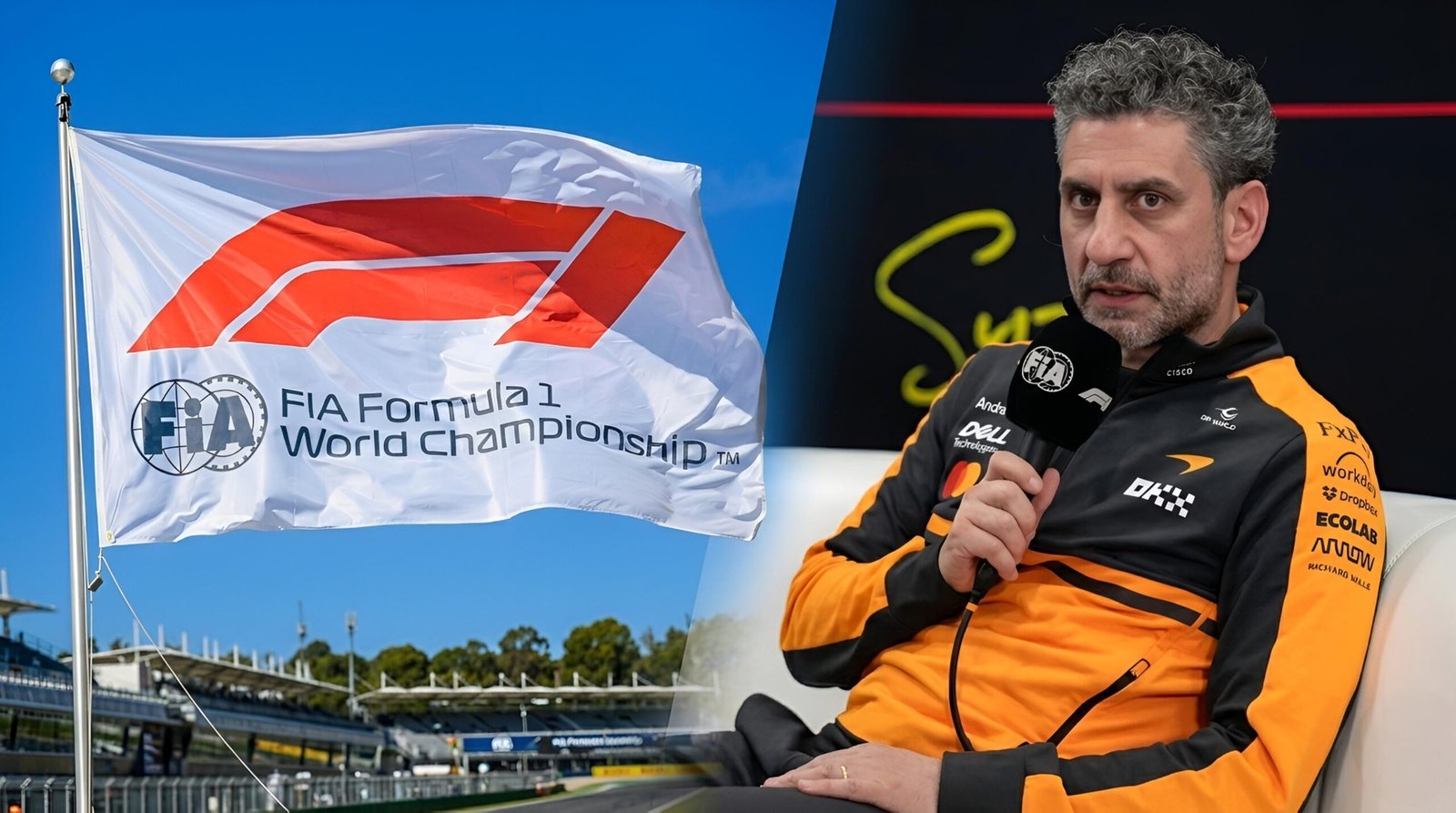
The 2026 regulations, which introduced significant advancements in power-unit architecture and aerodynamic philosophy, were designed to propel Formula 1 into a new era of sustainability and technical innovation. Yet, as the season has unfolded through the opening contests in Australia, China, and Japan, a recurring theme has emerged: the interplay between enhanced electrical energy deployment and the demands of a full qualifying lap. McLaren Team Principal Andrea Stella, whose team has consistently demonstrated competitive pace under the new rules, has publicly elevated this issue to the forefront of the agenda. In remarks that underscore his longstanding reputation for precision engineering and driver-centric leadership, Stella has designated the preservation of qualifying’s fundamental character as “priority number one” after safety considerations.
“Qualifying must continue to reward the absolute commitment of the most skilled drivers,” Stella emphasised in recent paddock briefings. “We cannot allow battery-management protocols to dilute the risk-reward dynamic that has defined the session for decades. Drivers should be free to explore the limits of grip and precision without the constant imposition of energy-harvesting compromises or lift-and-coast manoeuvres that fundamentally alter the driving style expected at this level.”
This perspective resonates deeply within a sport where qualifying has historically served as the purest expression of raw talent, car setup mastery, and momentary bravery. Under the 2026 regulations, the power units—now featuring a substantially increased electrical contribution and revised energy-recovery systems—have demonstrated exceptional efficiency in race conditions. However, on circuits characterised by high-energy demands, such as Albert Park’s sweeping high-speed sections or Suzuka’s demanding combination of fast corners and technical chicanes, the battery’s state-of-charge depletes at an accelerated rate during a single flying lap. The result is a session in which strategic energy deployment becomes as critical as aerodynamic efficiency or mechanical grip, shifting the emphasis from outright lap-time optimisation to tactical conservation.
Industry observers with decades of regulatory experience note that such challenges are not unexpected in the first year of any major regulation set. The pre-season amendments ratified in February 2026 already addressed several initial concerns identified during winter testing. Those adjustments focused primarily on power-unit mapping flexibility and aerodynamic load distribution. The forthcoming April meetings represent the next logical step: a data-driven, collaborative forum where telemetry from actual race weekends—rather than simulated or pre-season mileage—can inform precise, incremental refinements. Sources familiar with the process indicate that the agenda will encompass a holistic analysis of early-season performance metrics, with dedicated segments allocated to power-unit behaviour, aerodynamic interactions under the new active-aero provisions, and the broader implications for racecraft and spectator engagement.
Stella’s intervention carries particular weight given McLaren’s track record of constructive engagement with regulators. The Anglo-Italian engineer, who rose through the ranks at Ferrari before assuming leadership at McLaren, has consistently advocated for regulations that enhance rather than constrain driver agency. His concerns are not framed as criticism of the regulatory philosophy but as a call for targeted evolution. “The DNA of qualifying is about extracting the maximum from both man and machine in a single, unrepeatable moment,” he observed following the Japanese Grand Prix. “When drivers report that they must monitor battery levels mid-corner instead of focusing exclusively on apex clipping and exit traction, we risk losing the visceral spectacle that draws millions to the sport.”
The circuits cited by Stella provide compelling case studies. At Albert Park, the combination of long straights and medium-to-high-speed corners places exceptional demand on electrical deployment for acceleration and corner-exit traction. Early data from the Australian Grand Prix weekend revealed that several drivers were forced to adopt conservative lines through sectors two and three to preserve sufficient energy for the final flying lap. Similarly, at Suzuka—renowned for its unforgiving layout and the technical precision required through the Degner and Spoon curves—the 2026 cars exhibited rapid battery drain in high-load zones, compelling teams to implement bespoke energy-management strategies that prioritised lap completion over absolute speed.
Such compromises, while technically proficient, introduce an element of calculation that many within the paddock believe detracts from the session’s traditional allure. Former World Champion drivers and current competitors have echoed Stella’s sentiments in private briefings, describing a subtle but noticeable shift in qualifying dynamics. The risk-reward equation that once rewarded the boldest line or the most aggressive curb usage is now tempered by the imperative to balance instantaneous performance against cumulative energy availability. This evolution, while aligned with the sustainability objectives embedded in the 2026 framework, must be carefully balanced against Formula 1’s core identity as the pinnacle of motorsport entertainment.
The regulatory review process itself reflects the mature governance structure that has evolved within the sport over recent decades. The 2026 regulations were conceived through an unprecedented level of collaboration between the FIA, FOM, teams, and power-unit manufacturers. Built-in review windows—precisely like the one now activated—were incorporated to ensure adaptability without destabilising the competitive order. The February pre-season adjustments demonstrated the system’s responsiveness; the April discussions will build upon that foundation with empirical data from competitive environments. Discussions are expected to explore a range of proportionate measures, including refined battery-capacity thresholds for qualifying-specific modes, adjusted energy-harvesting algorithms that maintain race-day efficiency while liberating quali performance, and potential software mapping permissions that allow teams greater freedom to prioritise lap-time over energy conservation during the critical 18-minute sessions.
Beyond the immediate technical considerations, these meetings carry broader strategic significance. Formula 1’s regulatory stability has been a cornerstone of its commercial renaissance, attracting new manufacturers and expanding its global audience. Any perception that qualifying has lost its edge could undermine fan engagement, particularly among audiences who value the dramatic, high-stakes theatre of Saturday afternoons. Conversely, a measured response that preserves the regulations’ environmental and technological ambitions while restoring the purity of qualifying would reinforce the championship’s reputation for thoughtful, evidence-based evolution.
Stakeholders across the paddock have expressed confidence in the process. The involvement of all ten teams ensures democratic representation, while the presence of FIA technical delegates and FOM sporting directors guarantees alignment with both safety standards and commercial objectives. Insiders anticipate that any adjustments emerging from these talks will be modest in scope yet impactful in execution—consistent with the incremental philosophy that has defined successful regulatory cycles in the past.
As the sport prepares for the Miami Grand Prix—the first major event following the April break—the outcome of these discussions will be closely monitored. Early indications suggest a constructive atmosphere, with teams unified in their desire to refine rather than overhaul the framework. Stella’s leadership on the qualifying issue exemplifies the proactive, solutions-oriented approach that has long characterised the upper echelons of Formula 1 engineering.
In the final analysis, the 2026 regulations have already delivered on many of their promises: closer racing in certain conditions, reduced reliance on fossil fuels, and a renewed emphasis on electrical innovation. The challenge now lies in fine-tuning the balance between these progressive ideals and the timeless elements that make Formula 1 compelling. By addressing battery-management constraints in qualifying with the same rigour and expertise that defined their introduction, the FIA, FOM, and the teams will reaffirm their commitment to a championship that remains both technologically advanced and viscerally exciting.
The coming week’s deliberations therefore represent more than a routine regulatory checkpoint; they constitute a pivotal moment in safeguarding the soul of the sport while embracing its future. Formula 1’s stakeholders have repeatedly demonstrated their capacity for intelligent adaptation. The expectation is that this latest chapter will further enhance a championship already navigating the complexities of its most ambitious regulatory transformation in a generation.


