Published by: AutodromeF1 Editorial Team
The Human Threshold: Fernando Alonso’s Vibration Ordeal at the 2026 Chinese Grand Prix Reveals the Hidden Costs of Formula 1’s Power-Unit Revolution
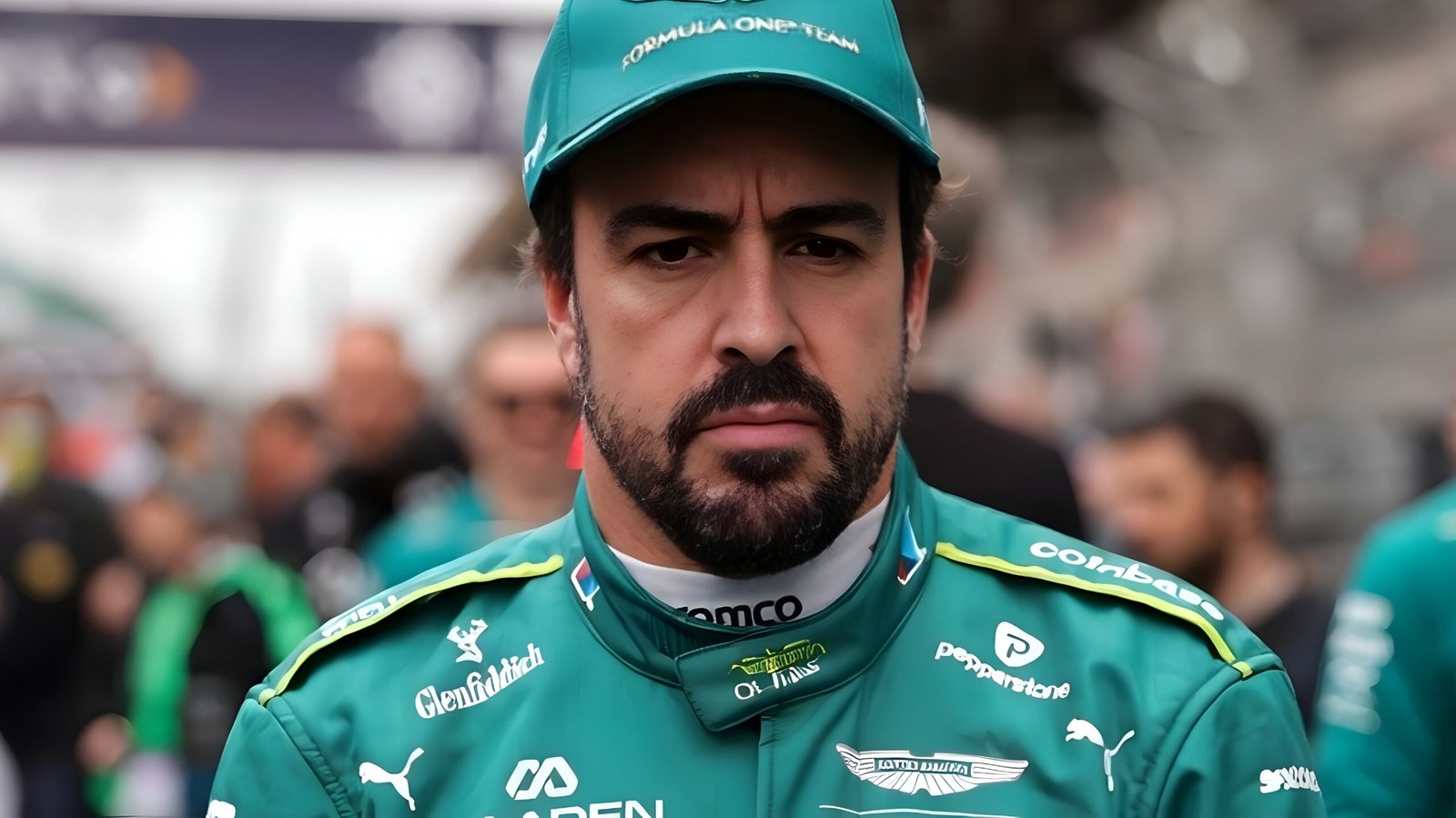
In the high-stakes crucible of the Formula 1 season’s second round, experience met innovation with unforgiving force. Fernando Alonso, the two-time world champion now in his mid-forties, was compelled to retire his Aston Martin AMR26 after 33 laps of the Chinese Grand Prix, not because of mechanical failure in the conventional sense, but because the machine’s relentless vibrations had rendered his body incapable of continuing. Onboard telemetry and footage captured a driver literally fighting to retain physical control, shaking his hands free from the steering wheel mid-corner in a desperate bid to restore circulation and sensation. What began as a technical anomaly escalated into a stark reminder that, even in an era of unprecedented engineering sophistication, the limits of human endurance remain non-negotiable.
Alonso’s post-race account left little room for ambiguity. “I began to lose all feeling in my hands and feet,” he reported, describing the sensation as more acute than any experienced during pre-season testing or the Australian opener. The vibrations, emanating from the Honda RA626H power unit, intensified progressively, transforming the cockpit into a resonant chamber where low-frequency oscillations transmitted through the chassis with alarming efficiency. By lap 30, the discomfort had progressed to numbness severe enough to compromise grip and pedal modulation. Team principal Adrian Newey, who assumed leadership of Aston Martin’s operations for the 2026 campaign, had issued prescient warnings months earlier about the potential for prolonged exposure to induce nerve damage. Those concerns, once theoretical, materialised on the 5.451-kilometre Shanghai International Circuit in visceral fashion.
The retirement was not isolated. Minutes earlier, Alonso’s teammate Lance Stroll had exited with a suspected battery-related failure within the same power-unit architecture, delivering Aston Martin its second consecutive double did-not-finish of the young season. The confluence of issues — one physiological, the other electrical — underscored a broader vulnerability in the Honda-Aston Martin partnership as it navigates the radically revised 2026 regulations. These rules, designed to usher in a new generation of sustainable, electrically dominant power units, have introduced complex harmonic interactions that neither simulation nor winter testing fully anticipated.
Onboard camera sequences, later released by the team and broadcast partners, offer the most compelling evidence. Viewers witness Alonso’s hands lifting intermittently from the wheel, fingers flexing in an attempt to counteract the numbness, while the steering column itself appears to oscillate visibly. The footage, captured at racing speeds exceeding 300 km/h through Shanghai’s sweeping turns, conveys not merely mechanical distress but the quiet heroism of a veteran refusing to yield until safety protocols demanded otherwise. Alonso completed 33 laps before pitting and climbing from the car, his body language betraying the cumulative toll of sustained exposure.
This episode arrives at a pivotal juncture for Formula 1. The 2026 power-unit regulations mandate a dramatic shift: a reduction in internal-combustion displacement, a near-doubling of electrical output, and the integration of sustainable fuels. Honda’s RA626H represents the cutting edge of this philosophy — compact, efficient, and capable of delivering prodigious hybrid performance. Yet early indications suggest that the pursuit of efficiency has inadvertently amplified vibrational signatures, particularly in the frequency bands that resonate with human physiology. Engineers have long understood that chassis and power-unit harmonics can couple destructively; the current manifestation, however, appears uniquely pronounced under race conditions.
Newey, whose arrival as team principal marked a deliberate elevation of technical authority within Aston Martin’s hierarchy, had flagged these risks during pre-season briefings. His concern extended beyond lap-time degradation to the neurological welfare of the drivers. “We anticipated challenges,” Newey remarked in the immediate aftermath, “but the intensity under sustained load exceeded our modelling thresholds. Driver safety is not a variable to be optimised; it is the absolute constraint.” Such language, coming from one of the sport’s most revered aerodynamic minds now overseeing operational strategy, carries particular weight. It signals that Aston Martin, despite its ambitious technical partnership with Honda, is confronting teething problems that demand immediate, collaborative resolution.
The double retirement compounds an already difficult start for the Silverstone-based outfit. In Melbourne, both drivers had reported similar, albeit less severe, vibrational discomfort after approximately 25 laps. Honda has acknowledged the issue publicly, committing to iterative hardware and software revisions targeting both reliability and driver comfort. Yet the Chinese Grand Prix exposed the gap between laboratory mitigation and real-world race demands. Battery integrity failures, as experienced by Stroll, further illustrate how the new electrical architecture — while promising greater regenerative capacity — introduces cascading vulnerabilities when subjected to Shanghai’s demanding layout of long straights and high-load corners.
From a regulatory perspective, the incident invites scrutiny from the Fédération Internationale de l’Automobile. Formula 1 has historically prided itself on evolving safety standards in response to empirical evidence. The introduction of halo devices, energy-recovery systems, and impact-absorbing structures followed tragic or near-miss precedents. The current vibrational phenomenon, while not immediately life-threatening, raises questions about cumulative health effects — particularly for drivers whose careers span multiple regulatory eras. Alonso, at 44, embodies the archetype of seasoned resilience; his ability to diagnose and articulate the issue in real time reflects decades of accumulated knowledge. Nevertheless, the prospect of nerve compression or desensitisation cannot be dismissed lightly, especially when multiplied across a 24-race calendar.
Historical parallels exist, albeit imperfect. The turbocharged engines of the 1980s produced their own resonant signatures, while the V10 and V8 eras occasionally induced chassis shake under specific load conditions. None, however, coincided with the current emphasis on hybrid integration and sustainable fuels. The 2026 regulations were conceived to align Formula 1 with global decarbonisation objectives while preserving spectacle. The early evidence suggests that the engineering trade-offs may require recalibration — not merely for performance parity but for the fundamental protection of those entrusted with piloting these machines at the edge of control.
Aston Martin’s response will define its trajectory through the remainder of the campaign. Collaboration with Honda’s HRC division has already intensified, with telemetry analysis prioritising frequency damping solutions. Potential countermeasures include revised mounting geometries, active vibration cancellation systems, and even cockpit insulation enhancements. Newey’s dual mandate — technical oversight and operational leadership — positions him uniquely to orchestrate these adaptations. Yet the team must also navigate the psychological dimension: restoring driver confidence after an experience that, by Alonso’s own admission, surpassed prior thresholds of discomfort.
For Alonso himself, the episode adds another chapter to a career defined by adaptability. Having contested more than 400 Grands Prix across two decades, he remains among the grid’s most analytical operators. His willingness to articulate physiological limits publicly serves not only his own interests but the collective advancement of driver welfare standards. At an age when many contemporaries have long retired, Alonso continues to demonstrate that experience can coexist with the physical demands of modern Formula 1 — provided those demands remain within humane boundaries.
The broader paddock has taken note. Rival teams employing similar power-unit philosophies will monitor developments closely, while the FIA’s technical department is expected to convene stakeholders in the coming weeks. Preliminary discussions may address minimum vibration thresholds or mandatory monitoring protocols. Such measures would not diminish the innovative spirit of the 2026 regulations but rather safeguard the human element that remains Formula 1’s most irreplaceable asset.
As the season progresses toward Suzuka and beyond, the narrative surrounding Aston Martin and Honda will hinge on their capacity to reconcile ambition with pragmatism. The Chinese Grand Prix retirement, while painful in the moment, may ultimately prove catalytic — prompting refinements that elevate both performance and safety. Fernando Alonso’s ordeal, captured in stark onboard clarity, serves as a powerful testament: technological progress must never outpace the physiological resilience of those who bring it to life on the circuit. In the relentless pursuit of speed, the human threshold must always command the final word.


