Published by: AutodromeF1 Editorial Team
Maranello, Italy 31 March – In a significant strategic maneuver that could reshape the competitive landscape of the 2026 Formula 1 season, Scuderia Ferrari has secured a pivotal approval from the Fédération Internationale de l’Automobile (FIA) to upgrade its power unit. This development, sanctioned under the sport’s “Agreed and Duly Justified Upgrade” (ADUO) regulations, grants the Maranello-based team a critical opportunity to neutralize a quantified performance deficit and challenge for supremacy in the new era of grand prix racing. The upgrade specifically targets the thermal efficiency of the internal combustion engine, a crucial area where Ferrari has sought to close a performance gap estimated at approximately 2%, or roughly 25 horsepower, to the benchmark set by rival Mercedes.
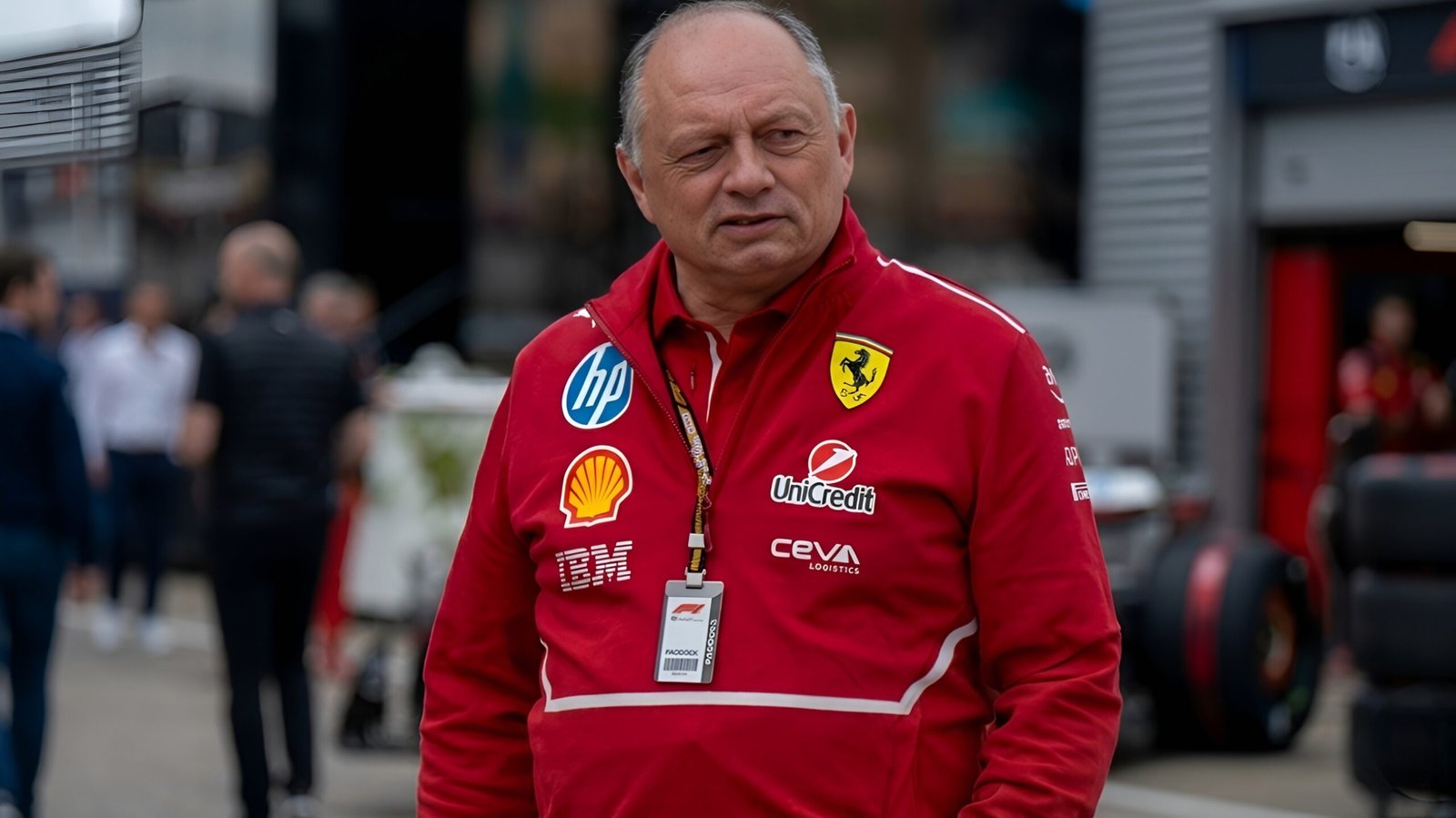
The timing of this enhancement is as strategic as the engineering itself, with a potential introduction window spanning from the Canadian Grand Prix to the subsequent race in Barcelona. This timeline positions Ferrari to apply immediate pressure on its primary competitors, including McLaren and the formidable Red Bull Racing, just as the European leg of the season intensifies. The approval is not merely a technical footnote; it represents the culmination of meticulous data gathering, rigorous analysis, and successful petitioning to the sport’s governing body, underscoring Ferrari’s aggressive intent to rectify its power unit’s shortcomings. For Team Principal Frédéric Vasseur, this news validates the team’s optimistic outlook, providing a tangible pathway to convert their chassis’s demonstrable on-track potential into definitive race-winning results.
The Regulatory Maze: Navigating the Engine Freeze and ADUO Parity
To fully appreciate the magnitude of this development, one must first understand the regulatory framework in which it exists. Formula 1 is currently operating under a power unit “freeze,” a regulation implemented to control costs and provide stability ahead of the radical new engine formula set for 2026. This freeze essentially locks the fundamental design of the power units, preventing manufacturers—Ferrari, Mercedes, Renault, and Red Bull Powertrains (with Honda’s technology)—from pursuing open-ended performance development.
However, the FIA recognized a potential pitfall in this long-term freeze: a manufacturer could find itself locked into a significant and potentially insurmountable performance deficit for several seasons. To avert such a scenario and maintain a competitive balance, the ADUO regulations were established. These rules provide a carefully controlled mechanism for manufacturers to apply for upgrades if they can prove a justifiable performance deficiency relative to the leading power unit.
The process is exacting. Power is measured and audited by the FIA independently of chassis performance, ensuring that aerodynamic or mechanical advantages do not cloud the assessment of the engine itself. A complex system of metrics is used to establish a clear hierarchy. Based on this official assessment, a tiered system of recourse was created. If a manufacturer’s power unit is found to have a deficiency between 2% and 4%, they are permitted to introduce one major upgrade in 2026 and another in 2027. Should the deficit be even greater, exceeding 4%, the regulations allow for a more aggressive catch-up plan of two upgrades per year.
Ferrari’s successful petition places them in the former category. Their proven 2% deficit was the key that unlocked this vital upgrade path, a testament to the FIA’s commitment to the spirit of the ADUO rules. This regulatory context is also notable in light of recent technical directives and scrutiny from the FIA concerning parameters like engine compression ratios. Teams like Ferrari, who have remained scrupulously within the defined compliance boundaries, are now able to leverage the very same regulatory framework to their advantage, ensuring that adherence to the rules does not result in a permanent competitive penalty.
The Heart of the Matter: A Thermal-Side Offensive
The approved upgrade is centered on the “thermal side” of the power unit, a term that refers primarily to the Internal Combustion Engine (ICE). While modern F1 power units are complex hybrids, the ICE remains the core generator of power. A thermal-side enhancement is an intricate engineering discipline focused on maximizing the energy extracted from each ignition event within the engine’s cylinders.
This pursuit of thermal efficiency is about creating a more perfect and potent combustion process. Engineers will have focused on a multitude of interconnected areas. This could include subtle but impactful redesigns of the piston crowns, optimization of the combustion chamber’s geometry, or advancements in fuel injection technology for finer atomization and a more uniform fuel-air mixture. The goal is to convert more of the fuel’s chemical energy into mechanical work and less into wasted heat.
Furthermore, this type of upgrade invariably involves sophisticated heat management. Improving how the engine dissipates and recycles heat can lead to significant performance gains. Enhanced cooling systems allow the engine to run at a more optimal, and aggressive, operating temperature without compromising reliability. Waste heat, captured by the Motor Generator Unit-Heat (MGU-H), can be more efficiently converted into electrical energy, which can then be deployed by the Motor Generator Unit-Kinetic (MGU-K) for a direct boost in horsepower.
This 25-horsepower target is a substantial figure in a sport defined by marginal gains. On the track, it translates directly into superior straight-line speed, making overtaking maneuvers more viable and defense more robust. It also improves acceleration out of corners, reducing the time it takes to reach top speed and thus contributing to a lower overall lap time. As noted by Fred Vasseur, while on-track battles may appear close, an underlying deficit of half a second per lap is a chasm that can only be bridged by a fundamental performance uplift of this nature. This upgrade is precisely the tool required to close that gap.
The Ripple Effect: Strategic Implications for the 2026 Grid
Ferrari’s impending power boost sends a clear signal to the paddock and will trigger a cascade of strategic recalculations among its rivals. The immediate pressure falls on customer teams powered by Ferrari, such as Haas and Sauber, who will also benefit from the enhanced performance and could become more disruptive forces in the midfield battle.
For direct competitors like McLaren, who rely on Mercedes power, this development is a cause for concern. It threatens to erode any straight-line speed advantage they may have enjoyed and intensifies the need for them to maximize their own chassis and aerodynamic development to stay ahead. The dynamic between Ferrari and McLaren, already a highlight of recent seasons, is set to become even more fiercely contested.
Meanwhile, at Red Bull Racing, the situation is complex. While their chassis design has been the class of the field, their in-house Red Bull Powertrains division is on a steep learning curve. The pending upgrades for their unit will now be benchmarked against a moving target, as Ferrari elevates the standard. Any delays or under-delivery in their own development program could see them ceding a crucial advantage to the resurgent Italian team.
This upgrade is more than just an injection of horsepower; it is a strategic gambit that alters the championship’s calculus. It grants Ferrari greater flexibility in race strategy, potentially allowing for more aggressive aerodynamic setups (e.g., running higher downforce for cornering grip) without being unduly penalized on the straights. It bolsters driver confidence and serves as a powerful morale boost for the entire organization, from the factory floor in Maranello to the mechanics in the garage.
In a sport where psychological momentum is as important as mechanical grip, Ferrari’s FIA-approved upgrade is a definitive statement of intent. It is a declaration that the Scuderia is not merely participating in the 2026 season but is methodically and aggressively engineering its path back to the pinnacle of motorsport. As the Formula 1 circus heads into the heart of its season, all eyes will be on the crimson cars, waiting for the moment when this newfound power is unleashed.
Disclaimer: The analysis and performance figures presented in this article, including the cited 2% performance deficit and estimated 25-horsepower gap, are based on current technical audits and reports circulating within the 2026 Formula 1 paddock following the implementation of the Agreed and Duly Justified Upgrade (ADUO) regulations. While every effort has been made to ensure accuracy based on the FIA’s tiered recovery framework and official technical directives, specific power unit output and thermal efficiency data remain proprietary to Scuderia Ferrari and the FIA’s auditing body. This content is intended for informational and analytical purposes and does not constitute an official statement from the Fédération Internationale de l’Automobile or Ferrari S.p.A. Development timelines, including the potential introduction of components at the Canadian or Spanish Grands Prix, are subject to final homologation and team strategy shifts.


