Published by: AutodromeF1 Editorial Team
Ferrari’s April Break: Inside the Maranello Simulator Programme as Leclerc and Hamilton Prepare for Miami
Maranello, Italy – April 10, 2026
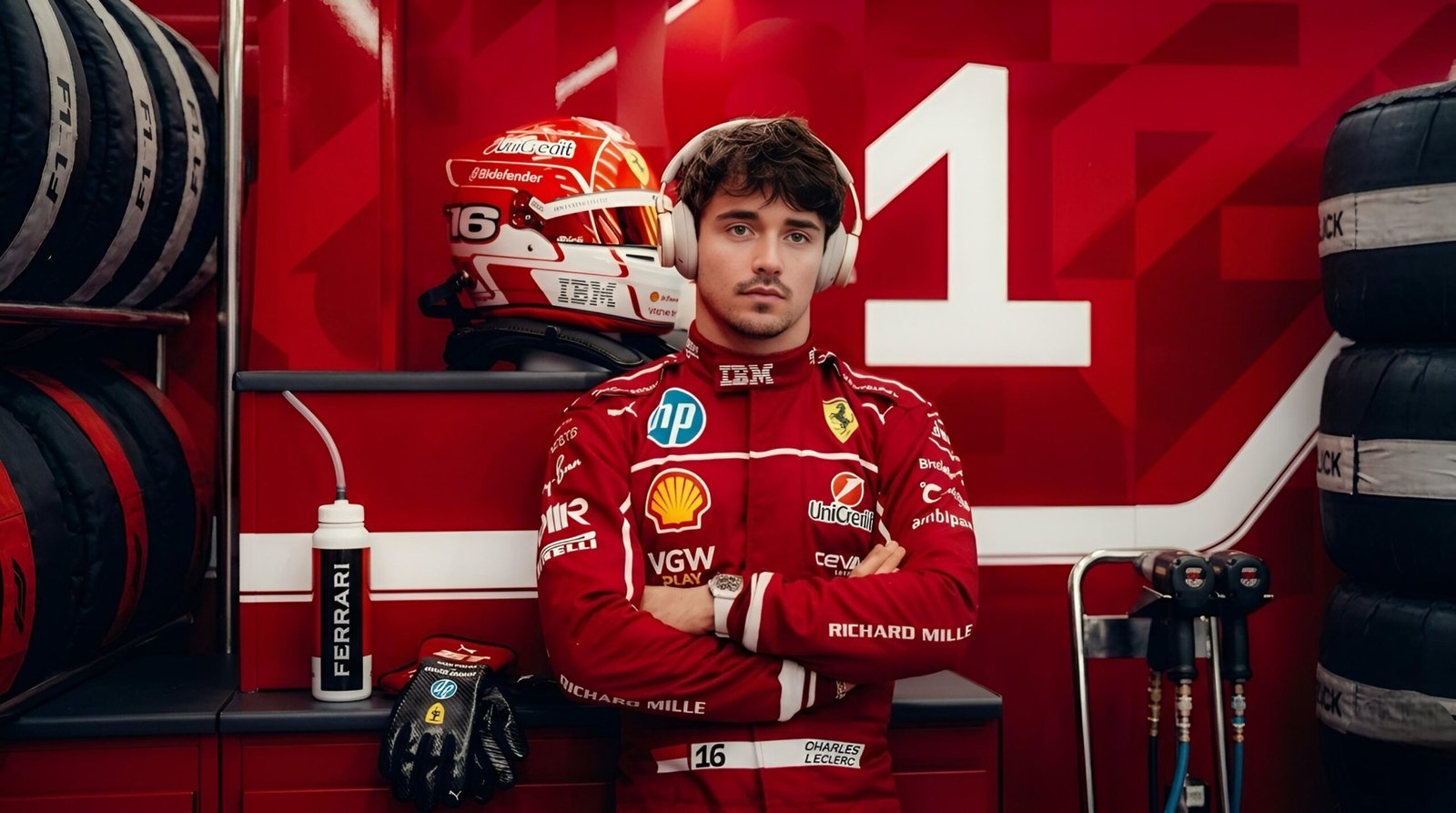
In Formula 1, calendar gaps are rarely holidays. With the 2026 season paused until the Miami Grand Prix on May 1-3, Scuderia Ferrari’s Maranello headquarters has shifted into one of the most important development windows of the year. At the center of that work is Charles Leclerc, whose role in Ferrari’s simulator and correlation programme has been a constant through the SF-23, SF-24, and now SF-26 eras.
The break itself was unplanned. The cancellations of the Bahrain and Saudi Arabian Grands Prix created an unscheduled month between Japan and Miami. For engineering teams adapting to the 2026 regulations, that time is invaluable. It allows for data deep-dives, simulator mapping, and validation of upgrade packages without the pressure of a race-weekend turnaround.
Where Ferrari Stands After Three Rounds
The 2026 championship began with Mercedes in control. George Russell won a chaotic Australian Grand Prix at Albert Park, leading a Silver Arrows one-two. Rookie Kimi Antonelli then announced himself with consecutive victories in China and Japan, making him the youngest championship leader in F1 history and giving him a nine-point advantage in the drivers’ standings.
Ferrari has shown flashes of speed. Lewis Hamilton, in his debut season with the Scuderia, secured his first Ferrari podium in China. Charles Leclerc topped the final day of pre-season testing in Bahrain and has been consistently in the top-five mix. But the team is still searching for the consistency and tyre management to challenge Mercedes over a full race distance.
Leclerc addressed Ferrari’s development approach earlier this year, calling the early shift of resources to the 2026 project a “no-brainer” given the magnitude of the rule change. After the SF-26’s shakedown in Barcelona, he described the car as “very, very all-new” and noted that drivers and engineers were still discovering its core characteristics.
Why the 2026 Rules Make Simulators Critical
The 2026 regulations represent the biggest technical reset since 2014. Power units move to a near 50/50 split between internal combustion and electrical power, active aerodynamics are permitted, and chassis dimensions and weight targets have changed. That combination means last year’s data is far less transferable than usual.
With in-season testing banned outside of limited filming days, the driver-in-loop simulator is the primary tool for bridging the gap between CFD, wind tunnel, and track. Engineers use it to test thousands of setup permutations: ride height, suspension kinematics, differential maps, and energy deployment strategies for qualifying vs. race. Driver feedback then tells them whether the predicted lap time gain is actually drivable.
Leclerc’s value in this loop is well-documented inside Ferrari. Team principal Frédéric Vasseur has repeatedly praised his ability to translate sensations into engineering changes. It is standard for both race drivers to complete simulator work during breaks, with programmes tailored to upcoming circuits. While teams never publish live schedules, the April gap is when most will run extensive Miami and European-round prep.
Monza and Miami: Two Benchmarks for 2026 Development
Two circuits are especially relevant to Ferrari’s current workload: Autodromo Nazionale Monza and the Miami International Autodrome. They sit at opposite ends of the setup spectrum.
Monza is the calendar’s ultimate low-drag test. Long straights, heavy braking, and high-speed chicanes punish excess drag and reward efficient power unit deployment. It’s where teams validate whether their 2026 aero package can run competitively in minimum downforce trim without destabilizing the car under braking.
Miami is the opposite. The temporary street circuit around Hard Rock Stadium has an abrasive surface, low grip evolution, and a sequence of low- and medium-speed corners that overheat rear tyres. It rewards mechanical compliance and a car that can rotate without sliding. For 2026, energy management out of slow corners is also critical because of the increased electrical deployment.
Running both tracks in the simulator lets engineers stress-test opposite ends of the setup matrix. Solutions that work at Monza often fail at Miami, and vice versa. Finding a baseline that is robust across both is key to in-season development efficiency.
What Ferrari Is Actually Doing This Month
Ferrari is expected to use one of its two permitted 200 km filming days during the April break, with Monza reported as the venue. Filming days are not performance tests — FIA rules prohibit it — but they allow teams to complete systems checks on new components. In practice, that means shaking down new floors, wings, or cooling configurations to ensure they function before a race weekend.
Reports indicate the package is aimed at the Miami Grand Prix. Miami’s status as a Sprint weekend makes preparation critical: teams get just one 60-minute practice session before Sprint Qualifying on Friday. Arriving with a car that correlates well to sim work can be the difference between making SQ3 and being knocked out in SQ1.
Both Leclerc and Hamilton are expected to drive the filming day. That reflects Ferrari’s approach in 2026 of using its two drivers’ contrasting styles to broaden feedback. Leclerc’s long-term familiarity with Maranello’s systems and Hamilton’s experience adapting to new regulation sets give engineers two data points on the same hardware.
The Leclerc-Hamilton Dynamic in Development
Leclerc enters 2026 with eight Grand Prix victories, 26 pole positions, and seven seasons of Ferrari institutional knowledge. Hamilton joined as a seven-time world champion and brings experience of three previous major regulation changes: 2009, 2014, and 2017. Vasseur has been clear that Ferrari needs both skill sets — Leclerc’s speed of adaptation to new Ferrari concepts, and Hamilton’s ability to steer long-term car development direction.
That division of labor is common in top teams. One driver often leads early correlation work because their feedback style matches the engineers’ models. The other focuses on race-weekend optimization and broader trends. Over a 24-race season, both roles are necessary.
Why This Break Could Define Ferrari’s European Season
Under 2026 rules, gains are measured in hundredths, not tenths. The combination of heavier cars, active aero, and new power unit behavior means mistakes in setup or energy strategy are punished harder. Teams that arrive at races with parts they fully understand tend to outscore teams that bolt on upgrades and hope.
For Ferrari, the April break is therefore about risk reduction. Every hour in the simulator that improves correlation saves Friday practice time in Miami. Every systems check at Monza reduces the chance of a cooling or electrical issue during the Sprint. And every debrief between Leclerc, Hamilton, and the engineers sharpens the development direction before the European leg begins in Monaco and Barcelona.
The Bigger Picture for 2026
Ferrari has not won a drivers’ championship since 2007. Leclerc, now 28, has been vocal that the current regulation cycle is a window the team must exploit. Hamilton chose Ferrari for 2026 believing the project could deliver his record eighth title. Vasseur’s job is to turn that ambition into process.
Miami won’t decide the championship, but it will indicate whether Ferrari’s April work has closed the gap to Mercedes. With Antonelli and Russell scoring heavily, and Red Bull’s Max Verstappen struggling with the new rules and yet to finish in the top five, the early title fight is unusually open.
What happens in Maranello over the next three weeks — simulator laps, data reviews, filming day validation — is the foundation. In modern F1, races are won on Sunday, but seasons are built in the gaps between them.


