Published by: AutodromeF1 Editorial Team
Ferrari’s Ephemeral Launch Supremacy: Charles Leclerc Counsels Restraint as Mercedes Asserts Overarching Authority at the 2026 Australian Grand Prix
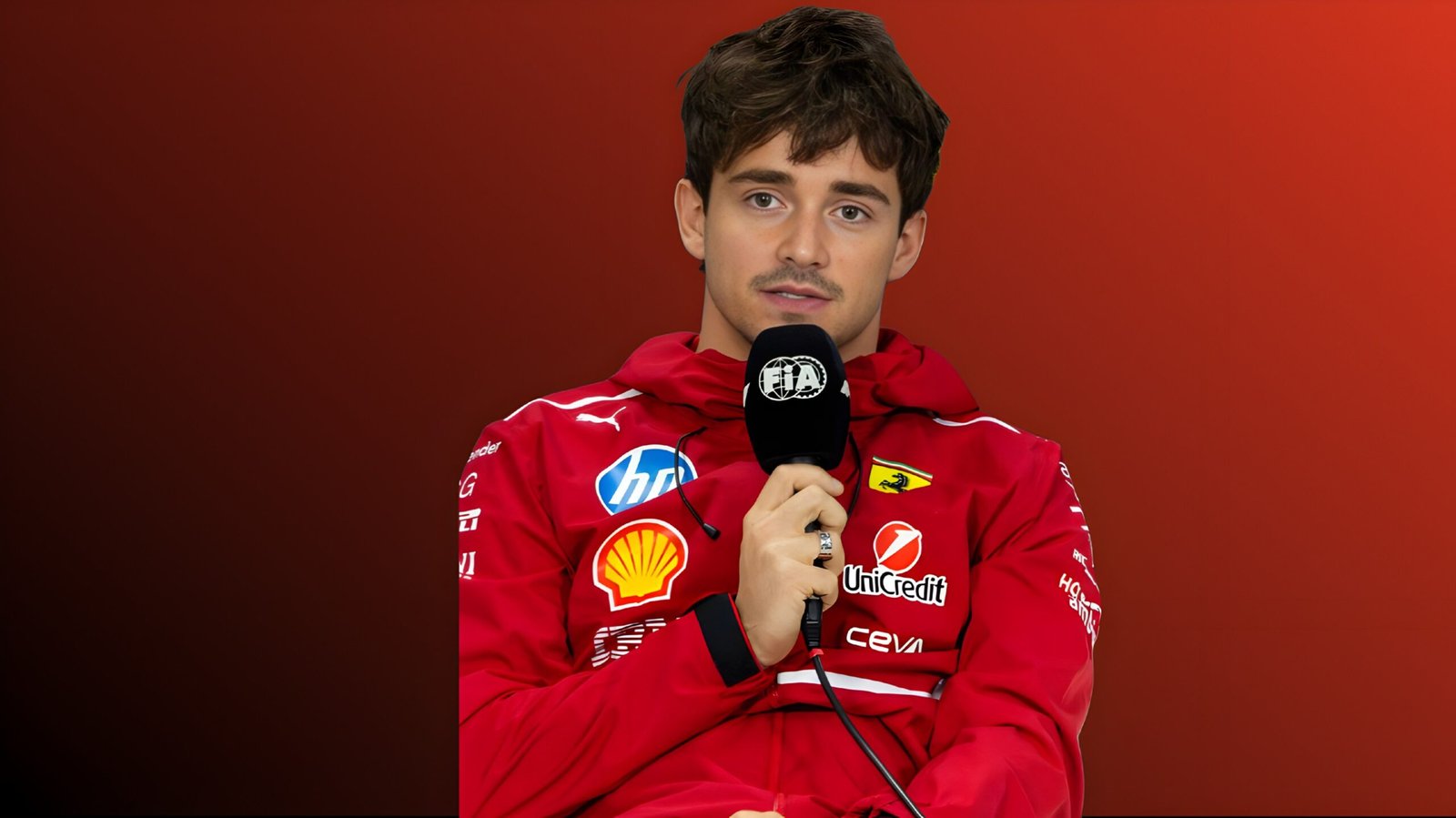
In the crucible of the 2026 Formula 1 season opener, where the Albert Park Circuit reverberated with the anticipatory hum of a sport redefined by radical technical metamorphosis, Charles Leclerc articulated a message of disciplined realism. Having been catapulted from fourth on the grid into a fleeting lead at the outset of the Australian Grand Prix, the Ferrari driver swiftly dispelled any burgeoning narrative that his team’s superior race-start capability constituted a durable strategic asset. Instead, he framed it as an incidental byproduct of engineering choices destined to be neutralised by rivals once their own systems attained full optimisation.
The qualifying session on Saturday had already foreshadowed the hierarchy that would crystallise on race day. Mercedes secured a commanding front-row lockout, with George Russell claiming pole position and rookie teammate Kimi Antonelli slotting into second. Leclerc, starting from fourth, trailed the pole-sitter by a stark eight-tenths of a second—an interval sufficiently pronounced to prompt the Monegasque to double-check his telemetry data in disbelief. The disparity was not merely numerical; it underscored a fundamental divergence in package performance under the new regulations, where outright one-lap pace appeared to favour the silver arrows decisively.
Yet the opening metres of the grand prix unfolded a dramatically different tableau. Leveraging what appeared to be an intrinsic advantage in launch dynamics, Leclerc executed a textbook getaway that propelled his Ferrari SF-26 ahead of both Mercedes cars by the time the field reached Turn 1. For a handful of breathless seconds, the scarlet machine led the race, eliciting audible gasps from the capacity crowd and igniting momentary optimism within the Ferrari garage. This early ascendancy, however, proved ephemeral. As the field stabilised into the first stint, the superior race pace of the Mercedes duo began to assert itself, gradually eroding Leclerc’s buffer and relegating him to a defensive third place by the chequered flag.
In the aftermath, Leclerc’s reflections were characterised by an almost clinical detachment from the euphoria that might otherwise have accompanied such a promising start. “It is a wrong expectation,” he stated with characteristic candour, “to imagine that this initial surge will remain a defining characteristic across the entirety of the season.” His analysis cut to the technical heart of the matter. The 2026 power-unit regulations, which mandate a recalibrated turbocharger architecture in pursuit of greater thermal efficiency and hybrid synergy, have produced divergent design philosophies among manufacturers. Ferrari’s adoption of a more compact turbocharger configuration facilitates a swifter spool-up response, enabling the internal combustion engine to deliver torque with greater immediacy at the moment the lights extinguish. By contrast, Mercedes has elected for a physically larger turbo unit, optimised for elevated peak power and sustained output but inherently slower to reach its operational sweet spot owing to greater rotational inertia.
Leclerc was at pains to emphasise that this disparity is far from insurmountable. “Our engine is somewhat easier to calibrate for an effective launch,” he elaborated. “Nevertheless, once Mercedes fully refines their deployment strategy—particularly in synchronising the turbo’s acceleration with battery energy release and MGU-K deployment—the differential will diminish to negligible proportions.” He further observed that the advantage is most pronounced in the opening 200 metres, after which the superior aerodynamic efficiency and energy-management sophistication of the Mercedes package reasserted primacy. To rely upon the start as a race-winning differentiator, he cautioned, would be to build a championship campaign upon foundations of sand.
This measured assessment gains added resonance when viewed against the broader canvas of the weekend’s proceedings. Throughout free practice on Friday, Ferrari had projected an air of quiet confidence, with both Leclerc and teammate Lewis Hamilton registering competitive times that suggested the Scuderia might spring a surprise under the new regulatory framework. Yet by Saturday morning, the picture had darkened perceptibly. Mercedes exhibited a level of one-lap optimisation that left Ferrari “on the back foot,” as Leclerc himself acknowledged pre-race. The eight-tenths deficit in qualifying was not an anomaly but a symptom of deeper challenges in extracting consistent performance from the revised chassis-power unit integration.
Race strategy compounded the narrative. When Virtual Safety Car periods intervened—triggered by minor incidents in the midfield—Leclerc elected to remain on track, gambling on the preservation of track position. Mercedes, conversely, capitalised on the neutralised conditions to execute double-stack pit stops with clinical precision, emerging with fresh rubber and an unassailable pace advantage. Russell duly converted his pole into a controlled victory, while Antonelli, displaying poise beyond his tender years, secured a composed second place. Leclerc crossed the line in third, a result he described as “the maximum we could realistically extract from the package today.” There were no regrets, he insisted; the deficit was one of fundamental performance rather than tactical miscalculation.
The technical context of these events is inseparable from the seismic regulatory overhaul introduced for 2026. Designed to usher in an era of heightened sustainability, the new power units dispense with the MGU-H, reduce battery capacity, and recalibrate the turbocharger’s role within a 50/50 split between internal combustion and electric propulsion. High-revving starts have become a focal point precisely because the revised hybrid architecture places greater emphasis on instantaneous torque delivery from both the turbo and the electric motor. Manufacturers were therefore compelled to make philosophical choices: prioritise spool response for launch excellence, or favour ultimate power density for sustained race pace. Ferrari’s decision to embrace the former has yielded the visible dividend witnessed in Melbourne, yet Leclerc’s commentary reveals an internal recognition that such specialisation carries inherent limitations once competitors complete their own developmental iterations.
Beyond the immediate race narrative, Leclerc’s intervention carries profound implications for team psychology and long-term planning. In an era when regulatory parity is ostensibly the objective, the temptation to over-celebrate isolated strengths is ever-present. By publicly tempering expectations, the 2024 world championship contender—now in his eighth season with Ferrari—is signalling a culture of unflinching self-assessment. “We cannot afford to delude ourselves into believing that a single phase of the race will mask deficiencies elsewhere,” he remarked in a subsequent media briefing. “The true measure of our competitiveness will be revealed across the full 58 laps, not merely the first 200 metres.”
This perspective finds echo in the engineering corridors at Maranello. Insiders suggest that while the smaller turbo has indeed conferred a launch benefit, the attendant trade-offs—particularly in managing exhaust energy recovery and maintaining boost pressure under prolonged high-load conditions—have yet to be fully mitigated. Mercedes, by contrast, appears to have struck a more harmonious balance between power and driveability, albeit at the cost of requiring more meticulous pre-launch calibration. The larger turbo’s slower spin-up is offset by superior peak output and more efficient energy deployment later in the lap, advantages that manifested emphatically once the field settled into racing rhythm.
The weekend’s events also illuminate the evolving strategic landscape of Formula 1 under the new rules. With reduced reliance on traditional energy-harvesting systems and a greater premium placed on precise power-unit mapping, teams must now orchestrate their strategies with heightened foresight. Leclerc’s choice to stay out during the Virtual Safety Car, while ultimately unsuccessful, exemplified the razor-thin margins at play: one correctly timed pit stop can transform a defensive third into a dominant victory. Mercedes’ execution in this regard was exemplary, underscoring why their 1-2 finish felt not merely deserved but inevitable once the initial launch phase concluded.
Looking ahead, the Chinese Grand Prix in Shanghai looms as the next critical litmus test. There, the combination of a longer straight and more technically demanding corners will place even greater emphasis on overall aerodynamic efficiency and energy-management consistency. Ferrari will arrive armed with updated software mappings and, potentially, minor hardware revisions aimed at narrowing the qualifying gap. Yet Leclerc’s words serve as a sobering reminder that incremental gains in start performance must be subordinated to fundamental improvements in race pace if the Scuderia harbours genuine title aspirations.
In the wider championship context, Mercedes’ authoritative display in Melbourne has already prompted speculation that the Brackley-based outfit may have stolen a march in the development race. Their ability to extract superior performance from the new regulations—despite the theoretical disadvantages of their turbo configuration—suggests a depth of simulation accuracy and wind-tunnel correlation that rivals have yet to match. For Ferrari, the challenge is clear: translate the transient brilliance of the launch into sustained competitiveness across every phase of the grand prix weekend.
Charles Leclerc’s post-race demeanour, simultaneously reflective and resolute, encapsulated the maturity that has defined his career. The “crazy” thrill of leading from fourth, he conceded with a wry smile, was “fun while it lasted.” Yet fun alone does not secure championships. In an age of regulatory flux, where engineering ingenuity can produce dazzling but short-lived advantages, the drivers and teams that prosper will be those who temper excitement with rigorous analysis. Ferrari’s start advantage, Leclerc has declared, is precisely such a phenomenon—spectacular in the moment, yet destined to be absorbed into the broader competitive equilibrium.
As the 2026 season unfolds across 24 rounds, the narrative arc is already being etched. Mercedes has signalled intent; Ferrari has acknowledged the gap; and Charles Leclerc, through measured candour, has set the tone for a campaign defined not by fleeting fireworks but by methodical, unrelenting progress. The Australian Grand Prix may have offered a tantalising glimpse of scarlet potential, but the Monegasque’s message was unequivocal: true supremacy will be forged not at the lights, but across the full distance of the marathon that lies ahead.


