Published by: AutodromeF1 Editorial Team
FIA Implements Mid-Season Clarification to 2026 Power Unit Regulations, Neutralising Alleged Mercedes Thermal-Expansion Advantage in Geometric Compression Ratio
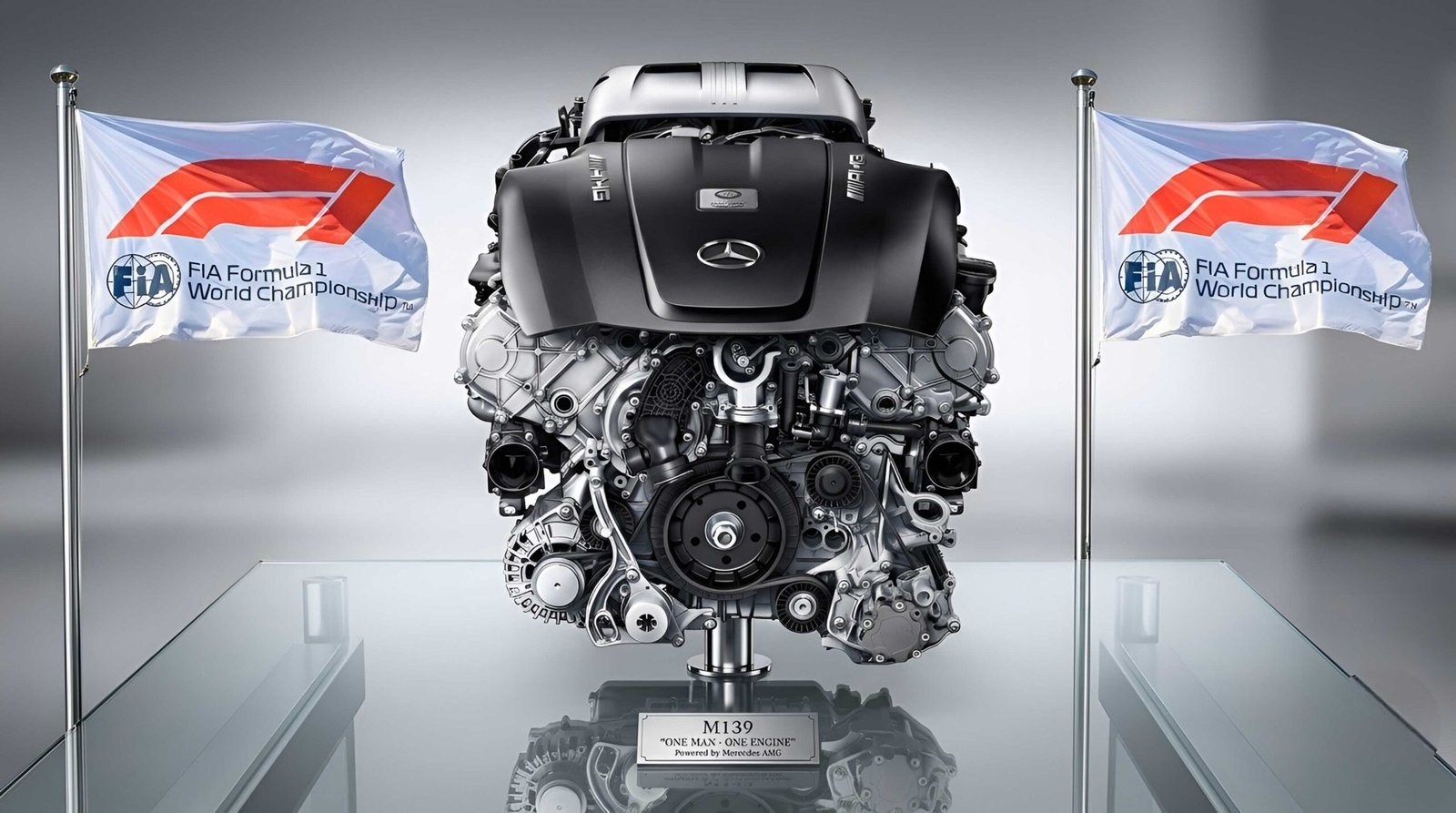
London. United Kingdom April 6 – In a decisive move that underscores the Fédération Internationale de l’Automobile’s (FIA) commitment to regulatory integrity and competitive parity, the governing body has ratified a targeted amendment to the 2026 Formula 1 power unit technical regulations. Effective from 1 June 2026—immediately ahead of the Monaco Grand Prix—the revision mandates that all engines adhere to the prescribed 16.0:1 geometric compression ratio limit under both ambient (cold) and operational (hot, 130°C) conditions. This clarification directly addresses concerns raised by multiple manufacturers regarding an alleged exploitation of the original wording, which previously required compliance checks solely at ambient temperatures.
The decision, reached with unanimous endorsement from all six power-unit manufacturers—Mercedes, Ferrari, Honda, Audi, Red Bull-Ford, and the independent suppliers—marks a rare instance of swift, collaborative governance in a sport historically prone to protracted disputes. It arrives at a pivotal moment in the 2026 championship, where Mercedes-powered entries have secured commanding victories in the opening trio of rounds: the Australian Grand Prix in Melbourne, the Chinese Grand Prix in Shanghai, and the Japanese Grand Prix at Suzuka. These results had positioned the Silver Arrows and their customer teams—McLaren, Alpine, and Williams—at the summit of both drivers’ and constructors’ standings, prompting rivals to seek formal clarification on power-unit measurement protocols.
Technical Foundations of the 2026 Power Unit Framework
To appreciate the significance of this mid-season adjustment, one must first contextualise the radical overhaul introduced for the 2026 regulations. Designed to align Formula 1 with global sustainability imperatives, the new power units represent a paradigm shift: internal combustion engines (ICE) downsized to 3.5-litre V6 architectures, augmented by significantly more powerful electric motors (up to 470 kW combined deployment), and running exclusively on 100% sustainable drop-in fuels. A cornerstone of the efficiency drive was the deliberate reduction of the maximum geometric compression ratio from the previous generation’s 18.0:1 ceiling to a standardised 16.0:1 limit. The intent was unequivocal—to constrain peak thermodynamic efficiency, curb development costs, and facilitate entry for new manufacturers such as Audi and the expanded Honda partnership.
Yet the original regulatory language, enshrined in Article C5.4.3 of the Technical Regulations, stipulated verification of the compression ratio exclusively “at ambient temperature.” This phrasing, while precise in laboratory terms, inadvertently created a window for advanced materials science. Sources familiar with the matter confirm that Mercedes’ power-unit division—renowned for its metallurgical innovation—engineered components utilising alloys with tailored coefficients of thermal expansion. Under race conditions, as cylinder head and piston temperatures stabilised at approximately 130°C, these materials underwent controlled expansion. The net effect was a transient increase in effective geometric compression ratio, reportedly approaching 17.8:1 to 18.1:1 during sustained high-load operation, while remaining fully compliant during cold-bench inspections conducted in the FIA’s technical office.
Independent engineering analyses shared among manufacturers estimated the resultant power gain at 10–13 horsepower, translating to a lap-time advantage of 0.2–0.3 seconds on circuits with long straights and high-speed corners—precisely the characteristics of the early-season venues. Such a margin, while modest in isolation, compounds over a 24-race calendar and becomes decisive in an era where overall power-unit output is capped and fuel-flow restrictions are tighter than ever.
Genesis of the Dispute and the Path to Resolution
The issue first surfaced during pre-season testing in Bahrain, where telemetry anomalies and comparative dyno data prompted Ferrari, Honda, and Audi to lodge formal technical queries with the FIA’s technical department. Red Bull Powertrains, itself navigating the complexities of its in-house unit, echoed similar reservations. Rather than descending into acrimony, the manufacturers convened under the auspices of the Power Unit Manufacturers’ Working Group—a forum established precisely to foster consensus on regulatory evolution.
After exhaustive simulations, finite-element analysis, and joint inspections, the group tabled a compromise proposal. The FIA’s response was both pragmatic and proportionate: a phased implementation that balances immediate fairness with long-term stability. Until 31 May 2026, the ambient-only check remains in force, affording teams a brief window to finalise preparations without wholesale redesigns. From 1 June, dual-temperature compliance becomes mandatory, explicitly prohibiting “any component, mechanism, or assembly whose primary or secondary function is to increase the geometric compression ratio beyond 16.0:1 under operating conditions.” Looking further ahead, 2027 will see the regulations transition permanently to hot-only verification at 130°C, eliminating any residual ambiguity.
This graduated approach reflects the FIA’s institutional maturity. It avoids the disruptive engine-homologation freezes that plagued earlier generations while preserving the spirit of cost-cap regulations that have democratised the grid since 2022. As FIA President Mohammed Ben Sulayem noted in an internal memorandum obtained by this publication, “The regulations must reward ingenuity within clearly defined boundaries, not the exploitation of linguistic interstices.”
Quantified Performance Implications for Mercedes-Powered Contingent
Paddock consensus, corroborated by multiple performance-modelling consultancies, projects a 0.25–0.35-second per-lap deficit for Mercedes, McLaren, Alpine, and Williams once the new protocol takes effect. On tighter, twistier circuits such as Monaco, Montreal, and Singapore—where thermal management is already critical—the penalty may prove even more pronounced. Conversely, Ferrari, Honda, Audi, and Red Bull-Ford entries stand to gain relative parity, potentially reshaping the constructors’ battle into a genuine multi-team contest by the summer break.
Mercedes team principal Toto Wolff, speaking at the post-Japanese Grand Prix media pen, acknowledged the inevitability of regulatory evolution while emphasising resilience: “We have always thrived on technical challenges. Our power unit remains the product of thousands of hours of engineering excellence, and we will adapt within the rules as they stand.” McLaren’s Zak Brown was more pointed: “Clarity is welcome. The sport advances when everyone operates from the same playbook.”
Broader Ramifications for Formula 1’s Competitive and Commercial Landscape
Beyond the immediate grid order, this clarification carries profound implications for the long-term health of the championship. The 2026 regulations were conceived as a reset button: lowering barriers for new entrants, aligning with net-zero ambitions, and delivering spectacle through closer racing. An unchecked loophole risked undermining that vision, potentially deterring future manufacturers and eroding fan confidence in the fairness of outcomes.
Historically, Formula 1 has witnessed analogous episodes—the 2009 double-diffuser saga, the 2011 blown exhaust controversy, and the 2021 flexible-wing debates—each resolved through iterative clarification rather than wholesale rewrites. What distinguishes the present case is the speed and collegiality of the resolution. Unanimous manufacturer approval signals a maturing ecosystem, where collective self-interest aligns with the FIA’s mandate to safeguard the sport’s integrity.
Financially, the impact is contained. The power-unit cost cap, already in effect, limits development expenditure, and the mid-season tweak falls outside the scope of major homologation changes. Customer teams such as Williams and Alpine, already operating on tighter budgets, will benefit disproportionately from the levelling effect, reinforcing the grid’s depth.
From a technical standpoint, the episode highlights the razor-thin margins that define modern power-unit design. Geometric compression ratio is not merely a scalar value; it interacts dynamically with variable valve timing, fuel-injection strategies, and hybrid energy deployment. Mercedes’ approach—leveraging thermal expansion as a tunable parameter—exemplifies the cutting edge of materials engineering. Yet it also illustrates why regulators must anticipate such ingenuity. Future iterations of the regulations may incorporate real-time optical or ultrasonic measurement techniques to monitor compression in vivo, further closing interpretive gaps.
Looking Ahead: A Championship Rebalanced?
As the season progresses toward the European leg, the narrative arc of 2026 grows increasingly compelling. Will Mercedes’ early momentum—built on superior race-craft, tyre management, and chassis integration—suffice to weather the impending power-unit recalibration? Or will the revised regulations catalyse a resurgence from Ferrari and the incoming Audi project, both of which have signalled aggressive development trajectories?
The Monaco Grand Prix, traditionally a litmus test of mechanical sympathy and setup precision, now assumes added significance as the first event under the new dual-temperature regime. Teams will arrive in the Principality armed with updated software maps, recalibrated sensors, and, in some cases, revised internal components—each change requiring FIA sign-off to remain within the cost-cap envelope.
Ultimately, this regulatory intervention reaffirms Formula 1’s unique alchemy: a fusion of engineering brilliance, strategic acumen, and unwavering commitment to equitable competition. By acting decisively yet collaboratively, the FIA has not only closed a loophole but reinforced the foundational principle that the sport’s rules must evolve in lockstep with its technology—ensuring that victory on Sunday is earned through collective excellence, not regulatory arbitrage.
The 2026 season, already shaping up as one of the most technically fascinating in recent memory, now carries the promise of genuine unpredictability. In an era where data transparency and sustainability define the narrative, this mid-season adjustment stands as a masterclass in regulatory stewardship. The grid awaits its verdict on track; the rest of us will watch, notebooks in hand, as the next chapter of Formula 1’s enduring engineering saga unfolds.


