Published by: AutodromeF1 Editorial Team
Ferrari’s Principled Stand: Frédéric Vasseur Insists Regulatory Stability Must Prevail Over Reactive Adjustments to 2026 Race-Start Procedures
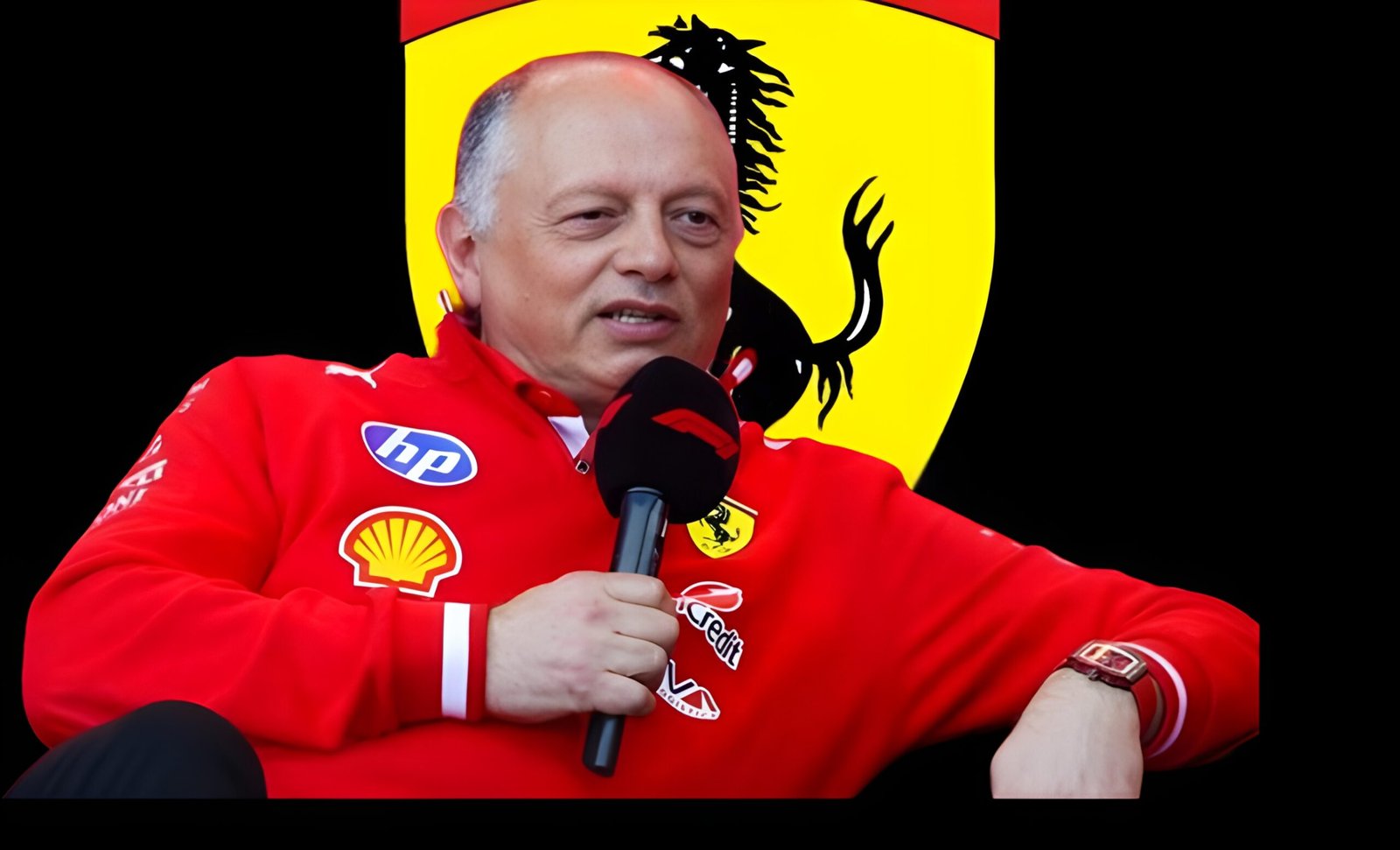
Shanghai, 18 March 2026 — In a forthright declaration that cuts through the mounting political undercurrents of the Formula 1 paddock, Scuderia Ferrari team principal Frédéric Vasseur has drawn a firm line against further modifications to the sport’s race-start protocols. Speaking in the aftermath of the Chinese Grand Prix weekend, Vasseur articulated a position of unyielding resolve: “enough is enough.” His remarks represent not merely a defence of his team’s competitive edge but a broader philosophical assertion on the sanctity of regulatory frameworks in a sport where engineering excellence and long-term planning have historically defined success.
The context for Vasseur’s intervention is rooted in the contentious early-season performances under the radical 2026 technical regulations. Rival teams, most notably Mercedes, have voiced growing dissatisfaction with the current starting procedure, citing inconsistencies that have allowed Ferrari-powered cars to surge dramatically from suboptimal grid positions. At the Australian Grand Prix in Melbourne, both Charles Leclerc and Lewis Hamilton — now teammates at Ferrari — executed exemplary launches from the second row, propelling themselves into the race lead within seconds of the lights extinguishing. Similar scenes unfolded in Shanghai, where the scarlet machines again demonstrated superior getaway traction, leaving competitors scrambling to recover positions amid chaotic opening laps.
These incidents have prompted calls for additional refinements to the start sequence, with some drivers and team principals arguing that the procedures introduce unacceptable variability and potential safety risks. Critics contend that the disparity in launch performance could precipitate a significant incident if left unaddressed, particularly on circuits where grid bunching remains pronounced. Yet Vasseur perceives these appeals as something more insidious: an attempt to retroactively penalise Ferrari for superior compliance with rules that the entire grid collectively endorsed.
To appreciate the depth of Vasseur’s frustration, one must revisit the genesis of the 2026 power-unit regulations and their implications for race starts. The new hybrid architecture — characterised by the elimination of the MGU-H, a greater emphasis on electrical deployment, and sustainable fuels — fundamentally altered turbocharger behaviour. Without the energy-recovery system that previously assisted spool-up, drivers faced heightened challenges in building revs during the critical pre-launch phase. Recognising this from the outset, Ferrari proactively engaged the FIA more than a year ago, highlighting potential difficulties. As Vasseur recounted in Shanghai: “One year ago I went to the FIA and raised my hand on the starting procedure to say ‘guys, it will be difficult’. The reply was clear: that you have to design the car fitting with the regulation, not change the regulation fitting with the car.”
Ferrari heeded that directive with precision. The team engineered its power unit around a smaller turbo configuration optimised for rapid response under the anticipated constraints, complemented by sophisticated clutch mapping and energy-management strategies tailored to the original start protocol. When the FIA later introduced a compromise measure — a five-second pre-start window accompanied by flashing blue lights on the grid panels to afford additional spool time — Ferrari accommodated the adjustment without protest, even though Vasseur maintains it conferred no net benefit to the Maranello squad. “We already changed massively the rule of the start with the five-second story,” he emphasised. “We designed the car fitting with the regulation, the change of the five seconds, the blue light story, didn’t help us at all – but I think at one stage enough is enough.”
For Vasseur, the matter is now unequivocally closed — at least from Ferrari’s perspective. “For me, yes,” he affirmed when pressed on whether the debate should conclude. This stance is not born of intransigence but of a conviction that perpetual rule tweaking erodes the very foundation upon which Formula 1’s technological arms race is built. Teams invest hundreds of millions annually in research, simulation, and development predicated on regulatory stability. Mid-season alterations, particularly those perceived as targeting one constructor’s hard-won advantage, risk transforming the championship into a contest of lobbying prowess rather than engineering merit.
The current controversy echoes precedents throughout Formula 1’s history, albeit with distinct nuances. During the hybrid era’s inception in 2014, Mercedes’ foresight in power-unit architecture granted dominance that prompted rivals to demand technical clarifications and restrictions — adjustments that ultimately diluted innovation. Similarly, the 2022 ground-effect regulations saw complaints over porpoising lead to aerodynamic tweaks that favoured certain chassis philosophies. In each instance, the governing body navigated a delicate balance between safety, fairness, and the preservation of competitive integrity. The 2026 cycle, however, carries amplified stakes: these regulations represent the most comprehensive overhaul in decades, encompassing active aerodynamics, revised chassis dimensions, and a 50/50 split between combustion and electrical power. Stability is not merely desirable; it is imperative for the sport’s credibility as it courts new manufacturers and a global audience attuned to sustainable high-performance engineering.
Critics from rival camps, including Mercedes driver George Russell, have characterised Ferrari’s resistance as “selfish,” suggesting that collective safety concerns should supersede individual design choices. Yet such framing overlooks the collaborative nature of regulation formulation. The five-second blue-light protocol was itself a concession granted after extensive testing and dialogue during pre-season sessions in Bahrain. Its implementation followed a period in which Ferrari had already signalled potential vulnerabilities — only to be instructed to adapt. That Ferrari’s solutions have yielded superior launches underscores a fundamental truth of motorsport: those who anticipate and engineer around constraints most effectively reap the rewards.
Technically, the advantage manifests in nuanced ways. Ferrari’s compact turbo design minimises lag under the revised electrical architecture, enabling drivers to achieve optimal clutch engagement and torque delivery precisely when the lights extinguish. By contrast, several competitors opted for larger turbo units prioritising peak power output, inadvertently compromising initial response. This divergence was foreseeable; the absence of the MGU-H was public knowledge from the regulations’ publication. Vasseur’s surprise, expressed earlier in the season, stemmed not from the complaints themselves but from the apparent amnesia among some teams regarding the rules’ long gestation.
Beyond the immediate grid dynamics, the debate raises profound questions about governance in Formula 1. The sport’s unique structure — blending commercial interests, technical working groups, and the FIA’s overarching authority — often invites political manoeuvring. Ferrari’s position benefits from its historical influence and, in certain procedural contexts, veto-like capabilities on sporting regulations. While detractors may decry this as undue leverage, it equally serves as a bulwark against capricious changes that could undermine investor confidence. In an era when automotive giants evaluate entry based on regulatory predictability, repeated post-implementation revisions risk signalling instability to prospective partners.
Moreover, the human element cannot be ignored. Drivers such as Leclerc and Hamilton, beneficiaries of the current procedure, have demonstrated composure under pressure, converting superior starts into tangible race advantages. Hamilton, in particular, has leveraged his experience to mitigate any residual variability, while Leclerc’s instinctive feel for the clutch bite point has become emblematic of Ferrari’s resurgence. For the grid at large, however, inconsistent launches have introduced an element of lottery to proceedings — a perception Vasseur acknowledges but attributes to execution rather than regulation. He contends that teams must address their technical shortcomings through innovation, not by seeking administrative redress.
Looking forward, the FIA faces a pivotal decision. Proposals for further tightening — perhaps recalibrating the pre-start window or introducing additional safeguards — remain under discussion, yet require supermajority approval among teams. Ferrari’s opposition, articulated with clarity by Vasseur, complicates consensus. Should the governing body yield to pressure, it would set a precedent that could reverberate across future regulation cycles, potentially discouraging the very risk-taking that drives progress. Conversely, upholding the status quo would affirm the principle that foresight and adaptation define champions, compelling rivals to recalibrate their power-unit philosophies ahead of subsequent evolutions.
This episode also illuminates Ferrari’s strategic maturation under Vasseur’s stewardship. Since assuming leadership, the Frenchman has instilled a culture of disciplined compliance and proactive foresight, evidenced here by the team’s early engagement with the FIA. The resulting start advantage, while contentious, symbolises a broader revival for the Scuderia — one grounded in engineering pragmatism rather than political expediency. As the season unfolds, with key races in Japan, Miami, and beyond, the narrative will hinge on whether rivals can close the performance gap through development or whether the debate escalates into formal governance challenges.
In essence, Vasseur’s declaration transcends a single procedural dispute. It challenges Formula 1 to reaffirm its commitment to rules that reward ingenuity over influence. In a sport where the margin between victory and defeat is measured in milliseconds, the true test of fairness lies not in equalising outcomes through perpetual amendment but in providing a stable arena where excellence can flourish unimpeded. As the paddock convenes in the coming weeks, Vasseur’s message resonates with clarity: the time for iteration has passed; the era of adaptation must now prevail.
This position, while firm, invites reflection on the sport’s enduring ethos. Formula 1 has long prided itself on being the pinnacle of technological competition, where regulations serve as the canvas for creativity rather than a straitjacket for conformity. By insisting on closure to the start-procedure revisions, Ferrari not only protects its current competitive standing but advocates for a future in which all participants — constructors, drivers, and fans alike — benefit from consistency. Whether the wider grid concurs remains to be seen, yet Vasseur’s intervention has undeniably elevated the discourse from tactical grievance to principled imperative.


