Published by: AutodromeF1 Editorial Team
A Tale of Two Teams: Mercedes’ Composure and Ferrari’s Internal Combustion at the 2026 Chinese Grand Prix
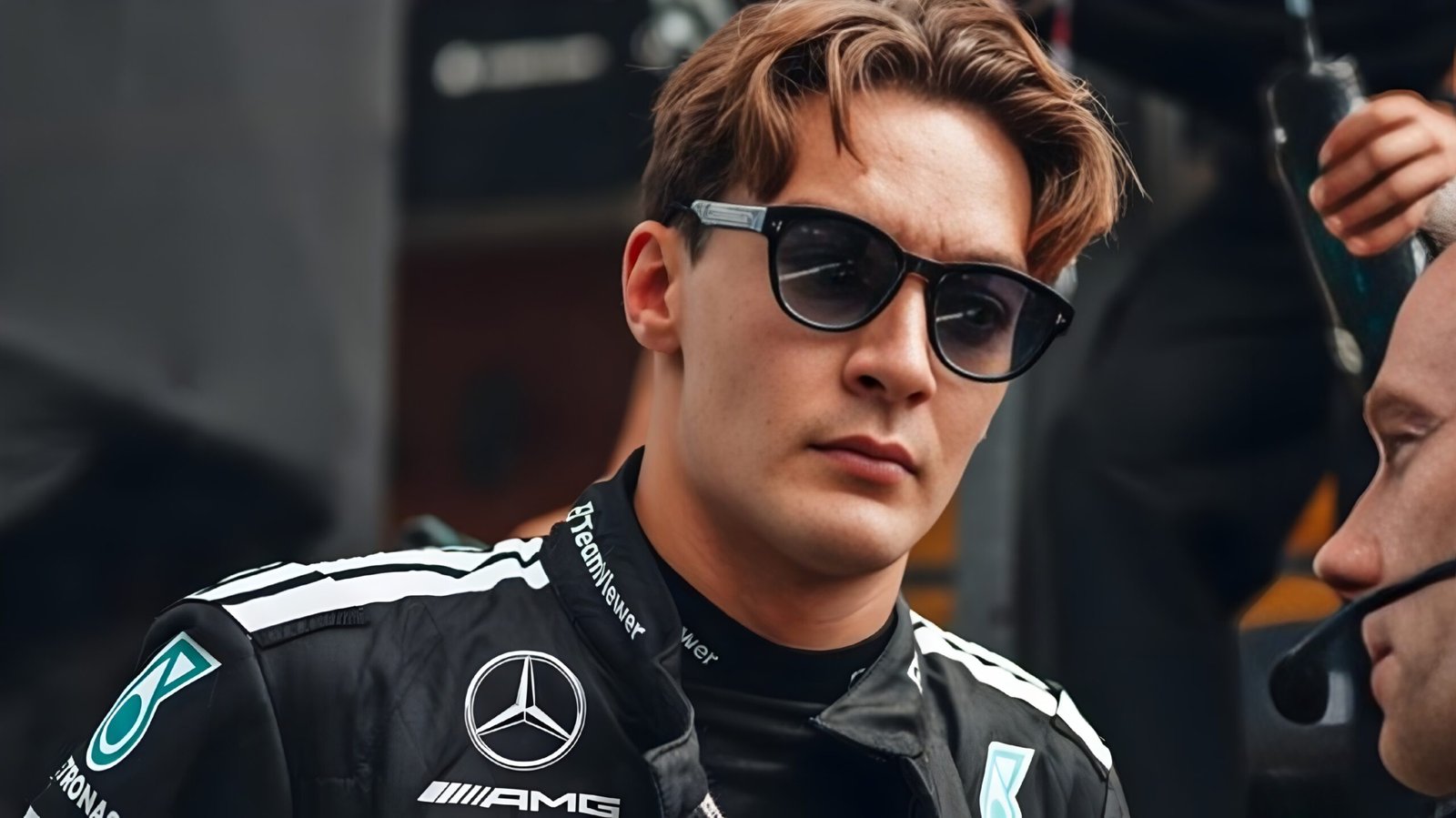
The 2026 Chinese Grand Prix will be remembered not merely for the results on the timing sheet, but as a profound case study in the divergent philosophies of two of Formula 1’s titan teams. While Mercedes executed a masterclass in strategic dominance and disciplined racecraft, Scuderia Ferrari, in a captivating yet alarming display, showcased the raw, combustible friction of an intra-team rivalry in its infancy. For George Russell, who secured a remarkable second place, the race was a tale of two distinct experiences: the solitary pursuit of his teammate at the front and a breathtaking, ringside view of the high-stakes duel unfolding in his mirrors—a battle he fully expected to end in a shower of scarlet carbon fiber.
From the outset, the Shanghai International Circuit was painted silver. The Mercedes duo of George Russell and the rising Kimi Antonelli established an immediate and commanding presence, locking out the front of the grid with a pace that left their rivals trailing. This initial display of force was a statement of intent, demonstrating a synergy between car and driver that appeared almost seamless. However, the inherent chaos of motorsport intervened in the form of a safety car, a development that reset the field and momentarily stripped Russell of his hard-won track position.
What followed was a testament to the British driver’s resilience and Mercedes’ strategic acumen. Emerging from the restart behind the dueling Ferraris, Russell was tasked with methodically dismantling their defenses. His subsequent charge back through the field was not a frantic scramble but a calculated and clinical operation. He stalked his prey, managed his tires, and executed his overtakes with the precision of a surgeon, ultimately reclaiming his second-place position. This determined fightback underscored a crucial element of the Mercedes victory: a calm, unwavering focus on the ultimate objective, even when faced with unexpected adversity. While his teammate Antonelli pulled away to seal the win, Russell’s performance was the bedrock of the team’s commanding result, a portrait of composure under immense pressure.
Yet, for fifteen pivotal laps, from lap 14 to lap 29, Russell’s attention—and that of the global audience—was fixated on the astonishing civil war erupting between the two Ferrari drivers, Lewis Hamilton and Charles Leclerc. In his debut season with the Prancing Horse, the seven-time World Champion Hamilton found himself locked in a relentless, wheel-to-wheel struggle with his fiercely competitive teammate. This was not a managed, strategic exchange of positions; it was a raw, unfiltered battle for supremacy, fought with an aggression that bordered on reckless.
From his vantage point, often just meters behind, Russell watched with a mixture of professional concern and sheer disbelief. He witnessed the two scarlet cars trading positions with a ferocity that seemed to defy team orders and self-preservation. The tension reached its apex in a now-infamous maneuver at Turn 14. Leclerc, in a daring lunge, forced his way past Hamilton on the inside. However, the nature of the corner exit meant his move inevitably compromised Hamilton’s line, momentarily holding up his own teammate. The incident, a microcosm of their larger battle, was so pronounced that it prompted Russell to key his radio, his voice a blend of surprise and alarm. “What’s Leclerc doing?” he questioned his race engineer, the subtext clear: this was not normal racing. A moment later, he followed up with a more direct observation: “Leclerc just backed up Lewis.”
In the sterile, data-driven world of modern Formula 1, such a flagrant and aggressive internal fight is a rarity. For Russell, it was a high-wire act he was convinced could only have one conclusion. “I was just waiting for the two of them to collide, and somehow they didn’t,” he confessed to the media in the post-race debrief. The sentiment revealed the razor’s edge upon which the Ferrari drivers were operating. “It was some of the most aggressive racing I’ve seen for a while,” he added, a significant statement from a driver accustomed to the crucible of Grand Prix competition.
While the spectacle was undeniably thrilling, Russell was acutely aware of its direct impact on his own race. As the Ferraris sparred, costing each other valuable tenths of a second in every corner, Kimi Antonelli was extending his lead, disappearing over the horizon. “It cost him time,” Russell noted, acknowledging the strategic gift that the Ferrari fireworks had presented to the Mercedes camp. Yet, he conceded that had he not been a direct competitor in that moment, he would have “enjoyed the spectacle.” His sentiment was ironically echoed by Leclerc himself, who, despite the palpable tension, described it on his team radio as “quite a fun battle.”
Ultimately, the anticipated collision never materialized. Both Leclerc and Hamilton, masters of their craft, managed to keep their multi-million-dollar machines in one piece, a feat that speaks to their extraordinary skill. Yet, the absence of a crash did not negate the significance of the event. The battle lines at Ferrari have been drawn. Hamilton’s arrival was never going to be a quiet transition, and this public display of raw competition signals a season of immense tension for the Maranello leadership.
The final classification told the story in stark numbers. George Russell crossed the line in a comfortable second place, a full twenty seconds ahead of Hamilton, who finished third. The gap was a powerful metric, quantifying the time lost in Ferrari’s internal struggle and validating the efficiency of Mercedes’ approach. In his final analysis, Russell graciously praised Ferrari’s inherent pace, a nod to the challenge they represent. But as the current championship leader, his performance in Shanghai—a blend of strategic patience and a front-row seat to his rivals’ chaotic ballet—served as a potent reminder that in Formula 1, championships are won not just with speed, but with the cool-headed composure that turns chaos into opportunity.


