Published by: AutodromeF1 Editorial Team
London, United Kingdom April 10 – In the high-stakes arena of Formula 1, where technical precision, human chemistry, and organizational stability converge to define success, few partnerships have exemplified symbiotic excellence quite like that of Max Verstappen and Gianpiero “GP” Lambiase. On April 9, 2026, Red Bull Racing formally confirmed what had been circulating in paddock whispers for weeks: Lambiase, the Italian-born engineer who has served as Verstappen’s race engineer since 2016 and more recently as the team’s Head of Racing, will depart Milton Keynes at the conclusion of his contract at the end of 2027 to join McLaren as Chief Racing Officer no later than 2028.
This transition, while contractually deferred, marks the end of an era that delivered four consecutive Drivers’ Championships (2021–2024) and a staggering tally of 71 Grand Prix victories together. It also represents yet another significant recalibration for Red Bull Racing amid a wave of high-profile departures that has reshaped the team’s identity over the past two seasons.
Helmut Marko’s Measured Reflection
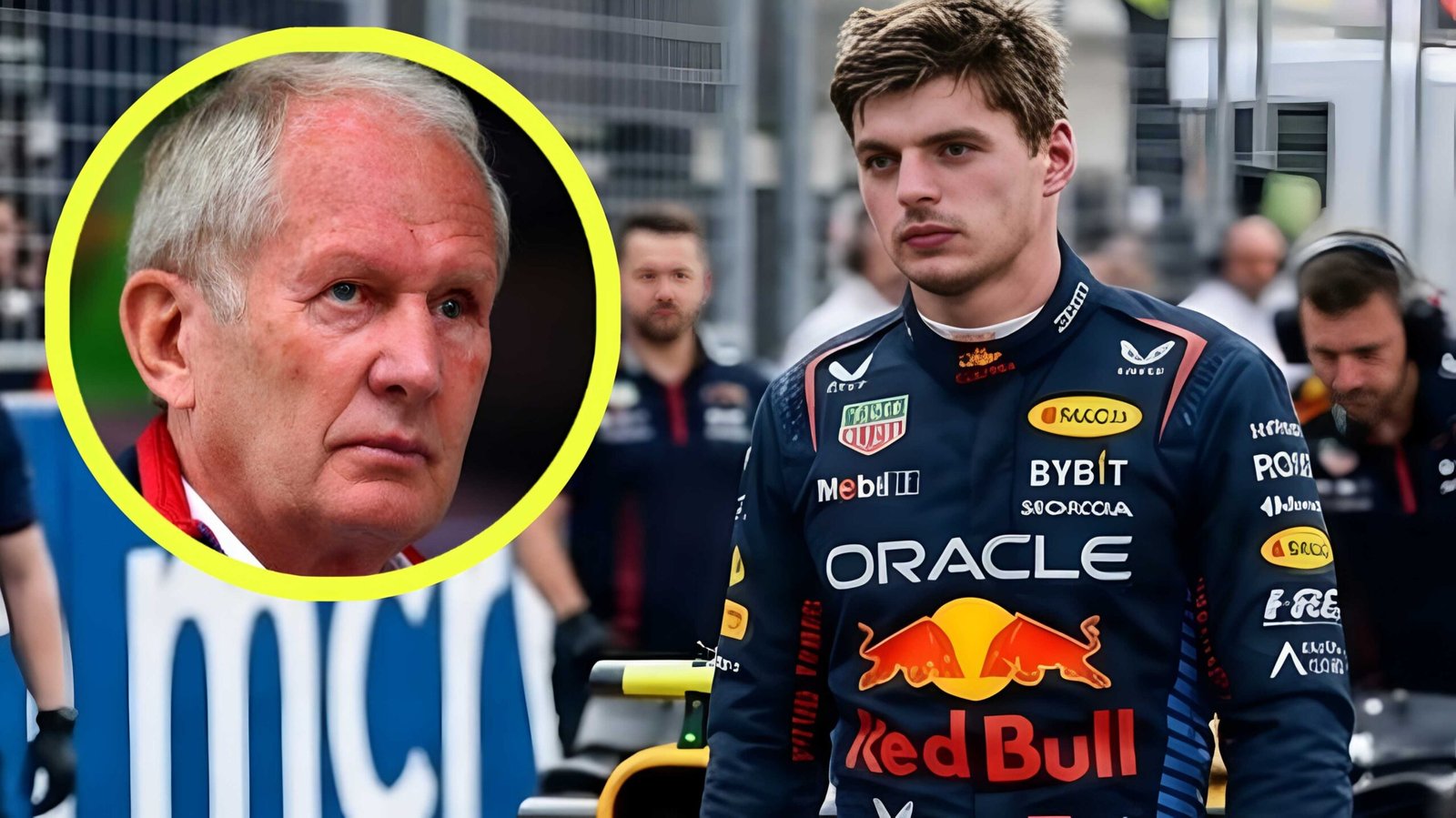
Helmut Marko, the veteran motorsport advisor who stepped down from his influential role at the end of 2025, offered a characteristically candid yet pragmatic assessment of the development. Speaking to the Austrian Press Agency (APA), the 82-year-old described the impending separation as “certainly a significant loss in value.” He drew a vivid parallel between Verstappen and Lambiase’s long-standing collaboration and that of “an old married couple,” noting that the pair frequently engaged in robust discussions and disputes, yet these tensions consistently fueled exceptional performance rather than undermining it.
“GP was a very essential factor in vehicle development and car set-up,” Marko emphasized. “He also went his own way at times, not always in agreement with the rest of the technical crew.” Despite the friction that occasionally surfaced with other members of the engineering hierarchy, Lambiase’s contributions remained indispensable. His ability to translate Verstappen’s raw feedback into actionable setup adjustments, combined with his broader oversight of race operations, helped elevate Red Bull from a competitive outfit to a dominant force during the ground-effect era.
Marko, however, struck a note of confidence in the team’s resilience. “The team is very big and we have a number of very good, young engineers,” he remarked. “A replacement will certainly be found — someone with some experience in a similar role.” This outlook reflects Red Bull’s traditional strength in nurturing internal talent, a philosophy that has long underpinned its junior driver program and technical depth. Yet the scale of recent exits suggests that absorbing such losses may prove more complex than in previous cycles.
The Depth of a Historic Partnership
To fully appreciate the gravity of Lambiase’s departure, one must examine the foundations of his relationship with Verstappen. The Dutchman joined Red Bull’s senior team midway through the 2016 season, replacing Daniil Kvyat after a stunning debut victory in Spain. From that moment, Lambiase — who had joined Red Bull in 2015 initially as Kvyat’s race engineer — became the calm, analytical counterpoint to Verstappen’s instinctive, sometimes fiery driving style.
Their radio exchanges, often laced with blunt honesty and dry humor, became the stuff of Formula 1 folklore. Behind the public banter lay a profound professional trust. Lambiase did not merely relay data; he shaped strategy, challenged assumptions during high-pressure debriefs, and played a pivotal role in refining the car’s balance to suit Verstappen’s preference for a responsive, front-end-dominant handling characteristic.
By 2021, this partnership had matured into championship-winning synergy. Verstappen claimed his maiden title in a dramatic finale at Abu Dhabi, with Lambiase’s input proving critical amid controversial late-race decisions. Subsequent seasons saw Red Bull achieve near-total supremacy, with the duo securing back-to-back-to-back titles through 2024. Lambiase’s elevation to Head of Race Engineering in 2022, and later Head of Racing in 2025 following Jonathan Wheatley’s exit, further amplified his influence across trackside operations.
Verstappen has long acknowledged this bond publicly. In earlier interviews, he stated unequivocally that he would not continue in Formula 1 without Lambiase as his engineer — a testament to the depth of their collaboration. While the driver has since matured and the team dynamics have evolved, the emotional and operational void left by GP’s eventual departure cannot be overstated.
A Broader Exodus at Red Bull
Lambiase’s move does not occur in isolation. It forms part of a sustained talent drain that has altered Red Bull Racing’s landscape since the peak of its 2022–2024 dominance. The most high-profile departure was that of Adrian Newey, the visionary Chief Technical Officer whose aerodynamic mastery defined multiple championship eras. Newey departed in 2025 to take up a senior role at Aston Martin, including equity involvement and team principal responsibilities.
Shortly thereafter, Jonathan Wheatley, long-serving Sporting Director and a master of regulatory navigation and operational efficiency, left to assume the team principal position at the Audi-Sauber project. Christian Horner, the team principal who had steered Red Bull through two distinct championship cycles (2010–2013 and 2021–2024), was replaced in 2025 by Laurent Mekies. Marko himself chose to step away at the close of 2025 after more than two decades of shaping the organization’s competitive ethos.
Additional exits have included senior figures such as Rob Marshall (who joined McLaren as Chief Designer), Will Courtenay (linked to strategy roles elsewhere), and various trackside engineers within Verstappen’s immediate orbit. These departures have coincided with a noticeable shift in Red Bull’s on-track fortunes. After losing the 2025 Constructors’ Championship to a resurgent McLaren, the team has faced mounting challenges in adapting to evolving regulations and maintaining its previous edge in development pace.
This pattern of attrition raises legitimate questions about institutional continuity. Red Bull’s strength has historically resided in its ability to promote from within and attract ambitious young talent. Marko’s assertion that a suitable replacement for Lambiase can be identified from the existing pool of engineers underscores this philosophy. Yet replacing not only technical expertise but also the intangible chemistry forged over more than a decade with the sport’s pre-eminent driver presents a unique challenge.
McLaren’s Strategic Coup
For McLaren, the acquisition of Lambiase represents a calculated enhancement of an already formidable leadership structure. The Woking-based squad, under the stewardship of Team Principal Andrea Stella, has transformed from midfield contender to Constructors’ Champion in recent seasons through disciplined execution, shrewd recruitment, and a data-driven culture.
Lambiase will assume the role of Chief Racing Officer, reporting directly to Stella. This position encompasses overall leadership of race team operations — duties currently shared or managed by Stella alongside his principal responsibilities. The move is explicitly not a succession plan for the team principal post; rather, it aims to distribute workload, allowing Stella greater bandwidth for strategic oversight, technical integration, and long-term planning.
McLaren’s statement welcomed Lambiase as a “top talent,” highlighting the team’s ongoing strategy of bolstering its senior ranks with proven Red Bull alumni. The arrival complements existing additions such as Rob Marshall and Will Courtenay, creating a concentration of former Milton Keynes expertise within the papaya organization. While Lambiase’s start is contractually capped at no later than 2028, teams frequently negotiate early releases or gardening leave arrangements, leaving open the possibility of an accelerated integration.
This recruitment also signals McLaren’s ambition to sustain its competitive resurgence beyond the current regulatory cycle. As Formula 1 prepares for the seismic 2026 technical overhaul — featuring new power unit regulations and chassis concepts — operational stability and experienced race leadership will prove decisive.
Implications for Verstappen and Red Bull’s Future
The most immediate question concerns the impact on Max Verstappen. At 28 years old (as of 2026), the four-time champion remains at the absolute peak of his powers, yet he has voiced increasing frustration with certain aspects of modern Formula 1, including the direction of recent regulations and the spectacle they produce. His contract with Red Bull extends to 2028, incorporating performance-related exit clauses that could become relevant should the team’s competitiveness falter.
Verstappen has repeatedly emphasized loyalty to key personnel, with Lambiase, his father Jos, and formerly Marko forming a trusted inner circle. The loss of GP will undoubtedly test the strength of his remaining ties to the team. While Verstappen is unlikely to make impulsive decisions, the cumulative effect of Red Bull’s personnel shifts, combined with on-track challenges, will inevitably factor into his long-term career considerations. Speculation about potential moves to McLaren, Mercedes, or even a sabbatical has already intensified in the paddock.
For Red Bull, the coming seasons represent a critical test of adaptability. The organization must demonstrate that its deep bench of young engineers can maintain development momentum under the new 2026 regulations. Promoting internal candidates while ensuring seamless continuity for Verstappen will require meticulous planning. The team’s leadership, now under Mekies and Technical Director Pierre Waché, must foster an environment that retains remaining talent and attracts fresh expertise.
A Defining Transition in Formula 1
Gianpiero Lambiase’s departure is far more than a routine personnel change. It symbolizes the natural evolution — and occasional disruption — inherent in elite motorsport. Partnerships that achieve legendary status are, by their very nature, finite; their dissolution creates space for new dynamics while leaving an indelible legacy.
Red Bull’s response will reveal much about its capacity for renewal. McLaren’s integration of Lambiase will test whether cross-pollination of talent translates into sustained on-track advantage. And Verstappen’s reaction, both immediate and over the longer horizon, may ultimately shape the competitive landscape of Formula 1 for years to come.
In an era defined by rapid technological shifts and intense commercial pressures, the human element — the trust between driver and engineer, the institutional memory carried by senior figures — remains the most precious and fragile asset. As Lambiase prepares for his final chapters with Red Bull and a new beginning at McLaren, the sport watches closely to see how the ripples from this “old couple’s” separation will influence the next championship battles.


