Published by: AutodromeF1 Editorial Team
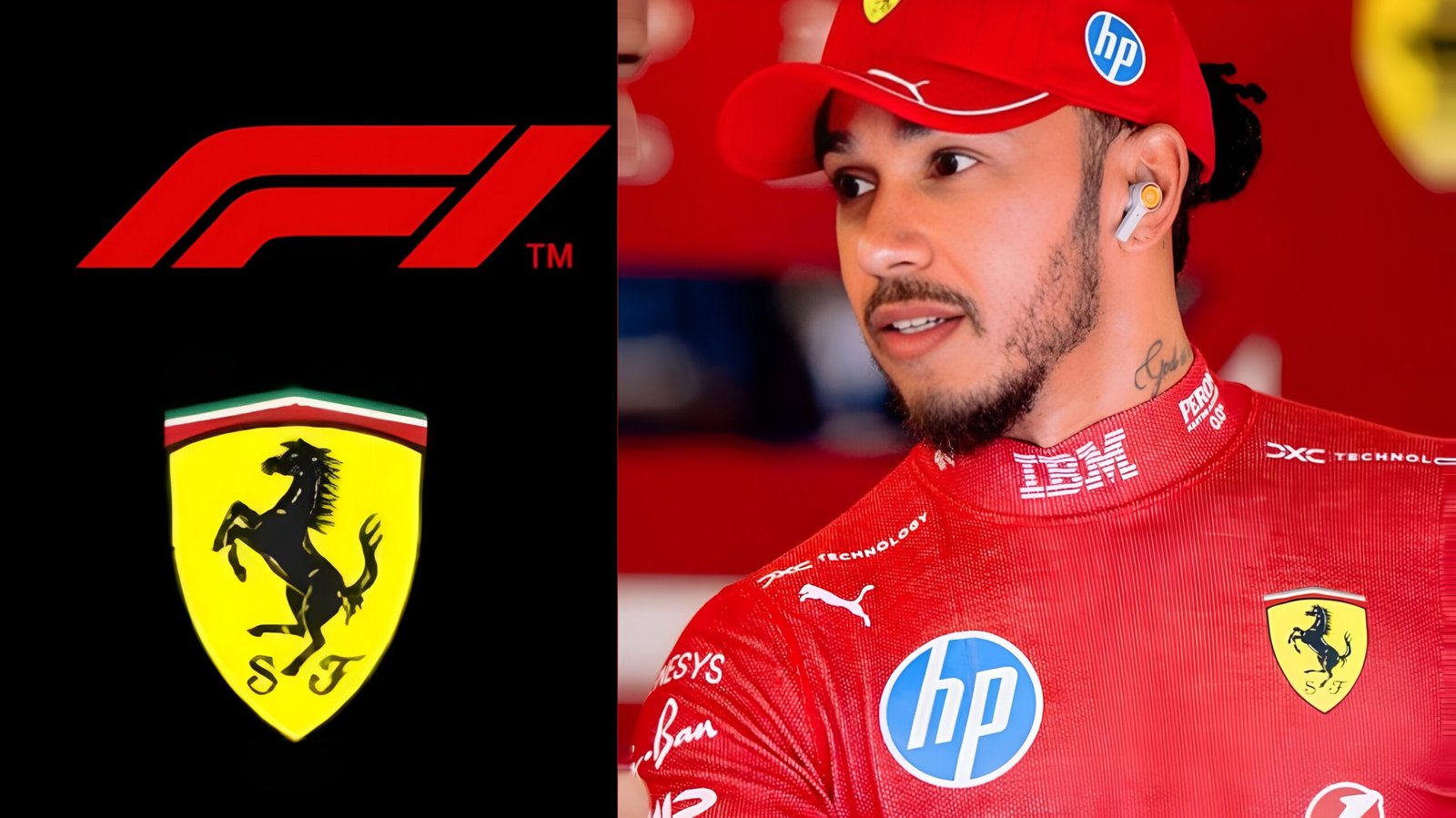
In a candid and technically incisive assessment that reverberated through the Formula 1 paddock, seven-time World Champion Lewis Hamilton has delivered a sobering verdict on Scuderia Ferrari’s early performance in the 2026 season. The British driver, in his landmark first year with the Maranello-based team, articulated a significant performance deficit to his former team, Mercedes-AMG Petronas, estimating the gap at approximately half a second per lap in race conditions. His analysis points not to a singular flaw, but to a complex matrix of challenges rooted in the new-for-2026 regulations, primarily concerning straight-line speed, active aerodynamics, and the sophisticated art of energy deployment.
A Sobering Diagnosis from a Champion
Hamilton’s transition to Ferrari has been the defining narrative of the season, a blockbuster move that brought together the sport’s most successful driver and its most iconic team. The weight of expectation is immense, not only to end Ferrari’s championship drought stretching back to 2008 but to do so in a new and challenging regulatory era. It is within this high-pressure context that his early-season evaluation carries such profound weight.
“We are, I would estimate, around half a second a lap down in race trim,” Hamilton stated with the calm precision of a driver who has dissected telemetry data for nearly two decades. “It’s not one specific corner or a single weakness. It’s a consistent deficit that appears most pronounced on the straights. The way the Mercedes W17 deploys its energy and activates its aerodynamic modes gives it a significant advantage. It’s an efficiency gap, and it’s our primary challenge.”
This is not the lament of a driver struggling to adapt, but the clinical diagnosis of an engineer-at-heart. The 2026 regulations have fundamentally rewritten the rulebook on power and aerodynamics. With the removal of the Motor Generator Unit-Heat (MGU-H) and a near 50-50 split between internal combustion engine power and electrical energy from the Motor Generator Unit-Kinetic (MGU-K), the strategic deployment of a limited 350 kW of electrical power is paramount. Hamilton’s comments suggest that Mercedes has mastered this new-age power management, allowing them to gain crucial tenths of a second on every straight, which accumulate into a significant gap over a race distance.
His teammate, Charles Leclerc, who carries the hopes of the Tifosi on his shoulders, echoed the sentiment, albeit with the resolute tone of a driver focused on the long game. “We are definitely not at their level yet,” Leclerc conceded. “We have a lot of work to do. We understand the areas where the car needs to improve, and the entire team in Maranello is pushing relentlessly. We are united in our objective, but we are also realistic about the timeline.”
The ‘Macarena’ Wing: Ferrari’s First Major Counter-Attack
In the high-stakes development war of Formula 1, standing still is moving backward. In response to this clear and present performance gap, Ferrari has accelerated its development pipeline, fast-tracking a novel and aggressively designed rotating rear wing for the upcoming Chinese Grand Prix in Shanghai. Affectionately, and perhaps ironically, nicknamed the “Macarena” within the team for its unique rotational movement, this component is Maranello’s first major salvo in the battle to reclaim straight-line supremacy.
Under the 2026 active aerodynamic rules, teams can deploy movable front and rear wings to toggle between a high-downforce configuration for cornering and a low-drag mode for the straights. Ferrari’s “Macarena” wing is an extreme interpretation of this concept. The team has reportedly developed three distinct specifications of this drag-reducing design, each tailored to different levels of aerodynamic efficiency and track characteristics. The aim is singular: to “stall” the rear wing more effectively on the straights, shedding aerodynamic drag and unleashing the SF-26’s latent top speed.
The Shanghai International Circuit, with its colossal 1.2-kilometer back straight, provides the perfect litmus test for such an innovation. A successful deployment could see Ferrari claw back a significant portion of its deficit, making the car a more potent weapon in both qualifying and race situations, particularly when slipstreaming and overtaking. However, the introduction of such a critical component is not without risk. Validation on track is essential to ensure its structural integrity and that its aerodynamic behaviour is predictable, without upsetting the car’s overall balance—a factor Hamilton alluded to.
“An upgrade like this is promising, and it’s a testament to the team’s rapid response,” Hamilton noted. “But it’s one piece of a very large puzzle. It needs to work in harmony with the rest of the car, and we need to validate that its benefits on the straights don’t come at too high a cost in the corners. This is a development journey, and this is an important step, but it is not going to be a short thing.”
The Road Ahead: A Marathon, Not a Sprint
The consensus from both Hamilton and Leclerc is one of pragmatic patience. The gap to Mercedes is not a chasm that can be bridged by a single silver-bullet upgrade. It will require a sustained, aggressive, and intelligent development program that touches every aspect of the car’s performance envelope.
Beyond the “Macarena” wing, Ferrari’s engineers are undoubtedly engaged in a deep-dive analysis of their energy management systems. This includes the software controlling the deployment of electrical power, the cooling systems for the battery and MGU-K, and the intricate dance between energy harvesting under braking and its subsequent use on the straights. It is in these lines of code and complex hardware interactions that a significant portion of the lap time deficit resides.
For Hamilton, this challenge represents a new chapter in his storied career. He is no longer just the driver; he is an integral part of Ferrari’s renaissance project. His unparalleled experience in developing championship-winning cars with Mercedes is perhaps his most valuable asset to the Scuderia in this moment. His ability to provide precise, actionable feedback is a guiding light for the engineers in Maranello.
The 2026 season is still in its infancy, and the narrative is far from written. Ferrari’s response, beginning with the innovative “Macarena” wing, is a clear statement of intent. The team is not shying away from the challenge laid bare by its star driver. The path to closing the half-second gap will be arduous, a testament to the brutal competitiveness of modern Formula 1. But with the combined force of Lewis Hamilton’s championship-winning acumen and Charles Leclerc’s raw speed and passion, Ferrari has the foundational elements for a formidable fightback. The coming races will reveal whether this first bold upgrade is the start of a championship charge or simply the first step on a much longer road to redemption.


