Published by: AutodromeF1 Editorial Team
The Unyielding Threshold: Helmut Marko’s Pivotal Veto That Safeguarded Max Verstappen from the Nürburgring Nordschleife’s Perils in Formula 1
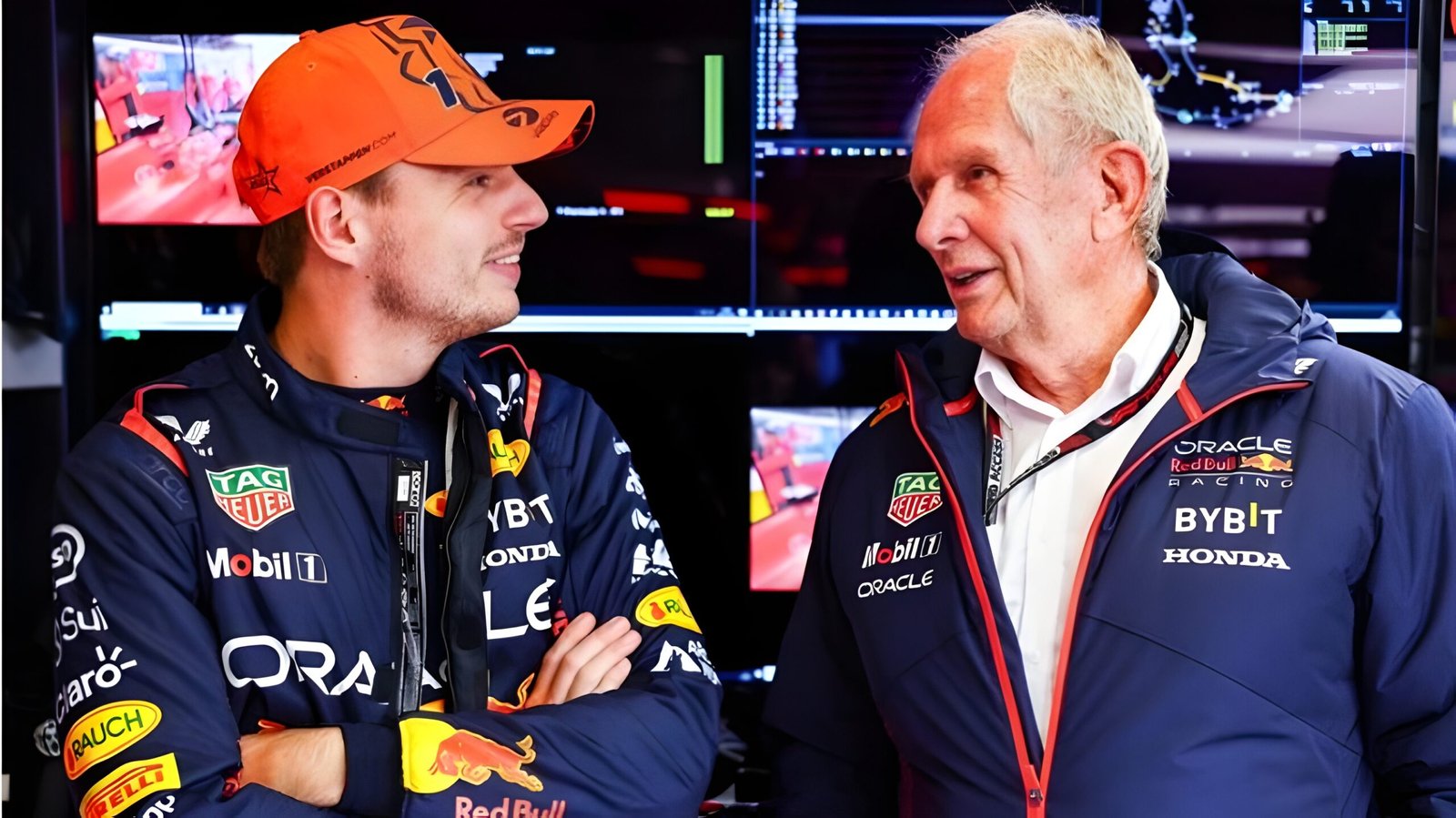
In the annals of modern motorsport, few decisions underscore the delicate interplay between raw ambition and uncompromising safety quite like the one rendered years ago by Dr. Helmut Marko. Today, the veteran Red Bull advisor has revisited that resolute intervention with characteristic candour, confirming he personally forbade Max Verstappen from conducting a demonstration run in a Formula 1 Red Bull on the fabled Nürburgring Nordschleife. The prohibition, born of acute awareness of the circuit’s unforgiving demands, stands as a masterclass in protective foresight—one that preserved one of the sport’s most formidable talents from a scenario Marko deemed untenable.
Marko’s reflection arrives at a moment of poetic symmetry. Verstappen returns to the “Green Hell” this weekend, not behind the wheel of an F1 machine, but in the far more forgiving confines of a Mercedes-AMG GT3. The timing could scarcely be more apt: as the four-time world champion prepares for his headline-making debut in the 2026 ADAC Ravenol 24 Hours Nürburgring, Marko’s recollection serves both as historical clarification and quiet vindication of a call that prioritised longevity over spectacle.
The genesis of the ban traces back several years, when Verstappen, ever the inquisitive competitor, approached Marko with palpable enthusiasm for the Nordschleife. “Years ago, Max raved to me about the Nordschleife,” Marko recounted in a recent interview. “Back then, he wanted to do a demonstration run with a Formula 1 Red Bull. But all my alarm bells went off at the time.” What began as a seemingly innocuous request for a show lap rapidly revealed deeper intent. Verstappen had viewed the now-legendary video of Timo Bernhard shattering the circuit’s outright lap record in 2018 aboard a Porsche 919 Hybrid Evo—a blistering 5:19.546 that remains untouched to this day. “So much for a demo run!” Marko continued. “Max had seen that incredible video of Timo Bernhard breaking the lap record in a Le Mans Porsche. I think he wanted to top that with the Red Bull. That was too dangerous for me. That’s why I put a stop to it and forbade it.”
Verstappen himself has never shied from acknowledging the intensity of his own ambitions. Speaking in 2023, he admitted candidly: “I wanted to do it, but I was not allowed by Helmut. He knew that I would try and go to the limits. I would have loved to do it.” The Dutchman elaborated that he would have pushed beyond any notional demonstration parameters, eschewing the restrictive demo tyres typically mandated for such outings in favour of full-race rubber—an approach incompatible with the safety protocols Red Bull was prepared to endorse. Marko’s intervention was instantaneous and unequivocal: “No, no, no, you’re not doing that!”
Such a stance might appear overly cautious to casual observers, yet it reflects a profound understanding of both the driver and the venue. The Nürburgring Nordschleife, stretching 20.832 kilometres through the Eifel mountains, remains one of motorsport’s most demanding arenas. Its 73 corners encompass dramatic elevation changes exceeding 300 metres, blind crests, treacherous jumps, and sections where the road narrows dramatically with scant run-off areas. Modern Formula 1 cars, optimised for high-downforce grip on smooth, purpose-built circuits, are ill-suited to these conditions. Their stiff suspensions transmit every undulation with punishing force; their aerodynamic packages generate immense loads that could prove catastrophic over the Nordschleife’s irregular surface. A single misjudgement at speeds approaching 370 km/h—as Bernhard achieved in the optimised Porsche prototype—could result in consequences far beyond a mere spin.
Marko’s assessment was not hyperbole but engineering pragmatism. He recognised that Verstappen’s instinctive drive to extract every tenth of a second would transform a controlled demonstration into an all-out record assault. The 2018 Porsche lap, achieved by a two-time Le Mans winner in a hybrid prototype expressly evolved for the challenge, set an almost mythical benchmark. For an F1 car—designed for circuits like Silverstone or Spa rather than the Nordschleife’s raw topography—the attempt would have invited unacceptable risk. Marko’s veto thus embodied the very ethos that has sustained Red Bull’s competitive edge: calculated audacity tempered by unyielding responsibility.
This perspective gains added resonance against the circuit’s storied yet sobering history within Formula 1. The last full Grand Prix contested entirely on the Nordschleife occurred in 1976, an event forever etched in collective memory by Niki Lauda’s near-fatal fiery crash during practice. The tragedy prompted the FIA to deem the 22.8-kilometre layout obsolete for top-tier single-seaters, shifting subsequent German Grands Prix to the shorter, safer Grand Prix circuit. Occasional testing has occurred since, yet no official F1 demonstration of the full Nordschleife has materialised precisely because the safety calculus has never aligned. Marko’s decision aligned seamlessly with that institutional caution, extending it to protect his star driver from self-imposed peril.
Fast-forward to the present, and the narrative has evolved into one of prudent opportunity. Verstappen now channels his affinity for the Nordschleife through machinery far better adapted to its demands. The Mercedes-AMG GT3 he will campaign under the Verstappen Racing banner—complete with distinctive Red Bull livery and race number three—represents a harmonious compromise. Revealed dramatically via a BASE jump from a 131-metre cooling tower, the car embodies the fusion of high performance and endurance resilience that GT3 regulations demand. Co-driven by factory aces Jules Gounon, Lucas Auer, and Dani Juncadella, with preparation handled by the highly regarded Winward Racing squad, the programme includes preparatory rounds in the Nürburgring Langstrecken-Serie (NLS) ahead of the May 14-17 24-hour epic.
Marko has expressed measured approval of this pivot. “Luckily, he can now let loose on the Nordschleife with the Mercedes GT3,” he noted, while adding with a knowing chuckle that he suspects Bernhard’s record still lingers in Verstappen’s competitive psyche. “He’s a racer of the old school, after all.” Indeed, Verstappen’s recent performances validate that assessment. Having secured his DMSB Nordschleife permit in 2025, he claimed victory in his GT3 debut during the NLS9 round last September—leading his stint by more than a minute and contributing to an overall winning margin exceeding 20 seconds. Reports from private testing suggest he has already eclipsed existing GT3 benchmarks on the full Nordschleife, demonstrating an uncanny ability to adapt F1-honed precision to the circuit’s unique rhythms.
The contrast between the forbidden F1 scenario and the sanctioned GT3 campaign could hardly be starker. Where a Formula 1 car’s carbon-fibre monocoque and ultra-stiff setup would amplify every bump into a potential disaster, the Mercedes-AMG GT3 offers progressive compliance, robust crash structures, and tyre compounds engineered for prolonged abuse across 25.378-kilometre combined laps during the 24-hour race. Its production-derived chassis and less extreme aerodynamics mitigate the very risks that rendered the F1 option untenable. For Verstappen, this pathway satisfies his insatiable hunger for the Nordschleife without compromising the physical integrity that remains central to his Formula 1 primacy.
Beyond the immediate technical and safety dimensions lies a broader philosophical insight. Marko’s intervention exemplifies the mentorship that has defined his relationship with Verstappen since the latter’s precocious arrival in Formula 1. It underscores a recognition that true greatness flourishes not through reckless boundary-testing but through strategic restraint. In an era when social media amplifies every headline-grabbing stunt and simulator lap times fuel public speculation, Marko’s stance served as a reminder that some challenges, however alluring, demand deference to engineering reality and human vulnerability.
Verstappen’s own reflections on the Nordschleife reveal a driver who has matured while retaining his core intensity. “The Nürburgring is a special place,” he observed recently. “There is no other race track quite like it. The 24-hour race at the Nürburgring has been on my bucket list for a long time, so I’m very excited that we can now make it happen.” His preparation—gained through NLS participation and meticulous analysis—speaks to a methodical approach that mirrors the discipline now applied to his Formula 1 campaigns amid evolving 2026 regulations.
As the motorsport community anticipates Verstappen’s assault on the 24-hour endurance classic, alongside formidable rivals from Manthey Porsche and ABT Sportsline, Marko’s past decision gains retrospective lustre. It prevented a potential catastrophe that could have altered not only Verstappen’s career trajectory but the very narrative of Red Bull Racing. Instead, it has facilitated a parallel chapter in which the champion explores new frontiers safely, enriching his legacy without unnecessary jeopardy.
In the final analysis, Helmut Marko’s veto was never about stifling ambition; it was about preserving it. By drawing a firm line at the Nordschleife’s most extreme manifestation in Formula 1, he ensured that Max Verstappen could one day return to the Green Hell on terms that honour both the circuit’s majesty and the driver’s extraordinary talent. The upcoming 24 Hours will test that balance anew, yet with the wisdom of experience and the security of appropriate machinery, it promises spectacle rather than sorrow. In an increasingly complex sporting landscape, such measured guardianship remains not merely prudent—but profoundly necessary.


