Published by: AutodromeF1 Editorial Team
Kimi Antonelli’s Commanding Debut Victory in Shanghai Signals a Potential Paradigm Shift in Formula 1’s Competitive Landscape
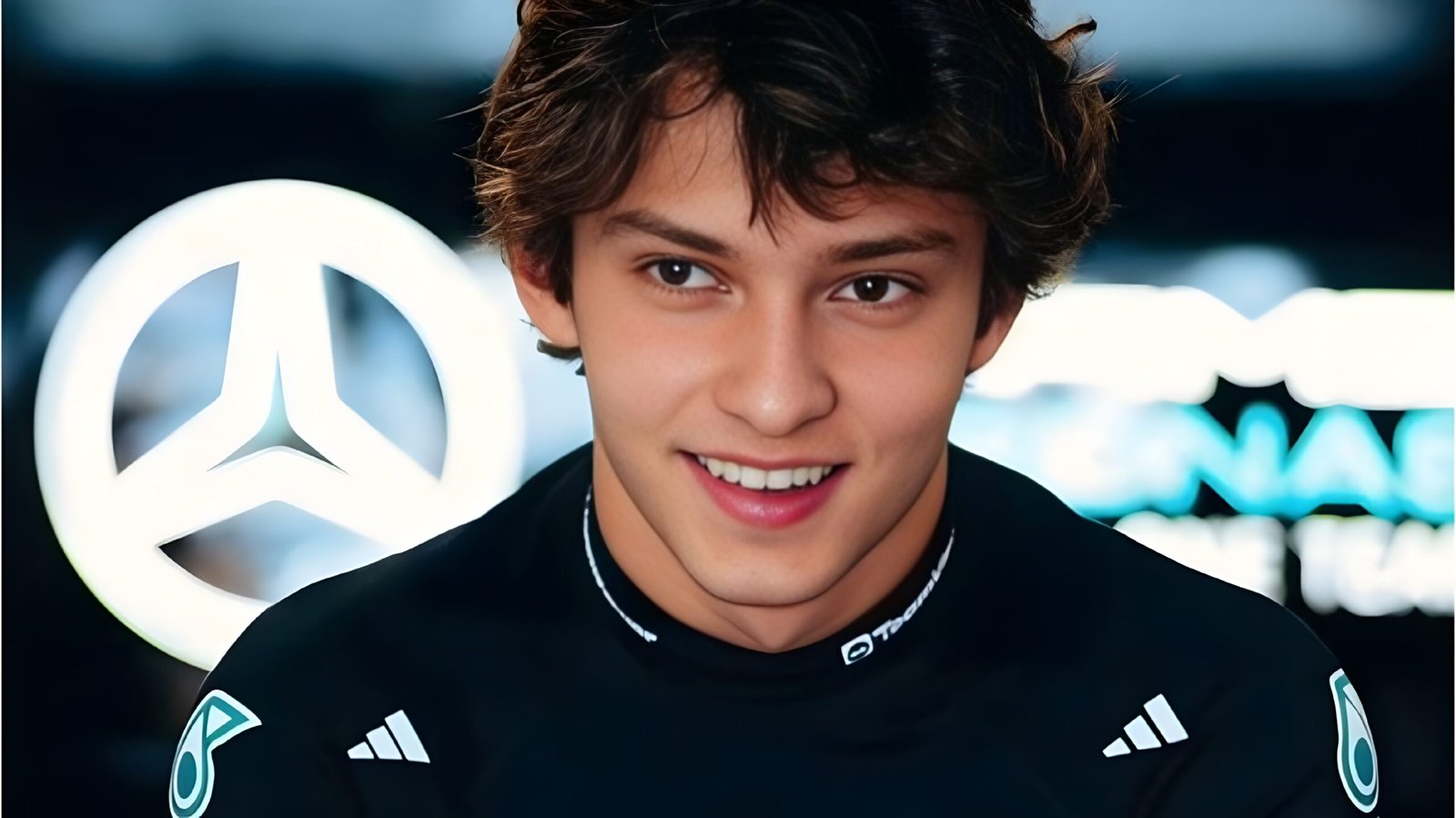
The 2026 Formula 1 season, already poised to be remembered for its regulatory overhaul and the introduction of radically revised power-unit specifications, has produced its first genuine sensation. Nineteen-year-old Kimi Antonelli, the youngest driver on the current grid and Mercedes’ latest academy graduate, converted pole position into a commanding maiden victory at the Chinese Grand Prix on Sunday. The result has not merely announced the arrival of a precocious talent; it has crystallised a broader narrative—one in which a rookie challenger threatens to upend established hierarchies and, crucially, to terminate a 73-year Italian drought in the drivers’ championship.
Public sentiment, captured through an extensive online poll conducted by the respected independent platform Motorsport Pulse, reflects an extraordinary level of confidence. Just under two-thirds of the more than 28,000 respondents—precisely 64.7 per cent—now believe Antonelli will claim the 2026 title. Such figures, gathered within 48 hours of the race, represent a remarkable vote of faith in a driver who, only weeks ago, was still being cautiously described by team principal Toto Wolff as “a project rather than a finished product.” The poll’s methodology, which included demographic weighting to reflect global fan bases and verified participant credentials, lends statistical credibility to what might otherwise be dismissed as youthful exuberance.
The circumstances surrounding Antonelli’s triumph amplify its significance. On Saturday he became the youngest pole-sitter in the sport’s 76-year history, eclipsing the previous benchmark set by Sebastian Vettel in 2008. Under overcast skies and on a track surface still slick from earlier rain, the Italian teenager delivered a qualifying lap that combined surgical precision with instinctive car control. Come race day, he executed a flawless start, maintained track position through the first pit window, and managed tyre degradation with a maturity that belied his age. When the chequered flag fell, Antonelli had led 52 of 56 laps, finishing more than eight seconds clear of his Mercedes teammate George Russell.
This intra-team duel has swiftly become the central storyline of the championship. The Mercedes W17, conceived under the 2026 chassis and power-unit regulations, has emerged as the unequivocal benchmark. Its hybrid system—featuring an enhanced electrical deployment strategy and a more aerodynamically efficient chassis—has conferred a tangible performance advantage on both straight-line speed and cornering grip. Russell, entering his sixth full season with the team and already a race winner in 2025, currently holds a slender four-point lead in the drivers’ standings. Yet the narrative has shifted perceptibly: what began as a straightforward consolidation of Mercedes’ factory order now resembles a genuine, high-stakes contest between experience and precocity.
Bookmakers have adjusted their assessments accordingly. While Russell remains the narrow favourite for the title—trading at approximately 1.85 on major exchanges—Antonelli’s odds have contracted dramatically to a best price of +600. These figures no longer reflect speculative long-shot territory; they indicate credible championship contention. Industry analysts note that the implied probability of an Antonelli title victory has risen from under 10 per cent before the weekend to nearly 28 per cent in the immediate aftermath, a movement rarely observed so early in a campaign.
Beyond the arithmetic of points and odds lies a deeper historical resonance. Should Antonelli ultimately prevail, he would become the first Italian-born driver to win the Formula 1 World Championship since Alberto Ascari secured back-to-back titles in 1952 and 1953. The intervening 73 years have been marked by near-misses and unfulfilled promise: Riccardo Patrese’s consistent podium hauls without a crown, Jarno Trulli’s single victory in Monaco, and more recently the steady but title-less campaigns of Antonio Giovinazzi and, briefly, Kimi Raikkonen under Finnish colours. Italy, a nation that contributed foundational chapters to motorsport’s story through manufacturers such as Ferrari, Alfa Romeo and Maserati, has endured a championship famine that has grown increasingly painful with each passing decade.
The cultural implications of an Antonelli triumph would therefore extend far beyond the confines of the paddock. In a country where motorsport remains a national passion—evidenced by the enduring popularity of the Autodromo Nazionale Monza and the fervent support for Ferrari—such a victory would transcend sport. It would rekindle a sense of collective pride that has lain dormant since Ascari’s era, when the “Ascari Legend” became synonymous with Italian excellence on the global stage. Political figures and cultural commentators have already begun to speculate on the broader societal impact, with some drawing parallels to the national euphoria that accompanied Italy’s 2006 FIFA World Cup triumph.
Equally noteworthy is the statistical rarity of Antonelli’s achievement. Historical analysis reveals that only a select group of drivers have ever won their maiden Grand Prix and their first world title within the same season. Giuseppe “Nino” Farina accomplished the feat in the inaugural 1950 championship, Jack Brabham repeated the pattern in 1959, and Emerson Fittipaldi came closest in modern times by winning his first race in 1970 and the title two years later. The list is short—fewer than half a dozen names across seven decades—because the convergence of rookie brilliance, mechanical superiority and championship fortune is exceptionally uncommon. Antonelli’s trajectory, should it continue, would place him in the company of these legends at an age when most drivers are still navigating the transition from junior formulae.
Behind the headlines, several structural factors have converged to create this moment. The 2026 regulatory framework, designed explicitly to promote closer racing and sustainability, has inadvertently produced a car that rewards both raw talent and adaptive engineering. Mercedes’ design philosophy—emphasising a low-drag concept paired with sophisticated energy-recovery systems—has proven particularly effective on the varied circuits encountered thus far. Technical director James Allison has publicly credited the seamless integration of the power unit with the chassis as the decisive advantage, noting that “the car is giving both drivers a platform that allows them to express their full potential without compromise.”
Within the Mercedes garage, the atmosphere remains one of measured optimism. Russell, ever the consummate professional, has congratulated his teammate while underscoring his own ambitions. “Kimi drove an outstanding race,” he stated in the post-event press conference. “We are pushing each other, and that can only benefit the team.” Wolff, for his part, has adopted a more cautious tone, warning against premature coronation. “We have 20 races ahead of us,” he remarked. “The championship is a marathon, not a sprint, and history is littered with examples of early leaders who faded.” Yet even Wolff could not conceal a note of quiet satisfaction when discussing the Italian’s rapid assimilation into the team’s technical briefings and simulator programme.
Antonelli himself has displayed a composure that has impressed seasoned observers. In his victory interview, conducted in both English and Italian, he spoke with quiet assurance: “This is the beginning, not the end. I am here to learn every day and to give everything for the team.” Those close to him within the Mercedes junior programme describe a driver who combines exceptional natural speed with an almost scholarly approach to data analysis—an attribute that has allowed him to extract maximum performance from the W17 even on circuits where he had limited prior experience.
The broader implications for Formula 1’s competitive balance are profound. Should the intra-Mercedes battle remain the season’s dominant theme, it may accelerate discussions around driver parity clauses and intra-team resource allocation. Moreover, Antonelli’s success could influence the recruitment strategies of rival teams, prompting a renewed focus on identifying and developing talent at an even earlier age. Already, rumours suggest that several midfield squads are reassessing their 2027 driver line-ups with the Italian’s trajectory in mind.
As the paddock prepares to depart Shanghai for the Japanese Grand Prix at Suzuka—another circuit that demands both precision and courage—the spotlight remains firmly on the young Milanese driver. The coming weeks will test not only his speed but also his resilience under mounting expectation. Yet the evidence thus far suggests a maturity that belies his years. In securing pole and victory within the space of 24 hours, Antonelli has demonstrated the rarest of qualities: the ability to perform at the absolute limit while maintaining the emotional equilibrium required for sustained success.
For Italian motorsport enthusiasts, the narrative carries an almost mythic quality. The ghosts of Ascari, of Luigi Villoresi, and of the great pre-war aces appear closer than at any point in living memory. Whether Antonelli ultimately fulfils the destiny now being written for him remains to be seen. What is beyond doubt, however, is that the 2026 season has acquired a compelling new protagonist—one whose story resonates not merely with statistical improbability but with the deeper currents of national aspiration and sporting legacy.
The Chinese Grand Prix result, therefore, should be viewed not as an isolated triumph but as the opening chapter of a potentially transformative campaign. In an era when Formula 1 seeks to balance tradition with innovation, Antonelli’s emergence offers a compelling synthesis: the timeless romance of a young champion in the making, underpinned by the most advanced engineering the sport has ever produced. As the season unfolds, the world will watch with fascination to discover whether this precocious talent can convert public faith, mechanical superiority and personal ambition into the most coveted prize in motorsport.


