Published by: AutodromeF1 Editorial Team
In a stunningly candid assessment following the 2026 Australian Grand Prix, reigning Formula 1 2025 World Champion Lando Norris delivered a stark and multi-faceted verdict on the state of the competitive order and the sport’s new technical regulations. While his own McLaren team languished, Norris offered effusive praise for Scuderia Ferrari’s chassis, anointing it the benchmark of the new era, while simultaneously issuing a scathing critique of the 2026 cars, labeling them as a significant step backward for the pinnacle of motorsport. This complex analysis from the sport’s defending champion paints a vivid picture of a driver grappling with a competitive deficit and a philosophical disillusionment with the direction of Formula 1’s technology.
The Champion’s Concession: Ferrari’s Technical Supremacy
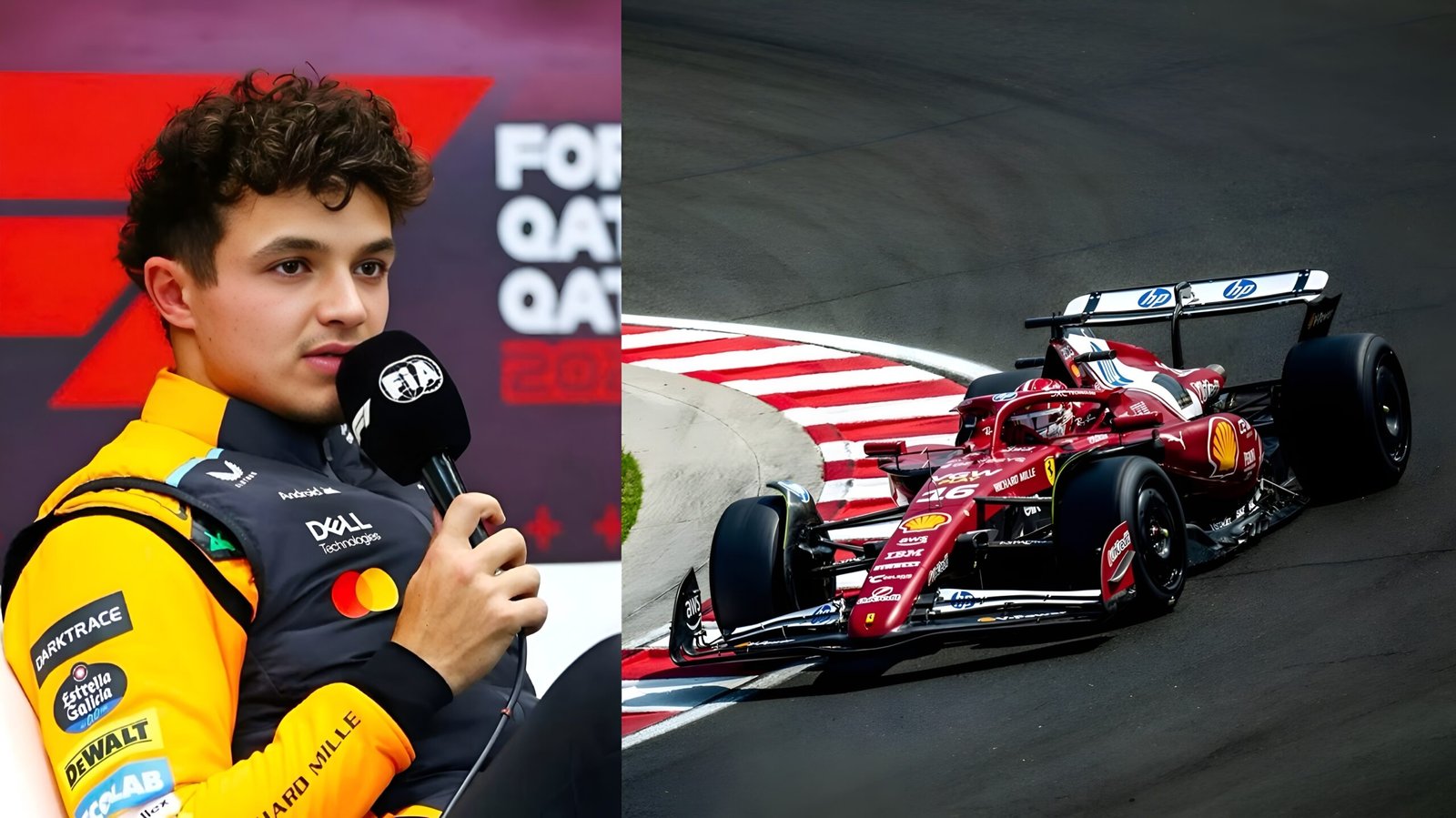
Fresh from a challenging race at Albert Park, where he finished a distant fifth, Norris did not mince words about the performance hierarchy. In a move that eschewed typical paddock politics, he bypassed the race-winning Mercedes to single out their closest competitor, Ferrari, as the team that has mastered the new regulations. His analysis was not that of a frustrated driver, but of a seasoned expert offering a technical observation with clear admiration.
“I think Ferrari, from what we see, quite clearly they have the best car,” Norris stated, his comments reverberating through the paddock. “Their cornering speeds are unbelievable.”
This specific praise for Ferrari’s cornering prowess is technically significant. The 2026 regulations, with their emphasis on a 50/50 power split between the internal combustion engine and the electrical MGU-K, have fundamentally altered car dynamics. The cars are heavier and possess different aerodynamic characteristics. Norris’s observation suggests that while other teams are wrestling with the trade-offs between straight-line speed, derived from the new power units, and mechanical grip, Ferrari has engineered a chassis that provides a stable, confidence-inspiring platform through the corners. This “unbelievable” speed indicates a machine with superior downforce, exceptional balance, and an ability to maintain momentum—a critical advantage that compounds lap after lap.
His assessment laid bare McLaren’s own struggles. “We’re nowhere near where we need to be, clearly,” he admitted, contextualizing the gap with a damning statistic. “But probably more so from a car perspective.” Norris estimated McLaren’s deficit at over half a second per lap to the front-runners. In Formula 1 terms, this is a chasm. His race result underscored this point: he crossed the line 52 seconds behind the race winner and, more pointedly, 36 seconds adrift of the leading Ferrari, effectively rendering him a spectator to the battle at the front. This gap is not merely a setup issue; it speaks to a fundamental deficit in car performance, a reality the reigning champion was quick to acknowledge.
A Broader Condemnation: The “Worst” Cars of a Generation?
Beyond the immediate competitive landscape, Norris, the very driver who mastered the previous generation of cars to win the 2025 World Championship, launched a blistering critique of the 2026 regulations. His frustration, which had been simmering since a difficult P6 qualifying session, boiled over into a damning indictment of the new machinery.
Contrasting them with their predecessors, which he had lauded as the “best ever,” Norris described the 2026 cars as “probably the worst.” His criticism was not aimed at safety or aesthetics, but at the very philosophy of the power unit regulations and their impact on the art of driving. The core of his complaint lies with the mandated 50/50 split between electric and internal combustion power.
This regulation forces drivers into an unprecedented level of energy management. The complex interplay of harvesting energy under braking and deploying it on straights has turned races into a constant, high-stakes exercise in conservation. Drivers are forced to lift and coast far earlier and more extensively than ever before to ensure they have sufficient electrical energy to defend or attack. For a purist like Norris, this detracts from the raw, flat-out racing that defines Formula 1. Instead of pushing the car to its absolute physical limits every lap, the focus has shifted to a cerebral, almost tactical, management of the battery. This, in Norris’s view, compromises the essence of being a racing driver at the highest level.
This sentiment reflects a growing concern within the paddock that the sport may have over-engineered the challenge, creating a formula where the driver’s ability to manage software and energy deployment strategies is becoming as important, if not more so, than their car control and raw pace. For a champion who built his reputation on the latter, this new reality is clearly a source of profound professional frustration.
The Road Ahead: A Champion’s Challenge
Lando Norris’s post-race analysis in Melbourne presents a compelling narrative for the 2026 season. As reigning World Champion, his voice carries immense weight, and his dual critique—of his own team’s performance and the sport’s new direction—sets a somber tone for his title defense. He finds himself in the unenviable position of being at the peak of his powers, yet constrained by machinery that is both uncompetitive and, in his view, fundamentally unsatisfying to drive.
His open admiration for Ferrari’s chassis will serve as a powerful motivator for the engineers at McLaren’s Woking headquarters. It is a clear and public benchmark, a target laid down by their own star driver. The half-second deficit is a mountain to climb, and the pressure is now immense to close that gap and provide their champion with a car capable of defending his crown.
More broadly, his condemnation of the 2026 regulations will resonate with fans and officials alike. When the reigning champion, a young and popular figure, questions the very soul of the new cars, it cannot be ignored. The coming months will reveal whether his concerns are isolated or if they represent a consensus view among the drivers. Formula 1’s governing bodies now face the uncomfortable reality that their vision for the future of the sport is being publicly questioned by its most recent and credible victor.
For Lando Norris, the path forward is one of immense challenge. He must lead his team out of a significant performance deficit while mastering a formula he fundamentally dislikes. The 2026 season will not only be a test of McLaren’s engineering prowess but a profound test of their champion’s resilience, leadership, and his ability to extract performance from imperfection.


