Published by: AutodromeF1 Editorial Team
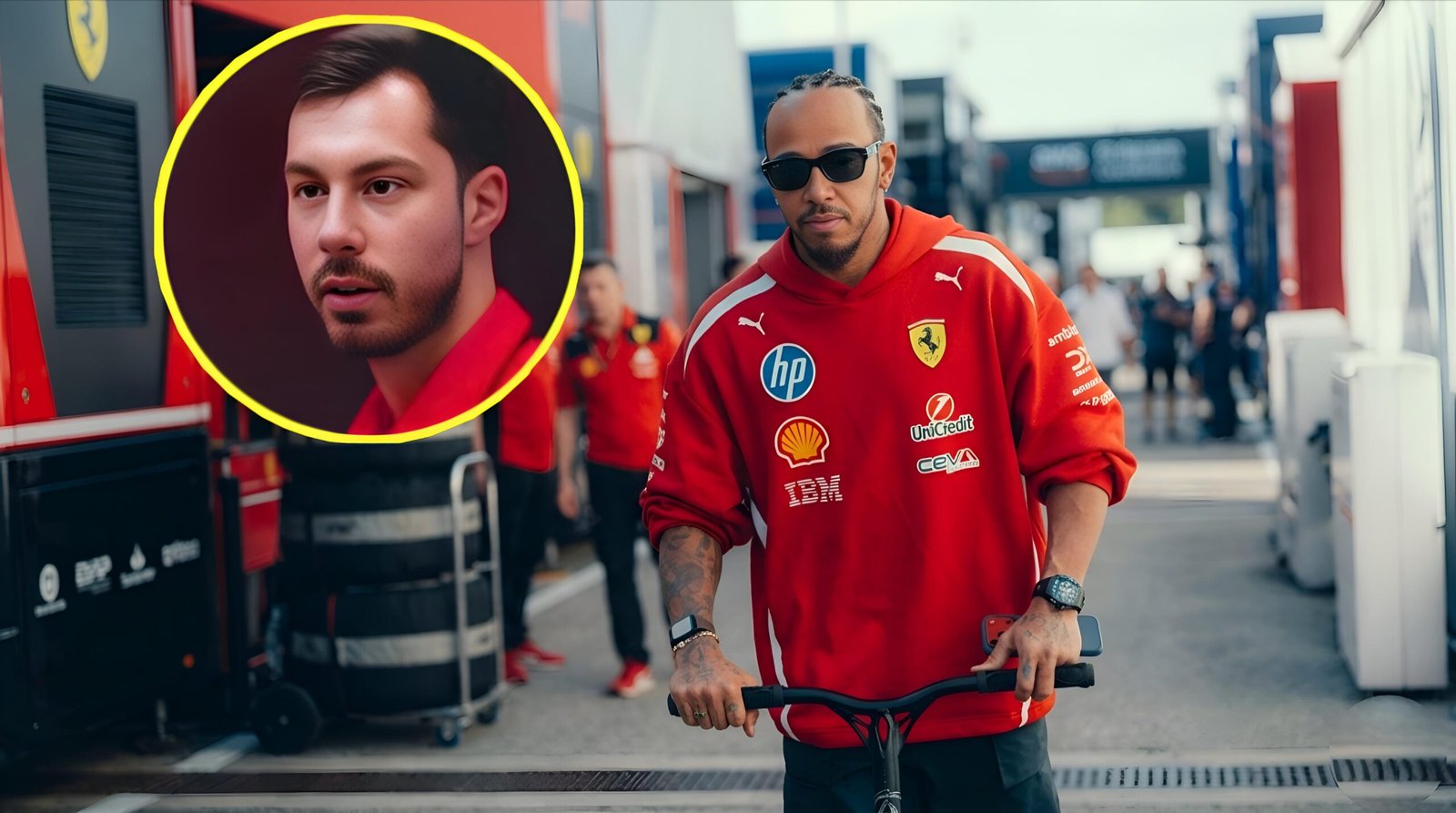
Ferrari Engineering Overhaul: Cédric Michel-Grosjean Poised to Become Lewis Hamilton’s Permanent Race Engineer from the Miami Grand Prix
Maranello, Italy 2 April – In the high-stakes world of Formula 1, where milliseconds separate triumph from frustration, the relationship between a driver and their race engineer is often the unseen cornerstone of success. It is a partnership forged in the crucible of data streams, split-second decisions, and the intimate language of radio communication that can elevate a championship contender or expose underlying vulnerabilities. As the 2026 season enters its critical early phase, Scuderia Ferrari has orchestrated a significant mid-season recalibration in Lewis Hamilton’s garage, one that underscores the team’s relentless pursuit of stability amid ambition.
Cédric Michel-Grosjean, the French engineer whose expertise helped propel Oscar Piastri to contention at McLaren, is set to step into the role of Hamilton’s full-time race engineer beginning at the Miami Grand Prix weekend. He will assume the position from interim engineer Carlo Santi, whose steady hand has guided the seven-time world champion through the opening rounds of the campaign. This transition, while meticulously planned, arrives against a backdrop of calendar disruptions and the inherent complexities of integrating fresh talent into one of motorsport’s most storied outfits.
The announcement aligns with a deliberate strategy Ferrari has pursued since the close of the 2025 season, when Hamilton’s inaugural year in Maranello concluded with a mix of promise and persistent challenges. Riccardo Adami, Hamilton’s race engineer during that debut campaign, was reassigned to a strategic role within the Ferrari Driver Academy and test program—a move described internally as a necessary evolution to bolster the team’s long-term talent pipeline. Adami’s tenure, while marked by moments of collaboration, highlighted the occasional friction that can arise when a driver of Hamilton’s caliber adapts to a new technical and cultural environment. Hamilton himself later reflected on the decision as “a very difficult one,” acknowledging the human and professional toll of such shifts while emphasizing gratitude for Adami’s contributions during a demanding transition period.
In the immediate aftermath, Carlo Santi emerged as the logical interim solution. A veteran Ferrari engineer with over a decade of experience, Santi previously collaborated closely with Kimi Räikkönen during the Finn’s successful tenure with the Scuderia. His appointment provided continuity and institutional knowledge, allowing Hamilton to maintain momentum without the disruption of an entirely external voice on the pit wall. Early indications suggest the pairing has yielded tangible results: Santi’s calm, process-driven approach contributed to Hamilton securing his first podium finish of the 2026 season, fostering a rapport that has been notably smoother than in the preceding year. Yet Ferrari, ever pragmatic in its championship aspirations, recognized that a long-term solution was essential—one that could infuse the #44 garage with cutting-edge insights from a rival operation.
Enter Michel-Grosjean. A graduate of the prestigious École Polytechnique Fédérale de Lausanne (EPFL), he spent nearly a decade at McLaren, rising through the ranks to become lead trackside performance engineer on Piastri’s side of the garage. In that capacity, Michel-Grosjean played a pivotal role in optimizing car setup, brake balance, engine modes, and real-time performance feedback—elements that were instrumental in Piastri’s competitive surge during the 2025 campaign. His departure from Woking at the end of 2025 triggered the customary gardening leave period, a contractual safeguard that delayed his immediate integration into Ferrari’s operations. Ferrari’s recruitment of Michel-Grosjean was not a reactive measure but a calculated investment in external excellence, designed to complement the team’s internal strengths while addressing Hamilton’s expressed need for precise, data-rich communication tailored to his driving style.
Initial plans called for Michel-Grosjean to embed himself gradually, shadowing key personnel during the early-season races in Australia, China, and Japan. This observational phase was intended to acclimate him to Hamilton’s nuanced preferences—his distinctive radio phrasing, the specific telemetry he prioritizes, and the intricate rhythms of Ferrari’s in-race decision-making protocols. Such shadowing is more than procedural; it is an apprenticeship in the subtle art of engineering synergy, where understanding a driver’s instincts can prevent the miscommunications that have plagued past partnerships. Michel-Grosjean has been present trackside since the Australian Grand Prix, quietly absorbing processes while dressed in Ferrari team attire, a visible sign of his impending full integration.
However, external forces intervened. Geopolitical tensions in the Middle East led to the cancellation of the Bahrain and Saudi Arabian Grands Prix, events originally slated for April. These disruptions—prompted by regional conflict and safety imperatives—compressed the 2026 calendar to 22 races and created an extended five-week hiatus between the Japanese Grand Prix and the Miami weekend. What might have been a seamless progression from early-season observation to full operational status was thus postponed. The delay, while regrettable, has afforded Michel-Grosjean additional time to refine his understanding of Hamilton’s requirements, ensuring the handover minimizes any performance dip. Ferrari insiders emphasize that this period of close observation has been invaluable, allowing the engineer to calibrate his input to Hamilton’s feedback loops with precision.
From a strategic standpoint, this transition exemplifies Ferrari’s adaptive philosophy under team principal Frédéric Vasseur. Vasseur has publicly praised Santi’s interim contributions, noting the pair’s effective collaboration and the absence of any urgency to accelerate changes prematurely. “I think Michel-Grosjean is an excellent recruit and that he could get along well with Lewis,” Vasseur observed in recent media interactions, “but for now Carlo Santi is taking care of Lewis and the couple is working well—we will decide together, there is no hurry.” This measured approach contrasts sharply with the more turbulent engineer-driver dynamics of Hamilton’s Mercedes era, where Peter Bonnington (“Bono”) became synonymous with seamless, intuitive guidance over more than a decade. Replicating—or surpassing—that level of rapport is no small feat, yet Michel-Grosjean’s pedigree suggests he possesses the analytical acumen and interpersonal finesse required.
The broader implications for Hamilton’s 2026 campaign are profound. At 41, the British driver enters his second season at Ferrari with renewed optimism, buoyed by incremental car improvements and a more harmonious technical framework. Yet the cumulative effect of multiple engineer changes—first Adami’s reassignment, then Santi’s interim role, and now Michel-Grosjean’s arrival—has been acknowledged by Hamilton as potentially “detrimental” to early-season consistency. Stability in the engineering seat is not merely administrative; it underpins confidence in high-pressure scenarios, from qualifying simulations to race-day strategy calls. A fresh perspective from McLaren’s data-driven culture could, however, unlock untapped potential, particularly in tire management, aerodynamic efficiency, and the integration of 2026’s regulatory evolutions.
Historically, Ferrari’s greatest eras have thrived on such symbiotic driver-engineer bonds—think Michael Schumacher and Ross Brawn, or more recently, the precision that defined Sebastian Vettel’s early successes. Hamilton, with 105 career victories and a legacy defined by relentless adaptation, now faces another chapter in this evolution. Michel-Grosjean’s McLaren tenure equipped him with experience in a team that emphasized agile performance optimization, skills that could prove decisive as Ferrari challenges for constructors’ and drivers’ honors. Observers note that Piastri’s rapid ascent under Michel-Grosjean’s oversight mirrored the kind of incremental gains Hamilton seeks: refined feedback loops that translate raw data into actionable insights without overwhelming the driver.
Beyond the immediate Miami debut, this move signals Ferrari’s commitment to a hybrid model of engineering talent—blending homegrown expertise with targeted external hires. It also reflects the sport’s broader talent mobility, where engineers like Michel-Grosjean navigate non-compete clauses and cultural shifts with the same rigor as drivers. For Hamilton, the change represents both opportunity and adjustment. Early radio exchanges with Santi demonstrated growing alignment, yet the introduction of Michel-Grosjean’s voice—potentially more performance-oriented and less steeped in Ferrari tradition—will require recalibration. The Miami International Autodrome, with its mix of high-speed straights and technical corners, offers an ideal proving ground: a venue where strategic nuance and real-time engineering input can shine.
As the paddock converges on Florida, anticipation builds around this new partnership. Will Michel-Grosjean’s fresh insights catalyze the consistency Hamilton craves? Or will the mid-season pivot introduce the very teething issues the team sought to avoid? What remains certain is Ferrari’s proactive stance: prioritizing long-term synergy over short-term expediency. In a season already reshaped by external events, this engineering evolution stands as a testament to the Scuderia’s ambition—to not merely compete, but to engineer a championship challenge worthy of its history and Hamilton’s unparalleled pedigree.
The Miami Grand Prix weekend will mark more than a calendar milestone; it will test the resilience of a carefully cultivated alliance. For fans, analysts, and the sport at large, it offers a compelling narrative of adaptation in Formula 1’s unforgiving arena—one where human connection, technical mastery, and strategic foresight converge. As ever, the true measure of success will unfold not in press releases, but in the quiet precision of the garage and the clarity of the radio under race pressure. Ferrari, it seems, is betting that Michel-Grosjean holds the key to unlocking Hamilton’s full potential in red. The coming races will reveal whether that wager pays dividends on the track.


