Published by: AutodromeF1 Editorial Team
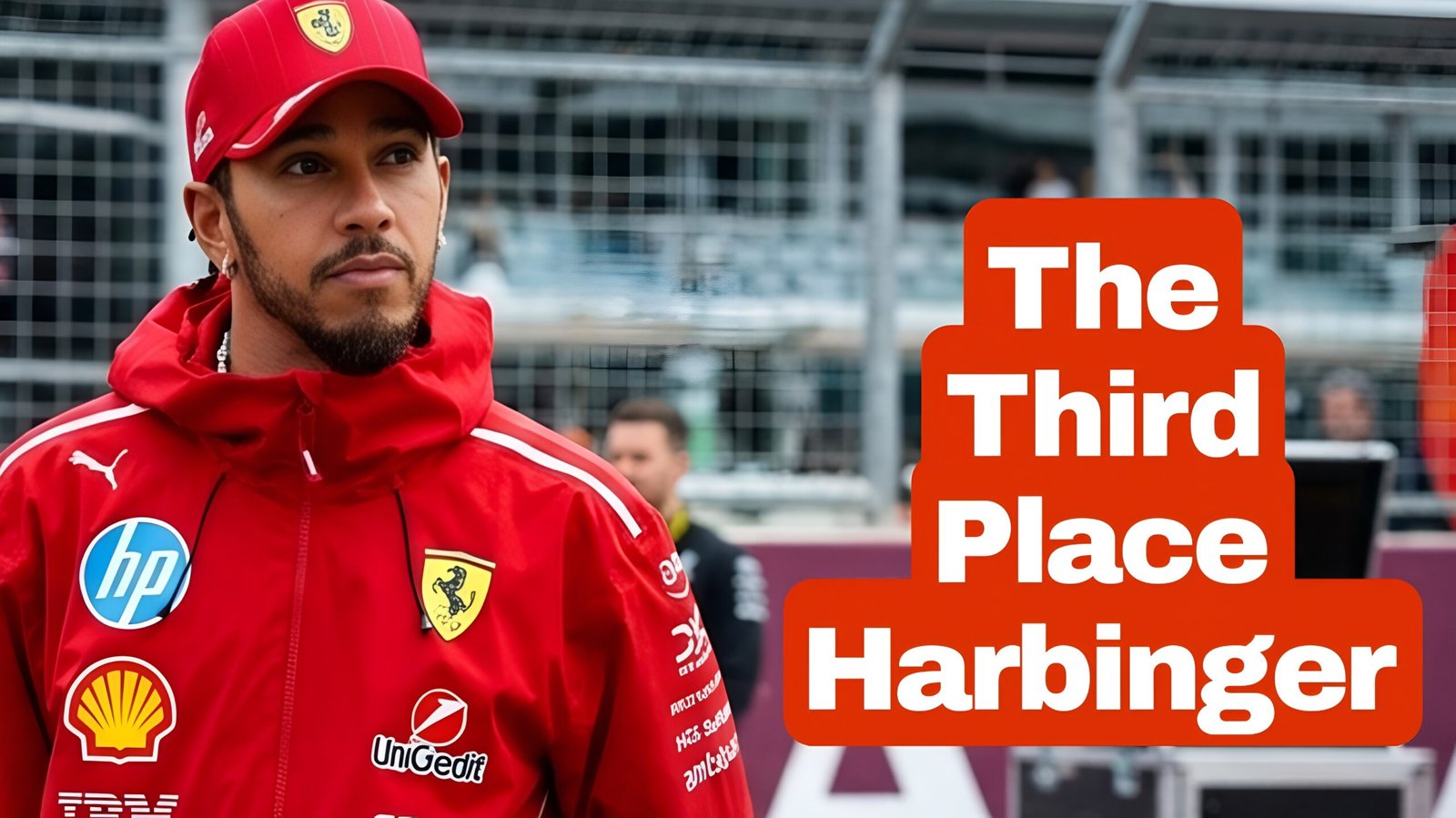
The Third-Place Harbinger: Lewis Hamilton’s Inaugural Podiums Across Three Iconic Teams and the Enduring Championship Symmetry That Defines a Legacy
In the rarefied world of Formula 1, where split-second decisions and infinitesimal margins separate triumph from obscurity, patterns emerge that transcend statistical anomaly to approach the realm of sporting prophecy. Sir Lewis Hamilton, the most decorated driver of the modern era with seven world titles to his name, has once again etched such a pattern into the sport’s collective consciousness. Across his transitions to three of the most storied constructors in the championship’s history—McLaren, Mercedes, and now Ferrari—his first podium finish with each new team has consistently been a hard-fought third place. More strikingly still, in the initial two instances, the driver who stood atop the podium on that debut occasion ultimately claimed the Drivers’ Championship at season’s end. With Hamilton’s latest milestone secured at the 2026 Chinese Grand Prix for Scuderia Ferrari, the symmetry invites rigorous examination: a coincidence born of competitive dynamics, or a subtle indicator of shifting power balances within the grid?
This narrative thread, woven through nearly two decades of Hamilton’s unparalleled career, offers a lens through which to view not only his personal evolution but also the broader currents reshaping Formula 1 in an era of regulatory flux, youthful prodigies, and intensifying manufacturer rivalries. Unlike the breathless recaps that dominate much contemporary motorsport coverage—often fixated on lap times and radio transcripts—this analysis delves deeper, exploring the technical, psychological, and strategic underpinnings of these moments while projecting their implications for a 2026 season that promises to redefine dynasties.
The McLaren Genesis: A Debutant’s Poise Amidst Emerging Rivalry (2007)
Hamilton’s entry into Formula 1 in 2007, as a 22-year-old prodigy paired with two-time champion Fernando Alonso at McLaren, represented one of the most audacious rookie campaigns in the sport’s annals. The Australian Grand Prix at Albert Park, Melbourne, served as the crucible. Qualifying fourth, Hamilton navigated the race with a maturity that belied his inexperience, capitalising on strategic precision and the inherent pace of the McLaren MP4-22 to secure third place. Ahead of him, Ferrari’s Kimi Räikkönen crossed the line first in a commanding performance, with Alonso claiming second to complete a podium that foreshadowed the intra-team tensions to come.
The margin was telling: Räikkönen finished 7.240 seconds ahead of Alonso, who in turn led Hamilton by 18.600 seconds. Yet Hamilton’s composure under pressure—managing tyre wear on a circuit notorious for its demanding layout—signalled the arrival of a generational talent. Räikkönen, in his maiden season with Ferrari, would go on to clinch the 2007 Drivers’ Championship by the slimmest of margins: a single point over both Hamilton and Alonso, who finished level on 109 points. The season’s dramatic denouement in Brazil, compounded by McLaren’s espionage controversy and internal discord, underscored the volatility of that year. Nevertheless, the pattern held: the Australian victor ascended to the throne.
In retrospect, this debut podium encapsulated Hamilton’s ability to extract maximum performance from nascent machinery. The McLaren-Mercedes partnership, then in its competitive ascendancy before the hybrid regulations of later eras, provided a platform that propelled him to four victories and 109 points in his rookie year. Analysts at the time noted the psychological resilience required to share a garage with Alonso, a dynamic that tested alliances yet honed Hamilton’s competitive edge. This early symmetry—third place on debut, championship for the winner—would prove no isolated incident but the first verse in a recurring motif.
The Mercedes Transition: Correcting the Narrative Amidst Hybrid Revolution (2013)
Six years later, Hamilton’s move to Mercedes for the 2013 season marked a pivotal recalibration. Joining the Brackley-based outfit after a mutually amicable parting from McLaren, he inherited a team transitioning from midfield contender to championship aspirant under the new 1.6-litre turbo-hybrid regulations. The Malaysian Grand Prix at Sepang provided the stage for his first podium in silver.
Starting from fourth on the grid, Hamilton executed a measured drive that capitalised on the superior tyre management of the Mercedes W04 and strategic calls that preserved his position through variable weather conditions. Sebastian Vettel, then the dominant force at Red Bull Racing, claimed victory with authoritative control, followed by teammate Mark Webber in second. Hamilton crossed the line third, 25 points behind the winner in a race that highlighted the early-season balance of power. The result was not merely symbolic; it affirmed Mercedes’ potential in the nascent hybrid era, where energy recovery systems and power unit efficiency would soon redefine performance hierarchies.
Vettel, building on his prior three consecutive titles, would dominate the remainder of 2013 with a record nine successive victories, securing his fourth championship in emphatic fashion. Hamilton’s podium, though modest in the context of the season’s eventual outcome—Mercedes would claim only three wins that year—signalled the foundations of a dynasty. By season’s end, the team had laid the groundwork for four consecutive constructors’ titles and Hamilton’s own era of supremacy from 2014 onward.
It is worth noting a common misconception in some retellings: the Malaysian victor was not Räikkönen, as occasionally misremembered, but Vettel, whose Red Bull RB9 exemplified the aerodynamic and power advantages of the time. This correction sharpens the pattern’s clarity. Hamilton’s third-place finish, achieved through deft overtaking and defensive masterclass against faster cars in the closing laps, exemplified the adaptability that would later define his Mercedes tenure. The move itself, from a storied British squad to a resurgent German powerhouse, mirrored broader industry shifts toward manufacturer investment in sustainable propulsion technologies.
The Ferrari Chapter: A Long-Awaited Breakthrough in the Post-Hybrid Epoch (2026)
Fast-forward to the present, and the pattern resurfaces with compelling resonance. Having joined Scuderia Ferrari ahead of the 2025 season after a record-breaking 12-year association with Mercedes, Hamilton endured a challenging maiden campaign marked by developmental hurdles and a conspicuous absence of podiums—27 races without one, by some accounts. The 2026 regulations, emphasising sustainable fuels and revised aerodynamics, promised a reset. At the Chinese Grand Prix in Shanghai this March, the breakthrough materialised.
In a race characterised by Mercedes’ early-season resurgence, Hamilton delivered a consummate performance to claim third for Ferrari. Kimi Antonelli, the 19-year-old Italian sensation making waves in his sophomore year with the Silver Arrows, secured a maiden victory from pole position in a display of precocious brilliance. Teammate George Russell completed a dominant one-two for Mercedes, underscoring the team’s seamless integration of youth and experience following Hamilton’s departure. Hamilton, starting further back, orchestrated a strategic fightback, overtaking his Ferrari teammate Charles Leclerc in the latter stages through precise tyre conservation and opportunistic overtakes under virtual safety car periods.
As of mid-March 2026, with only a handful of rounds completed, the Drivers’ Championship standings reflect an intriguing fluidity: Russell leads with 51 points, Antonelli trails closely in second on 47, while Hamilton occupies fourth. The season remains emphatically open, with the Japanese Grand Prix looming as the next theatre of combat. Antonelli’s victory—his first in Formula 1—evokes echoes of past prodigies, yet the podium symmetry with Hamilton’s debut for Ferrari revives the familiar question: will the Chinese victor follow the precedent set by Räikkönen and Vettel?
Analytical Depth: Coincidence, Causation, or Competitive Echo?
To dismiss this pattern as mere happenstance would overlook the structural dynamics at play. Each of Hamilton’s team transitions coincided with periods of flux: the 2007 spy scandal and rookie influx; the 2013 advent of hybrids; and the 2026 regulatory overhaul emphasising efficiency and parity. In each case, the debut podium race featured a constructor asserting early dominance—Ferrari in 2007, Red Bull in 2013, and now Mercedes again—before consolidating through the season. Hamilton’s consistent extraction of a podium from machinery still acclimatising to his inputs speaks to his unparalleled racecraft: tyre management, strategic foresight, and mental fortitude honed across 300-plus Grands Prix.
Statistically, the recurrence defies probability. Only a select cadre of drivers—Alonso, Schumacher, Prost—have achieved comparable multi-team success, yet none exhibit this precise inaugural symmetry. Psychologically, Hamilton’s third-place finishes served as psychological anchors: affirmations of potential amid adjustment periods. For McLaren, it quelled debutant nerves; for Mercedes, it validated the switch; for Ferrari, it punctures the narrative of post-Mercedes decline.
In the current landscape, the 2026 implications are profound. Mercedes’ early pace, propelled by Antonelli’s raw talent and Russell’s veteran stewardship, suggests a renewed title challenge. Ferrari, buoyed by Hamilton’s experience and the Maranello outfit’s historical resilience, appears poised for incremental gains. The young Italian’s trajectory—already a winner at an age when Hamilton was merely debuting—mirrors the sport’s shift toward accelerated development cycles. Yet history cautions: Räikkönen and Vettel capitalised on momentum; Antonelli must sustain it amid inevitable regulatory equalisation and strategic evolutions.
Hamilton himself, at 41, pursues an eighth crown with the same unyielding ambition that defined his ascent. His Ferrari tenure, initially fraught, now carries the weight of legacy. Should the pattern endure and Antonelli prevail, it would represent a passing of the torch; if not, Hamilton’s podium heralds a Ferrari renaissance. Either outcome enriches the narrative.
Broader Context and Forward Horizons
Beyond individual accolades, this symmetry illuminates Formula 1’s evolution. From the analogue era of 2007, through hybrid hegemony, to the sustainable paradigm of 2026, Hamilton has bridged epochs. His moves—McLaren to Mercedes, Mercedes to Ferrari—mirror the sport’s commercial and technological migrations: from independent teams to manufacturer powerhouses, and now toward global sustainability mandates.
Comparisons to peers abound. Fernando Alonso’s transitions yielded podiums but lacked this exact alignment with eventual champions. Michael Schumacher’s Ferrari arrival yielded immediate dominance without the third-place preface. Hamilton’s arc, by contrast, embodies measured ascent: podium as prelude, championship as potential coda.
Looking ahead, the Japanese Grand Prix and subsequent European rounds will test the hypothesis. Mercedes’ one-two in China signals technical superiority, yet Ferrari’s development trajectory—bolstered by Hamilton’s feedback—could narrow the gap. Antonelli’s maturity under pressure will prove decisive; Russell’s consistency provides ballast. For Hamilton, the focus remains on incremental podiums evolving into victories, a trajectory familiar from his Mercedes golden years.
In an age where data analytics and simulations dominate discourse, the persistence of this human-centric pattern reminds us of Formula 1’s enduring romance: the interplay of talent, timing, and fate. Whether harbinger or historical footnote, Hamilton’s third-place milestones across three teams affirm a career of singular resonance. As the 2026 season unfolds, the paddock—and enthusiasts worldwide—will watch with heightened anticipation, pondering whether the symmetry that has defined his transitions will once more crown a champion.
This is no ordinary statistical quirk; it is a testament to Hamilton’s enduring influence and the subtle rhythms governing elite competition. In a sport often reduced to telemetry, such patterns restore the narrative depth that elevates Formula 1 to cultural phenomenon.


