Published by: AutodromeF1 Editorial Team
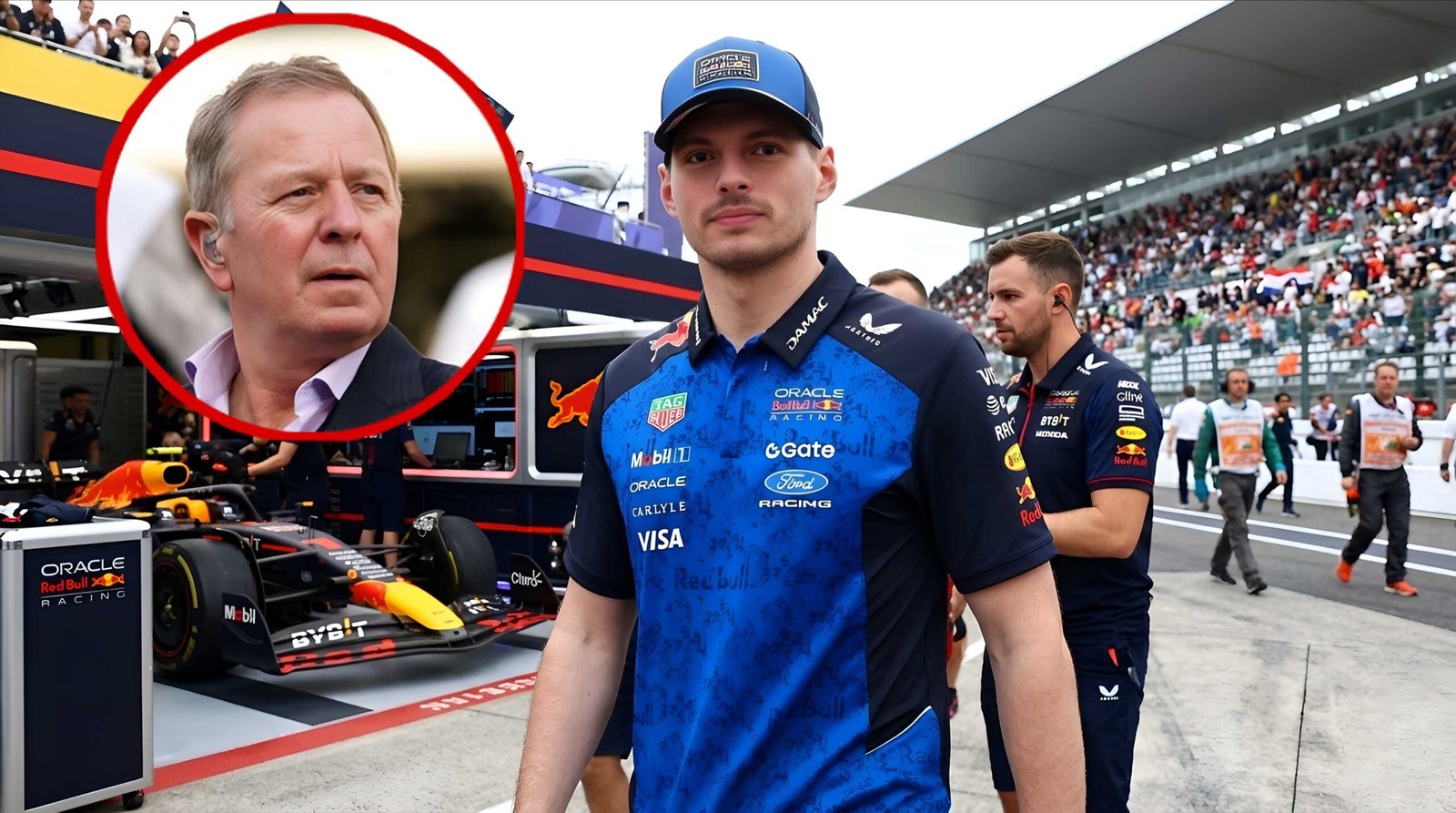
Martin Brundle Delivers Measured Critique of Max Verstappen’s Ongoing Public Speculation on His Formula 1 Future
In an era defined by regulatory flux and commercial intensity, the Sky Sports F1 commentator urges the four-time world champion to resolve his uncertainty with clarity, underscoring that even unparalleled talent must ultimately align with the sport’s evolving demands.
London, United Kingdom – 1 April 2026 – Martin Brundle, one of Formula 1’s most respected and experienced voices, has articulated a pointed yet respectful assessment of Max Verstappen’s repeated expressions of doubt concerning his long-term participation in the championship. Speaking during a recent edition of Sky Sports’ The F1 Show, Brundle acknowledged the Dutch driver’s extraordinary gifts while expressing clear exasperation with the cyclical nature of the speculation that has come to characterise Verstappen’s public commentary in recent months.
Brundle’s remarks, delivered with the authority of a former Grand Prix competitor, Le Mans winner, and decades-long paddock insider, strike a careful balance between admiration and pragmatism. “I would hugely miss his talent,” he stated. “Either go or stop talking about it, because it is what it is. You’ve got to make the most of it.” He further described the ongoing narrative as “getting a bit boring now,” while reminding observers that “no driver is indispensable.”
The context for Brundle’s intervention is both technical and contractual. Verstappen, currently contracted to Red Bull Racing until the end of 2028 with carefully negotiated performance-related exit options, has openly questioned the philosophical direction of Formula 1 under the forthcoming 2026 regulatory framework. Central to his reservations is the heightened emphasis on energy management, sustainable fuels, and a significantly increased electrical power contribution—elements he has, on occasion, likened in character to the constraints familiar from Formula E. These concerns have been amplified by Red Bull’s concurrent transition to an in-house powertrain programme, marking the team’s first independent foray into engine manufacturing since its re-entry into the sport in 2005.
Such commentary is not without precedent in Verstappen’s career. The 28-year-old has consistently demonstrated a willingness to speak candidly about technical and competitive matters, a trait that has endeared him to purists even as it occasionally unsettles team principals and governing bodies. Yet Brundle’s intervention highlights a growing sense within the paddock that sustained public uncertainty, however genuine, risks becoming performative rather than constructive. In an era when Formula 1’s global audience has expanded dramatically under Liberty Media’s stewardship, the narrative surrounding its pre-eminent talent carries implications far beyond the cockpit.
To fully appreciate the weight of Brundle’s perspective, it is necessary to examine the technical architecture of the 2026 regulations themselves. The new power-unit formula mandates a near-50/50 split between internal-combustion and electrical energy deployment, coupled with the elimination of the MGU-H and a substantial reduction in overall power-unit weight. Active aerodynamics, revised chassis dimensions, and a mandatory sustainable fuel mandate further redefine the competitive landscape. These changes represent the most profound regulatory reset since the hybrid era began in 2014. Verstappen’s unease appears rooted less in outright rejection than in a principled concern that the resultant racing product may prioritise efficiency metrics over the visceral, mechanical drama that has historically defined the pinnacle of motorsport.
From an engineering standpoint, such apprehensions are understandable. Energy management in Formula 1 has always been critical; under the 2026 rules it becomes existential. Drivers will be required to master deployment strategies that mirror, in certain respects, the battery-conservation discipline demanded in electric single-seater competition. Red Bull’s powertrain development—conducted in partnership with Ford—remains in its relative infancy compared with established manufacturers such as Mercedes-AMG, Ferrari, and the incoming Audi programme. The team’s recent competitive fluctuations, particularly in race-pace reliability during the 2025 campaign, have only intensified the scrutiny surrounding Verstappen’s future.
Yet Brundle’s counsel transcends the immediate technical debate. It reflects a deeper understanding of the psychological contract that exists between elite athletes and their chosen discipline. History demonstrates that drivers of Verstappen’s calibre—those possessing what the commentator rightly termed “generational speed and car control”—have occasionally found themselves at similar crossroads. Michael Schumacher contemplated retirement multiple times before his final Mercedes chapter; Alain Prost engineered calculated exits that reshaped team hierarchies; even Ayrton Senna, whose commitment appeared absolute, navigated periods of profound dissatisfaction with regulatory and political machinations. In each case, the sport adapted. Talent of Verstappen’s magnitude is rare; its absence would undoubtedly diminish the spectacle. But the championship’s institutional resilience, forged through more than seven decades of evolution, has repeatedly proven greater than any individual.
Verstappen’s achievements to date provide irrefutable evidence of his stature. Four world titles secured in an era of intense intra-team and inter-manufacturer competition; record-breaking victory tallies; a driving style that marries clinical precision with instinctive bravery. His ability to extract performance from machinery that, at times, appeared marginal has been instrumental in Red Bull’s dominance across multiple regulatory cycles. To lose such a competitor at or near his physical and mental peak would constitute a significant blow to the championship’s competitive narrative. Brundle himself concedes this reality while simultaneously rejecting any notion of indispensability—a stance that aligns with the meritocratic ethos that has long underpinned Formula 1.
Contractual analysis further complicates the picture. Verstappen’s agreement with Red Bull includes clauses that afford him flexibility should the team’s performance fall below mutually agreed thresholds. These provisions were negotiated with foresight, recognising the volatility inherent in power-unit transitions. Mercedes, historically interested in securing the Dutchman’s services, currently lacks an immediate vacancy following the extension of George Russell’s contract and the stabilisation of its driver line-up. Other potential suitors—most notably the factory Audi project slated for 2026—remain speculative. Retirement, while theoretically an option, appears improbable for a driver who, at 28, retains the physical and cognitive capacities to compete at the highest level for another decade or more.
The commercial ramifications of any potential departure extend beyond the sporting arena. Formula 1’s global broadcasting deals, sponsorship portfolios, and digital engagement metrics have become increasingly intertwined with star power. Verstappen’s marketability—rooted in his authenticity, cross-generational appeal, and unfiltered engagement with fans via social platforms—has contributed measurably to the sport’s post-pandemic resurgence. A prolonged period of uncertainty could, paradoxically, sustain short-term interest while eroding long-term stability. Brundle’s call for resolution therefore carries strategic as well as moral weight: clarity benefits all stakeholders, from team engineers to casual viewers.
It is worth noting that Brundle’s commentary emerges not from antagonism but from a place of informed concern. His own career, spanning the turbo era through to the early 1990s, equipped him with first-hand experience of regulatory upheaval and the personal toll it can exact. As a broadcaster, he has cultivated a reputation for forensic insight tempered by empathy—an approach that distinguishes his analysis from the more sensationalist tendencies prevalent in contemporary sports media. In urging Verstappen to “make the most of it,” Brundle implicitly acknowledges the fleeting nature of elite athletic opportunity while affirming the driver’s agency in shaping his legacy.
Looking ahead, the 2026 season promises to be a watershed moment. The convergence of new technical regulations, manufacturer realignment, and shifting environmental imperatives will test the adaptability of every team and driver. Verstappen’s decision—whether to remain, relocate, or reconsider his involvement—will reverberate across the grid. Should he choose to stay and master the new paradigm, his stature as one of the sport’s all-time greats will only be enhanced. Conversely, a departure executed on his own terms would represent a principled stand, albeit one that deprives audiences of a rare talent in its prime.
Ultimately, Brundle’s intervention serves as a timely reminder of professional maturity within a high-stakes environment. Formula 1 rewards decisiveness as much as it celebrates genius. The sport’s future will be determined not solely by regulatory documents or power-unit specifications, but by the choices of those entrusted with its most visible roles. Verstappen possesses the talent to define an era; the question now is whether he will also demonstrate the strategic clarity to shape his own narrative within it.
As the European leg of the 2026 season approaches, the paddock will watch closely. Brundle has spoken with the candour and experience that only a true insider can muster. The ball, as the saying goes, rests firmly in Verstappen’s court. The coming weeks and months will reveal whether the champion elects to commit fully to the challenge ahead or seeks fulfilment beyond the current confines of Formula 1. In either case, the sport—and its most astute observers—will adapt, evolve, and continue.


