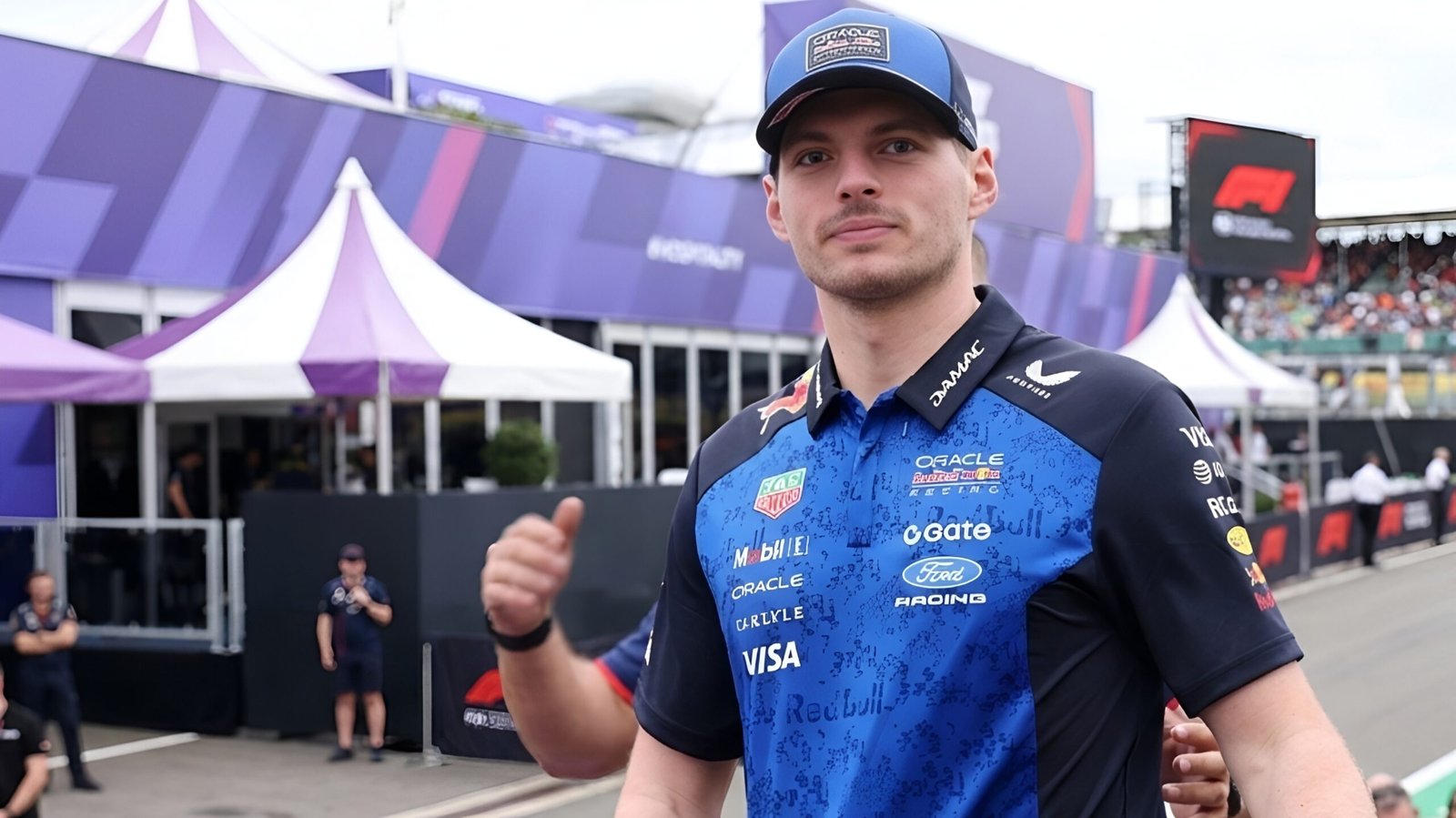
Published by: AutodromeF1 Editorial Team
Max Verstappen’s Profound Discontent with 2026 Formula 1 Regulations: A Pivotal Moment for the Sport’s Future
London, United Kingdom 31 March – In an era defined by unprecedented technological ambition and regulatory transformation, Formula 1 finds itself confronting a challenge that transcends mere on-track performance. Max Verstappen, the driver whose mastery has reshaped the competitive landscape over the past half-decade, has articulated a level of dissatisfaction so acute that it now threatens the very foundation of his continued participation. Drawing directly from the Dutch champion’s own measured yet unequivocal statements, the core issue revolves around the 2026 power-unit regulations—specifically their heavy emphasis on battery management and electrical energy deployment—which he contends have introduced dynamics fundamentally at odds with the visceral essence of elite motorsport racing.
Verstappen has never been one to mince words, and his recent commentary carries the weight of experience forged through multiple world championships and hundreds of race starts. While he remains steadfast in his assertion that departure from the sport is not his immediate preference, the tenor of his observations signals a deeper existential reckoning. He is engaged in ongoing discussions with the Fédération Internationale de l’Automobile (FIA) aimed at refining the regulations, yet he has also openly contemplated the possibility of retirement at the season’s end should the joy of competition fail to return. This is no impulsive outburst; it is the considered reflection of a driver who has always placed passion above contractual security, even as his agreement with Red Bull Racing extends through 2028.
The technical underpinnings of Verstappen’s critique merit close examination. The 2026 regulations represent one of the most sweeping overhauls in Formula 1 history, deliberately shifting the power-unit architecture toward a near-equal balance between internal-combustion elements and electrical systems. Drivers are now required to exercise precise, almost surgical control over energy harvesting and deployment across every sector of the circuit. What this translates to in practice, Verstappen explains, is an unnatural style of driving that prioritizes battery-state management over instinctive racing lines and throttle application. Overtaking opportunities diminish as cars enter “energy-neutral” zones where neither driver possesses sufficient deployable power to force a move. The result, in his assessment, is racing that feels contrived and episodic—more akin to a high-stakes simulation of energy conservation than the free-flowing, wheel-to-wheel combat that has historically defined the pinnacle of the sport.
Verstappen has characterized these dynamics with characteristic bluntness as “anti-racing” and has drawn an unflattering parallel to “Formula E on steroids.” The analogy is telling. Where Formula E celebrates its electric purity and strategic energy deployment, Formula 1 has long prided itself on the visceral marriage of mechanical power, aerodynamic grip, and driver skill. The new regulations, while laudable in their sustainability objectives, appear—in Verstappen’s view—to have tipped the scales too far toward the former at the expense of the latter. The emotional toll is palpable. After difficult weekends, including a P8 finish in Japan that stood in stark contrast to his customary dominance, Verstappen described himself as feeling “completely empty.” Such candor from a driver of his calibre is rare and demands attention. It underscores a truth often overlooked in the rush to celebrate technical innovation: Formula 1’s enduring appeal rests not solely on spectacle or sustainability metrics, but on the authentic fulfilment it provides to those who risk everything behind the wheel.
This sense of unfulfilment is compounded by broader performance realities. Red Bull Racing, the team that has underpinned Verstappen’s recent supremacy, is navigating a transitional period in which the new chassis-power-unit combination has yet to deliver the expected synergy. Verstappen has been quick to praise the squad’s engine-development efforts, yet he insists that the overall package requires urgent recalibration if it is to restore competitive integrity and driver engagement. Poor results, while not the sole driver of his discontent, serve as an amplifying factor. Even a driver accustomed to winning acknowledges that occasional non-victorious weekends can be acceptable—provided the racing itself remains exhilarating. At present, the 2026 regulations appear to have stripped away that exhilaration, replacing it with a form of energy-management chess that leaves little room for the instinctive brilliance that has defined Verstappen’s career.
The speculation surrounding retirement is therefore neither hyperbolic nor unfounded. Reports emanating from Dutch media outlets describe these as “crucial weeks ahead,” with the mid-season break looming as a potential inflection point. Verstappen has been characteristically transparent, stating that he is “thinking about everything” and questioning whether the demands of a 22-race calendar remain worthwhile in the absence of genuine enjoyment. His contract notwithstanding, he has made clear that passion, not financial or professional obligation, remains his guiding principle. Should the regulations remain unaltered in their current form, the door to an early exit—or at least a strategic pause—stands ajar.
Notably, Verstappen has begun to articulate alternative horizons that align more closely with his enduring love of driving at the limit. Endurance racing, including events such as the Nürburgring 24 Hours and the 24 Hours of Le Mans, has surfaced in his reflections as an appealing prospect. These disciplines offer the raw, unfiltered challenge of long-distance competition, variable conditions, and mechanical reliability that contrast sharply with the battery-centric constraints of contemporary Formula 1. Such musings are not idle; they reflect a driver who, at the height of his powers, is unwilling to compromise the intrinsic rewards that first drew him to motorsport.
Yet hope for resolution persists. Verstappen’s direct engagement with the FIA underscores a constructive intent. He has advocated for targeted adjustments to the power-unit regulations that would restore a more balanced emphasis on internal-combustion performance and reduce the artificial constraints imposed by battery management. The governing body, alongside teams and stakeholders, is understood to be actively reviewing these concerns during the forthcoming break. Whether these deliberations will yield meaningful drivability enhancements remains to be seen. A full reversal of the 2026 framework is improbable, but incremental refinements—perhaps recalibrating energy-deployment thresholds or easing the stringency of harvesting protocols—could go some distance toward reconciling sustainability goals with the sport’s entertainment mandate.
From a broader perspective, Verstappen’s stance places Formula 1 at a crossroads of profound significance. The sport has invested heavily in the 2026 regulations as a bold statement of environmental stewardship and technological leadership. Smaller, lighter cars, sustainable fuels, and advanced hybrid systems were conceived to ensure Formula 1’s relevance in a rapidly decarbonising world while preserving—or even enhancing—spectacle. The unintended consequence, however, appears to be a dilution of the very qualities that distinguish Formula 1 from other racing series: the unbridled expression of driver talent under conditions of maximal mechanical and aerodynamic demand.
The implications extend beyond one driver’s future. Verstappen’s departure, should it materialise, would deprive the sport of its most compelling narrative force at a time when global audiences are larger and more diverse than ever. His absence would reverberate through commercial partnerships, broadcasting contracts, and the competitive equilibrium of the grid. More fundamentally, it would prompt soul-searching about whether regulatory ambition has outpaced the human and sporting elements that sustain Formula 1’s unique cultural resonance.
Historical precedents offer instructive parallels. Drivers of the calibre of Ayrton Senna, Michael Schumacher, and Lewis Hamilton have each, at various junctures, weighed the balance between personal fulfilment and professional commitment. Rarely, however, has a reigning champion articulated such a fundamental philosophical divergence from the sport’s evolving direction while still at the peak of his competitive powers. Verstappen’s position is therefore not merely personal; it is diagnostic. It invites stakeholders to interrogate whether the 2026 regulations have achieved their intended harmony between innovation and entertainment, or whether course corrections are required to safeguard the sport’s soul.
In the final analysis, the coming weeks and months will prove decisive. The FIA’s responsiveness to driver feedback, Red Bull’s capacity to optimise the package, and Verstappen’s own internal calculus will collectively determine whether Formula 1 retains its pre-eminent talent or bids farewell to a generational figure. The regulations were designed to propel the sport forward; the question now is whether that forward momentum can be reconciled with the unyielding demand for racing that feels authentic, exhilarating, and worthy of the emotional investment demanded of its participants.
Max Verstappen has never hidden behind platitudes. His critique is rooted in the lived experience of a driver who has elevated Formula 1 to new heights precisely because he refuses to accept mediocrity in any form—technical, competitive, or emotional. The sport that has benefited so profoundly from his brilliance now faces the task of proving that it can evolve without sacrificing the very qualities that made his ascent possible. The dialogue is open, the stakes are clear, and the outcome will resonate far beyond the confines of any single season. Formula 1’s next chapter may yet be written not in the boardroom or the wind tunnel, but in the quiet, determined reflections of its most formidable champion.


