Published by: AutodromeF1 Editorial Team
In the high-octane, often cutthroat world of Formula 1, where driver movements are frequently dictated by the highest bidder or the fastest car, Max Verstappen has chosen a different path. While the 2026 season marks a radical new era for the sport, Verstappen has signaled that his future remains anchored to the team that gave him his start.
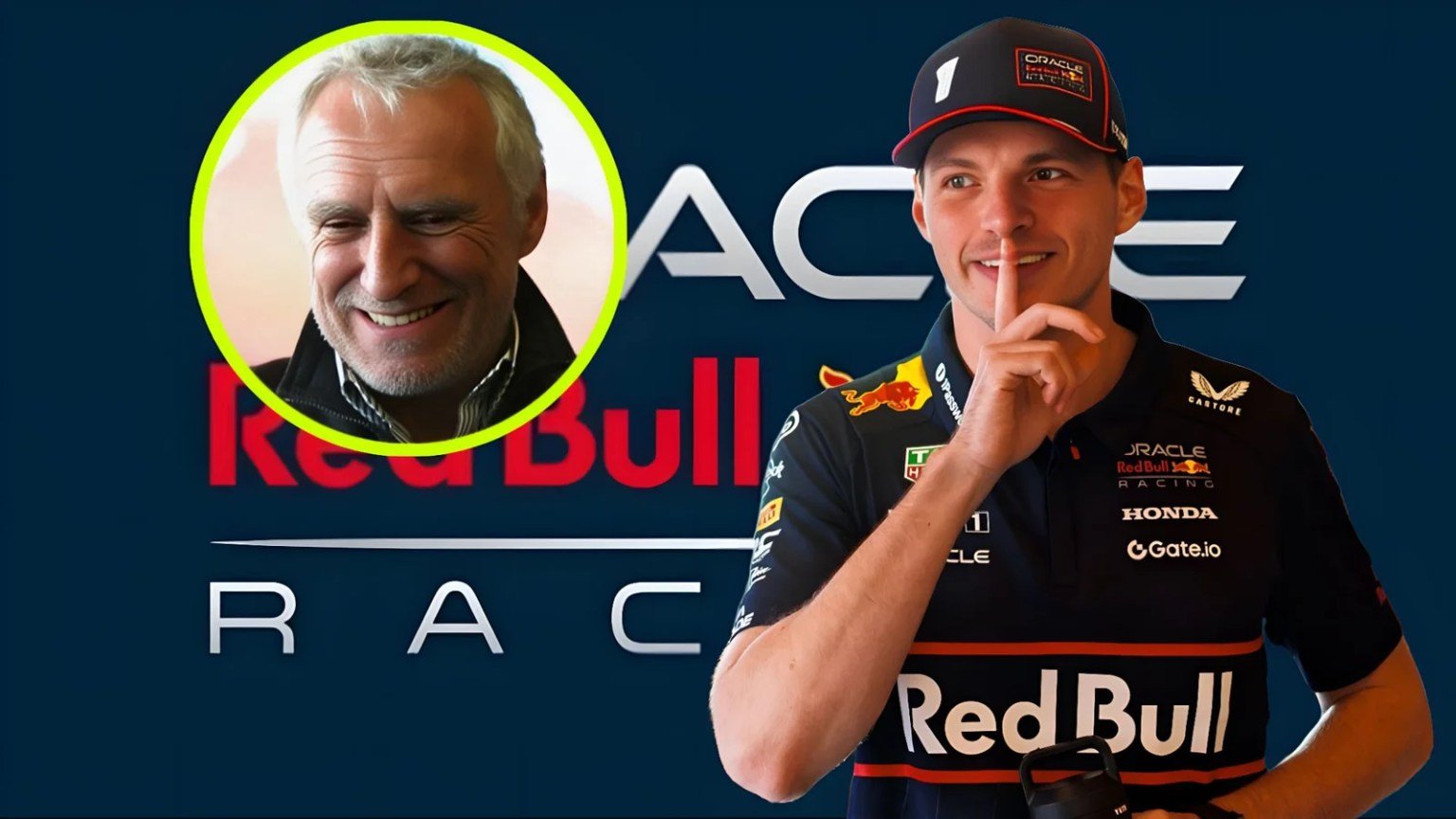
Beyond the legal jargon of his record-breaking contract, which ties him to Red Bull Racing until at least the end of 2028, lies a deeply personal “Covenant of Loyalty.” This commitment traces back to a final, solemn promise made to the man who built the Red Bull empire: the late Dietrich Mateschitz.
A Promise Kept: The Final Conversation with Mateschitz
The bedrock of Verstappen’s unwavering allegiance was formed not in a boardroom, but in a private moment of reflection. Shortly before Dietrich Mateschitz passed away in October 2022 at the age of 78, Verstappen shared a pivotal conversation with his mentor.
In a revealing interview with The Times in early 2026, the three-time World Champion (who narrowly missed a fourth consecutive title in 2025 to McLaren’s Lando Norris) recounted the depth of that bond. “I told him, ‘I want to stay for the rest of my career at this team,'” Verstappen shared. “It wasn’t about the money or the trophies at that moment. It was about the shared goal we had from day one. He was a man of his word, and loyalty is a principle I hold above all else.”
For Verstappen, Mateschitz was the ultimate “kingmaker.” At just 16 years old, when other teams were hesitant to gamble on a driver without a driver’s license, Mateschitz personally green-lit Verstappen’s promotion directly to F1 with Scuderia Toro Rosso in 2015. This “Great Gamble” bypassed the traditional junior ladders and changed the trajectory of the sport forever. Verstappen’s current refusal to entertain offers from rivals like Mercedes is seen as the ultimate reciprocation of that initial faith.
Navigating the “Frankenstein” Era of 2026
The 2026 season represents the most significant technical upheaval in Formula 1 history. With the introduction of the new Power Unit regulations—which rely on a 50/50 split between internal combustion and electrical power—the competitive hierarchy has been thrown into chaos.
Red Bull Racing has taken its boldest risk yet: Red Bull Ford Powertrains. For the first time, the team is manufacturing its own engines in-house at Milton Keynes, ending their successful era with Honda. Verstappen has been candid about his frustrations with the new “active aero” and “energy management” rules, famously echoing former Team Principal Christian Horner’s description of the 2026 cars as “Frankenstein’s monsters.”
Despite these technical hurdles and early-season struggles to match the straight-line speed of the Ferrari and Mercedes power units, Verstappen’s commitment has not wavered.
“It’s a brand new journey,” Verstappen noted during the 2026 Australian Grand Prix weekend. “I am proud of the work the engine department has done. We are building something from the ground up, and that process is worth more to me than jumping into a ready-made winning car elsewhere.”
Stability Amidst a Changing Guard
Verstappen’s loyalty is particularly striking given the seismic shifts in Red Bull’s leadership over the past 24 months. The “Old Guard” that facilitated his rise has largely transitioned:
Adrian Newey: The design genius behind Verstappen’s championship-winning cars departed for Aston Martin in 2025, leaving a technical void that many thought would trigger a Verstappen exit.
Christian Horner: After nearly two decades at the helm, Horner was replaced as Team Principal by Laurent Mekies ahead of the 2026 season following a period of internal restructuring.
Helmut Marko: While still a presence in the paddock, the 82-year-old advisor’s role has evolved as the team moves into a new corporate era under Oliver Mintzlaff and Mark Mateschitz.
In a paddock where Lewis Hamilton’s move to Ferrari stunned the world, Verstappen’s presence provides the “Bedrock of Stability” for the Red Bull brand. He has become more than just a driver; he is the face of a transition from a beverage-backed racing team to a fully integrated automotive manufacturer.
The Legacy of a Visionary
Dietrich Mateschitz didn’t just want to win races; he wanted to disrupt the status quo. By creating the Red Bull Junior Team, he proved that a “fizzy drink company” could out-engineer and out-race the likes of Ferrari, McLaren, and Mercedes. Verstappen is the crowning achievement of that philosophy.
The 2026 season sees Verstappen partnered with French youngster Isack Hadjar, who represents the next generation of the Red Bull academy. Verstappen has taken on an almost elder-statesman role, guiding the team through the growing pains of their new engine project.
His racing is now fueled by a sense of gratitude. Every podium finish in the new RB22 is framed as a tribute to Mateschitz’s vision. “He was the one who trusted me when I was just a kid in a kart,” Verstappen reflected. “My goal is to continue winning and make him proud, ensuring the legacy he built stays at the front of the grid.”
Conclusion: A New Chapter of F1 Dynasties
As Formula 1 moves deeper into 2026, the “Verstappen-Red Bull” alliance stands as a rare anomaly in a sport defined by transient interests. While the RB22 may not yet be the dominant force its predecessors were, the bond between driver and team is stronger than ever.
Max Verstappen is not just chasing his fifth world title; he is fulfilling a promise made to a dying friend. In doing so, he is etching his name into history not just as a champion, but as a man whose word is as unbreakable as his will to win.


