Published by: AutodromeF1 Editorial Team
Precision’s Reckoning at the Green Hell: Max Verstappen’s Nordschleife Mastery Erased by Regulatory Rigor in the 58th ADAC Barbarossapreis
Nürburgring, Germany – March 22, 2026 — In the unforgiving crucible of the Nürburgring Nordschleife, where every apex and crest demands not merely skill but an almost preternatural symbiosis between driver, machine, and environment, four-time Formula 1 World Champion Max Verstappen delivered a performance of such commanding authority that it seemed destined to etch another chapter in his burgeoning legend beyond the grand prix arena. Yet, mere hours after crossing the finish line of the four-hour NLS2 contest — the 58th ADAC Barbarossapreis — with a margin approaching a full minute, the verdict arrived not from the stopwatch but from the scrutineers’ barcode scanners: disqualification. The offence? A procedural infraction so elemental yet so absolute that it underscores the razor-thin margin separating triumph from oblivion in endurance racing’s most exacting domain.
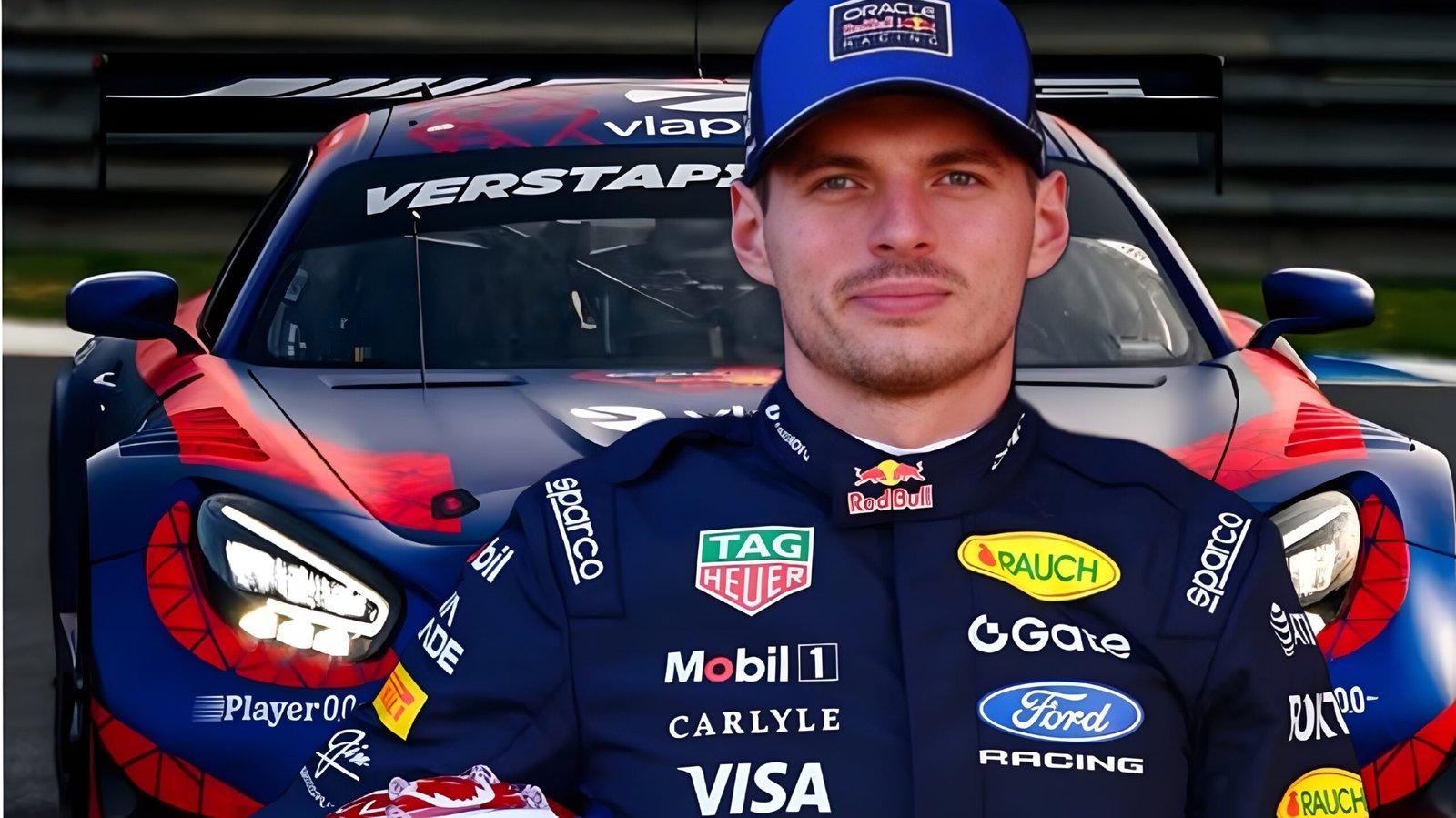
The #3 Mercedes-AMG GT3 Evo, fielded under the Verstappen Racing banner by Winward Racing and shared with seasoned GT3 exponents Dani Juncadella and Jules Gounon, had not simply competed; it had dominated. Securing pole position with a lap time of 7:51.751 — a staggering 1.9 seconds clear of its nearest rival — the car maintained an unassailable rhythm throughout the race. Verstappen, who handled the opening and closing stints, orchestrated a masterclass in consistency and pace on a circuit renowned for its 73 corners, 300-metre elevation changes, and relentless exposure to the elements. By the chequered flag, the Mercedes held a lead of 59.524 seconds over the second-placed entry, a gap that spoke volumes of superior tyre management, aerodynamic efficiency, and the Dutchman’s instinctive adaptation to the Nordschleife’s raw, unfiltered demands.
This was no ordinary victory lap. For Verstappen, whose Formula 1 commitments with Red Bull Racing leave scant room for diversion, the outing represented a deliberate investment in versatility. Having first sampled the Nordschleife in 2025, he returned in 2026 with clear intent: to hone his craft ahead of a full assault on the Nürburgring 24 Hours in May. The Green Hell, as aficionados reverently term the 20.8-kilometre public road turned racetrack, has long served as the ultimate litmus test for drivers seeking to transcend single-seater confines. Here, traction control is minimal, braking zones are negotiated by feel rather than data overlays, and survival hinges on an intimate dialogue with the tarmac’s every undulation. Verstappen’s pre-race reflections captured this reverence: “It is the craziest race track in the world — in a positive sense.” His words, delivered with the quiet intensity that has defined his career, echoed the sentiments of legends from Jackie Stewart to Niki Lauda, who understood that the ‘Ring forgives neither haste nor hubris.
Yet the post-race scrutiny revealed a breach that no amount of on-track brilliance could mitigate. Under the stringent regulations enforced by the DMSB (Deutscher Motor Sport Bund), teams in the NLS are allocated precisely six sets of tyres — 24 individual covers — for the entirety of the race day, encompassing practice, qualifying, and the four-hour main event. This quota is not arbitrary; it embodies the series’ core ethos of cost containment, mechanical parity, and environmental stewardship in an era where tyre waste draws increasing regulatory scrutiny. The #3 car’s telemetry and barcode logs, however, disclosed the deployment of seven full sets — 28 tyres in total. The infraction, identified during routine post-race verification, left the stewards with no discretion. Disqualification was immediate and irrevocable, stripping Verstappen, Juncadella, and Gounon of their hard-earned laurels and reordering the provisional classification.
The beneficiaries of this regulatory recalibration now stand atop the podium. The #99 Rowe Racing BMW M4 GT3 Evo, driven by a disciplined crew that had shadowed the leaders throughout, inherits first place. Trailing by 1:00.7 seconds is the #44 Porsche 911 GT3 R from Manthey EMA, with the #48 Porsche entry claiming third at a gap of 1:03.8. These promotions, while procedurally correct, carry an air of bittersweet inevitability; endurance racing’s annals are replete with such technical reversals, yet few involve a driver of Verstappen’s calibre.
Winward Racing’s response was swift and unequivocal, reflecting the professionalism that has characterised its partnership with the Verstappen stable. Team principal Christian Hohenadel issued a candid statement acknowledging the lapse as “an internal error” for which the squad bore full responsibility. “The disqualification hurts because the performance on track was exceptional,” he noted, before pivoting to forward momentum: “We must now focus on the lessons learned and prepare thoroughly for our debut in the Nürburgring 24 Hours this summer.” An official apology disseminated via social channels reiterated gratitude to fans and partners, underscoring accountability without deflection — a refreshing departure from the litigious posturing sometimes witnessed in elite motorsport.
For Verstappen himself, the episode arrives amid a 2026 Formula 1 campaign already marked by its share of challenges. His decision to contest selected NLS rounds, including this second instalment after the opening event’s weather-induced cancellation, signals a strategic broadening of horizons. Observers have long speculated that such extracurricular commitments serve dual purposes: sharpening racecraft in variable conditions and providing psychological respite from the unrelenting pressure of title defence. The Nordschleife, with its absence of hybrid complexities and emphasis on pure mechanical sympathy, offers precisely that palate cleanser. Yet the disqualification, while technically attributable to team oversight rather than driver error, invites reflection on the broader architecture of multi-programme operations. In an age of hyper-professionalism, where data analytics and logistical precision are paramount, even a single misstep in tyre inventory can unravel hours of flawless execution.
This incident, moreover, illuminates the philosophical underpinnings of endurance regulations. The DMSB’s tyre limit — rooted in the VLN/NLS heritage — functions as a leveller, compelling teams to optimise rather than overstock, to strategise rather than brute-force. It echoes the FIA’s broader push toward sustainability in GT categories, where tyre compounds must balance grip, durability, and ecological footprint. For a driver accustomed to Formula 1’s more permissive frameworks, the transition demands recalibration. Verstappen’s pace suggested seamless adaptation; the team’s lapse, by contrast, exposed the granular vulnerabilities inherent in scaling a championship outfit across disciplines.
Contextualising this within the Nürburgring’s storied history amplifies its resonance. The circuit has witnessed iconic triumphs — from the 1976 Lauda conflagration that redefined safety protocols to modern GT marathons where strategy trumps sheer speed. Disqualifications here are not uncommon; recall the 2015 24 Hours controversy involving tyre anomalies or earlier VLN exclusions for regulatory minutiae. What distinguishes Verstappen’s case is its juxtaposition of transcendent talent against prosaic administration. The four-time champion, who in Formula 1 has mastered the art of maximising regulatory grey areas to his advantage, now confronts a domain where rules admit no nuance. This is not diminishment but democratisation: the Nordschleife levels all, from novices to world champions, under the same unyielding code.
Reactions from the paddock and beyond have been measured yet empathetic. Fellow competitors expressed admiration for the on-track showing, with one Porsche driver privately noting the Mercedes’ “unrelenting pressure” as a benchmark for the season ahead. Social media, that barometer of public sentiment, reflected a spectrum from commiseration — “Rules are rules, but this stings” — to philosophical acceptance: “Endurance racing’s beauty lies in its precision; today it claimed its due.” Verstappen’s supporters, meanwhile, drew parallels to past reversals in his career, emphasising resilience as the hallmark of champions.
Looking forward, the episode need not cast a long shadow. The NLS calendar offers redemption opportunities, with the next round mere weeks distant. More significantly, preparations intensify for the centrepiece: the 24 Hours of Nürburgring, where Verstappen Racing will field the Mercedes-AMG in a bid for outright honours. That marathon demands not only stamina but flawless orchestration across tyre, fuel, and driver rotations — precisely the disciplines this disqualification has spotlighted. Winward’s commitment to “turning the page” suggests rigorous internal audits, from inventory protocols to digital logging systems, will fortify the operation.
In a broader sense, Verstappen’s foray into GT3 racing enriches the narrative of his career. At 28, with Formula 1 titles secured and records accumulating, he embodies the modern polymath driver: one who seeks fulfilment across formulae rather than resting on laurels. The Nordschleife, with its mythic status and visceral authenticity, provides an ideal counterpoint to the sanitised precision of contemporary grand prix circuits. His disqualification, far from a setback, may yet serve as catalyst — a reminder that even in victory’s embrace, vigilance remains paramount.
As the motorsport world digests this chapter, one truth endures: the Nürburgring Nordschleife does not merely test drivers; it interrogates the entire ecosystem surrounding them. Max Verstappen passed the athletic and technical examination with distinction. The administrative one, administered by the DMSB’s tireless protocols, proved a sterner arbiter. In that dialectic lies the enduring allure of endurance racing — where glory is provisional, excellence absolute, and lessons eternal.


