Published by: AutodromeF1 Editorial Team
Max Verstappen’s Participation in the 2026 Nürburgring 24 Hours Receives Unreserved Endorsement from Red Bull Racing, Underscoring the Synergy Between Passion and Professional Excellence
In the rarefied realm of Formula 1, where every decision is calibrated against the imperatives of performance, safety, and regulatory compliance, the announcement that Max Verstappen will contest the 2026 edition of the Nürburgring 24 Hours stands as a compelling affirmation of the enduring power of authentic passion within elite motorsport. Laurent Mekies, the newly appointed team principal of Red Bull Racing, has confirmed in unequivocal terms that the four-time world champion required no persuasive effort to secure organisational approval for the endeavour. Mekies articulated the team’s position with characteristic clarity and insight: “He doesn’t need to convince us, really.” The statement, delivered during a recent media engagement, encapsulates a philosophy that transcends conventional managerial caution and instead celebrates the intrinsic motivations that define Verstappen’s approach to racing.
Mekies elaborated that even the briefest conversation with Verstappen reveals an unmistakable transformation in demeanour. “It is enough to speak for a few minutes with Max, and you see his face light up, his eyes light up when he talks about racing cars — and it doesn’t matter what type of cars,” he observed. This luminous enthusiasm, far from constituting a distraction, functions as a restorative force. Conventional wisdom in professional athletics often posits that extracurricular commitments risk depleting the finite reserves of energy and focus required for primary obligations. In Verstappen’s case, however, the opposite dynamic prevails. Mekies noted that participation in such events “doesn’t take energy from him, but in fact he comes back to the racetrack with more energy. He is in love with the sport.” This perspective not only validates Verstappen’s multifaceted engagement with motorsport but also reflects Red Bull Racing’s sophisticated understanding of athlete psychology, wherein sustained excellence is nurtured through the preservation of intrinsic joy rather than its suppression.
The logistical framework of the project aligns seamlessly with the 2026 Formula 1 calendar, demonstrating meticulous planning on the part of both the driver and the team. The Nürburgring 24 Hours is scheduled for 16-17 May 2026, occupying the natural interlude between the Miami Grand Prix in early May and the Canadian Grand Prix later that month. This temporal placement is far from coincidental; it affords Verstappen sufficient recovery time while preserving the continuity of his championship campaign. The 2026 season promises to be one of profound transformation, with the introduction of new chassis regulations, revised power-unit specifications, and significantly altered aerodynamic philosophies. Amid such upheaval, the opportunity to immerse oneself in a contrasting discipline may yet prove beneficial, sharpening reflexes, enhancing adaptability, and reinforcing the mental resilience that has become Verstappen’s hallmark.
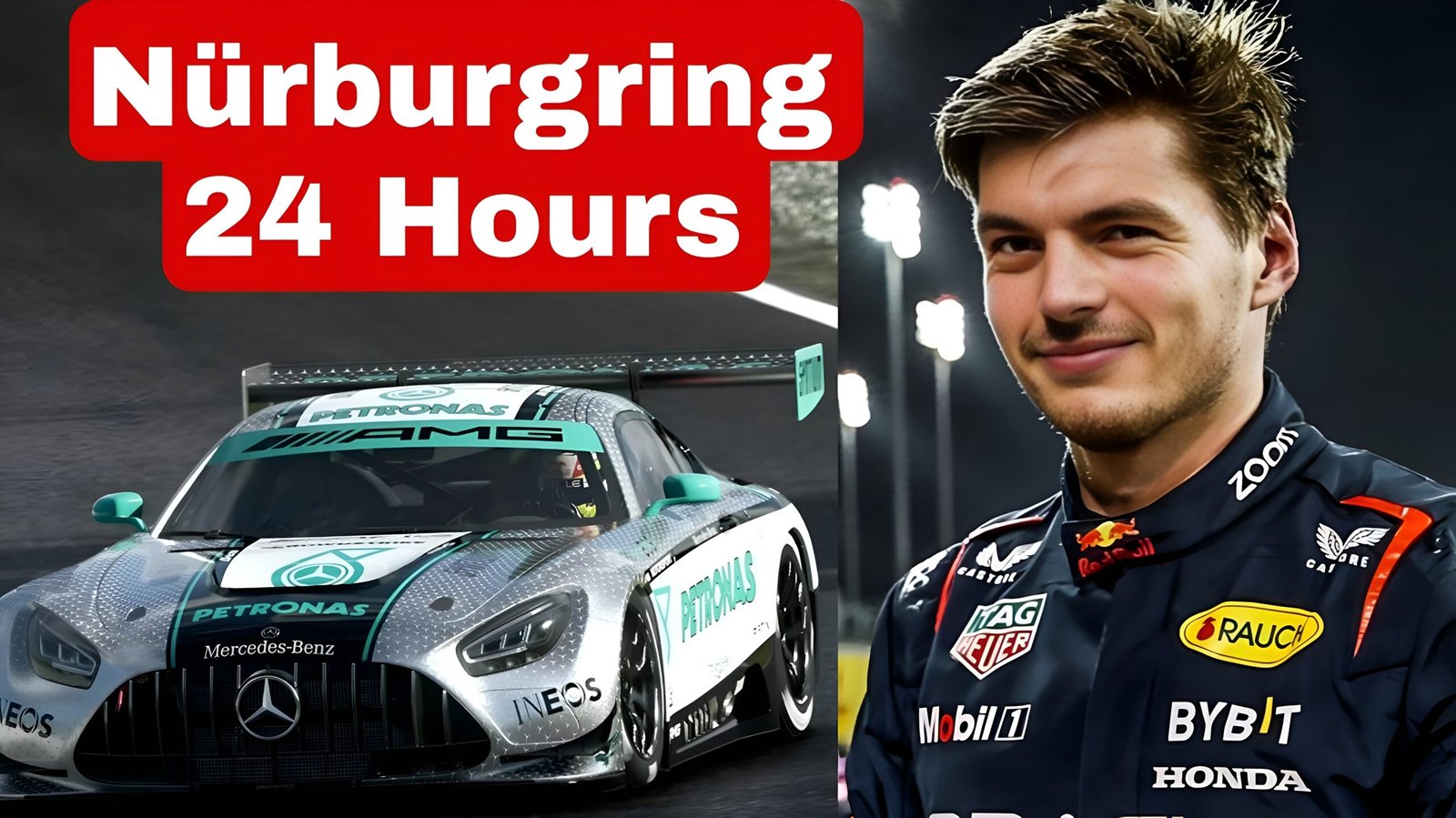
Verstappen will compete aboard a Mercedes-AMG GT3 Evo, presented in a bespoke Red Bull livery and entered under the banner of Verstappen Racing. The arrangement represents a collaborative venture that blends the resources and branding of the Red Bull organisation with the autonomy of the driver’s personal racing entity. His co-drivers comprise a formidable triumvirate: Daniel Juncadella, whose extensive experience in endurance and GT categories brings strategic maturity; Jules Gounon, a multiple champion whose consistency under pressure is well documented; and Lucas Auer, whose precision and adaptability further strengthen the quartet. The selection of these partners underscores a deliberate commitment to excellence, ensuring that the entry is not merely symbolic but competitively viable across the 24-hour duration.
Red Bull Racing’s supportive stance is rooted in precedent and principle alike. The organisation has previously witnessed the positive effects of Verstappen’s extracurricular pursuits, most notably his victory in a GT3 event at the Nürburgring in 2025. That success not only demonstrated his capacity to excel beyond the confines of single-seater machinery but also facilitated the formal acquisition of his GT3 racing licence, thereby satisfying all technical and regulatory prerequisites for the 2026 campaign. Helmut Marko, the team’s senior motorsport advisor, had earlier indicated that such licensing would constitute the sole condition for approval, a threshold now comfortably surpassed. The alignment of these elements illustrates a cohesive organisational culture that values driver agency while safeguarding collective objectives.
To appreciate the magnitude of this undertaking, it is essential to contextualise the Nürburgring 24 Hours within the broader tapestry of international motorsport. The event, contested on the legendary 20.8-kilometre Nordschleife, is universally regarded as one of the most gruelling tests of man and machine ever devised. Its moniker, “the Green Hell,” derives from the circuit’s unrelenting topography: a relentless sequence of elevation changes, blind apexes, high-speed sweeps, and narrow sections where the margin for error is measured in centimetres. Competitors must contend not only with the physical demands of sustained high performance but also with the psychological burden of nocturnal running, fluctuating meteorological conditions, and dense traffic comprising everything from professional prototypes to enthusiastic amateurs. The 24-hour format transforms the race into a strategic chess match played at 300 kilometres per hour, requiring flawless coordination between drivers, engineers, and pit crews. For a Formula 1 driver of Verstappen’s calibre to embrace this environment voluntarily is testament to a rare temperament that finds fulfilment in adversity rather than comfort.
Verstappen’s decision resonates on multiple levels. In an era when Formula 1 drivers are subjected to unprecedented levels of scrutiny, simulation-based preparation, and physical conditioning, his willingness to engage in endurance racing reaffirms the centrality of passion as a sustaining force. Throughout his career, Verstappen has distinguished himself not merely through technical proficiency but through an unquenchable curiosity for the craft of driving. From his early karting days to his dominance in Formula 1, the Dutchman has consistently demonstrated that true mastery arises from a holistic immersion in the sport. The Nürburgring project, therefore, is less a diversion than an extension of that philosophy. It allows him to hone skills — traffic management, tyre conservation, and endurance under fatigue — that possess direct applicability to the increasingly complex demands of modern Grand Prix racing.
From the team’s vantage point, the initiative carries strategic as well as emotional value. By endorsing Verstappen’s participation, Red Bull Racing signals its confidence in his ability to compartmentalise commitments without compromise. This approach contrasts markedly with more conservative organisations that might view such ventures as liabilities. Instead, Mekies and his colleagues perceive the endeavour as an investment in the driver’s long-term well-being and motivation. In a sport where burnout remains an ever-present risk, the cultivation of supplementary outlets for creative expression and competitive fulfilment represents enlightened management. Moreover, the project generates substantial brand visibility. The Red Bull-liveried Mercedes-AMG GT3 will serve as a mobile ambassador for the organisation’s values of audacity, innovation, and exhilaration, extending the team’s global footprint beyond the Formula 1 paddock.
The broader implications for motorsport merit consideration. Verstappen’s example may well encourage other drivers to explore disciplines outside their primary series, fostering a more interconnected and vibrant ecosystem. Historically, icons such as Juan Manuel Fangio, Stirling Moss, and more recently Fernando Alonso have demonstrated that versatility across categories enriches both the individual and the sport. In the contemporary landscape, where specialisation is often prized, Verstappen’s balanced portfolio challenges this paradigm. His success could inspire regulatory bodies and team principals to adopt more flexible frameworks that accommodate such ambitions, provided they do not impinge upon core responsibilities.
Furthermore, the announcement arrives at a pivotal juncture for Formula 1. The 2026 regulations herald a new technological epoch, one that will demand fresh approaches to car development and driver adaptation. By engaging in the Nürburgring 24 Hours, Verstappen effectively maintains a state of competitive sharpness during a period when traditional testing is limited. The experience of piloting a GT3 machine through the Nordschleife’s myriad corners will refine his sensitivity to mechanical feedback, his decision-making under duress, and his capacity to extract performance from imperfect conditions — attributes that will prove invaluable when the new-generation cars take to the grid.
Public and media reaction has been overwhelmingly positive, reflecting widespread appreciation for an athlete who refuses to be defined solely by his Formula 1 achievements. Fans, long accustomed to Verstappen’s forthright demeanour and unfiltered love of racing, view this project as an authentic expression of his character. It humanises a figure who has sometimes been portrayed through the narrow lens of championship dominance, revealing instead a multifaceted competitor whose joy derives from the act of racing itself. Media coverage, while extensive, has largely avoided sensationalism, recognising the story as one of professional maturity rather than risk-taking bravado.
In summation, Laurent Mekies’ confirmation that Max Verstappen requires no persuasion to pursue the 2026 Nürburgring 24 Hours represents far more than a routine administrative approval. It constitutes a profound endorsement of the principles that underpin Red Bull Racing’s success: respect for individual passion, trust in professional judgment, and the conviction that genuine enthusiasm enhances rather than detracts from elite performance. As the motorsport community turns its gaze toward the Green Hell in May 2026, the narrative transcends the competitive outcome. It speaks to the timeless truth that the greatest champions are those who race not merely to win titles, but because the very essence of the sport continues to ignite an irrepressible spark within them. In Verstappen’s case, that spark burns brighter than ever, illuminating a path that honours both personal fulfilment and organisational excellence in equal measure. The 2026 season will undoubtedly test new technical frontiers, yet it is this human dimension — the unyielding love of racing in all its forms — that may ultimately prove the most enduring legacy of the endeavour.


