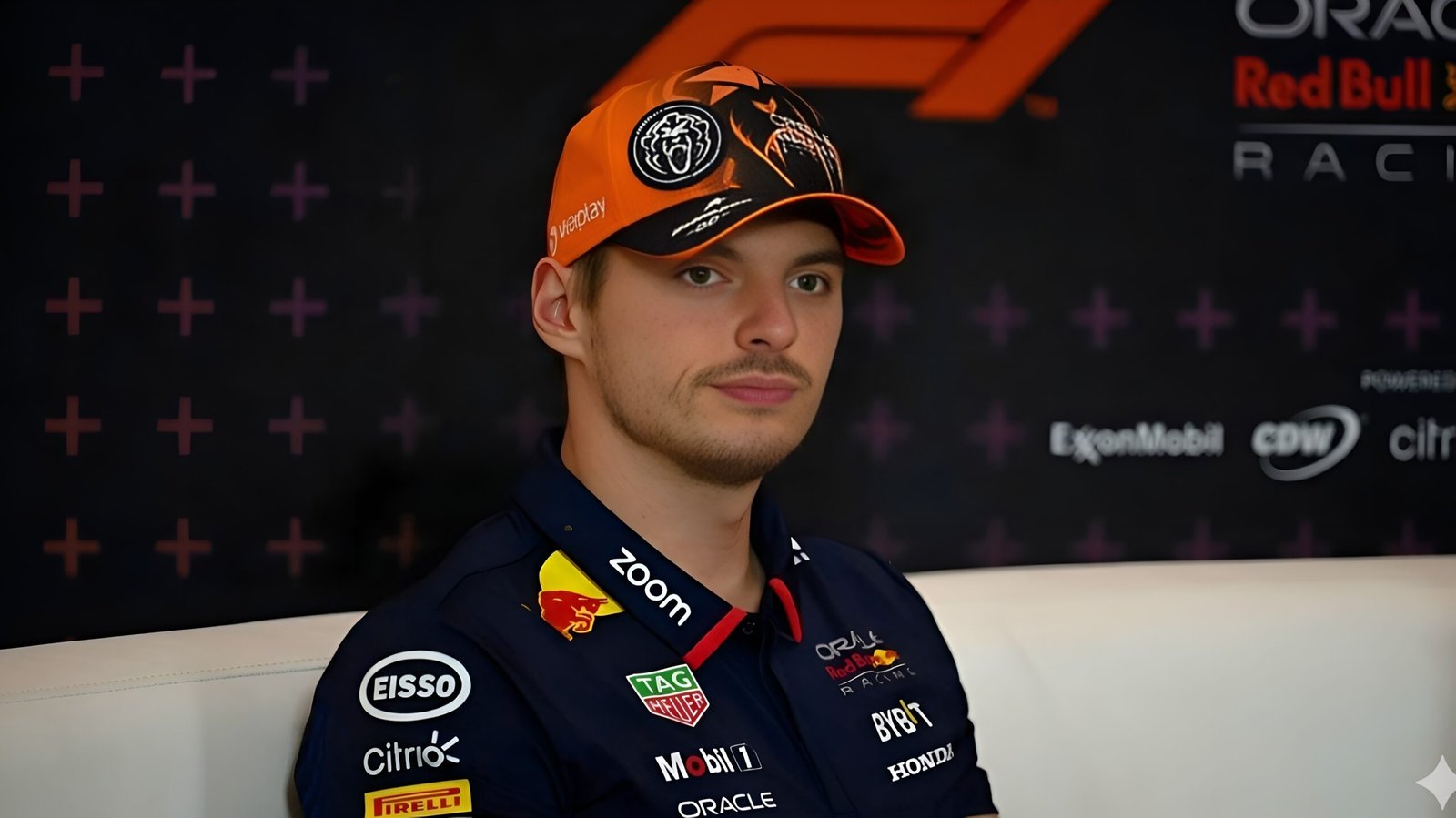
A defiant Max Verstappen prepares for the 2026 Japanese Grand Prix after a tense confrontation with the media at the Suzuka International Racing Course.
Published by: AutodromeF1 Editorial Team
Suzuka, 26 March – In the high-stakes, high-pressure crucible of Formula 1, the relationship between a world champion and the global media is a delicate, often fraught, symbiosis. It is a dance of necessity, where narratives are shaped, legacies are forged, and tensions can simmer just beneath the polished surface of professional decorum. That surface was irrevocably shattered at the Suzuka International Racing Course, where Max Verstappen, a driver whose prodigious talent is matched only by his fierce competitive spirit, drew a definitive line in the sand, turning a routine media session into a stark tableau of personal grievance and an assertion of control.
The incident, which has since reverberated through the paddock and beyond, was as brief as it was dramatic. As journalists gathered for the customary pre-race briefing ahead of the Japanese Grand Prix, Verstappen’s gaze settled on a specific figure: Giles Richards, the esteemed and long-serving Formula 1 correspondent for The Guardian. Before the session could formally commence, Verstappen interjected, his voice calm but unyielding. “One second; I’m not speaking before he’s leaving,” he stated, leaving the room in a stunned silence. The “he” was unequivocally Richards. When pressed for a reason, Verstappen confirmed the ejection was a direct consequence of a question Richards had posed months earlier, in the aftermath of the 2025 season finale in Abu Dhabi. Richards, attempting to clarify, asked, “Because of the question I asked you in Abu Dhabi about Spain?” Verstappen’s reply was a curt and final “Yep. Get out.” Once Richards had vacated the area, Verstappen, with the air of a man who had reclaimed his territory, simply stated, “Now we can begin.”
To understand the magnitude of this confrontation, one must rewind to the embers of the 2025 World Championship. It was a season defined by a titanic struggle, not with a traditional rival, but with the fine margins of error and consequence. In Abu Dhabi, with the championship already lost to McLaren’s Lando Norris by a razor-thin two-point margin, Verstappen faced the media’s inevitable post-mortem. It was here that Richards posed the question that would fester for months. He asked Verstappen if he regretted the on-track collision with Mercedes driver George Russell during the Spanish Grand Prix earlier that year—a clash that had earned Verstappen a 10-second penalty, cost him nine crucial championship points, and, by simple arithmetic, had arguably cost him the title itself.
Verstappen’s reaction at the time was one of palpable irritation, a glimpse into the raw frustration of a champion dissecting his own defeat. “You forget all the other stuff,” he retorted, his tone laced with exasperation at what he perceived as a simplistic and provocative line of inquiry. He pointedly noted the journalist’s expression, “You’re giving me a stupid grin now,” before emphasizing the holistic nature of a championship campaign: it was but one incident in a grueling 24-round season. For Verstappen, the question was not merely an inquiry; it was an indictment, a reduction of a year’s worth of relentless effort, strategy, and sacrifice to a single, contentious moment.
The Suzuka ejection was the delayed detonation of that Abu Dhabi exchange. It represents more than a simple grudge; it is a calculated statement from an athlete who has grown increasingly weary of what he views as a “gotcha” style of journalism. This is not an isolated event but rather the latest chapter in Verstappen’s complex and often contentious relationship with the press. It echoes his and his Red Bull team’s decision to boycott Sky Sports F1 during the 2022 season, a move prompted by comments they deemed disrespectful and biased, particularly in relation to the controversial 2021 title decider where Lewis Hamilton was, in the words of one pundit, “robbed.”
These actions paint a portrait of an athlete who is acutely aware of the narratives constructed around him and is unafraid to use his considerable leverage to challenge them. In the modern era of sport, where athletes are brands and every word is parsed for meaning, Verstappen is reclaiming agency. He is rejecting the premise that he must be a passive subject in the media’s story, especially when he feels the narrative is being driven by antagonism rather than objective analysis. His stance forces a difficult but necessary conversation about the rules of engagement between sports figures and the press. Where does legitimate, challenging journalism end and targeted provocation begin? At what point does an athlete’s obligation to media access cede to their right to refuse engagement with individuals they believe have demonstrated bad faith?
Verstappen’s actions can be interpreted through multiple lenses. To his detractors, it is the petulant act of a superstar unable to handle criticism, an arrogant display of power that undermines the media’s vital role in holding figures accountable. From this perspective, difficult questions are not an insult but a fundamental part of the job, and to eject a journalist for doing that job is an attack on the principles of a free press. It sets a dangerous precedent, suggesting that access will be granted only to those who offer favorable coverage.
However, to his supporters and a growing contingent of observers, Verstappen’s stand is a justifiable defense of his own mental and professional space. Athletes, they argue, are not public utilities. They are human beings operating under immense psychological pressure, and they should have the right to curate their environment, particularly by excluding those they perceive as consistently negative or unfair. In this view, the Abu Dhabi question was not just “difficult”; it was deliberately inflammatory, designed to elicit an emotional response from a driver at his most vulnerable moment. Verstappen’s subsequent action at Suzuka, therefore, was not an attack on the press as a whole, but a specific, targeted response to an individual he felt had crossed a professional boundary.
This incident highlights a fundamental shift in the power dynamics of sports media. The rise of social media has given athletes a direct channel to their audience, lessening their dependence on traditional outlets to convey their message. They are no longer simply subjects of the news cycle; they are active participants and creators within it. Verstappen, with his massive global following, can communicate his perspective directly, unfiltered by the editorial choices of journalists like Richards. This new reality emboldens athletes to push back against coverage they dislike, knowing their side of the story will be heard regardless.
The confrontation in Suzuka is, therefore, a microcosm of a much larger negotiation taking place across the landscape of professional sports. It is a clash between the old guard of journalism, which holds dear its role as the fourth estate of the sporting world, and a new generation of empowered, media-savvy athletes who demand a different kind of relationship—one based on a perceived standard of mutual respect. Max Verstappen has made it clear what his standard is. The question now is how the media, and indeed the sport of Formula 1 itself, will respond to a champion who is not just racing to win on the track, but is also determined to control the narrative off it.


