Published by: AutodromeF1 Editorial Team
McLaren’s Strategic Masterstroke: Poaching Red Bull’s Elite Talent Signals a New Era of Dominance in Formula 1
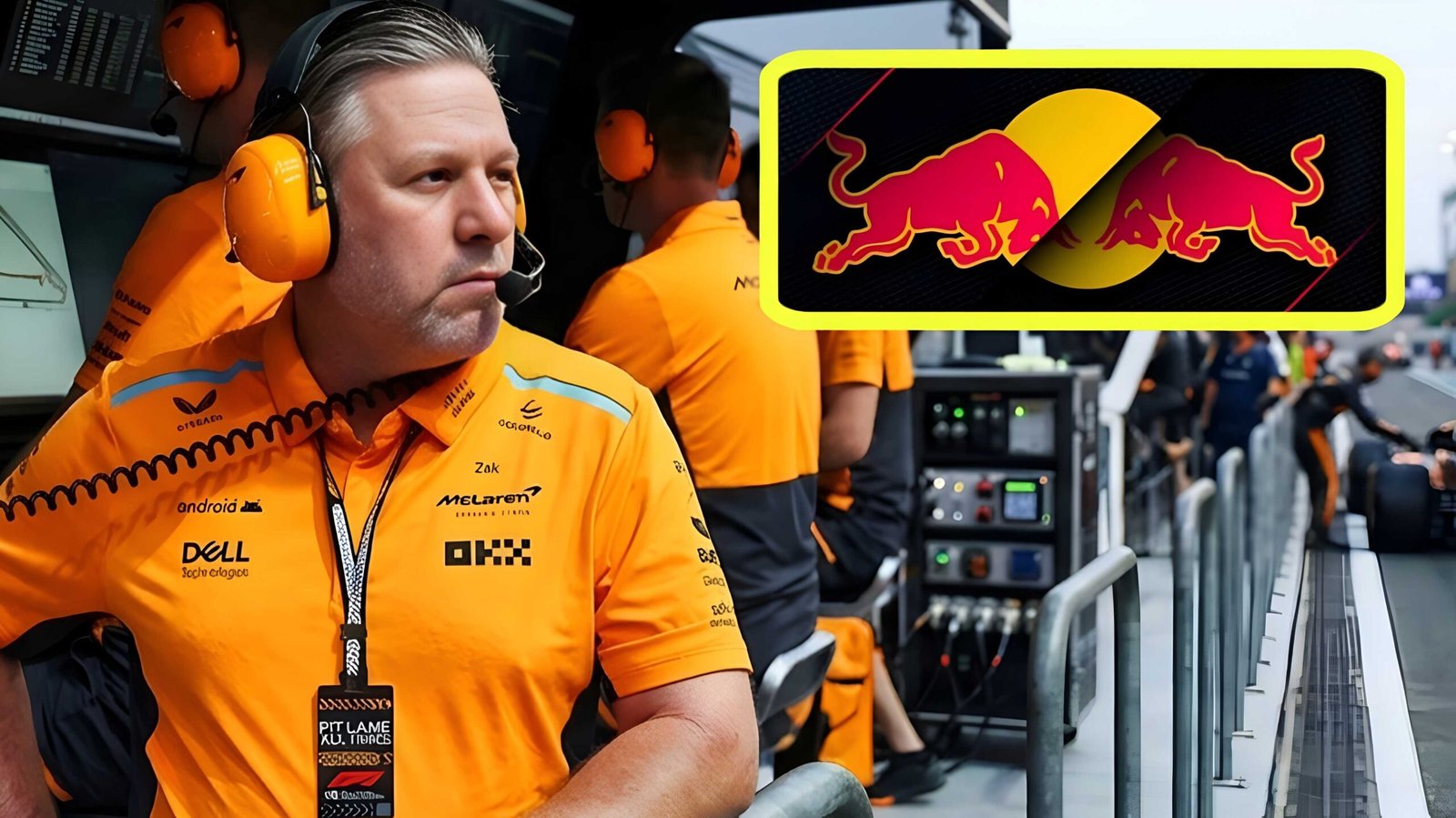
London. United Kingdom April 10 – In the high-stakes arena of Formula 1, where milliseconds separate triumph from obscurity and the right personnel can redefine a team’s trajectory for years to come, McLaren Racing has executed one of the most calculated and audacious talent acquisitions in recent memory. By systematically attracting key figures from its fiercest rival, Red Bull Racing, the Woking-based outfit is not merely bolstering its ranks—it is reshaping the competitive landscape ahead of the pivotal 2026 regulations and beyond. This latest chapter, marked by the impending arrival of Gianpiero Lambiase, underscores a deliberate philosophy: invest in proven excellence, foster institutional stability, and build an infrastructure capable of sustained championship contention.
The announcement on April 9, 2026, that Max Verstappen’s longtime race engineer and Red Bull’s Head of Race Engineering, Gianpiero Lambiase, will join McLaren as Chief Racing Officer no later than 2028 represents the culmination of a multi-year recruitment drive. Lambiase, a highly respected figure known for his calm authority, technical acumen, and deep rapport with drivers, will report directly to Team Principal Andrea Stella. Far from a replacement, this role is designed to alleviate operational pressures on Stella, allowing the Italian engineer-turned-leader to focus on broader strategic oversight while Lambiase handles critical race-day and engineering coordination.
McLaren’s official statement emphasized the significance of this move: “The team’s ability to attract and secure top talent, like Lambiase, and previously Rob Marshall and Will Courtenay, alongside the retention and promotion of highly-talented people already within the team, is a testament to the strategic vision and culture that are integrally embodied in the McLaren Mastercard Formula 1 Team under the leadership of Zak Brown and Andrea Stella, who are also both on long-term contracts.” This is no hollow rhetoric. It reflects a profound cultural shift that has transformed McLaren from a midfield struggler into a powerhouse capable of back-to-back Constructors’ Championships in 2024 and 2025, with Lando Norris claiming the Drivers’ title in the latter year.
The Anatomy of McLaren’s Talent Pipeline from Red Bull
To fully appreciate the depth of this strategy, one must examine the personnel involved and the timeline of their transitions.
Will Courtenay, a 22-year veteran of Red Bull who served as Head of Race Strategy for 15 years, joined McLaren as Sporting Director earlier in 2026 after a contractual standoff. His expertise in orchestrating race-weekend decisions—pitting strategies, tire management, and real-time tactical adjustments—has already begun influencing McLaren’s operations. Courtenay’s move followed a period of negotiation that highlighted the intense competition for elite minds in the paddock.
Rob Marshall, who spent 17 years at Red Bull culminating in a senior engineering and design role, made the switch in early 2024. Now serving as Chief Designer and Chief Technical Officer at McLaren, Marshall has been instrumental in the aerodynamic and structural evolution of the MCL series cars. His contributions are widely credited with helping McLaren achieve the technical superiority that powered their recent title successes. Marshall’s arrival predates the others but forms the foundational pillar of the technical resurgence.
Now, Gianpiero Lambiase—affectionately known as “GP” within the Verstappen camp—adds a layer of race engineering prowess and leadership depth. Having guided Verstappen since the Dutchman’s debut in 2016, Lambiase possesses an unparalleled understanding of driver psychology, car feedback translation, and the nuances of on-track performance optimization. His decision to join McLaren, after reportedly declining overtures from teams including Aston Martin, speaks volumes about the allure of the papaya project. While a period of gardening leave or negotiated early release remains possible, the confirmed timeline aligns with the expiry of his Red Bull contract at the end of 2027.
These acquisitions are not isolated incidents but part of a broader exodus from Milton Keynes. Red Bull has endured significant internal upheaval, including the departure of Christian Horner in 2025. Horner, who had served as Team Principal and CEO for two decades, was relieved of operational duties in July 2025 following a period of turbulence, with his formal exit finalized in September via a substantial settlement. Laurent Mekies assumed the CEO role, and further changes—including the exit of long-time advisor Helmut Marko—have contributed to a sense of transition at the energy drink-backed squad.
In this context, McLaren’s ability to cherry-pick talent without disrupting its own stability stands in stark contrast. The team has not only imported expertise but also retained and promoted internal talent, creating a hybrid of fresh perspectives and institutional knowledge.
Verstappen’s Future: Speculation Amid Shifting Allegiances
Unsurprisingly, Lambiase’s departure has reignited intense speculation surrounding Max Verstappen, the four-time World Champion whose partnership with the engineer has been one of the most formidable in modern F1. The two share a bond forged through a decade of shared successes, from Verstappen’s early breakthroughs to multiple championship campaigns. While Verstappen has publicly committed to Red Bull for the 2026 season—the first year of the radical new power unit and chassis regulations—his longer-term future (2027 onward) remains fluid, governed in part by performance clauses in his contract.
Recent comments from Verstappen expressing dissatisfaction with aspects of Red Bull’s 2026 car development have only amplified the narrative. Both Mercedes and McLaren are understood to be monitoring the situation closely. Mercedes, in particular, has long been linked with a potential Verstappen acquisition, viewing him as the catalyst for a return to title contention. For McLaren, the hypothetical pairing of Verstappen with either Norris or Piastri would represent an extraordinary—if logistically complex—lineup.
Yet, McLaren executives have shown no inclination to destabilize their current driver roster. Lando Norris, the British homegrown talent and reigning champion, remains the cornerstone of the team on a long-term contract. His loyalty, development within the McLaren system, and proven racecraft make him untouchable in any realistic scenario. Oscar Piastri, the precocious Australian who has rapidly established himself as one of the grid’s most complete drivers, benefits from a multi-year deal that includes performance-related protections but also team-order flexibility in extremis.
Should Verstappen become available post-2026 and express interest in joining McLaren, the most plausible configuration would involve pairing him with Piastri, potentially reassigning or offering alternative opportunities to the second seat while preserving Norris as the undisputed lead. However, such a move would require extraordinary circumstances, given McLaren’s current harmony and the mutual respect between Norris and Piastri. Their partnership has already delivered Constructors’ dominance, proving that two highly capable drivers racing freely can extract maximum performance from a competitive car.
The Broader Implications: Culture, Stability, and the 2026 Horizon
What sets McLaren’s approach apart is its emphasis on long-term cultural cohesion. Zak Brown, the charismatic CEO, and Andrea Stella, the measured Team Principal, both operate under multi-year extensions. Stella’s contract, extended in 2024, was celebrated as a vote of confidence in his leadership, which has emphasized data-driven decision-making, collaborative engineering, and a no-blame culture that encourages innovation. Brown’s vision has modernized the organization, attracting investment (including the Mastercard title sponsorship) and fostering partnerships that extend beyond the track.
This stability contrasts sharply with the volatility at other leading teams. Red Bull’s post-Horner era under Mekies must now navigate not only technical challenges but also the loss of institutional memory embedded in departing personnel. The 2026 regulations—featuring new power units, sustainable fuels, and chassis evolutions—will test every organization’s adaptability. McLaren enters this era with reinforced technical (Marshall), strategic (Courtenay), and racing operations (Lambiase) expertise, positioning it as a formidable contender regardless of Verstappen’s ultimate destination.
Critics might argue that heavy reliance on ex-Red Bull staff risks importing outdated methodologies or internal rivalries. However, McLaren’s track record suggests otherwise. The integration of these individuals has coincided with tangible on-track progress, from aerodynamic breakthroughs to superior race execution. Moreover, the team’s commitment to developing homegrown talent—through its driver academy and reserve programs—ensures a balanced ecosystem that prevents over-dependence on any single external source.
From a governance perspective, these moves highlight the fluid nature of F1’s talent market. Contracts, gardening leave periods, and compensation packages play pivotal roles, yet ultimately, professionals gravitate toward environments offering clear vision, competitive resources, and personal growth opportunities. McLaren has evidently created such an environment, one where engineers and strategists see a pathway to influence championship outcomes without the distractions of corporate infighting.
Looking Ahead: A Championship Calculus Defined by Execution
As the 2026 season approaches, the focus shifts to execution. Will Red Bull’s transitional phase yield a competitive car capable of retaining Verstappen’s loyalty? Can Mercedes leverage its engine expertise and organizational reset to mount a serious challenge? And how will McLaren’s enhanced personnel translate into lap-time advantages on circuits worldwide?
One certainty emerges: McLaren’s proactive talent strategy has granted it a structural edge. By securing Lambiase alongside previous Red Bull recruits, the team has deepened its bench without compromising driver stability. Norris and Piastri form one of the strongest pairings on the grid—technically proficient, mentally resilient, and commercially valuable. Any future Verstappen integration would be an enhancement, not a replacement.
In an industry where success is measured not merely in trophies but in the ability to anticipate and adapt to regulatory shifts, McLaren’s moves exemplify foresight. This is not opportunistic raiding; it is the deliberate construction of a dynasty. As the paddock digests these developments, one question lingers for rivals: how does one counter an organization that combines technical brilliance with unwavering leadership continuity?
The coming seasons will provide the answers. For now, McLaren stands as a model of modern F1 management—ambitious yet pragmatic, aggressive in recruitment yet harmonious in culture. In a sport defined by relentless evolution, such equilibrium may prove the ultimate competitive advantage.


