Published by: AutodromeF1 Editorial Team
Mercedes’ Early Ascendancy in 2026: Toto Wolff Foresees Regulatory Turbulence Despite Consecutive Victories
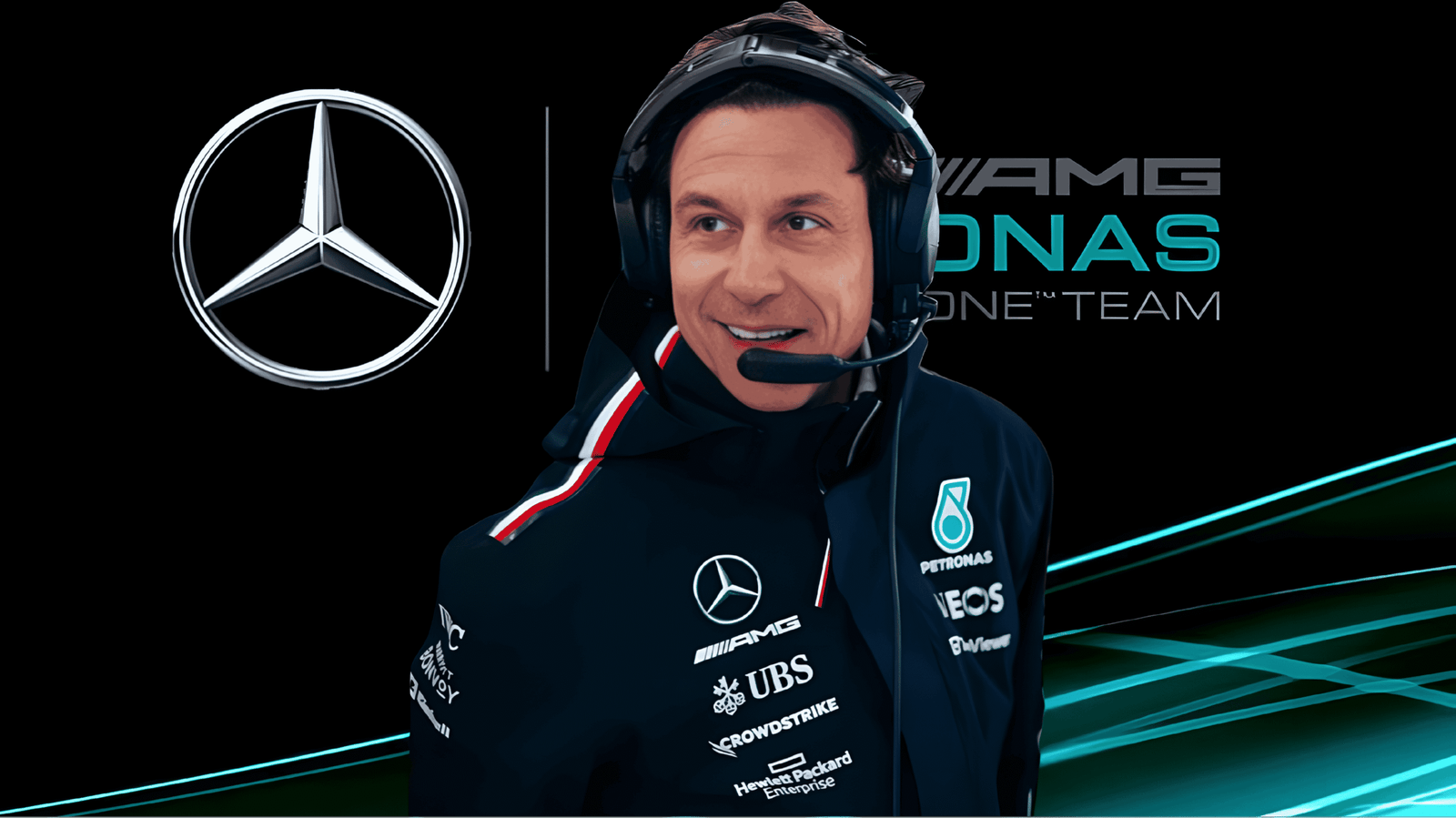
In the wake of yet another commanding performance by the Mercedes-AMG Petronas Formula One Team, team principal Toto Wolff has issued a pointed reminder that technical excellence alone may not dictate the outcome of the nascent 2026 world championship. Speaking to an assembled international press corps immediately after Kimi Antonelli’s triumphant victory at the Chinese Grand Prix, Wolff articulated both satisfaction with the squad’s current machinery and a sober anticipation of the political manoeuvres that traditionally accompany periods of competitive dominance.
“We have a good car that, at this stage, is capable of winning,” Wolff declared. “But let’s see what kind of political knives are going to come out in the next few weeks and months.”
The statement, delivered with the measured restraint that has become a hallmark of Wolff’s public commentary, encapsulates the perennial tension between sporting merit and regulatory governance that has long defined Formula One. Mercedes entered the 2026 campaign amid widespread scepticism regarding the new power-unit architecture and chassis regulations. Yet, after securing dominant one-two finishes in both the Australian and Chinese Grands Prix, the Brackley-based outfit now sits atop the constructors’ standings, ahead of a resurgent Ferrari squad that had been tipped by many observers to challenge for early honours.
Antonelli’s success at the Shanghai International Circuit marked the 19-year-old Italian’s second career victory in as many races, underscoring not only the inherent pace of the W17 but also the precocious talent of a driver thrust into the spotlight following Lewis Hamilton’s departure to Ferrari at the end of 2025. George Russell, who completed the one-two in both Australia and China, continues to demonstrate the consistency and race-craft that have made him a cornerstone of the team since his promotion from Williams. Together, the pair have amassed a commanding lead that, on paper at least, positions Mercedes as the benchmark against which all rivals must measure themselves.
However, Wolff’s cautionary tone suggests that the team’s engineering advantage may soon face scrutiny far beyond the confines of the track. Central to his concerns is the impending implementation, on 1 June, of a revised compression-ratio protocol for the 2026-spec turbo-hybrid power units. This clampdown, which will mandate rigorous hot and cold dynamometer testing, stems directly from allegations levelled by rival manufacturers that certain power-unit configurations—widely understood to include Mercedes’—have exploited interpretative ambiguities in the initial regulatory framework.
The technical nuance is significant. Compression ratio, a fundamental parameter governing the efficiency with which air-fuel mixture is ignited within the combustion chamber, directly influences both thermal efficiency and power output. Under the 2026 regulations, which emphasise sustainable fuels and increased electrical deployment, even marginal variances can translate into lap-time advantages measurable in tenths of a second. Rivals, most notably those operating under the Ferrari and Red Bull Powertrains umbrellas, have reportedly submitted formal protests asserting that Mercedes’ unit may exceed the spirit—if not the letter—of the prescribed limits. The Fédération Internationale de l’Automobile (FIA) has responded by accelerating the introduction of mandatory dual-temperature validation protocols, a move that Wolff and his engineering team must now navigate with precision.
Compounding the technical debate are parallel discussions surrounding energy deployment strategies and race-start procedures. The 2026 regulations introduced more stringent limits on battery energy release during qualifying and race conditions, ostensibly to promote closer racing and reduce the strategic predictability that plagued earlier hybrid eras. Yet, as teams accumulate data from the opening rounds, discrepancies in interpretation have emerged. Mercedes’ deployment maps appear to extract maximum permissible energy with exceptional efficiency, prompting whispers in the paddock that regulatory clarification—or indeed revision—may be sought by those trailing in performance.
Equally contentious is the looming question of Allowed Development Upgrade Opportunities (ADUO) beyond the sixth round of the championship. The 2026 sporting regulations were crafted with the explicit aim of stabilising development pathways after the radical overhaul of chassis and power-unit specifications. However, the precise window for further aerodynamic and power-unit evolutions remains a subject of intense negotiation. Should the FIA accede to calls for an accelerated freeze, Mercedes’ current advantage could be preserved; conversely, an extended open-development period would allow better-resourced competitors to close the gap through iterative upgrades. Wolff has historically advocated for regulatory stability once a competitive order has been established, yet he is acutely aware that those currently disadvantaged may lobby vigorously for the opposite.
It is instructive to place Wolff’s remarks within the broader historical continuum of Formula One’s regulatory politics. One need only recall the protracted disputes surrounding the 2014 hybrid regulations, when Mercedes’ early dominance triggered successive technical directives aimed at curbing its power-unit superiority. Similarly, the 2021 cost-cap controversies and the 2022 ground-effect regulatory reset each demonstrated how swiftly sporting governance can pivot when one constructor’s ascendancy threatens the commercial equilibrium of the sport. Wolff, who has steered Mercedes through five consecutive constructors’ titles between 2014 and 2020, is no stranger to such scrutiny; his reference to “political knives” is less a complaint than a recognition of the ecosystem’s inherent dynamics.
Earlier in the pre-season, Wolff had been notably dismissive of rival concerns regarding the 2026 power-unit regulations. In interviews conducted during winter testing at Bahrain, he asserted that Mercedes had adhered scrupulously to the published technical directives and that any perceived performance disparity was attributable to divergent development philosophies rather than regulatory non-compliance. “We designed to the rules as written,” he remarked at the time. “If others chose different paths, that is their prerogative.” The contrast between that confidence and his current circumspection is telling. It suggests that the team principal, while buoyed by empirical results, remains vigilant against the possibility that technical protestations may serve as proxies for competitive realignment.
From an engineering perspective, the Mercedes W17 represents a masterful integration of the new chassis regulations—featuring narrower bodywork, revised front-wing geometry, and a more aggressive diffuser profile—with a power unit that balances internal combustion efficiency against electrical augmentation. The powertrain’s ability to sustain high deployment levels through the Shanghai circuit’s long straights and demanding esses was particularly evident in Antonelli’s qualifying lap, which secured pole position by a margin of nearly three tenths over Ferrari’s Charles Leclerc. Post-race telemetry indicated that the Mercedes unit operated comfortably within the revised energy-flow parameters, yet rival data analysts have already begun questioning whether such consistency can be maintained once the June compression-ratio clampdown takes effect.
The implications for the championship narrative are profound. Should the regulatory interventions proceed as anticipated, Mercedes may find its early-season buffer eroded at precisely the moment when the European leg of the calendar—traditionally a stronghold for aerodynamic development—commences. Conversely, if the team can demonstrate compliance through the forthcoming dyno audits, its technical lead could solidify into a structural advantage extending well into the summer months. Ferrari, currently second in the standings but already exhibiting signs of chassis instability under race conditions, will be particularly motivated to influence the regulatory discourse. Red Bull Racing, despite a subdued start, retains the infrastructure and personnel depth to mount a late challenge should development freedoms be expanded.
Beyond the immediate competitive landscape, Wolff’s intervention raises broader questions about the governance of Formula One in an era of unprecedented regulatory complexity. The 2026 regulations were heralded as the most ambitious reset in decades, designed to align the sport with global sustainability objectives while preserving the spectacle that underpins its commercial viability. Yet the speed with which technical disputes have surfaced—barely three races into the campaign—suggests that the balance between innovation and stability remains delicate. Stakeholders across the paddock, from team principals to the FIA’s technical department, will be watching closely to ensure that regulatory evolution does not devolve into regulatory warfare.
For Mercedes, the coming weeks represent a dual challenge: sustaining on-track performance while navigating the political undercurrents that Wolff has so presciently identified. The team’s engineering resources are formidable, and its operational discipline has been refined over more than a decade at the pinnacle of the sport. Nevertheless, history cautions that no advantage is immune to reinterpretation once it becomes sufficiently pronounced.
As the Formula One caravan departs Shanghai for the forthcoming races in Japan and beyond, the narrative is no longer solely about lap times or race strategy. It is, as Toto Wolff has reminded us, about the intersection of engineering brilliance and institutional power. The 2026 season, still in its infancy, already carries the hallmarks of a campaign that will test not only the limits of technology but also the resilience of the sport’s regulatory framework.
In an environment where success begets scrutiny, Mercedes enters the next phase of its title defence with both momentum and a clear-eyed awareness of the battles that lie ahead. Whether the “political knives” Wolff anticipates materialise in the form of tightened technical directives, revised upgrade windows, or intensified lobbying remains to be seen. What is certain is that the team principal’s words serve as both a declaration of confidence in the W17 and a strategic signal that Mercedes will not yield its advantage without rigorous defence—on the track and in the corridors of governance alike.


