Published by: AutodromeF1 Editorial Team
Red Bull’s 2026 Crisis: RB22 Aero Failures & RBPT-Ford Success
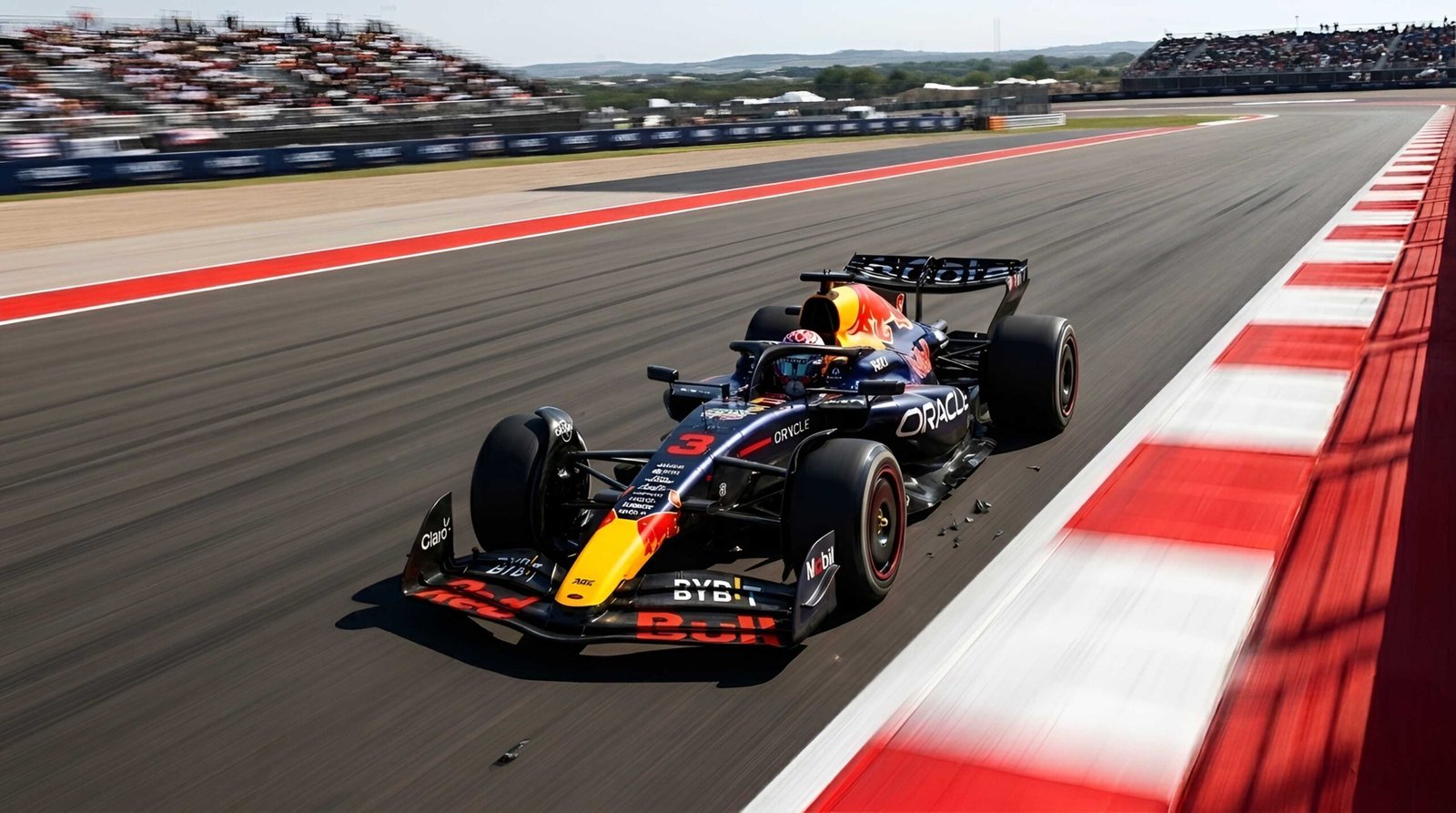
London, United Kingdom April 9 – In the high-stakes arena of Formula 1, where technological precision and split-second adaptability define success, Red Bull Racing’s RB22 has emerged as a cautionary tale for the 2026 season. Once the benchmark of dominance, the Milton Keynes-based outfit now finds itself mired in an unfamiliar struggle, languishing in sixth place in the constructors’ championship—tied on points with Alpine—at a moment when the sport’s radical regulatory overhaul demands flawless integration across every subsystem. Despite the undeniable prowess of its Red Bull Powertrains (RBPT) partnership with Ford, which has exceeded all preseason expectations for power delivery and reliability, the RB22’s aerodynamic package and chassis dynamics have proven fundamentally misaligned with the demands of the new era. This is not merely a temporary setback; it represents a profound technical misalignment that threatens to derail Red Bull’s competitive trajectory unless addressed with surgical urgency.
The 2026 regulations, which introduced active aerodynamic elements, narrower and shorter chassis dimensions, sustainable fuels, and a recalibrated ground-effect philosophy, were always destined to redraw the competitive order. Teams entered the season with varying degrees of preparedness, informed by years of simulation, wind-tunnel validation, and real-world testing. Red Bull, historically masterful at extracting marginal gains from aggressive aerodynamic concepts, appears to have misjudged the delicate balance required under these constraints. The result is a car plagued by excessive sensitivity to setup alterations—a trait that manifests as pronounced instability under varying track conditions, unpredictable downforce transitions, and a narrow operating window that punishes even minor deviations in ride height, rake angle, or suspension geometry.
This aerodynamic shortfall is not abstract. On-track telemetry and post-session debriefs consistently reveal lap-time deficits traceable to inconsistent airflow management, particularly through high-speed corners and during the deployment of active aero devices. Where rivals have engineered more robust flow attachment and predictable pressure distributions, the RB22 exhibits pronounced porpoising tendencies in certain configurations and a reluctance to maintain optimal ground-effect efficiency when subjected to the dynamic load shifts inherent in modern Formula 1. Mercedes, by contrast, has capitalized on its methodical development program to secure a commanding lead in the constructors’ standings with 135 points after the opening rounds in Australia, China, and Japan. Ferrari follows with 90, McLaren with 46, and even Haas has outscored Red Bull to sit fourth on 18 points. The message from the timing screens is unambiguous: aerodynamic harmony, rather than outright power, is the decisive currency in 2026.
Yet the narrative is not one of total failure. The RBPT-Ford power unit stands as a beacon of engineering excellence amid the turbulence. Developed in-house at Red Bull Powertrains in collaboration with Ford, the hybrid V6 turbocharged engine has delivered competitive output figures that match or surpass the field in both qualifying and race trim. Drivers have repeatedly emphasized in private briefings and public remarks that the powertrain is not the limiting factor; it fires cleanly, sustains thermal efficiency across long stints, and exhibits none of the reliability gremlins that afflicted several rival units during winter testing. Insiders familiar with the program describe the RBPT-Ford as a “surprisingly mature” proposition—testimony to the seamless knowledge transfer from Red Bull’s previous Honda partnership and Ford’s expertise in electrification and combustion optimization. In an era where power-unit regulations emphasize sustainability without sacrificing performance, this component has quietly become one of the most reliable assets on the grid, shielding the team from the kind of energy-deployment penalties that have hampered others.
The engine’s virtues, however, only serve to underscore the magnitude of the chassis and aerodynamic deficits. Reserve driver Isack Hadjar, thrust into a race seat alongside Max Verstappen following the regulatory reset, offered an unvarnished assessment that reverberated through the paddock. Describing the RB22’s chassis as “terrible,” Hadjar highlighted its fundamental shortcomings in cornering response: a lack of inherent balance that forces drivers into constant corrective inputs, coupled with tire-management issues that accelerate degradation and compromise strategic flexibility. The car’s behavior under lateral load—particularly in medium- and high-speed turns—reveals a chassis that struggles to maintain consistent weight transfer, resulting in unpredictable understeer-oversteer transitions that erode driver confidence and lap-time potential. Tire wear, already a critical variable under the 2026 tire-compound specifications, is exacerbated by the RB22’s inability to optimize slip angles and contact-patch loading.
Team principal Laurent Mekies, who assumed leadership of the senior squad after guiding the Racing Bulls program through its transition, has been candid about the diagnostic challenges. In a measured yet revealing media briefing following the Japanese Grand Prix, Mekies acknowledged a degree of “confusion” within the engineering ranks regarding the root causes of the imbalance. While upgrades are scheduled for introduction in the coming races, he conceded that the team may have missed critical development windows during the compressed winter preparation phase. This admission carries weight: Mekies is no stranger to technical troubleshooting, yet the RB22’s issues appear to stem from deeper architectural decisions made early in the design cycle—decisions that prioritized certain aerodynamic philosophies over the holistic vehicle dynamics integration now required.
From an engineering standpoint, the RB22’s weaknesses trace back to the interplay between its shortened wheelbase, revised front and rear wing concepts, and the integration of active aero elements mandated by the regulations. Red Bull’s traditional strength—exploiting extreme rake and aggressive diffuser profiles—has proven less effective when active systems must modulate downforce instantaneously. The chassis itself, while structurally sound in terms of crash safety and torsional rigidity, lacks the tunable compliance and kinematic precision that Mercedes and Ferrari have evidently achieved through iterative finite-element analysis and multi-body dynamics simulation. Poor tire management is a direct consequence: the RB22 generates uneven load distributions that accelerate wear on the inner shoulders of the Pirelli compounds, limiting stint lengths and forcing conservative race strategies.
This is not Red Bull’s first technical hiccup; the team has weathered regulatory transitions before, most notably in 2022 when ground-effect returned. Yet the current predicament feels more systemic. Verstappen, the four-time world champion and perennial standard-bearer, continues to extract every tenth of a second through sheer talent and racecraft, but the data logs paint a picture of a driver operating at the absolute limit to compensate for a fundamentally compromised platform. The broader implications extend beyond immediate points tallies. Red Bull’s sponsorship portfolio, long the envy of the paddock, relies on sustained on-track relevance; prolonged underperformance risks eroding commercial confidence at precisely the moment when the cost-cap environment demands disciplined resource allocation.
Looking ahead, the development roadmap offers cautious optimism. The team’s wind-tunnel and simulation facilities remain among the most advanced, and the RBPT-Ford partnership provides a stable foundation for iterative gains. Planned upgrades targeting front-wing endplate geometry, floor-edge sealing, and rear-suspension kinematics could narrow the gap, provided the aerodynamic correlation between simulation and reality is restored swiftly. However, the 2026 season is still in its infancy. With multiple street circuits and high-downforce venues on the horizon, the RB22’s sensitivity could prove even more punishing unless fundamental fixes are implemented before the European leg.
In the final analysis, Red Bull’s 2026 campaign illuminates a timeless truth in Formula 1: no component operates in isolation. The RBPT-Ford’s excellence is being squandered by an aero-chassis package that has yet to find harmony with the new regulations. Mekies and his technical cadre face a formidable task—recalibrating not merely individual elements but the entire design philosophy that propelled the team to supremacy in prior years. For a squad accustomed to dictating the narrative, the RB22 represents an unfamiliar role: that of the challenger seeking answers in a landscape where rivals have already found theirs.
Whether this proves a transient anomaly or the beginning of a longer recalibration remains to be seen. What is certain is that the engineering community will watch Red Bull’s response with keen interest. In a sport defined by relentless innovation, the ability to diagnose, adapt, and overcome is the ultimate measure of excellence. For now, the RB22 stands as a reminder that even the most storied organizations must navigate the complexities of regulatory upheaval with humility, precision, and unyielding resolve. The coming weeks will determine whether Red Bull can reclaim its place at the front—or whether the 2026 season will mark the start of a new chapter in the team’s storied history.


