Published by: AutodromeF1 Editorial Team
Red Bull Racing’s Infrastructure Reckoning: The Persistent Shadow of an Outdated Wind Tunnel in the Dawn of the 2026 Formula 1 Era
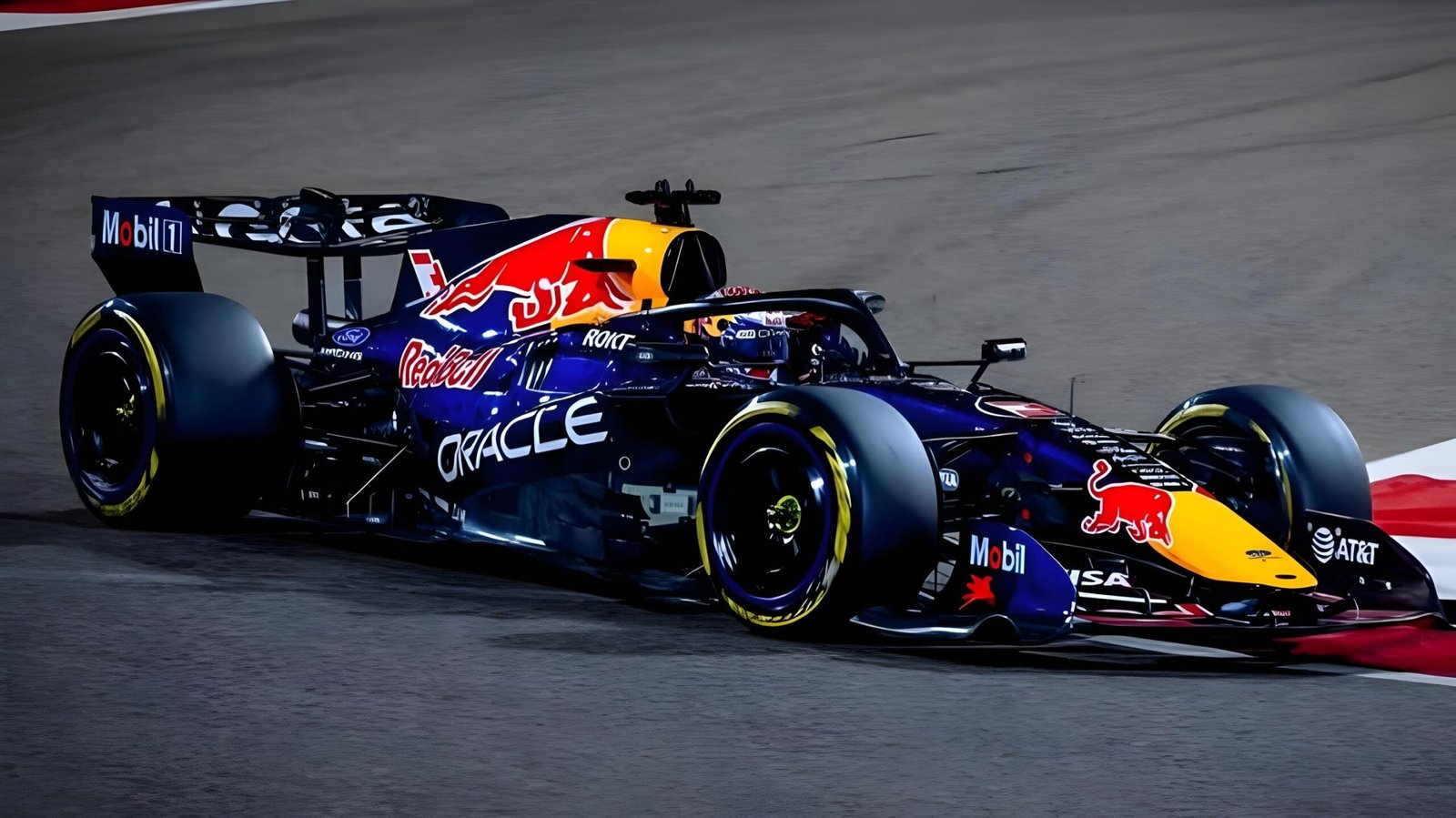
London, United Kingdom April 6 – In the rarefied world of Formula 1 engineering, where milliseconds separate triumph from obsolescence, the physical tools of discovery remain as critical as the intellectual capital that wields them. For Red Bull Racing, that foundational truth has manifested in a protracted and increasingly public challenge: the limitations of an aging wind tunnel infrastructure that, despite the team’s storied success, continues to undermine the fidelity between simulated data and on-track reality. Even as the Milton Keynes-based outfit navigates the post-Adrian Newey landscape following the design virtuoso’s departure in early 2025, the “Cold War relic” at the heart of its aerodynamic program has become both a technical constraint and a narrative focal point—one that senior figures within the team acknowledge without equivocation.
The facility in question, located near Bedford and pressed into service more than seven decades ago, predates not only the modern ground-effect regulations but the very foundations of contemporary Formula 1 itself. Originally conceived in an era of supersonic aviation and Cold War aerospace imperatives, it has undergone incremental upgrades over the years. Yet its fundamental architecture—susceptible to thermal inconsistencies, repeatability variances, and an inherent mismatch with the extreme low-ride-height demands of today’s Venturi-driven cars—has exposed persistent correlation discrepancies. As team principal Christian Horner has memorably articulated, the disconnect feels akin to “looking at two different watches”: one set of readings from the tunnel, another from the unforgiving asphalt. This divergence has not been a mere footnote; it has actively constrained the validation of novel aerodynamic concepts, particularly as the team sought to evolve the RB21 through 2025 and now prepares the RB22 for the seismic regulatory overhaul ahead.
Technical director Pierre Waché, who has assumed overarching responsibility for the technical program in Newey’s absence, has been characteristically candid. In recent briefings, Waché detailed the dual root causes of recent correlation struggles: the tunnel’s advanced age—the oldest currently in Formula 1 service—and the acute sensitivities of ground-effect aerodynamics under the 2022–2025 regulations. “The team struggled a lot at the end of the last regulations with correlation,” he noted, “mainly for two aspects. The first one is because the wind tunnel we have is quite old.” These issues intensified in late 2024 and carried into 2025, limiting the team’s ability to iterate confidently on performance upgrades. Track data, rather than tunnel outputs, increasingly dictated corrective actions, a reactive posture that eroded the proactive development edge Red Bull had long enjoyed. The consequences extended beyond lap times: Max Verstappen’s championship defense faced added pressure, with the car’s balance and responsiveness proving elusive to replicate across circuits.
Yet Waché offers measured reassurance for the immediate horizon. The 2026 regulations, which pivot away from the most extreme manifestations of ground-effect toward a more balanced emphasis on overbody aerodynamics, active systems, and flatter floor profiles, are expected to mitigate the current tunnel’s shortcomings. “The risk [of correlation issues] is greatly reduced,” he affirmed, underscoring that the regulatory shift plays to the strengths of Red Bull’s existing toolkit in the short term. Full resolution, however, awaits the operational debut of the team’s new state-of-the-art wind tunnel at the Milton Keynes campus. Construction, already reported as running three months ahead of initial projections, targets full commissioning by 2027, with potential early validation work possible in late 2026. Waché has described the investment as one designed to deliver “the best in the entire field,” signaling a long-term commitment to infrastructural parity that acknowledges past handicaps without dwelling on them.
This narrative of infrastructural catch-up unfolds against a backdrop of rivals who have already modernized their aerodynamic laboratories with conspicuous success. McLaren’s decision to revamp its wind tunnel, fully operational since late 2023, has been widely credited as a cornerstone of the team’s ascent to Constructors’ Championship dominance in 2025. The facility’s enhanced repeatability and correlation have enabled a seamless upgrade cadence, delivering consistent all-round performance gains that translated directly into race-winning reliability and pace. Ferrari, meanwhile, executed a targeted upgrade in 2024 by installing a rubber rolling road—a refinement that dramatically improves simulation accuracy at the low ride heights critical to ground-effect efficiency. The result has been a more trustworthy data pipeline, allowing Maranello’s engineers to pursue aggressive developments with greater confidence.
Mercedes and Aston Martin have pursued parallel paths of investment, each yielding facilities whose outputs align more precisely with CFD models and telemetry. Aston Martin’s new in-house tunnel at the Silverstone AMR Technology Campus, fired up ahead of the 2025 season after years of reliance on shared Mercedes infrastructure, has introduced radical calibration advancements and flow visualization capabilities that team principal Andy Cowell has hailed as transformative. These upgrades have not only narrowed historical data gaps but positioned the squad to capitalize on the 2026 reset with renewed ambition. Industry observers and fan analyses alike have echoed this assessment: while Red Bull’s tunnel limitations are not insurmountable, they represent a tangible edge ceded to competitors whose instrumentation and environmental controls more faithfully replicate the dynamic complexities of modern Formula 1 cars.
Compounding the hardware disparity is the regulatory framework governing aerodynamic testing itself. Under the FIA’s sliding-scale Aerodynamic Testing Regulations—reset annually according to Constructors’ Championship standings—success carries a built-in penalty of restricted development time. For 2026, allocations reflect the 2025 final order, with McLaren (as champions) operating at the most constrained baseline. The table below summarizes the precise entitlements for the leading contenders:

Red Bull’s 80 percent allocation—granted by virtue of its third-place 2025 finish—affords a modest increment over the frontrunners, yet this numerical advantage is tempered by the qualitative shortcomings of the current tunnel. Extra hours cannot fully compensate for repeatability shortfalls or thermal drift that have historically steered development down unproductive avenues. In contrast, Aston Martin’s full 100 percent baseline, combined with its upgraded facility, equips the Silverstone outfit with both volume and veracity—an enviable position as the grid prepares for the most transformative rulebook in a generation.
The broader implications extend beyond mere lap-time deltas. Newey’s early 2025 exit, while not the genesis of the tunnel issues, removed a singular interpretive genius capable of bridging simulation gaps through intuition and experience. His departure has placed greater onus on the collective expertise of Waché’s team and the robustness of the tools at their disposal. Fan discourse and specialist commentary have increasingly framed Red Bull’s situation as a test of organizational resilience: can a squad that redefined dominance through the 2022–2024 seasons recalibrate its engineering philosophy around more conventional data fidelity? The 2026 regulations, with their emphasis on power-unit integration, active aerodynamics, and chassis flexibility, offer a partial reset. By diminishing the primacy of ultra-precise ground-effect modeling—the very domain where the Bedford tunnel’s limitations proved most acute—Formula 1’s governing body has inadvertently granted Red Bull a transitional reprieve.
Nevertheless, the long-term prognosis hinges on execution. The new Milton Keynes tunnel will not arrive as a panacea; commissioning, calibration, and integration into the workflow will demand time, resources, and a period of parallel validation against legacy data. Waché and Horner have both emphasized patience, noting that the current facility remains fully occupied with 2026 development while the 2027 challenger will be the first to benefit fully from the upgraded environment. In the interim, Red Bull must leverage its institutional knowledge, driver feedback (particularly from Verstappen, whose feedback loop has grown ever more critical), and the additional testing hours afforded by its 2025 positioning to close the performance gap evident through much of the prior season.
From a strategic standpoint, this episode illuminates a deeper truth about modern Formula 1: infrastructure is no longer a static asset but a dynamic competitive lever. Teams that invested early in modernized tunnels—whether through wholesale construction like Aston Martin or targeted refurbishments like Ferrari’s rubberized rolling road—have reaped dividends in correlation confidence and development velocity. Red Bull’s trajectory, by contrast, underscores the risks of deferring such capital expenditure, even for an organization with unmatched recent pedigree. The “Cold War relic” may have served admirably during the hybrid era’s peak, yet in an age of hyper-precise simulation and ever-tighter margins, it has become a bottleneck that no amount of engineering ingenuity can entirely circumvent.
As the 2026 season looms, Red Bull enters a pivotal chapter. The regulatory clean sheet provides an opportunity to realign its aerodynamic philosophy with the strengths of its impending new facility. Waché’s optimism regarding reduced correlation risk is not mere rhetoric; it is grounded in the physics of the new ruleset. Yet the true test will lie in whether the team can translate that theoretical advantage into sustained on-track parity—or better—against rivals who have already bridged their own data divides. For a franchise that has prided itself on self-reliance and rapid iteration, the wind tunnel saga represents both a cautionary tale and a catalyst for renewal.
In the final analysis, Red Bull’s challenges are neither insurmountable nor unique in Formula 1’s long history of infrastructural arms races. What distinguishes this moment is the confluence of personnel transition, regulatory upheaval, and technological evolution. The team that once bent the sport to its will through sheer aerodynamic brilliance must now demonstrate equal mastery in adapting to the very tools that define progress. The new tunnel, when it comes online, will mark not merely the end of an era but the beginning of Red Bull’s next competitive chapter—one written, hopefully, with data that finally tells a consistent story across tunnel, screen, and circuit. Until then, the “two different watches” dilemma remains a reminder that in Formula 1, even the greatest teams are only as strong as their weakest instrument.


