Published by: AutodromeF1 Editorial Team
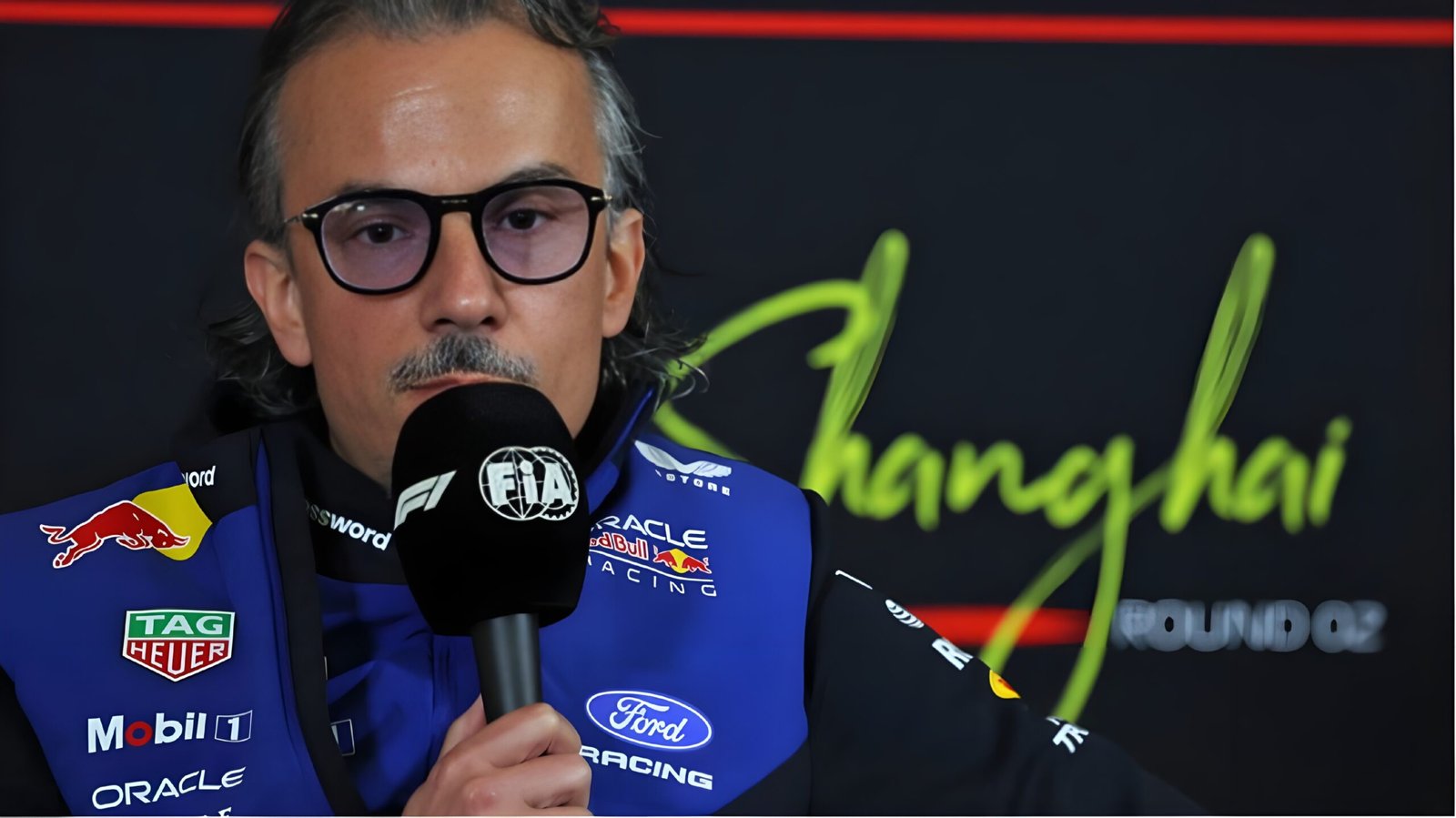
In a candid and stark assessment of the 2026 Formula 1 competitive landscape, Red Bull Racing’s Team Principal, Laurent Mekies, has delivered a sobering verdict on the team’s current standing, acknowledging a “substantial” performance deficit to the front-running Mercedes-AMG Petronas team. His analysis, devoid of platitudes, paints a picture of a team facing a multi-faceted challenge, requiring a comprehensive, “360-degree” overhaul of its RB22 challenger to bridge a gap estimated at nearly a second per lap in race trim. This admission signals the dawn of a grueling development war, a test of resolve and ingenuity for the Milton Keynes-based squad as it navigates the radically new technical regulations.
The Anatomy of a Deficit: A Deeper Dive
In the unforgiving world of Formula 1, where performance is measured in thousandths of a second, a one-second gap is an abyss. Mekies’ public acknowledgment of such a figure, particularly following the Australian Grand Prix, is a strategic move to frame the narrative, manage expectations, and galvanize his organization. He articulated that the deficit is not rooted in a single, isolated flaw but is fundamentally bisected between two core areas of performance: aerodynamic efficiency on the straights and mechanical/aerodynamic grip in the corners.
This roughly 50/50 split indicates a foundational issue with the RB22’s design philosophy rather than a localized problem that can be rectified with a simple front wing update or a revised floor. A straight-line speed deficit points towards either a higher-than-optimal drag profile, a power unit deployment strategy that is yet to be fully optimized, or a combination of both. In the new era of 2026 regulations, which feature a greater reliance on electrical energy deployment (MGU-K) and the use of 100% sustainable fuels, the intricate dance between aerodynamic drag and power unit performance is more critical than ever. The team must dissect whether the RB22’s aerodynamic surfaces, designed to generate downforce for cornering, are creating an excessive penalty in straight-line speed, or if the initial integration of their very own Red Bull Powertrain is still on a learning curve against established manufacturers like Mercedes High-Performance Powertrains.
Simultaneously, the cornering deficit speaks to a need for enhanced downforce generation from the floor and wings, as well as improved mechanical grip from the suspension geometry. The 2026 regulations, with their new active aerodynamics systems, have presented a fresh set of challenges in generating stable and predictable aerodynamic load across a wide range of cornering speeds. Red Bull’s struggle in this domain suggests that the team is still searching for the operational sweet spot of the RB22, a task complicated by the fact that improvements in one area (e.g., adding downforce for corners) can often exacerbate problems in another (e.g., increasing drag on the straights). Mekies’ “360-degree” terminology is, therefore, not hyperbole; it is a literal description of the task at hand. It requires a holistic review of the car’s concept, from the front wing to the rear diffuser, and a deep-seated collaboration between the aerodynamics department, the vehicle dynamics group, and the newly-formed powertrain division.
Navigating a Reshuffled Pecking Order
The early season results have positioned Red Bull as the fourth-fastest team, locked in a tight battle with a resurgent McLaren. This places them in a fiercely contested midfield, but a clear step behind the early pace-setters, Mercedes and Scuderia Ferrari, whose drivers like George Russell and the prodigious rookie Kimi Antonelli have set the benchmark. This reality aligns with the cautious optimism Mekies expressed post-pre-season testing. He alluded to the “games” often played during the Barcelona tests, where teams mask their ultimate potential through varied fuel loads and engine modes. The true pace of Mercedes and Ferrari was only unveiled under the competitive heat of the opening race weekends, confirming that Red Bull’s initial fight would be for points, not podiums.
Yet, within this challenging context, there are glimmers of the team’s formidable fighting spirit. Max Verstappen’s remarkable recovery drive from P20 on the grid to a P6 finish in Melbourne serves as a powerful testament to both his exceptional talent and the RB22’s underlying potential. Such a performance, while not a headline victory, demonstrates that the car possesses a solid operational platform and is capable of executing aggressive race strategies—a crucial asset in a long season. It proves that while the team may lack the ultimate one-lap pace, its race-day operations and driver skill remain world-class.
The Long Road Ahead: A War of Development
Mekies has framed the 2026 season not as a sprint, but as a marathon—a “fierce development race” and a “learning race.” This is the core of Red Bull’s strategy: to out-develop and out-learn their rivals over the course of the 24-race calendar. In modern Formula 1, the car that starts the season is rarely the same one that finishes it. The battle is fought as much in the wind tunnels, simulators, and production facilities at Milton Keynes as it is on the asphalt of Spa or Silverstone.
The team’s commitment to this upgrade war is absolute, with Mekies confirming that every department is operating at maximum capacity. The challenge is twofold: first, to understand the fundamental deficiencies of the RB22 and devise corrective solutions; second, to manufacture and deploy these upgrades at a rate that not only keeps pace with but exceeds the development trajectory of McLaren, Ferrari, and Mercedes. This relentless cycle of innovation is the lifeblood of a top-tier Formula 1 team.
Crucially, despite the aerodynamic and chassis challenges, Mekies expressed immense pride in the team’s landmark achievement: the creation of its own in-house power unit. The Red Bull Powertrains project represents a monumental undertaking, a declaration of independence that provides the team with full control over its destiny. While the learning curve is steep, the ability for the chassis and engine departments to work under one roof, with seamless integration, is a strategic advantage that will pay dividends in the long run. Mekies’ assertion that the new power unit has kept them “in the fight” from the very first race is a significant statement. It suggests that the powertrain is not the primary source of the deficit and is providing a reliable and competitive foundation upon which the team can build.
In conclusion, Red Bull Racing finds itself at a critical juncture. The bravado of its recent championship-winning years has been replaced by the quiet, focused determination of a team on the comeback trail. Laurent Mekies’ leadership will be defined by his ability to steer this ship through turbulent waters, transforming the “substantial” deficit of today into the marginal gains of tomorrow. While immediate title contention appears unlikely, the DNA of Red Bull is one of resilience and relentless innovation. The 2026 season will be a testament to that legacy, a 360-degree war fought on all fronts, where every engineer, designer, and driver will be called upon to close the gap, one millisecond at a time.


