Published by: AutodromeF1 Editorial Team
Red Bull Racing’s Calculated Gamble: How the 2025 Title Pursuit Has Reshaped Their 2026 Campaign
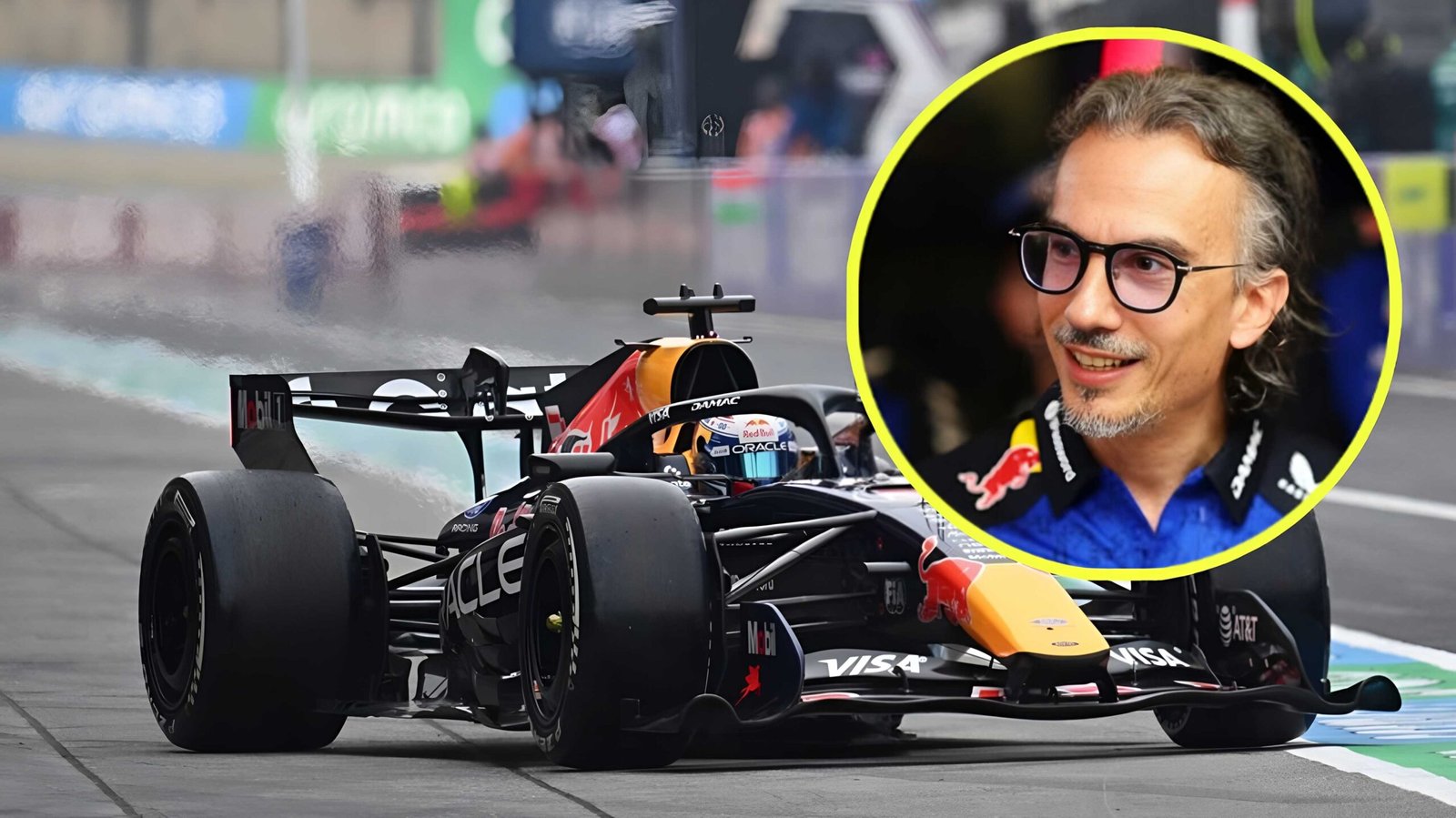
London, United Kingdom 3 March – In the rarefied world of Formula 1, where milliseconds separate triumph from obscurity, strategic trade-offs are rarely discussed with candour. Yet Red Bull Racing’s team principal, Laurent Mekies, has chosen precisely that path. In a series of measured reflections following the opening rounds of the 2026 season, Mekies has openly conceded that the team’s ferocious late-season push to secure the 2025 drivers’ championship for Max Verstappen came at a tangible cost to the development of their all-new RB22. The decision, while delivering a near-miss title challenge against McLaren’s Lando Norris, has left the Milton Keynes outfit grappling with a car that currently sits outside the expected hierarchy under the sport’s radical new technical regulations.
The arithmetic is unforgiving. After the first three races of 2026, Red Bull had accumulated a mere 16 points, consigning them to sixth place in the constructors’ standings. Teams historically regarded as midfielders—Haas and Alpine—have, at various stages, sat ahead of the four-time champions. Even more telling is the on-track perception: independent timing data and telemetry leaks suggest the RB22 has been running as the fourth-fastest car on the majority of circuits visited so far. For a squad that entered the new regulatory cycle as pre-season favourites in the eyes of many paddock insiders, the early-season reality has been sobering.
Mekies, whose leadership has been characterised by a calm, analytical style since assuming the role, did not mince words when addressing the root cause. “We made a conscious choice to extract every last ounce of performance from the RB21 in the closing stages of 2025,” he stated in a recent team briefing. “That focus undeniably hurt our 2026 prospects. We are paying the price for those choices now.” The admission carries weight precisely because it is rare. Most team principals prefer the language of incremental progress or external factors; Mekies has instead offered a masterclass in accountability.
To understand the scale of the compromise, one must revisit the final months of the 2025 campaign. With Verstappen trailing Norris by 104 points entering the closing triple-header, Red Bull’s engineering and aerodynamic departments were instructed to prioritise aggressive upgrades to the RB21. Resources that might otherwise have been allocated to the wind-tunnel programme for the RB22—particularly in the critical areas of floor development, suspension geometry, and power-unit integration—were redirected. The result was a late-season surge that brought Verstappen within touching distance of a fifth world title. The ultimate shortfall, while agonising, was framed internally as evidence of the team’s refusal to capitulate.

Yet the downstream consequences have manifested vividly in the RB22. Drivers and engineers alike have highlighted three persistent characteristics: compromised rear-end stability, reduced apex speeds through high-speed corners, and suboptimal energy recovery from the new-generation hybrid system. Verstappen has described moments of “nervous rotation” under load, while rookie teammate Isack Hadjar has spoken of the car demanding earlier braking zones than rivals to maintain traction out of medium- and high-speed turns. These traits are not mere teething problems; they stem from fundamental aerodynamic and mechanical choices made when development bandwidth was stretched thin.
The technical brief for 2026 demanded a complete rethink. The regulations introduced a new chassis philosophy, revised active aerodynamics, and a power unit architecture that places far greater emphasis on electrical deployment and thermal efficiency. Red Bull’s decision to design and manufacture its own power unit in-house, in partnership with Ford, added another layer of complexity. While the PU itself has performed reliably, Mekies has been quick to clarify that the chassis behaviour—not the engine—remains the primary obstacle. “The power unit is delivering what we asked of it,” he noted. “The issue lies in how the car translates that energy into consistent lap time.”
Pre-season testing in Bahrain offered the first public glimpse of remedial work. A revised front-wing assembly and re-profiled sidepods were introduced, accompanied by subtle floor-edge modifications aimed at restoring rear-end confidence. The package showed flashes of promise in long-run simulations, yet race weekends in Australia and China revealed that the core handling traits had not been fully resolved. By the time the circus reached Japan, Red Bull remained mired in the lower reaches of the points table despite incremental gains in qualifying trim.
What sets Mekies’ perspective apart is his refusal to view the situation as a crisis. Instead, he frames the early-season difficulties as a “net gain” in the longer strategic arc. The intense focus on 2025, he argues, forced the team to refine its development processes, simulation tools, and decision-making frameworks under genuine pressure. Those lessons are now being applied directly to the RB22 programme. “We have a clearer understanding of our own tools than we might have achieved through a more conventional approach,” Mekies explained. “That knowledge will serve us across the entire new regulatory cycle.”
Such optimism is grounded in Red Bull’s historical resilience. The team has repeatedly demonstrated an ability to accelerate development once a clear direction is identified. The arrival of major upgrades—expected to address rear stability and energy-management efficiency—is now targeted from the Japanese Grand Prix weekend onward. Internal simulations suggest that if the next two specification steps deliver the projected gains in aerodynamic balance and power deployment, Red Bull could realistically challenge for podiums by the European leg of the calendar.
The broader context of the 2026 season cannot be ignored. The regulatory overhaul was designed to reset the competitive order, yet early indications suggest McLaren and Ferrari have translated their 2025 momentum more effectively into the new cars. Mercedes, too, appears to have navigated the transition with fewer visible compromises. Red Bull’s sixth-place standing, therefore, is not merely a statistical anomaly; it represents a temporary misalignment between ambition and execution at the precise moment the sport’s rulebook changed.
For Max Verstappen, the situation presents both challenge and opportunity. The Dutchman has never been one to shy away from a fight, and his feedback loop with the engineering team remains as sharp as ever. Insiders suggest he is already driving the RB22 beyond its natural limits in certain sectors, extracting lap times that belie the car’s underlying balance issues. Whether that raw talent can translate into consistent top-three finishes before the summer break will depend on how quickly the aerodynamicists can close the gap on rear-end predictability.
Equally significant is the integration of Isack Hadjar. The young Frenchman’s promotion to a race seat alongside Verstappen was intended to inject fresh energy into the driver line-up. His early performances have been solid, yet the RB22’s demanding nature has exposed the limits of experience in a car that punishes small errors. Hadjar’s willingness to provide detailed, data-rich feedback has been praised internally, but the team acknowledges that both drivers require a more forgiving platform to showcase their full potential.
Looking further ahead, the 2026 campaign will test Red Bull’s ability to operate on two fronts simultaneously: immediate performance recovery and long-term power-unit evolution. The in-house Ford-Red Bull power unit represents a strategic bet on self-reliance after years of customer arrangements. While the early-season focus has been on chassis behaviour, the PU’s thermal characteristics and deployment strategies will become increasingly important as circuits demand higher electrical usage. Mekies has emphasised that the team harbours “no regrets” over the 2025 investment. “We fought until the final lap because that is who we are,” he remarked. “The lessons we learned in that fight are now being fed directly into the RB22.”
This philosophy—prioritising maximum performance in the moment while accepting the calculated risk of delayed development—distinguishes Red Bull from many of its rivals. Other organisations might have hedged their bets, splitting resources more evenly between the two seasons. Red Bull chose conviction. The early 2026 results suggest the price was higher than anticipated, yet the team’s leadership remains convinced that the long-term balance sheet will show a net positive.
As the season progresses, the paddock will watch closely to see whether Mekies’ measured optimism is vindicated. The upgrades slated for introduction in the coming races will serve as the first true litmus test. If Red Bull can climb from sixth to the front of the midfield—and eventually challenge the leading trio—the narrative will shift from “costly gamble” to “strategic masterstroke.” Should the RB22 require more fundamental redesign, the team’s 2025 title push may be remembered as the moment a dynasty momentarily blinked.
For now, Laurent Mekies and his colleagues are focused on the immediate task: turning hard-won knowledge into tangible lap-time gains. The 2026 season is still in its infancy. The circuits ahead—each presenting different demands on rear stability and energy recovery—will offer fresh data points. Red Bull has never been a team to dwell on setbacks. Their history is defined by rapid adaptation and an unrelenting pursuit of excellence. The current chapter may be uncomfortable, but it is far from conclusive.
In an era where Formula 1’s regulatory cycles are becoming shorter and the competitive margins ever finer, Red Bull’s experience serves as a compelling case study in the delicate art of resource allocation. Short-term glory and long-term dominance are not always compatible. The Milton Keynes outfit bet on the former to fuel the latter. Whether that wager proves prescient will be written in the results of the races still to come.


