Published by: AutodromeF1 Editorial Team
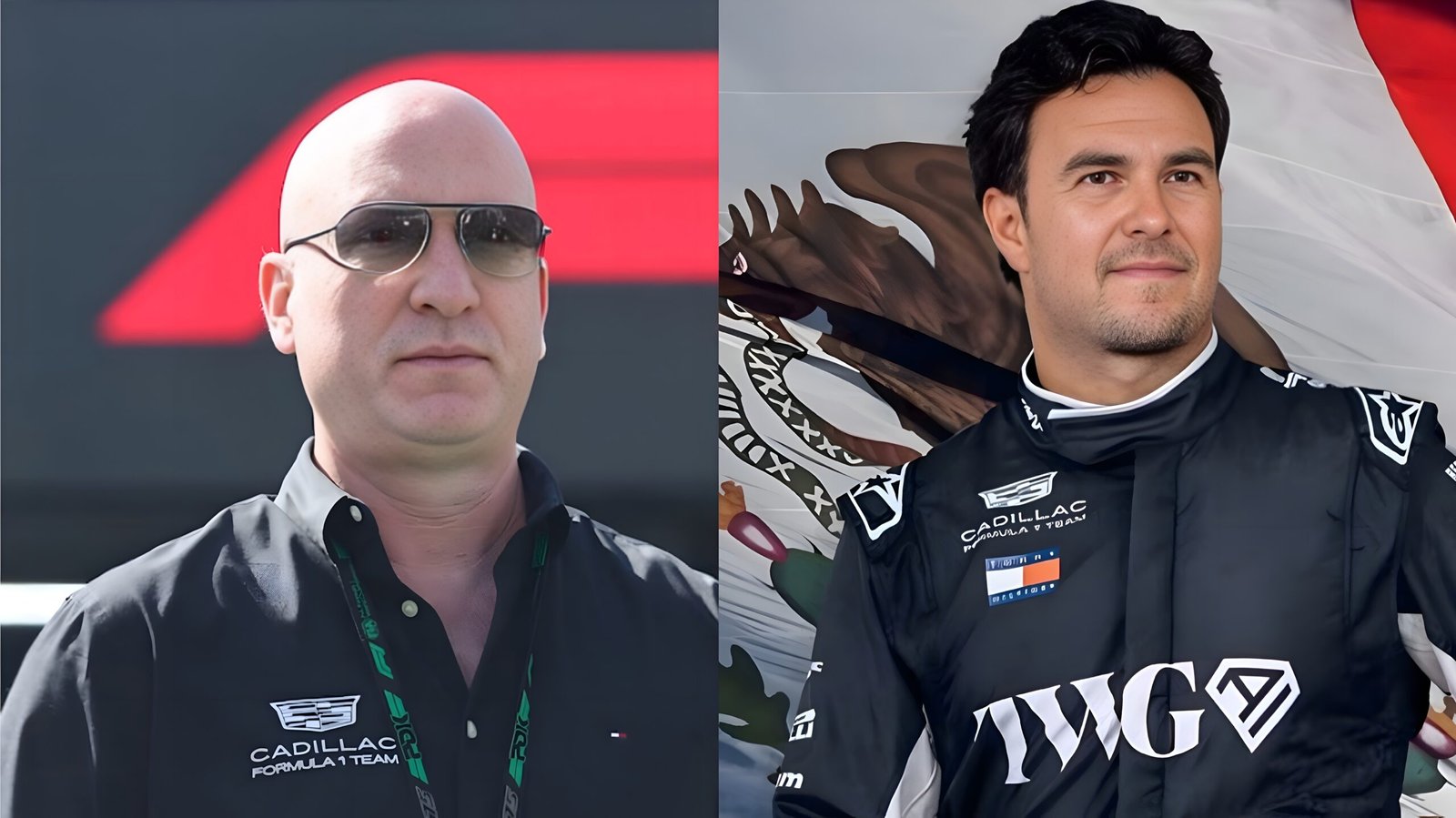
Sergio Pérez Lauds Cadillac CEO Dan Towriss as the Architect of the Team’s Formula 1 Ascendancy
In the intricate tapestry of modern Formula 1, where technical precision, strategic foresight, and unyielding ambition intersect to propel teams from inception to competitiveness, few voices carry the weight of experience quite like that of Sergio Pérez. The Mexican driver, returning to the grid with the newly established Cadillac outfit for the 2026 season, has publicly extolled the virtues of the team’s chief executive, Dan Towriss, describing him as the pivotal force behind the American constructor’s rapid emergence as a credible contender. Far from the hyperbolic praise that often accompanies new-team launches, Pérez’s assessment—delivered with the measured insight of a veteran who has navigated both the pinnacles and pitfalls of the sport—underscores a leadership philosophy rooted in competitive urgency and operational discipline.
Speaking candidly to an assembled international press corps ahead of the upcoming European leg of the championship, Pérez articulated what he perceives as Towriss’s defining attribute: an innate “competitive DNA.” “What I really like about Dan is his competitive DNA,” the driver remarked. “I think he’s not going to be very patient at the beginning, and he’s going to push the whole team forward to deliver results as quickly as possible, to move forward.” This characterisation is not mere rhetoric; it reflects a deliberate organisational ethos at odds with the protracted, sometimes glacial development cycles that have historically plagued expansion franchises. In an era when regulatory stability under the 2026 power-unit and chassis framework offers a narrow window for differentiation, Towriss’s impatience—framed by Pérez as constructive rather than impulsive—has evidently galvanised every department, from aerodynamics to powertrain integration and commercial strategy.
Pérez elaborated on the tangible impact of this approach, emphasising the collective motivation it has instilled within the squad. “We want to see a lot of development quickly, so that’s something really good to have on our team,” he noted. The statement, delivered with quiet conviction, reveals a driver who has transitioned from the high-pressure environment of a front-running outfit to the foundational phase of a startup, yet retains an unquenched thirst for progress. At Cadillac, where the infrastructure draws upon the formidable resources of General Motors and the racing pedigree of Andretti Global, such developmental velocity is not aspirational but operational imperative. Early-season telemetry and wind-tunnel data, though proprietary, have reportedly been interrogated with an intensity that belies the team’s status as the championship’s eleventh entrant. The result, insiders suggest, is an accelerated iteration cycle that positions the C01 chassis—powered by a GM-derived power unit—as a platform capable of incremental gains race by race.
The broader context of Pérez’s return to Formula 1 after a season on the sidelines adds layers of resonance to his endorsement. Having parted ways with his previous employer at the conclusion of 2024 amid a fiercely contested driver market, the 36-year-old Mexican found in Cadillac not merely a seat, but a platform aligned with his personal and professional aspirations. “People are very happy to have me back in the sport,” he reflected, “and they obviously understand that this is a big project, a long-term project as well.” This acknowledgment of public patience is telling. In Mexico, where motorsport enthusiasm borders on national fervour, Pérez’s absence had been keenly felt; his reappearance under the Cadillac banner has elicited an outpouring of support that transcends the customary loyalty afforded a homegrown hero. Social media analytics and merchandise sales data indicate a surge in engagement, particularly among younger demographics drawn to the team’s distinctly American yet globally inclusive identity.
Crucially, Pérez highlighted the cultural synergy between Cadillac and his homeland. “Obviously, Cadillac is a very popular brand in my country,” he observed, “so it feels like Cadillac is a really nice team for the fans as well.” The observation is astute. General Motors’ luxury marque has long enjoyed iconic status in Latin America, symbolising aspiration and engineering excellence. By aligning the F1 programme with this heritage, the team has cultivated a ready-made constituency that extends far beyond the traditional European heartland of the sport. Market research commissioned by the FIA and independent consultancies corroborates this: projected television audiences in Mexico and across Central and South America for Cadillac races are expected to rival those of established powerhouses, offering sponsors a demographic dividend that few other constructors can match. Pérez’s presence, therefore, functions as both on-track accelerant and off-track ambassador, bridging the Atlantic divide in a manner that enhances the sport’s commercial footprint.
Yet the significance of Pérez’s comments extends beyond personal narrative or regional appeal; they illuminate the evolving paradigm of team ownership in Formula 1. Dan Towriss, whose background encompasses executive leadership within General Motors’ global operations, embodies a hybrid model: the fusion of corporate rigour with motorsport’s visceral demands. Unlike traditional family-run or independent outfits that often rely on generational patronage, Cadillac’s structure benefits from the scale and technological depth of a multinational industrial giant. Towriss’s remit—overseeing commercial strategy while interfacing with GM’s engineering divisions—has facilitated seamless integration of electrification research, materials science, and simulation capabilities that were previously siloed. The “push” Pérez describes is, in this light, symptomatic of a governance framework designed to compress timelines without compromising quality. Industry observers note parallels with Mercedes’ ascent under Toto Wolff or Red Bull’s transformation under Christian Horner, yet Cadillac’s trajectory is distinguished by its explicit 2026 regulatory alignment and transatlantic supply chain.
This leadership dynamic assumes heightened importance given the technical regulations governing the new season. The shift to sustainable fuels, revised aerodynamics, and standardised components has levelled certain aspects of the playing field, yet it has also rewarded teams capable of rapid adaptation. Cadillac’s early performances—modest yet indicative of underlying potential—suggest that Towriss’s insistence on immediate deliverables has yielded measurable aerodynamic efficiencies and power-unit reliability improvements. Comparative analysis with fellow newcomers and midfield incumbents reveals a team that, while not yet challenging for podiums, has avoided the protracted teething problems that afflicted previous American entries. Pérez’s feedback loop, he has intimated, receives greater weight here than in prior environments, enabling targeted refinements that align driver preference with engineering output.
The human dimension of this endeavour merits equal consideration. For Pérez, the return represents more than professional reinstatement; it signifies participation in a venture whose long-term horizon aligns with his own career twilight. At an age when many contemporaries contemplate retirement, he has embraced the role of mentor and development driver alongside teammate Valtteri Bottas, whose own wealth of experience provides complementary stability. Their partnership—seasoned campaigners guiding a fledgling organisation—mirrors successful precedents such as Williams’ early-2010s configuration or Haas’s initial alliance with Ferrari. Fan correspondence and paddock sentiment alike attest to the palpable optimism surrounding the duo, tempered by realistic expectations of a multi-year ascent.
Economically, Cadillac’s entry heralds broader implications for Formula 1’s globalisation strategy. The sport, long dominated by European manufacturers, has increasingly courted North American investment to diversify revenue streams and mitigate geopolitical risks. General Motors’ commitment—valued in the hundreds of millions—signals confidence in the championship’s commercial viability post-2025 Concorde Agreement. Towriss’s stewardship ensures that this capital is deployed with accountability and strategic coherence, attributes that Pérez’s endorsement implicitly validates. In boardrooms from Detroit to Mexico City, the narrative is shifting from speculative venture to calculated investment with tangible returns in brand equity, talent acquisition, and technological spillover.
Moreover, the team’s developmental ethos addresses a perennial critique of expansion franchises: the perception of them as mere grid-fillers. By prioritising “a lot of development quickly,” Cadillac is crafting a counter-narrative—one of proactive ambition rather than passive participation. This philosophy resonates with the FIA’s vision of a more inclusive championship, where regulatory parity enables genuine competition. Early indications from simulator sessions and trackside data suggest that upgrades slated for mid-season could propel the team into regular points contention, provided the organisational momentum Pérez praises is sustained.
In reflecting upon the wider ecosystem, one cannot overlook the role of fan communities in sustaining momentum. Mexican supporters, historically fervent yet pragmatic, have demonstrated remarkable forbearance, recognising the “big project” Pérez references. Their enthusiasm is not blind optimism but informed appreciation of the infrastructural and personnel investments underpinning the programme. Ticket sales for the Mexican Grand Prix, already robust, are projected to receive an additional uplift from the Cadillac factor, reinforcing the circuit’s status as a flagship event. This symbiotic relationship between driver, team, and audience exemplifies the intangible yet invaluable currency of national pride within globalised sport.
Looking ahead, the trajectory mapped by Towriss and executed by Pérez and Bottas hinges on continued executional excellence. The 2026 regulations, while innovative, remain unforgiving; only those organisations capable of harmonising human capital with technological prowess will thrive. Cadillac’s early signals—underpinned by leadership that eschews complacency—offer grounds for cautious optimism. Pérez’s public articulation serves not merely as testimonial but as manifesto: a declaration that the team’s foundations are sound, its ambitions calibrated, and its leadership attuned to the unforgiving tempo of Formula 1.
In an industry where rhetoric often outpaces reality, Sergio Pérez’s measured endorsement of Dan Towriss stands as a compelling testament to substantive progress. It is a narrative of convergence—between corporate vision and sporting instinct, between transatlantic resources and Latin American passion, between immediate urgency and long-term horizon. As the season unfolds, the proof of this alignment will be etched in lap times, championship standings, and the enduring loyalty of a global fan base. For now, however, the message is unequivocal: under Towriss’s stewardship, Cadillac is not merely entering Formula 1; it is positioning itself to redefine the parameters of what a modern constructor can achieve.


