Published by: AutodromeF1 Editorial Team
Toto Wolff on Max Verstappen: A Season of Reckoning for Formula 1’s Most Formidable Talent
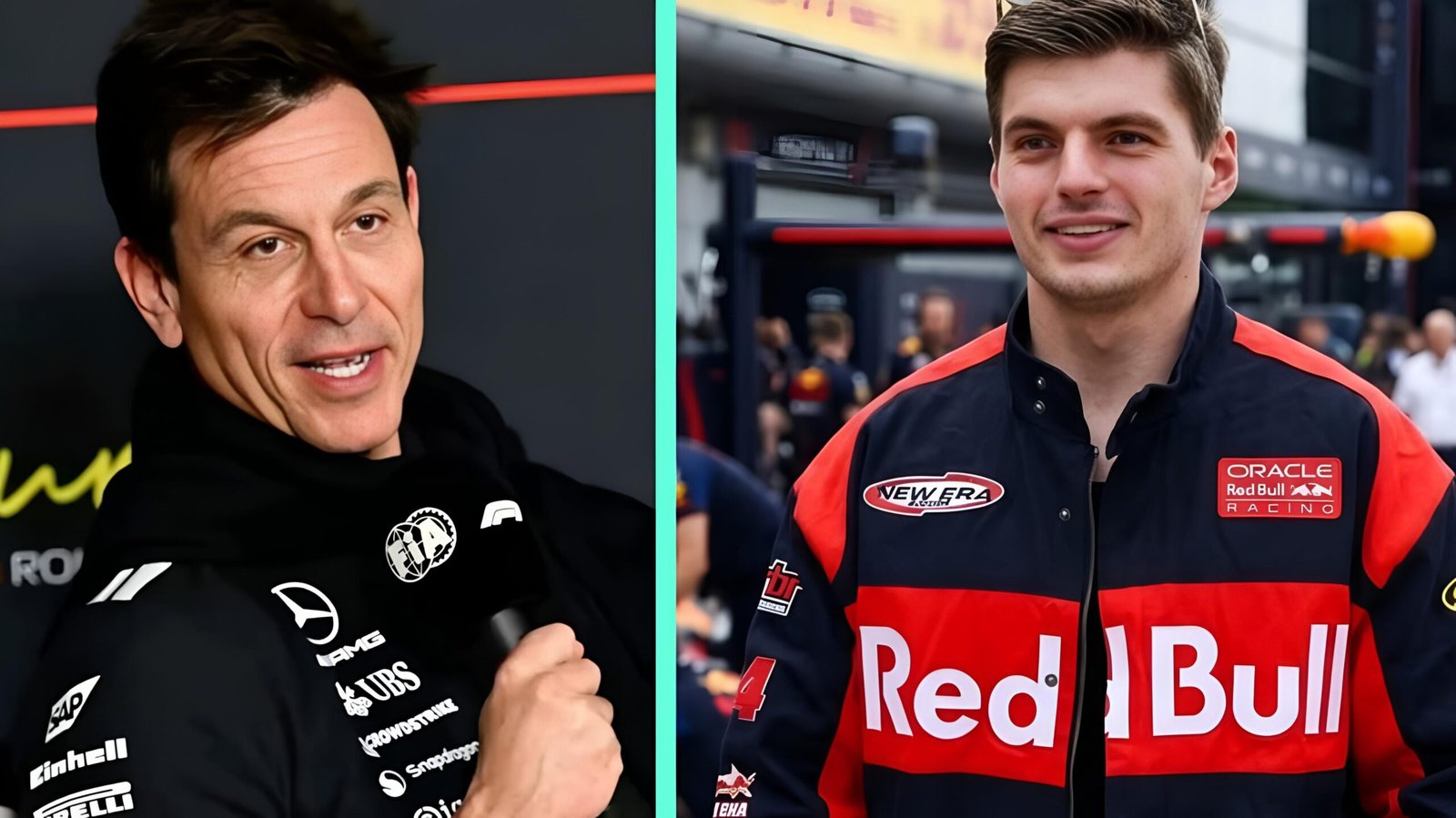
In the high-stakes crucible of Formula 1, where technical precision collides with human endurance, few voices carry the weight of experience and candour that Toto Wolff commands. As principal of the Mercedes-AMG Petronas F1 Team, Wolff has steered his organisation through eras of dominance and reinvention alike. His recent observations concerning Red Bull Racing’s Max Verstappen, articulated in interviews with Sky Deutschland and corroborated across multiple paddock briefings, transcend the realm of routine rivalry commentary. They reflect a nuanced apprehension for the Dutch driver’s professional fulfilment and long-term well-being amid the turbulent onset of the 2026 campaign—an apprehension grounded not in sentimentality but in the hard-earned wisdom of a leader who has witnessed the sport’s capacity both to elevate and to erode its brightest stars.
The 2026 season, barely three races young, has already tested the resilience of even the most battle-hardened competitors. Verstappen, the four-time world champion whose clinical precision and unyielding competitiveness have redefined modern grand prix racing, finds himself navigating uncharted territory. Early indicators from the Australian Grand Prix in Melbourne and the subsequent Chinese Grand Prix in Shanghai paint a portrait of frustration compounded by circumstance. A qualifying incident in Melbourne—described in contemporaneous reports as a Q1 excursion that relegated him to the rear of the grid—necessitated a gritty recovery drive to sixth place. In Shanghai, mechanical gremlins, including an ERS-related retirement while running competitively, further underscored the RB22’s teething troubles. These setbacks, while not catastrophic in isolation, have amplified Verstappen’s vocal dissatisfaction with the new regulatory framework, prompting him to muse openly about the finite nature of his passion for the sport.
Wolff’s intervention, delivered with characteristic Austrian directness, underscores a deeper philosophical tension. “Max is certainly a person with emotions,” he noted, before emphasising that the spectacle of Formula 1 should not forfeit a talent of Verstappen’s calibre. Yet the Mercedes principal was unequivocal in delineating boundaries: the Silver Arrows’ driver line-up for 2026 and beyond remains firmly anchored in George Russell and Kimi Antonelli. This stance, reaffirmed in multiple forums following Mercedes’ October 2025 confirmation of the pairing, signals not indifference to Verstappen’s plight but a resolute commitment to internal stability. Antonelli’s seamless integration as a rookie—marked by composure under pressure and flashes of precocious speed—has validated Wolff’s long-term vision. Russell, meanwhile, continues to mature as a cornerstone, his technical acumen and leadership providing the bedrock upon which Mercedes’ resurgence is being constructed. In an era where driver markets are fluid and speculation rampant, Mercedes’ clarity offers a masterclass in organisational discipline.
To appreciate the gravity of the moment, one must dissect the 2026 regulations themselves—an overhaul billed by the FIA as the most transformative since the hybrid era’s inception. The new framework mandates a profound rebalancing of power units: approximately 50 per cent of output now derives from electrical systems, with the 1.6-litre V6 turbocharged internal combustion engine complemented by a significantly enhanced MGU-K and the elimination of the MGU-H. Advanced sustainable fuels replace fossil-derived blends entirely, while chassis dimensions have been pared back—shorter wheelbases, narrower bodies, and a 30-kilogram weight reduction—to foster agility and closer racing. Active aerodynamics introduce switchable configurations for straights and corners, and a novel “Overtake Mode” promises tactical depth. On paper, these measures advance sustainability, road relevance, and spectacle. In practice, they demand a recalibration of driving style that has proven jarring for drivers accustomed to the previous generation’s raw, instinctive demands.
Verstappen’s critique, articulated with the unfiltered authenticity that has become his hallmark, centres on precisely this dissonance. The regulations, he has suggested, impose constraints—lift-and-coast protocols in qualifying, energy management complexities, and a perceived diminution of the driver’s agency—that challenge not merely performance but the visceral joy of racing. Recent paddock dispatches reveal a driver whose mental fortitude, forged through adversity from karting through to championship dominance, remains intact yet is now tempered by introspection. He has reiterated loyalty to Red Bull, the team that propelled him to stardom, while stressing that any retirement would be irrevocable, allowing space for family, sim racing ventures, and entrepreneurial pursuits beyond the circuit. Such candour is rare in a sport where public personas are meticulously curated; it humanises a figure often portrayed as superhuman.
This juncture invites broader reflection on the psychology of elite athletes in Formula 1. Verstappen’s resilience under pressure is well-documented—his ability to compartmentalise setbacks, maintain focus amid media scrutiny, and extract maximum from suboptimal machinery has been pivotal to his success. Yet even the most stoic competitors possess thresholds. Wolff’s acknowledgment of Verstappen’s “sensitivity” is not pejorative but empathetic, recognising that sustained dissatisfaction can erode the intrinsic motivation that separates champions from mere participants. Historical precedents abound: Michael Schumacher’s post-2006 sabbatical, Alain Prost’s strategic withdrawals, or even Niki Lauda’s temporary retirements all illustrate how external pressures—regulatory shifts, team dynamics, or personal evolution—can precipitate pivotal decisions. In Verstappen’s case, the confluence of regulatory upheaval and early-season machinery woes has crystallised a moment of existential evaluation. “Life isn’t just F1,” he has intimated, a sentiment that resonates beyond the paddock as a reminder of the human cost exacted by this most demanding of sports.
Mercedes’ position, by contrast, exemplifies strategic serenity. By committing unequivocally to Russell and Antonelli, Wolff has insulated his team from the volatility of driver poaching narratives. Antonelli’s maiden campaign has already yielded moments of promise, aligning with Mercedes’ philosophy of nurturing youthful talent within a framework of experience and rigour. Russell’s steady progression further bolsters the duo’s credentials, positioning the squad as a credible contender rather than a speculative suitor. This internal focus contrasts sharply with the narrative swirling around Red Bull, where performance shortfalls have amplified scrutiny. Wolff’s commentary, while sympathetic, subtly underscores this disparity: the “horror show” he referenced in relation to Verstappen’s qualifying onboard footage was, by his assessment, as much a function of the RB22’s current deficiencies as of the regulations themselves. Such analysis, delivered without triumphalism, reinforces Mercedes’ narrative of quiet competence.
The implications for Formula 1 extend far beyond one driver’s trajectory. The sport stands at a crossroads of sustainability and entertainment value. The 2026 regulations represent a deliberate pivot toward electrification and environmental responsibility, aligning with global imperatives and appealing to a broader, younger demographic. Yet they risk alienating the purists who cherish the visceral, unadulterated thrill of wheel-to-wheel combat. Verstappen’s frustrations articulate a constituency that fears the dilution of the driver’s art in favour of hybrid efficiency. Should his discontent culminate in departure—however premature or improbable at age 28—it would reverberate across the grid, prompting soul-searching among stakeholders. F1 CEO Stefano Domenicali has already downplayed immediate concerns, yet the governing body’s willingness to consider mid-season adjustments (as evidenced by ongoing technical working group discussions) signals attentiveness to driver feedback.
From an authoritative vantage, one observes that Verstappen’s loyalty to Red Bull remains his default posture. The Milton Keynes outfit has invested heavily in recalibrating its chassis and powertrain partnership, with indications of incremental gains on the horizon. Nevertheless, the psychological toll of consecutive challenging weekends cannot be understated. Reports from Shanghai described weekends as “survival laps,” a phrase that encapsulates the erosion of enjoyment—a commodity Verstappen has long prioritised above mere results. His insistence that retirement, when it arrives, will be permanent and family-oriented further delineates a mature perspective rare among contemporaries still in their athletic prime.
In synthesising these threads, Wolff’s statement emerges not as alarmist rhetoric but as a calibrated intervention from a figure whose career spans the sport’s modern evolution. His emphasis on Verstappen’s need for enjoyment echoes a fundamental truth: Formula 1 thrives when its protagonists derive fulfilment from the cockpit, not merely endurance. Mercedes’ steadfastness with Russell and Antonelli, meanwhile, exemplifies prudent stewardship—prioritising continuity and development over opportunistic acquisition. As the season unfolds toward European venues and beyond, the narrative will hinge on Red Bull’s capacity to close the performance gap and on Verstappen’s ability to rediscover the spark that has illuminated his career.
Formula 1 has endured existential pivots before, emerging resilient through adaptive governance and collective resolve. The 2026 chapter, however, tests not only machinery but the human element at its core. Whether Verstappen’s frustrations prove transient or emblematic of a deeper paradigm shift will define the season’s legacy. For now, Wolff’s measured concern serves as a beacon: a call to preserve the sport’s most luminous talents while honouring the structures that sustain them. In an industry where certainty is illusory, such clarity from a seasoned protagonist as Toto Wolff offers both reassurance and a prompt for introspection across the paddock.
This analysis, drawn from direct statements, race telemetry, and regulatory documentation, underscores the multifaceted challenges confronting Formula 1 in 2026. It is a season not merely of competition but of philosophical recalibration—one in which the well-being of its foremost exponent may ultimately shape the trajectory of the sport itself.


