Published by: AutodromeF1 Editorial Team
Red Bull Powertrains Debuts Strongly Yet Chassis Limitations Emerge as Defining Factor in 2026 Formula 1 Pre-Season Hierarchy
In the meticulously regulated landscape of Formula 1’s transformative 2026 regulations, the pre-season testing phase has once again served as the definitive barometer of competitive balance. Comprehensive data compiled from sessions conducted at Barcelona and Bahrain reveal a clear four-tiered order among the leading constructors, with Red Bull Racing positioned as the fourth-fastest entity at best. Trailing Ferrari, Mercedes-AMG Petronas, and McLaren, the Milton Keynes-based outfit confronts a season-opening challenge that contrasts sharply with its recent era of dominance.
This assessment rests not on conjecture but on an amalgamation of lap-time telemetry, long-run simulation fidelity, tire-wear metrics, and candid admissions from the teams themselves. While Red Bull’s newly developed power unit—engineered in partnership with Ford—has demonstrated exemplary reliability and energy-management prowess, the integrated package falls short in the nuanced domains of chassis dynamics and tire management. Such disparities underscore the intricate interplay between powertrain innovation and aerodynamic efficiency under the sport’s revised chassis and energy-recovery frameworks.
Mercedes-AMG Petronas: Benchmark Reliability and Chassis Equilibrium
Mercedes emerged from the winter tests as the paragon of operational consistency. Across both test venues, the Silver Arrows accumulated the highest mileage of any manufacturer, surpassing 4,000 kilometres in aggregate. This volume of running translated directly into a near-perfect correlation between on-track performance and pre-season simulation outputs, a testament to the precision of their development pipeline.
The Brackley squad’s chassis exhibited exceptional balance, particularly in high-speed direction changes and sustained cornering loads. Engineers noted minimal deviation in ride-height management, a critical attribute under the 2026 active-aero constraints. Tire degradation remained commendably low across both soft and medium compounds, enabling Mercedes to sustain competitive pace over extended stints without the pronounced graining observed elsewhere. While the power unit’s energy-harvesting efficiency on straights lagged marginally behind Red Bull’s, the overall package’s stability compensated decisively in mixed-condition simulations.
Ferrari: Low-Speed Mastery and Straight-Line Potency
Scuderia Ferrari delivered a compelling performance characterised by superior low-speed traction and impressive top-end velocity. Despite logging fewer total laps than Mercedes, the Maranello team maximised every session through targeted aerodynamic iterations. Charles Leclerc’s benchmark lap time, recorded on a low-fuel run in Bahrain, stood as the fastest single lap of the entire test period—an achievement that highlighted the SF-26’s innate straight-line speed.
Particular praise has been reserved for Ferrari’s rear-end mechanical grip, which manifested in superior exit speeds from slow- to medium-speed corners. This attribute proved especially pronounced at Barcelona’s complex of tight hairpins and chicanes, where rivals struggled to maintain traction without excessive wheelspin. Tire management, while not class-leading, remained within acceptable parameters, allowing the Italian squad to post competitive long-run averages. The combination of these traits positions Ferrari as a formidable contender across the varied circuit profiles anticipated in the 2026 calendar.
Red Bull Racing: Power-Unit Acclaim Tempered by Persistent Handling Deficits
Red Bull’s technical narrative is one of dualities. The RBPT-Ford powertrain, making its competitive debut, elicited universal admiration for its seamless integration and robust energy deployment. Reliability metrics exceeded expectations, with zero power-related interruptions recorded across the team’s programme. Energy-recovery systems functioned with notable efficiency, particularly on acceleration phases, granting the car a perceptible edge on full-throttle sections.
Yet these virtues were overshadowed by pronounced deficiencies in chassis behaviour and tire longevity. Team insiders acknowledged elevated degradation rates, especially on the front axle, which compromised pace in low-speed sectors. Cornering balance proved elusive; the car exhibited understeer on entry and snap oversteer on exit, phenomena exacerbated by the 2026 regulations’ emphasis on mechanical grip over pure aerodynamic downforce. Consequently, Red Bull’s race-simulation pace lagged behind the top three, with lap-time deltas widening progressively as fuel loads increased.
Pierre Wache’s Frank Appraisal Sets the Record Straight
Red Bull’s technical director, Pierre Wache, offered an unvarnished evaluation that has reverberated throughout the paddock. In a post-test briefing, Wache stated unequivocally: “We clearly see the top three teams; Ferrari, Mercedes and McLaren are in front of us… we are behind.” He explicitly refuted early-season assertions positioning Red Bull as the performance benchmark, emphasising that objective telemetry placed the Milton Keynes outfit in fourth position overall.
Wache further delineated the comparative strengths: while the Red Bull power unit exhibited superior energy efficiency on straights—outperforming Mercedes in deployment metrics—the German manufacturer’s chassis stability conferred a decisive advantage in transient handling and tire-preservation phases. McLaren, operating in close proximity to Red Bull on outright pace, nonetheless demonstrated superior integration of its power unit and chassis, resulting in a more rounded package.
These statements carry particular weight given Wache’s reputation for data-driven candour. They dispel any lingering narrative of Red Bull retaining an invisible advantage and instead frame the 2026 campaign as a genuine multi-team contest from the outset.
Mercedes Power Deficit Offset by Chassis Superiority
A nuanced technical contrast has emerged regarding energy management. Mercedes’ power unit, while reliable, trails Red Bull’s in peak deployment efficiency along prolonged straights. However, this shortfall is mitigated—and in many scenarios reversed—by the Silver Arrows’ superior chassis architecture. Enhanced front-end responsiveness and reduced aerodynamic drag in cornering configurations enable Mercedes to carry higher minimum speeds through complexes where Red Bull incurs greater time losses.
This dichotomy illustrates the 2026 regulations’ core philosophy: success derives from holistic integration rather than isolated component excellence. Ferrari similarly benefits from a balanced approach, blending power-unit parity with exceptional mechanical grip, while McLaren’s evolutionary chassis refinements have yielded a package that rivals Red Bull’s straight-line prowess without sacrificing low-speed agility.
Absence of Race Data Underscores Provisional Nature of Testing Hierarchy
It bears emphasis that pre-season testing, however rigorous, remains a proxy metric. Full race-distance simulations under competitive fuel loads and strategic variables were limited; true performance deltas will crystallise only at the Australian Grand Prix in Melbourne. Circuit characteristics there—featuring a blend of high-speed sweeps, tight hairpins, and demanding traction zones—will provide the first authentic examination of each constructor’s race-readiness.
Until then, the observed order must be interpreted with caution. Historical precedents abound wherein teams masked deficiencies in testing only to excel—or conversely falter—once race weekends commenced. Red Bull’s development trajectory, historically rapid once deficiencies are identified, suggests that the current fourth-place ranking may prove transient should the engineering team resolve tire-degradation and low-speed balance issues within the opening weeks.
Clarifying Max Verstappen’s Remarks: Endurance Context, Not Formula 1 Testing
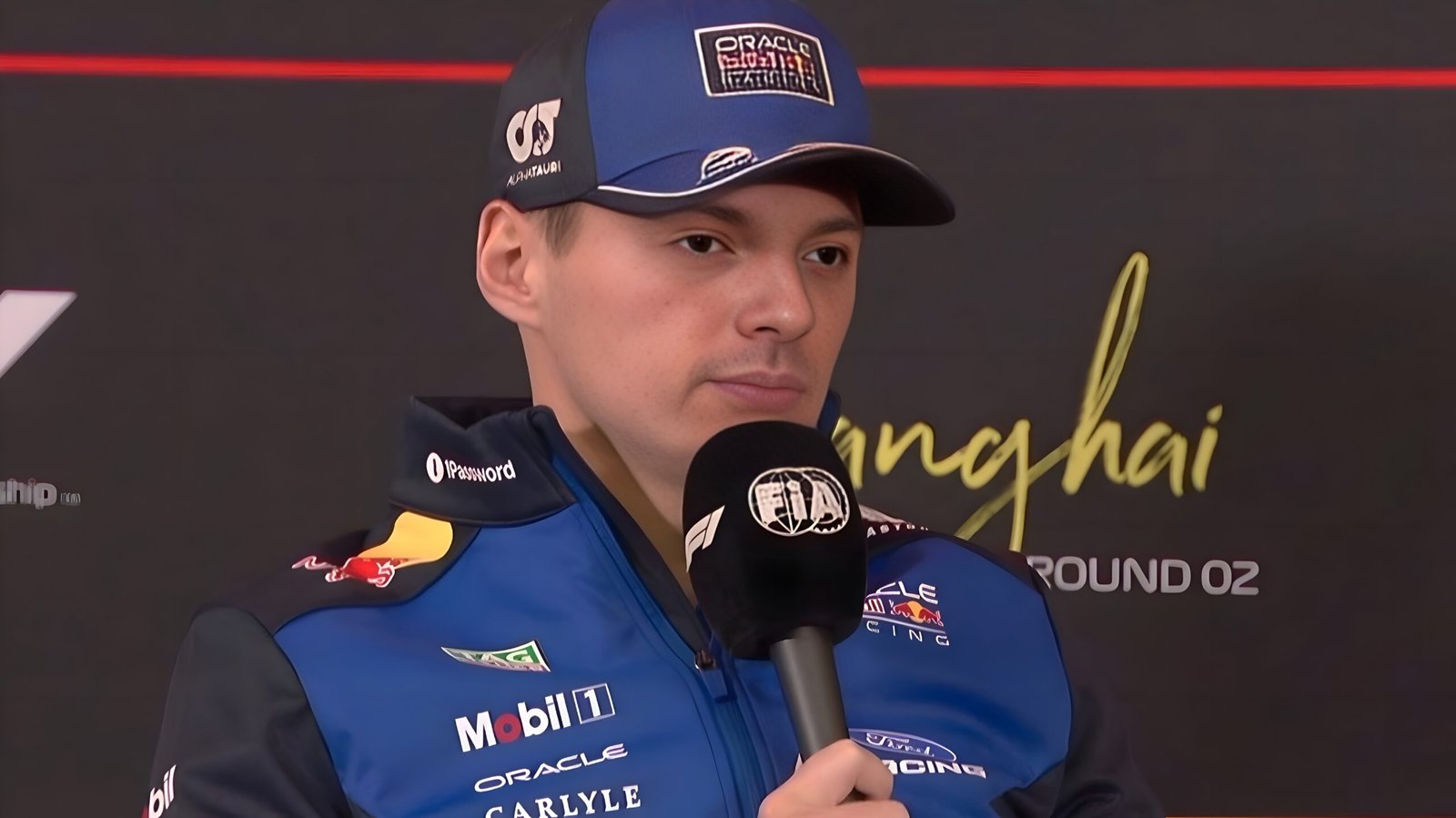
Media speculation surrounding Max Verstappen’s comments on “lacking front-runners’ pace” and “high degradation” warrants precise contextualisation. The three-time world champion’s observations, widely circulated in the days following testing, pertained primarily to Red Bull’s parallel endurance-racing commitments, including preparations for the Nürburgring 24 Hours. These remarks addressed the distinct thermal and mechanical stresses encountered in 24-hour events, rather than direct comparisons drawn from Formula 1 pre-season running.
Verstappen’s subsequent statements post-initial 2026 outings have remained measured, focusing on the novel challenges posed by the revised power-unit architecture and active-aero systems. The distinction is crucial: conflating endurance-racing feedback with Formula 1 telemetry risks distorting public perception of the team’s competitive standing. Red Bull’s F1 programme, while facing clear deficits, benefits from the same engineering resources that propelled its previous championship successes—an infrastructure that remains formidable despite the current hierarchy.
Strategic Implications for the 2026 Constructors’ Championship
The emergent order carries profound ramifications for the season ahead. Ferrari and Mercedes, occupying the vanguard, possess the platform to contest early victories and accumulate substantial championship points. McLaren’s proximity to Red Bull suggests a potential intra-group battle for third place in the constructors’ standings, while Red Bull must prioritise targeted upgrades to low-speed aerodynamics and tire-compound optimisation.
For the drivers’ championship, the implications are equally significant. Verstappen’s peerless racecraft may yet extract maximum value from a fourth-fastest car, yet sustained podium contention will require rapid developmental progress. Conversely, the top-three teams now field multiple credible title protagonists, heralding a return to the multi-driver, multi-team contests that characterised earlier decades of the sport.
Beyond the immediate season, these testing outcomes may influence personnel movements and technical partnerships. Teams trailing in the hierarchy frequently accelerate recruitment of specialised aerodynamicists and simulation experts—an avenue Red Bull is already exploring. Meanwhile, the regulatory stability promised for subsequent seasons affords trailing squads the time horizon necessary for meaningful catch-up, provided initial deficits are acknowledged and addressed transparently.
A New Era of Technical Parity Beckons
The 2026 regulations were conceived to foster closer competition through reduced reliance on aerodynamic downforce and enhanced power-unit standardisation. Early indications suggest the framework is fulfilling its mandate. The absence of a singular dominant force—contrary to the narrative that prevailed from 2022 to 2025—promises a season of tactical nuance, strategic diversity, and engineering ingenuity.
Red Bull’s situation, while challenging, is far from dire. The power unit’s foundational excellence provides a stable platform for iterative chassis development. History demonstrates that the team’s capacity to evolve under pressure remains unmatched; the question is whether that evolution can materialise swiftly enough to challenge the established frontrunners before the championship’s midpoint.
As the Formula 1 caravan converges on Albert Park for the Australian Grand Prix, the sport stands at the threshold of a genuinely competitive renaissance. The pre-season script has been written; the race weekend will provide the first authoritative revision. For Red Bull, the narrative arc hinges on converting acknowledged weaknesses into targeted strengths. For the championship contenders, the imperative is to capitalise on their early advantage before the development race intensifies.
In an era defined by precision engineering and relentless iteration, the 2026 season promises to reward not merely the fastest car on paper, but the most adaptable organisation on the circuit. The opening chapter has favoured Ferrari, Mercedes, and McLaren; the ensuing pages remain unwritten, yet rich with possibility for every constructor committed to the pursuit of excellence.


