Published by: AutodromeF1 Editorial Team
The Paddock’s New Great Game: Wolff and Horner Face Off for Alpine F1’s Future
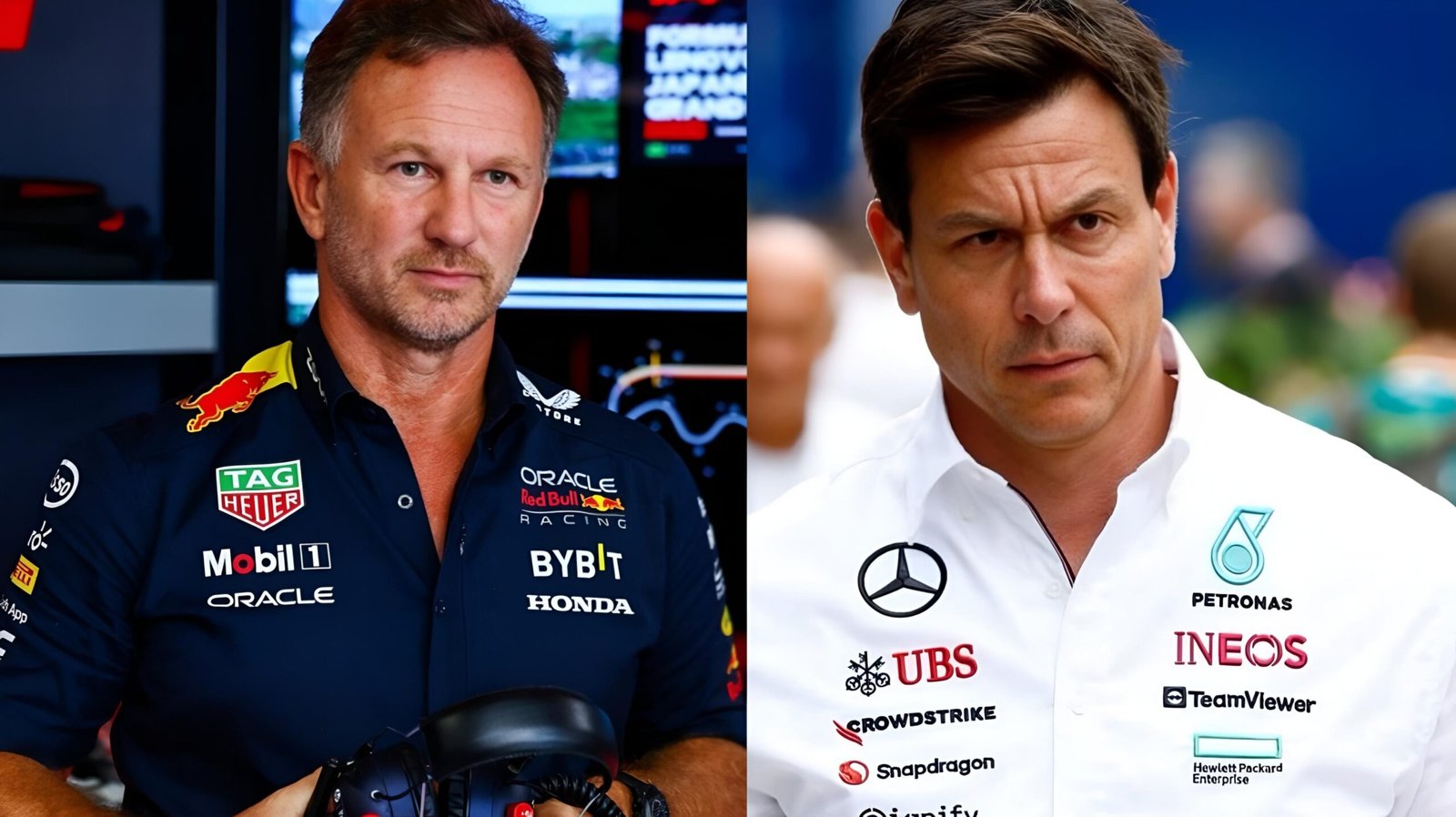
In a move set to redefine the Formula 1 grid, Mercedes and its team principal, Toto Wolff, are in advanced discussions to acquire a significant stake in the Alpine F1 team. However, the bid has ignited a dramatic paddock rivalry, pitting Wolff against his former Red Bull adversary, Christian Horner, who is independently vying for the same prize.
The battleground is a 24% share of the Enstone-based team, currently held by the investment group Otro Capital. For Mercedes, this is far more than a financial maneuver. It represents a strategic masterstroke to forge a powerful alliance that could reshape the competitive landscape of Formula 1 for the remainder of the decade. The German auto giant, already supplying power units to Alpine in a deal extending to 2030, seeks to formalize a “B-team” dynamic, mirroring the successful constructor hierarchy pioneered by Red Bull Racing.
This ambition, however, faces a formidable challenge from Christian Horner. The celebrated former Red Bull team principal, who made a stunning exit from the Milton Keynes outfit in 2025, has assembled his own consortium to launch a counter-bid. For Horner, this is a calculated return to the sport’s frontline, an opportunity to build a new powerhouse and directly challenge the empire he helped create and the rivals he fought for over two decades. The clash of these two titans—Wolff, the architect of Mercedes’ modern dominance, and Horner, the mastermind behind Red Bull’s dynasty—transforms a corporate acquisition into a high-stakes personal duel for influence and power.
The Strategic Imperative: Why Mercedes Wants a B-Team
The “B-team” model, perfected by Red Bull with its junior squad (currently Racing Bulls), has become the blueprint for success in modern Formula 1. It offers invaluable strategic advantages: it serves as a proving ground for junior drivers, allows for the testing of new components and aerodynamic concepts outside the constraints of the main team’s development program, and provides a reliable political ally in the complex world of F1 governance.
For Mercedes, establishing such a relationship with Alpine would be a game-changer. It would provide a pipeline for its roster of young talent, offering a competitive seat to drivers who might otherwise be forced to look outside the Mercedes family. Furthermore, a deeper technical collaboration could accelerate development for both teams, allowing them to pool data and resources to close the gap on their rivals under the ever-tightening budget cap. Sources within the sport suggest the partnership would enable a more seamless integration of the Mercedes power unit into the Alpine chassis, unlocking performance synergies that a standard customer relationship cannot offer.
Mercedes has remained tight-lipped, issuing a carefully worded statement acknowledging its role as a “key strategic partner” to Alpine and confirming it is being kept informed of developments. However, the message between the lines is clear: Mercedes is no passive observer. The brand is actively shaping its future on the grid, and this acquisition is central to its long-term vision.
A Rival’s Return: Horner’s Audacious Counter-Play
Christian Horner’s entry into the bidding war adds a layer of intense drama. After his departure from Red Bull, the F1 world has been waiting for his next move. An attempt to seize a stake in Alpine is both audacious and characteristic of his competitive spirit. His consortium, backed by a mix of private equity and motorsport-savvy investors, sees Alpine as an undervalued asset with immense potential.
Horner’s strategic objective is different from Wolff’s but no less ambitious. By securing a stake in Alpine, he would gain a significant foothold in a works team, a platform from which to build a new contender. His experience in transforming a fledgling team into a championship-winning machine is unparalleled, and his leadership could be the catalyst Alpine needs to unlock its performance. This move also positions him as a direct spoiler to Wolff’s plans, reigniting a rivalry that defined an era of Formula 1. The prospect of Horner, now an independent operator, going head-to-head with Wolff in the boardroom as well as on the track is a tantalizing one for the sport.
The Financial Stakes and Alpine’s Position
The 24% stake is valued at a formidable $588–$598 million, a figure that reflects the soaring enterprise value of Formula 1 teams in the sport’s current boom. Otro Capital, alongside RedBird Capital Partners and Maximum Effort Investments, acquired this share in 2023, and their willingness to sell signals a desire to capitalize on their investment. For Alpine, the French automotive giant’s racing division, a new major partner could provide much-needed stability and strategic direction after a period of management shuffles and inconsistent on-track performance.
As of early March 2026, a deal is yet to be finalized. Both the Wolff-led Mercedes camp and Horner’s consortium are deep in negotiations, with the outcome likely to have cascading effects across the paddock. Should Mercedes succeed, the grid could see the emergence of a new, formidable technical bloc. If Horner prevails, a revitalized Alpine could become a disruptive force, challenging the established order.
Ultimately, this is more than a business transaction; it is a battle for the soul of a team and a play for the future of the sport. As the negotiations continue behind closed doors, the Formula 1 world watches with bated breath. The rivalry between Wolff and Horner, once confined to the pit wall, has now escalated into a strategic chess match where the prize is a stake in the very fabric of Formula 1.


