Published by: AutodromeF1 Editorial Team
Aston Martin’s Pivotal Leadership Reckoning: Jonathan Wheatley Emerges as a Serious Contender in the Quest to Stabilise a Faltering 2026 Campaign
In the relentlessly competitive arena of Formula 1, where the margin between triumph and obscurity is measured in mere hundredths of a second, the appointment of a Team Principal transcends mere administrative formality. It represents a strategic inflection point capable of reshaping a team’s trajectory across an entire regulatory epoch. As the 2026 season unfolds under the weight of groundbreaking technical regulations—encompassing entirely new chassis architectures, power-unit specifications, and sustainable fuel mandates—Aston Martin finds itself confronting an existential early-season crisis. Recent reports have crystallised speculation that Jonathan Wheatley, the incumbent Team Principal at Audi, has been formally approached as a candidate to assume the role at Silverstone. This development, while not yet culminating in any appointment, underscores the depth of Aston Martin’s introspection and the high-stakes nature of its leadership overhaul.
The context for this pursuit is unambiguous and sobering. Aston Martin’s AMR26, the marque’s first full manifestation of the 2026 regulations, has encountered a confluence of performance deficiencies that have left the team languishing at the rear of the competitive order. Issues of fundamental slowness—reportedly exceeding four seconds off the pace in pre-season evaluations—have been compounded by chronic unreliability, severe vibrational anomalies that constrain driver stints to between 15 and 25 laps for safety considerations, persistent balance problems, and acute shortages of critical components. These challenges have not merely hampered race-day execution; they have eroded confidence within the organisation and prompted a comprehensive reevaluation of operational leadership. Adrian Newey, the legendary aerodynamicist who assumed interim Team Principal responsibilities late in 2025 following the departure of Andy Cowell, has taken personal charge of the recruitment process. His involvement signals both the gravity of the situation and the integration of technical and managerial imperatives under the new regime, where his ongoing collaboration with Honda and Aramco on power-unit development must coexist with the imperative to install a permanent racing operations lead.
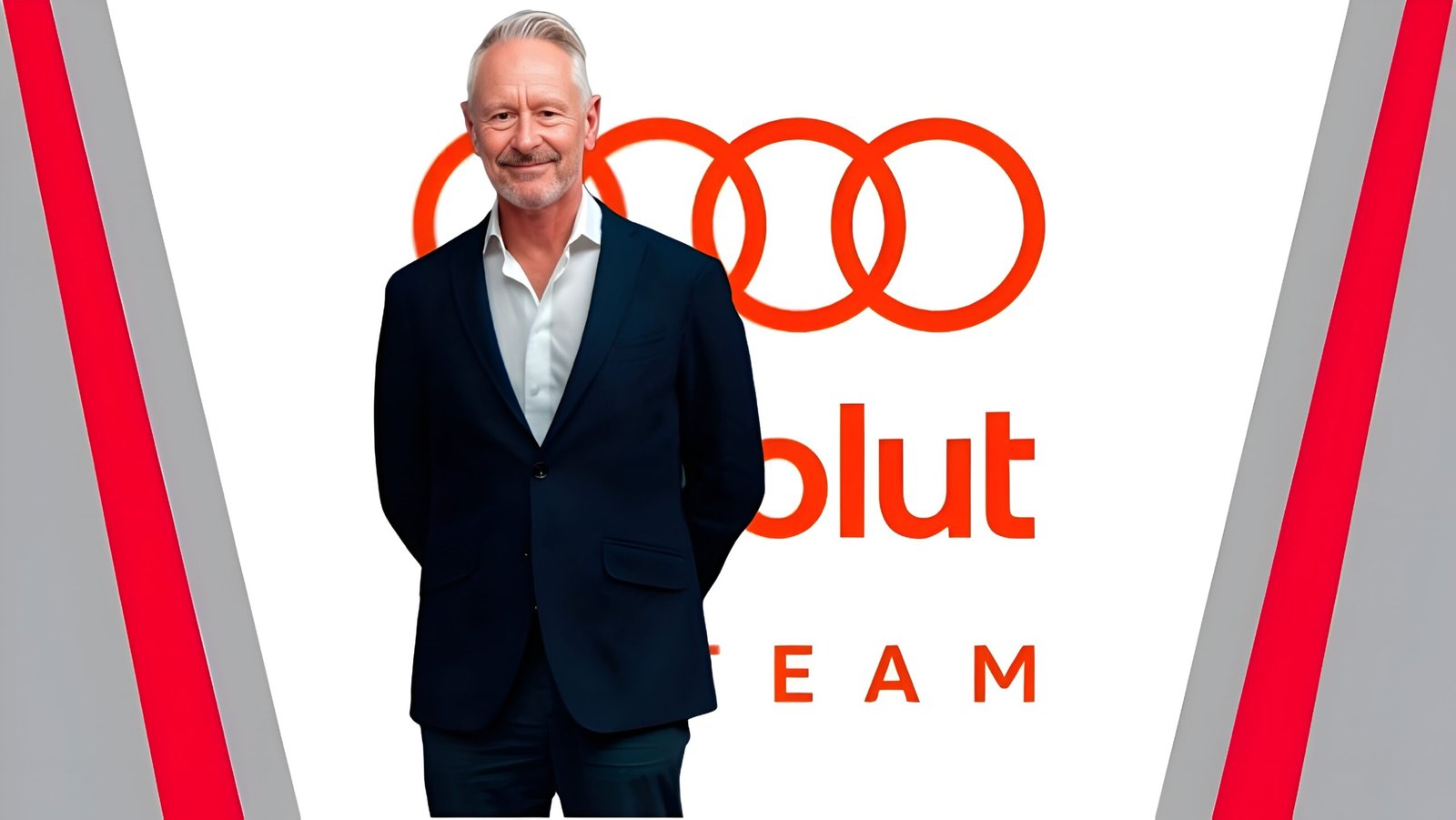
Wheatley’s candidacy introduces a compelling narrative of continuity, expertise, and potential geographic realignment. Currently serving as Team Principal and Management Board Spokesperson for Audi F1, he assumed the position in April 2025 after a distinguished tenure at Red Bull Racing. His mandate at Audi encompasses the oversight of racing operations during the critical transitional phase from the Sauber-era infrastructure to the full Audi identity. Working in tandem with Mattia Binotto in a co-leadership framework, Wheatley has been instrumental in steering the German manufacturer’s preparations for the 2026 regulations. His reputation for meticulous operational discipline, honed through years of orchestrating Red Bull’s championship-winning campaigns, positions him as a figure capable of imposing structure amid Aston Martin’s turbulence. Yet Wheatley’s current commitment to Audi remains steadfast; internal sources describe him as content within the project, where the alignment of resources and vision offers a platform for long-term impact. Any transition would necessitate navigating the complexities of gardening leave—a standard contractual safeguard in Formula 1 that could delay his integration by several months—while balancing personal considerations that may favour a return to the United Kingdom.
The emergence of Wheatley’s name in Aston Martin’s deliberations does not occur in isolation. It forms part of a broader, methodical canvassing of elite candidates that reflects the team’s determination to secure not merely a caretaker but a transformative architect. Among those approached, Mattia Binotto—whose technical acumen was forged at Ferrari—has reportedly declined the overture, citing strategic priorities elsewhere. Martin Whitmarsh, the former Aston Martin CEO whose deep institutional knowledge of the Silverstone operation offers continuity, remains a theoretical option but one tempered by his existing commitments. Gianpiero Lambiase, the esteemed race engineer long associated with Max Verstappen at Red Bull, explicitly declined participation, underscoring the selectivity with which prospective leaders are evaluating opportunities. These declinations and considerations have elevated the profile of Andreas Seidl, widely regarded as Aston Martin’s preferred and frontrunning candidate. The German executive, who previously served as Team Principal at McLaren and later as CEO of the Sauber Group before its integration into Audi, brings a rare combination of proven operational success and immediate availability. Having stepped back from Formula 1 duties in 2024, Seidl operates without the encumbrance of gardening leave, enabling a seamless commencement should negotiations reach fruition. His track record in fostering collaborative environments and delivering incremental performance gains aligns precisely with Aston Martin’s urgent requirements: stabilising the AMR26’s developmental trajectory while preserving harmony alongside Newey’s technical oversight.
This leadership vacuum at Aston Martin cannot be divorced from the wider structural realities of the 2026 regulatory framework. The new rules, designed to enhance sustainability through smaller, more efficient power units, active aerodynamics, and reduced reliance on fossil fuels, have imposed unprecedented demands on every constructor. Teams must simultaneously master chassis dynamics, power-unit integration, and energy-recovery systems while contending with the aerodynamic sensitivities introduced by revised ground-effect principles. Aston Martin’s difficulties—manifest in vibrational harmonics that compromise driver welfare and component reliability that curtails testing mileage—mirror the teething problems experienced by several midfield squads but are rendered more acute by the team’s historical ambition to ascend toward the front of the grid. The arrival of Honda as power-unit partner and Aramco’s strategic investment had promised synergy; instead, the early-season data has exposed integration shortfalls that no amount of engineering ingenuity can resolve without resolute operational leadership.
From a broader perspective, Wheatley’s potential involvement would represent a fascinating convergence of trajectories. Having departed Red Bull at the conclusion of 2024, he entered the Audi project with the explicit remit of professionalising a squad in transition. His leadership style—characterised by an emphasis on data-driven decision-making, cross-functional alignment, and unflinching accountability—has been credited with accelerating Audi’s internal cohesion. Should personal or familial motivations, rooted in his longstanding UK connections, ultimately prevail, Wheatley’s move could inject precisely the operational rigour Aston Martin requires. Yet the decision is far from straightforward. Audi’s project, bolstered by Volkswagen Group resources and a clear mandate to establish a German powerhouse, offers Wheatley a platform of institutional stability that few alternatives can match. Any departure would require delicate negotiations, not least to preserve relationships across the sport’s intricate ecosystem of contracts and allegiances.
The absence of direct confirmation from Wheatley himself adds a layer of measured ambiguity to the narrative. Speculation remains anchored in well-placed team insiders rather than public statements, reflecting the circumspect nature of high-level Formula 1 diplomacy. This restraint is prudent: premature disclosures risk destabilising current employers and complicating contractual resolutions. For Aston Martin, the ongoing talks represent more than personnel management; they constitute a referendum on the team’s capacity to evolve from a rebranded midfield outfit into a genuine championship aspirant. The stewardship of Lawrence Stroll and the infusion of technical luminaries like Newey have elevated expectations; failure to arrest the AMR26’s deficiencies could precipitate a loss of momentum precisely when the regulatory reset offers a rare equalising opportunity.
Moreover, the ramifications extend beyond Silverstone. A Wheatley appointment would ripple through the paddock, potentially triggering secondary movements within Audi’s hierarchy and reinforcing the perception of 2026 as a year of leadership flux. The “silly season” for principals, traditionally overshadowed by driver contracts, has assumed heightened prominence as teams grapple with the human capital required to translate regulatory complexity into competitive advantage. Seidl’s status as frontrunner, by virtue of his unencumbered availability and demonstrated aptitude for turnaround scenarios, suggests Aston Martin may prioritise expediency. Should Wheatley ultimately decline, the organisation’s contingency planning—already encompassing Whitmarsh’s institutional memory—would need to accelerate.
In examining the deeper currents at play, one discerns a recurring theme in Formula 1’s history: the decisive influence of principled, experienced leadership during periods of technological upheaval. The 1988 turbo ban, the 2014 hybrid revolution, and now the 2026 sustainability pivot each demanded not only engineering excellence but also managerial acumen capable of synthesising disparate disciplines. Aston Martin’s current predicament, while painful, affords an opportunity to recalibrate under enlightened guidance. Whether that guidance emanates from Wheatley’s operational precision, Seidl’s proven governance, or another candidate yet to surface, the decision will reverberate across the 2026 championship and beyond.
As negotiations continue behind closed doors, the Formula 1 community watches with keen anticipation. The sport’s stakeholders—drivers, engineers, sponsors, and fans—recognise that leadership stability is the invisible architecture upon which on-track spectacle is constructed. For Aston Martin, the coming weeks will determine whether this leadership recalibration can transform early adversity into the foundation for sustained resurgence. Jonathan Wheatley’s name, once whispered in speculation, now occupies a central position in that calculus, emblematic of the delicate interplay between loyalty, ambition, and the inexorable pursuit of performance that defines the pinnacle of motorsport.
This unfolding chapter serves as a reminder that in Formula 1, technical regulations may rewrite the rulebook, but it is the calibre of those who interpret and implement them that ultimately inscribes the results. Aston Martin’s methodical approach to this appointment—prioritising experience, availability, and cultural fit—reflects a maturity that bodes well for its long-term aspirations. Should Wheatley elect to engage more formally, or should Seidl formalise his position as the consensus choice, the team will have signalled its readiness to confront the 2026 challenges head-on. Until then, the paddock remains a theatre of quiet deliberation, where every conversation carries the potential to reshape the competitive hierarchy for years to come.


