Published by: AutodromeF1 Editorial Team
Bortoleto’s Measured Optimism Signals Audi’s Strategic Patience in the New Formula 1 Power-Unit Paradigm
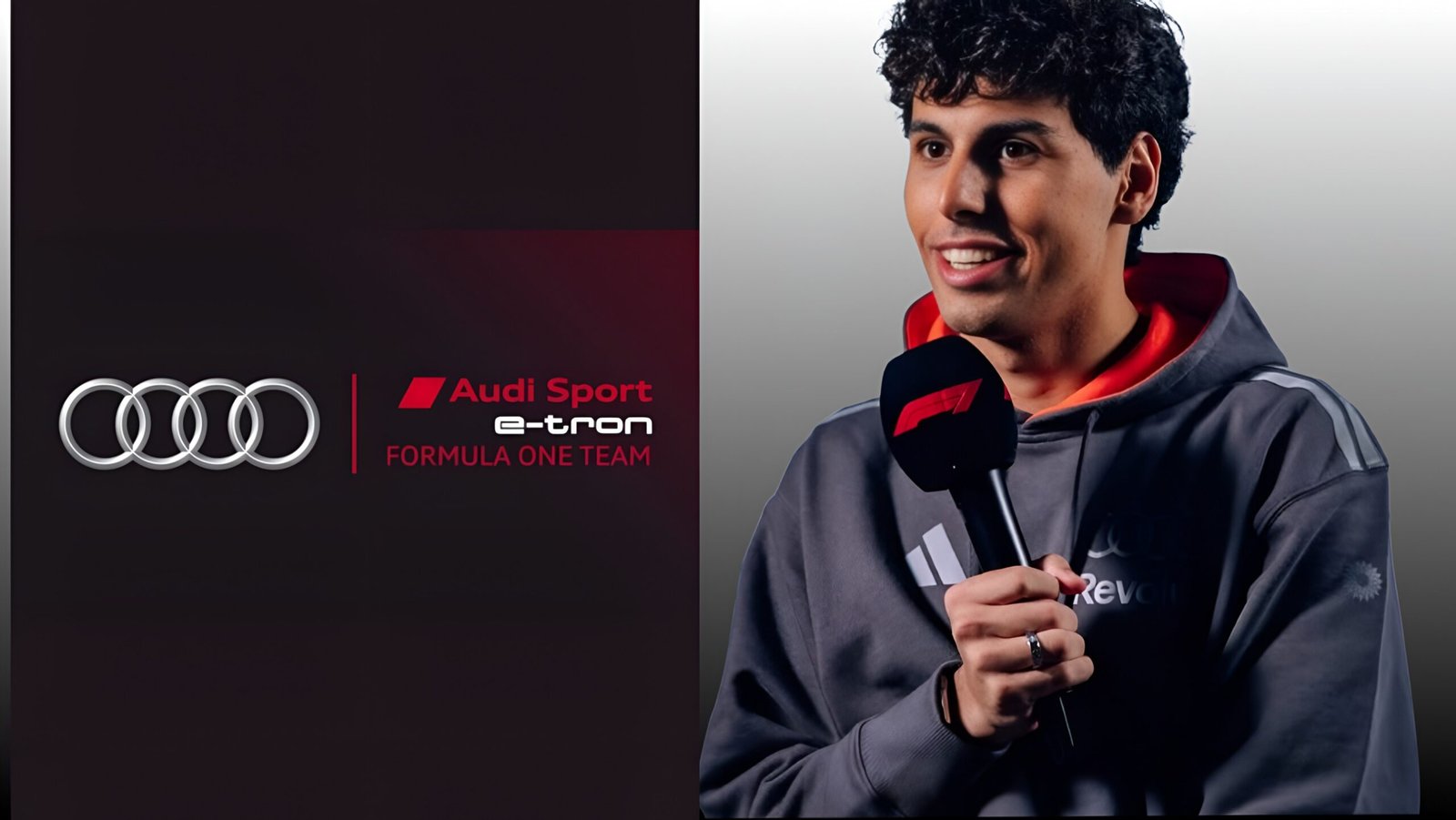
In the high-stakes crucible of Formula 1’s 2026 regulatory reset, where power units have been re-engineered from the ground up to prioritise sustainable hybrid efficiency over raw horsepower, few voices carry the weight of unvarnished conviction quite like that of Gabriel Bortoleto. The young Brazilian, entrusted with piloting Audi’s factory entry in its inaugural campaign, has articulated a stance that stands apart from the cautious corporate narratives typically emanating from Neuburg an der Donau. Speaking in the immediate aftermath of the Australian Grand Prix — the season’s second round and Audi’s first competitive outing under its own banner — Bortoleto declared with quiet certitude: “I have no doubt. I can’t tell you when we’re going to be there, but I can tell you that we’re going to be there. If it’s this year, if it’s next year, I don’t know, but I have full confidence that we’re going to be one of the top engine manufacturers in the future.”
This was no rote team-line recitation. Delivered amid the paddock bustle of Albert Park, where the echoes of the new-generation V6 turbo-hybrids still lingered in the air, Bortoleto’s words reflected a profound internal alignment between driver ambition and manufacturer ambition. Unlike the guarded briefings offered by seasoned team principals elsewhere, his statement eschewed timelines while embracing inevitability — a philosophical posture that distinguishes Audi’s approach from the more mercurial expectations that have historically accompanied manufacturer entries.
The context of this declaration is critical. Audi’s arrival in Formula 1, formalised through the acquisition and rebranding of the Sauber organisation, coincides precisely with the most sweeping power-unit overhaul since the hybrid era began in 2014. The new regulations mandate a 50-50 split between internal-combustion and electrical output, with sustainable fuels, reduced battery deployment windows, and a strict cap on development tokens designed to prevent runaway dominance. Yet early telemetry from the opening races has painted a picture of uneven performance across the grid. Insiders tracking dyno figures and straight-line speed traps have consistently placed Audi’s unit in the 540–550 bhp range for the combustion component, lagging the benchmark Mercedes powerplant — reportedly peaking at 571 bhp — by a margin of 21 to 31 bhp. Such a deficit, while significant in qualifying trim, mirrors the performance gap once endured by the weakest power units of the previous generation and, crucially, falls within the tolerances the FIA’s Additional Development and Upgrade Opportunities (ADUO) mechanism was expressly created to address.
Mattia Binotto, the architect of Audi’s power-unit programme and a veteran of Ferrari’s hybrid struggles, has been characteristically pragmatic in public commentary. “We are not expecting our powertrain to be the best from the very start,” he noted in pre-season briefings, underscoring the experiential chasm separating Audi from rivals who have refined hybrid architecture across twelve seasons. Yet Binotto’s tempered realism has not dampened the conviction within the driver ranks. Bortoleto’s perspective, informed by direct cockpit feedback during the Australian weekend, suggests that the shortfall is not merely a question of absolute output but of integration, calibration, and deployment strategy — areas where iterative gains can be realised far more rapidly than in the monolithic engine programmes of the past.
The Australian Grand Prix itself offered tangible evidence that Audi’s chassis architecture is already punching above its weight. Bortoleto, making only his second start in the silver-and-black livery, navigated the complexities of a damp qualifying session to reach Q3 for the first time as an Audi driver. Starting tenth on the grid, he threaded through the midfield maelstrom — capitalising on incidents involving more established competitors — to bring the car home in ninth position. In doing so, he secured the first championship points of Audi’s factory era, a milestone that team principal Jonathan Wheatley described as “a historic inflection point” rather than a fleeting achievement. While teammate Nico Hülkenberg was sidelined by a telemetry anomaly before the lights went out, Bortoleto’s racecraft underscored the fundamental soundness of the C26 chassis. Cornering speeds and hybrid energy recovery appeared competitive; the deficiencies, tellingly, manifested primarily on the long straights of the Australian circuit where outright combustion power is at a premium.
This dichotomy — a chassis that inspires confidence juxtaposed against a power unit still finding its voice — is precisely what lends Bortoleto’s optimism its intellectual rigour. He has repeatedly emphasised that the engineering team “understands the reasons why we miss power” and that the shortfall is “just about working and learning things.” In an era when regulatory frameworks deliberately compress development cycles, such clarity of diagnosis is not to be underestimated. The ADUO system, which triggers every six races and awards additional upgrade tokens to manufacturers trailing the performance benchmark by more than two percent, functions as a built-in safety net. The next checkpoint looms at the Miami Grand Prix in early May; should the gap persist, Audi will gain the latitude to accelerate component iterations in ways that closed-loop testing alone could never achieve.
To appreciate the magnitude of Audi’s undertaking, one must look beyond the immediate numbers to the broader historical tapestry of Formula 1 manufacturer transitions. When Mercedes returned as a full works team in 2010, it inherited a Brawn GP chassis that had already won a championship; its initial power-unit struggles were masked by that inherited aerodynamic advantage. Honda’s 2015 re-entry, conversely, was marred by chronic reliability woes and power deficits that required three full seasons to rectify. Renault’s 2016 factory programme similarly laboured under integration challenges before the 2017–2018 resurgence. Audi, by contrast, begins with neither a championship-winning legacy chassis nor a decade of hybrid institutional knowledge. Its power-unit facility in Neuburg operates with a workforce expanded by nearly 300 specialists since the project’s formal green-light in 2023, yet the learning curve remains steep.
What sets Audi’s narrative apart — and what Bortoleto’s comments illuminate — is the deliberate absence of panic. Rather than promising immediate parity, the organisation has framed 2026 as a foundational year of data accumulation. Wind-tunnel hours, simulator correlation, and real-world mileage are being prioritised over headline-grabbing upgrades. This methodical approach mirrors the philosophy that propelled Porsche’s successful endurance programmes and, more recently, Volkswagen Group’s electrification roadmap in other motorsport disciplines. By internalising the entire power-unit supply chain — from combustion chamber design to electric motor winding — Audi has eliminated the supplier-customer frictions that once plagued customer teams. The very fact that Bortoleto can speak with such assurance after only two race weekends suggests that internal simulations and dyno projections already point toward convergence.
From a driver-development standpoint, Bortoleto’s role transcends mere point-scoring. At 23, he embodies the next generation of talent nurtured within the Audi ecosystem. His progression from Formula 2 title contender to F1 debutant was accelerated by the manufacturer’s long-term commitment to Brazilian motorsport infrastructure. His cockpit feedback — granular, data-rich, and devoid of emotional exaggeration — has become a cornerstone of the power-unit calibration process. Engineers have noted that his inputs on energy-deployment mapping and thermal management have already prompted micro-adjustments that improved driveability during the Australian race. In an age when simulators can replicate 95 percent of track conditions, the remaining five percent of human intuition remains irreplaceable; Bortoleto is providing precisely that margin.
The broader implications for the 2026 constructors’ championship are profound. Should Audi’s power-unit trajectory follow the optimistic path its driver envisions, the grid could witness a genuine four-way battle for supremacy by the season’s midpoint. Mercedes and Ferrari, beneficiaries of uninterrupted hybrid development since 2014, currently hold the advantage in absolute output. Red Bull Powertrains, operating under a Honda partnership, has demonstrated impressive early reliability. Yet none of these entities enjoys the regulatory “catch-up” mechanisms that Audi can leverage. The ADUO tokens are not merely technical allowances; they represent a philosophical shift in governance, designed to prevent the stagnation that plagued the sport during periods of unchallenged dominance.
Critics may argue that Bortoleto’s confidence borders on naivety. After all, power-unit development in the hybrid era has historically required 24 to 36 months of iterative refinement before competitive parity is achieved. Yet such scepticism overlooks the unique architecture of the 2026 regulations. The mandated reduction in battery size and the emphasis on sustainable fuels have levelled certain aspects of the playing field. Moreover, Audi’s decision to retain Binotto — whose Ferrari tenure, though trophyless, yielded unparalleled insights into hybrid thermodynamics — provides institutional memory that no other new entrant can match. His ability to translate past lessons into current protocols has been described internally as “the single greatest accelerant” in the programme.
Looking further ahead, the 2027 season emerges as a plausible inflection point. By then, the full complement of development tokens accumulated across multiple ADUO windows could enable Audi to leapfrog the initial performance curve. Should the power unit achieve the “one of the top” status Bortoleto predicts, the aerodynamic package — already competitive in sector-two and sector-three performance — could propel the team into consistent podium contention. For a manufacturer whose automotive road cars increasingly emphasise electrification and performance hybridisation, success on the F1 stage would deliver synergistic marketing value far beyond the traditional sponsorship metrics.
In the final analysis, Gabriel Bortoleto’s statement is neither bravado nor blind faith; it is the articulation of a calculated trajectory rooted in engineering reality, regulatory opportunity, and human conviction. In an industry where hyperbole is currency, his measured phrasing — “we’re going to be there” rather than “we will win tomorrow” — commands attention precisely because it refuses to overpromise. As the 2026 season unfolds, with its unprecedented emphasis on power-unit evolution under constrained development windows, Audi’s progress will be measured not merely in bhp gains but in the alignment between ambition and execution. Should that alignment hold, the Brazilian’s words may come to be remembered not as youthful optimism but as the first public articulation of an inevitable ascent.
The coming weeks, particularly the Miami checkpoint and the subsequent European triple-header, will provide the empirical test. Until then, the paddock would do well to heed Bortoleto’s perspective: in the new Formula 1, confidence is not the absence of challenges but the certainty that the architecture exists to overcome them. Audi, through its driver’s voice, has signalled that it possesses exactly that certainty — and in a sport defined by perpetual reinvention, such certainty may prove the most potent performance advantage of all.


