Published by: AutodromeF1 Editorial Team
The Strategic Imperative of Energy in F1’s 2026 Hybrid Revolution: Nico Hulkenberg’s Candid Assessment of Battery Management Risks
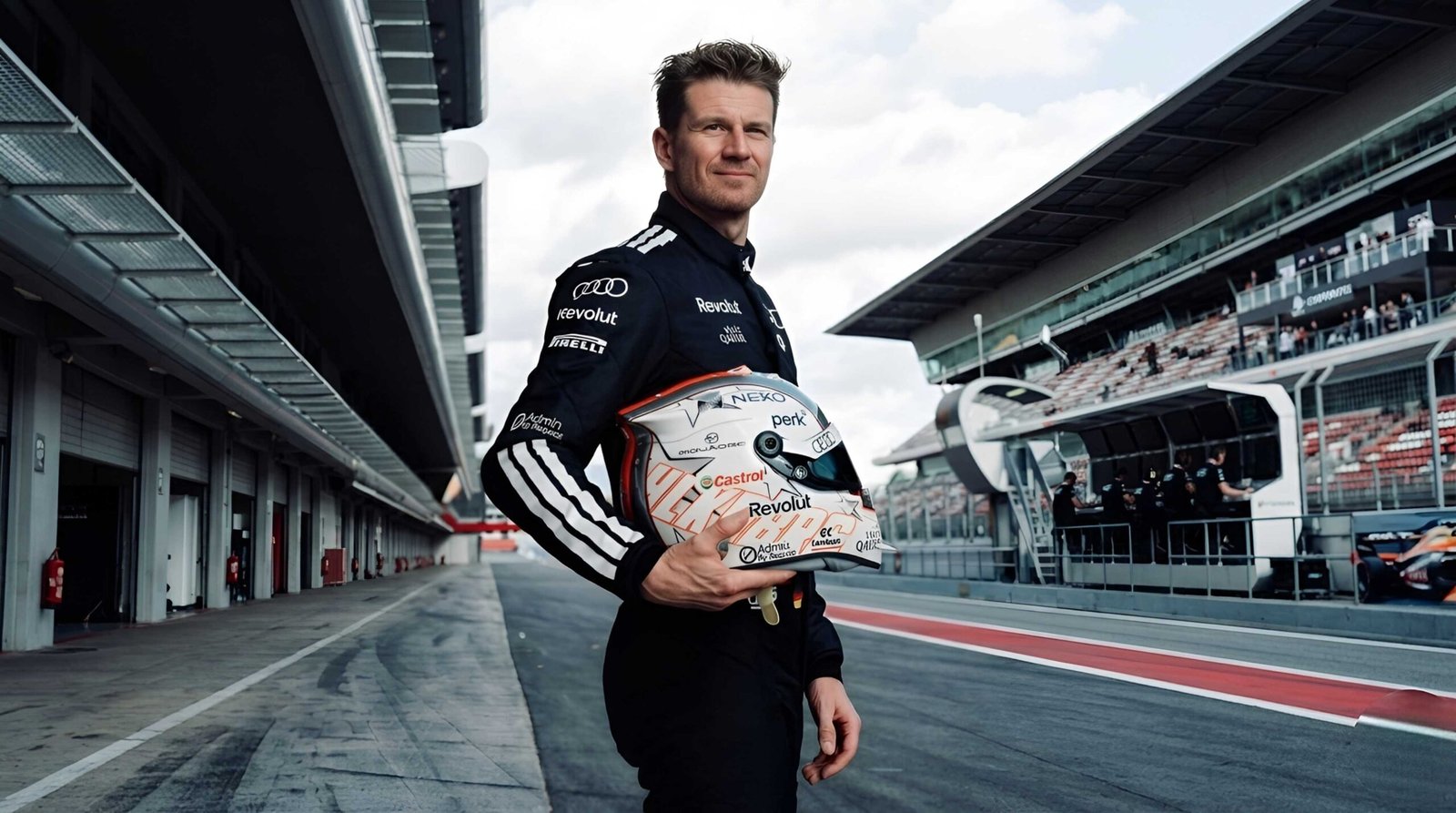
Berlin, Germany April 6 – In the high-velocity crucible of modern Formula 1, where split-second decisions can define race outcomes, Nico Hulkenberg has articulated a fundamental truth about the 2026 regulations: energy deployment is no longer a supplementary tool but the central strategic battleground. The veteran German driver, competing for Audi in its inaugural season, highlighted the precarious balance required in managing the power unit’s electrical reserves during the recent Japanese Grand Prix at Suzuka. Overspend on a bold overtake, and the penalty is immediate—a severe “de-rate” that strips the car of propulsion, rendering it a vulnerable “sitting duck” to pursuing rivals whose closing speeds can exceed 300 kilometres per hour. This is not mere hyperbole; it is the lived reality of a regulatory framework that has elevated battery strategy to an art form as precise and unforgiving as any in the sport’s history.
Hulkenberg’s post-race reflections, drawn from a hard-fought midfield battle near the points, capture the duality of the new era. “With the energy stuff, in a way, it’s interesting and fun, but at the same time, it’s also weird and frustrating,” he observed. “You do the move, but you really have to pick your fights, and it’s so easy to overspend and get a big de-rate and be a sitting duck. Sometimes, the closing speeds are really immense.” He added that while the spectacle may entertain television audiences—with wheel-to-wheel duels unfolding lap after lap—the cockpit experience reveals a more calculated, often tense contest shaped by invisible energy constraints. This perspective from a driver with nearly two decades of Formula 1 experience underscores a profound shift: raw mechanical power has yielded primacy to electrical precision, sustainability, and tactical foresight.
To appreciate the stakes, one must delve into the architecture of the 2026 power units. The regulations mandate a near 50/50 split between the internal combustion engine (ICE)—a refined 1.6-litre turbocharged V6 operating on 100 per cent advanced sustainable fuels—and the electrical component, primarily the Motor Generator Unit-Kinetic (MGU-K). The MGU-K’s output has tripled from 120 kilowatts in prior iterations to 350 kilowatts, delivering a significant portion of the car’s total propulsion. Gone is the Motor Generator Unit-Heat (MGU-H), which previously harvested thermal energy from exhaust gases, simplifying the system for cost control and manufacturer accessibility while placing greater demands on kinetic recovery and battery management.
Harvesting now occurs through multiple channels: under braking, during lift-and-coast phases at the end of straights (super clipping), on part throttle, or even in high-speed corners. The Energy Recovery System (ERS) can replenish the battery with up to twice the energy per lap compared to 2025, yet the finite capacity—governed by strict megajoule limits—demands meticulous calibration. Drivers deploy this stored energy via the “Boost Button,” activating enhanced power profiles for overtakes or defensive holds. However, exceeding deployment thresholds triggers automated safeguards: a sudden curtailment of electrical assistance that can slash straight-line speed by dozens of kilometres per hour within seconds. On-board telemetry from early-season testing and races, including Hulkenberg’s own Audi runs, vividly illustrates this collapse—RPMs plummeting mid-straight as the battery depletes, transforming a potential passing opportunity into a defensive crisis.
This dynamic amplifies the risks inherent in wheel-to-wheel combat. Closing speeds in 2026 are not merely faster; they are brutally unforgiving due to the sensitivity of energy states. A driver who deploys aggressively to clear a rival may find themselves exposed on the subsequent straight, where a better-managed pursuer surges past with full electrical boost intact. Hulkenberg’s experience at Suzuka exemplified this: battling on the fringes of the top ten, precise energy husbandry determined whether a move stuck or evaporated into vulnerability. The FIA’s pre-Japan adjustments—reducing maximum energy recharge in qualifying from 9 to 8 megajoules—reflect ongoing efforts to balance spectacle with drivability, following feedback from across the grid. Yet these tweaks only underscore the regulations’ emphasis on strategy over outright power.
From a driver’s vantage, the on-track reality diverges sharply from the broadcast narrative. Television viewers witness thrilling proximity and daring lines, but the cockpit is a realm of constant mental arithmetic: monitoring state-of-charge readouts, anticipating deployment windows, and overriding automated maps when instinct demands. “The race was probably entertaining on TV, there was probably lots going on, but it’s different,” Hulkenberg noted, echoing sentiments shared by peers such as Oscar Piastri, who has voiced concerns over unexpected closing rates in traffic. This cognitive load elevates energy management from a technical footnote to a core skill, akin to fuel strategy in the pre-hybrid V8 era but far more volatile. Martin Brundle, a seasoned observer, has warned that such demands risk diluting the “raw” essence of Formula 1, shifting focus from instinctive racing to engineering chess. Yet for Hulkenberg and his contemporaries, it represents an evolution that rewards adaptability and precision—qualities he has refined across stints with multiple teams.
The 2026 framework builds on the hybrid foundations laid in 2014, when turbocharged V6 power units introduced energy recovery as a performance multiplier. Then, the MGU-H provided a near-constant recharge buffer, allowing more liberal deployment. Today’s deletion of that system, coupled with the amplified MGU-K role and sustainable drop-in fuels derived from carbon capture and biomass, aligns Formula 1 with broader automotive electrification trends. Road relevance is explicit: the technology mirrors advancements in high-performance hybrids, fostering innovation that manufacturers like Audi can translate to production models. However, the trade-offs are evident in racecraft. Overtaking, once aided by DRS (now absent or heavily restricted in spirit under the new aero philosophy), hinges on energy parity. Defending requires hoarding reserves for critical zones, while attacking demands calculated risk. Midfield teams like Audi, still calibrating their package amid a steep learning curve, feel these pressures acutely—as evidenced by early-season starts and data-gathering priorities.
Strategically, the implications ripple through every session. Qualifying demands flawless energy profiles to extract maximum lap time without compromising race fuel loads. Races become multi-lap puzzles of harvesting efficiency: lift-and-coast tactics, mode selections for recharge versus boost, and pit-wall orchestration of deployment maps. Teams investing in simulation and driver-in-the-loop training gain edges, yet human factors—fatigue, split-second judgment under G-forces—remain decisive. Errors are punishing; a misjudged overtake can cost positions not through mechanical failure but through self-inflicted power deficit. As the season progresses into circuits with varying demands—high-speed straights at Monza versus twisty street tracks like Monaco—the battery’s role will only intensify, potentially exposing disparities between power-unit suppliers.
This regulatory philosophy prioritises sustainability and spectacle through complexity rather than brute force. The 100 per cent sustainable fuels reduce carbon emissions without altering engine architecture, advancing Formula 1’s net-zero ambitions by 2030. Yet they introduce variables in energy density and combustion efficiency that teams must master. For drivers, the psychological dimension is profound: the frustration of a thwarted move tempers the thrill of deployment, fostering a mindset of restraint amid aggression. Hulkenberg’s candour—rooted in battles that yielded valuable data despite points frustration—highlights resilience. Audi, transitioning from Sauber, views such challenges as foundational to long-term competitiveness, with Hulkenberg and teammate Gabriel Bortoleto accumulating insights that will refine software and hardware iterations.
Looking ahead, the 2026 narrative will hinge on mastery of this energy paradigm. Will frontrunners like Mercedes, Ferrari, and Red Bull Ford leverage superior mapping to dominate deployment windows? Can midfield squads close the gap through adaptive strategies? Potential FIA interventions—further energy tweaks or output adjustments—loom if safety or competitiveness concerns escalate, as seen in pre-season discussions. Ultimately, Hulkenberg’s insights affirm that Formula 1 remains a driver’s championship at heart, even as technology layers in new complexities. The “sitting duck” moments may frustrate, but they compel excellence in planning, execution, and recovery.
In an era defined by electrification, the high-stakes challenge of battery management does not diminish the sport; it redefines its essence. Precision over power, strategy over speed—these are the hallmarks of 2026 and beyond. As Hulkenberg and the grid navigate this terrain, one truth endures: the drivers who best orchestrate their electrical destiny will write the season’s most compelling chapters. The Japanese Grand Prix offered a microcosm; the campaigns to come will reveal the full scope of this transformative shift.


