Published by: AutodromeF1 Editorial Team
Audi’s Calculated Ascent: Nico Hülkenberg Articulates a Manufacturer’s Unyielding Resolve in Formula 1’s 2026 Renaissance
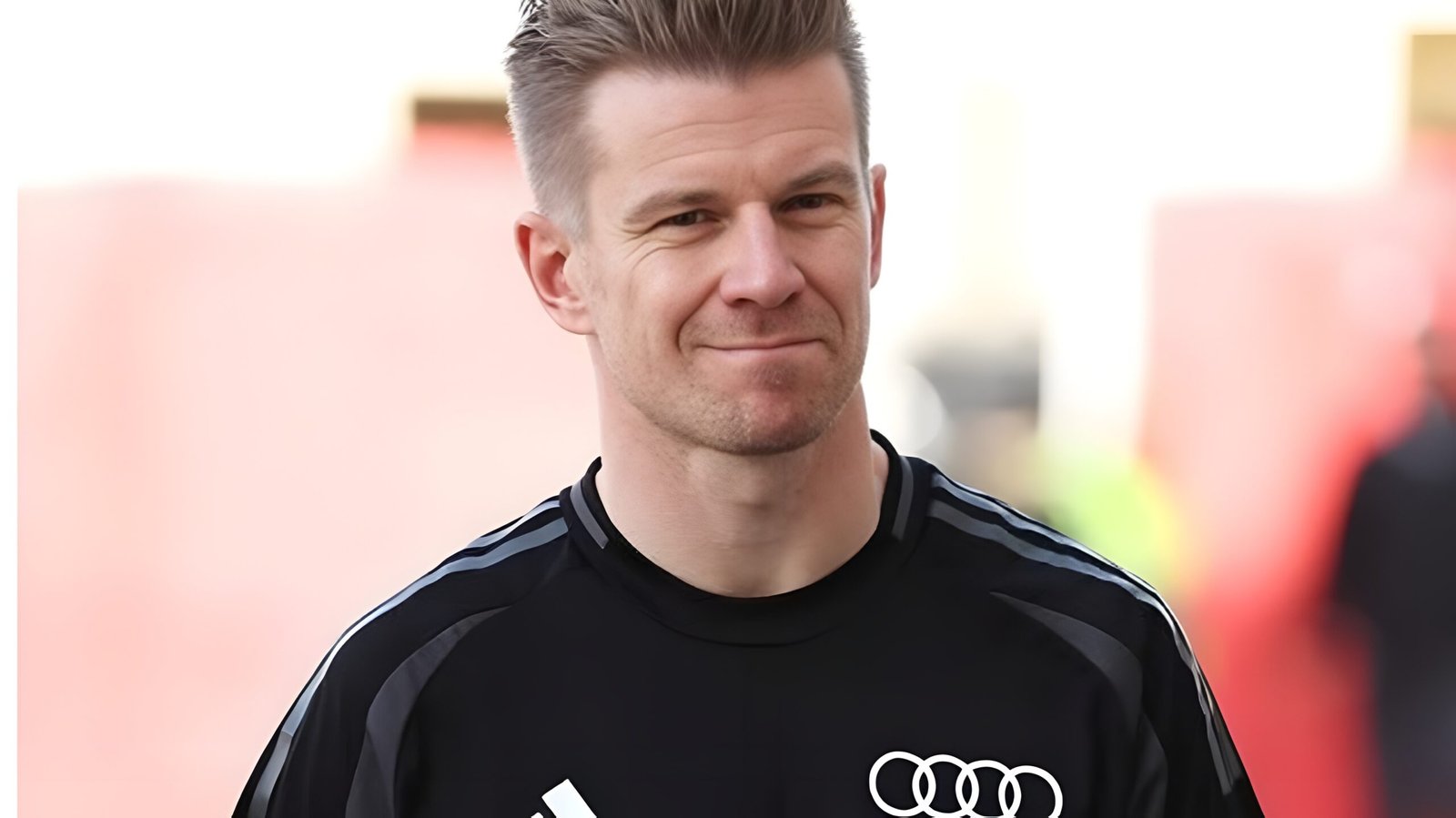
In the meticulously calibrated world of Formula 1, where engineering precision intersects with corporate ambition on a global stage, few pronouncements carry the weight of quiet conviction. As Audi prepares to launch its full-factory assault on the pinnacle of motorsport in 2026, Nico Hülkenberg has emerged as the articulate standard-bearer of that ambition. In a recent in-depth interview, the German veteran articulated a vision that transcends the transitional uncertainties of a fledgling programme, framing Audi not as an opportunistic entrant but as a committed protagonist determined to redefine competitive hierarchies. His remarks, delivered with characteristic candour and strategic foresight, have resonated deeply within the paddock and among enthusiasts, signalling that the Ingolstadt-based manufacturer harbours no tolerance for peripheral involvement.
Hülkenberg’s commentary arrives at a pivotal juncture. The team, operating under the Audi Revolut F1 Team banner following its comprehensive acquisition of the Sauber organisation, is moving beyond its embryonic phase. Emphasis is placed squarely on iterative refinement—fine-tuning aerodynamic efficiencies on the new R26 chassis, optimising the AFR 26 Hybrid power-unit, and synchronising operational workflows across facilities in Hinwil and Neuburg. Yet this acknowledgment of early-stage realities does not dilute the overarching mandate. “Audi is not entering Formula 1 as a tourist,” Hülkenberg emphasised, employing a metaphor that encapsulates the manufacturer’s philosophy with surgical clarity. The statement rejects any implication of casual participation, positioning the project instead as a deliberate, resource-intensive enterprise backed by the full might of the Volkswagen Group.
This distinction between mere presence and purposeful intent forms the cornerstone of several salient takeaways from the interview. First, Hülkenberg concedes the inevitability of initial teething issues inherent in any manufacturer’s debut within such a technologically demanding environment. These challenges—ranging from energy management calibrations to the integration of the 350kW electric motor—are framed not as liabilities but as necessary steps within a meticulously charted multi-year roadmap. The long-term vision, he stressed, extends well beyond incremental gains, envisaging a trajectory that culminates in sustained contention at the sharp end of the grid, building on the momentum of a solid 2025 campaign where Sauber secured 70 points.
Equally significant is the explicit repudiation of a midfield mindset. Hülkenberg’s assertion that “they’re not here for fun” serves as a pointed rejection of any notion that Audi might content itself with respectable lower-order finishes. Such rhetoric dismantles the narrative of cautious consolidation often adopted by new entrants, replacing it with an unequivocal declaration of competitive seriousness. The squad’s ambitions, articulated without equivocation, encompass podium appearances, race victories, and—ultimately—championship contention. This win-centric orientation aligns seamlessly with the historical precedents set by dominant manufacturers such as Mercedes and Red Bull, whose own ascents were predicated on similarly uncompromising foundations and elite management structures.
The credibility of these aspirations is anchored in Audi’s formidable industrial pedigree. As a cornerstone of the Volkswagen Group, the brand commands resources on a scale comparable to multinational conglomerates within the automotive sector. This stature translates into unparalleled financial and technological leverage. The takeover of Sauber represents far more than a nominal rebranding; it constitutes a comprehensive infrastructural overhaul, encompassing substantial capital injections into the Neuburg power-unit facility and the Bicester technology centre. Such commitments underscore a level of institutional seriousness that differentiates Audi from previous manufacturer forays that faltered through under-resourcing or divided focus.
Talent acquisition further reinforces this strategic depth. Audi has moved decisively to bolster its leadership cadre, securing the expertise of high-calibre professionals including Mattia Binotto, serving as Head of Audi F1 Project (COO/CTO), and Jonathan Wheatley, the inaugural Team Principal. Their appointments exemplify the manufacturer’s determination to import proven intellectual capital capable of accelerating development cycles. Complementary appointments across chassis and aerodynamics, led by Technical Director James Key, have created a cohesive engineering ecosystem poised to exploit the opportunities presented by the impending regulatory reset.
On the driver front, the pairing of Hülkenberg with Gabriel Bortoleto has been engineered to balance institutional memory with emerging dynamism. Bortoleto, a prodigious talent whose ascent through the junior formulae was marked by precision and adaptability, brings youthful vigour ideally suited to the clean-sheet ethos of 2026 machinery. Hülkenberg, by contrast, contributes a reservoir of sagacity accumulated across his extensive career, including his breakthrough podium at the 2025 British Grand Prix. His experience navigating the vicissitudes of multiple team environments lends tangible authenticity to the programme’s ambitions. Having extracted marginal performance gains throughout his career, he possesses an acute understanding of how to mentor younger colleagues through the technical rigours of top-level competition.
The immediate historical context lends additional gravity to these preparations. Sauber’s 2025 campaign, conducted as the final chapter of its independent identity, proved to be a successful preparatory interlude, finishing the season with 70 points and securing 9th in the standings. While this tally reflects a midfield position, it must be viewed through the prism of strategic patience. The 2025 season allowed the organisation to refine internal processes and acclimatise personnel to the demands of manufacturer-scale operations. The forthcoming regulatory metamorphosis—encompassing entirely new power-unit architectures with nearly 50% electrical share and innovative active aerodynamic systems—offers precisely the disruptive canvas upon which a well-resourced newcomer can inscribe its mark.
Formula 1’s history is replete with examples of regulatory inflection points that have propelled fresh entrants into contention. The 2014 hybrid era, the 2022 ground-effect revival, and earlier power-unit revolutions each furnished opportunities for organisations unencumbered by legacy designs to leapfrog established competitors. Audi’s clean-sheet approach, fortified by Volkswagen Group synergies in electrification and materials science, positions the team to capitalise similarly. Hülkenberg’s experience in adapting swiftly to evolving technical parameters will prove instrumental in this regard, providing real-time feedback loops that compress development timelines during the initial races of the 2026 season.
Beyond the cockpit and the drawing board, Audi’s entry carries profound implications for the broader ecosystem of Formula 1. The manufacturer’s global brand equity—rooted in decades of excellence across endurance racing and premium automotive production—promises to elevate the sport’s commercial and cultural footprint. Marketing synergies between road-car innovations and circuit performance are expected to generate substantial cross-pollination, while the project’s emphasis on 100% sustainable fuels aligns seamlessly with the championship’s environmental imperatives. In an era when Formula 1 seeks to broaden its appeal to younger demographics and emerging markets, Audi’s presence injects a potent combination of prestige and technological relevance.
Yet the path forward is not without acknowledged complexities. Hülkenberg himself has tempered optimism with realism, noting that genuine performance hierarchies will only crystallise once the grid fully settles after the 2026 opening rounds in Melbourne and Jeddah. Early-season comparisons, he cautions, may prove misleading amid varying levels of development maturity. This measured perspective underscores a sophisticated understanding of the sport’s cyclical nature: initial adaptation phases frequently yield to accelerated progress once foundational systems achieve operational stability and the “Vorsprung durch Technik” philosophy is fully realised on track.
Looking further ahead, Audi’s publicly stated horizon extends to championship viability within a defined multi-year window. The organisation envisions progressive elevation—initially contesting for regular points, then podiums, and subsequently victories—as cumulative refinements compound. Hülkenberg’s role in this narrative transcends driving duties; he functions as both ambassador and catalyst, his public articulation of confidence serving to galvanise internal morale and external stakeholder support alike. The driver’s ability to contextualise short-term hurdles within a coherent long-term strategy represents a leadership attribute of considerable strategic value.
In synthesising these elements, one discerns a project characterised by institutional coherence rather than fragmented aspiration. The convergence of substantial financial commitment, elite technical recruitment under Binotto and Wheatley, an experienced driver mentor, and a regulation set primed for innovation creates a compelling constellation of competitive potential. While the 2026 season will undoubtedly feature moments of adjustment and recalibration, the foundational architecture appears robustly engineered to withstand such rigours and challenge the established order.
For Formula 1 aficionados and industry analysts alike, Hülkenberg’s recent discourse offers more than inspirational rhetoric; it provides a lucid blueprint of manufacturer intent at its most resolute. Audi’s entry, far from constituting an experimental diversion, manifests as a calculated renaissance—one that honours the sport’s engineering heritage while projecting an unapologetic pursuit of excellence. As the grid assembles under the new regulatory order, the collective gaze will remain fixed on Hinwil and Neuburg, where ambition, precision, and global-scale resources are being forged into a singular competitive force.
In the final analysis, Nico Hülkenberg has not merely voiced confidence; he has crystallised a manufacturer’s manifesto. Audi, through his articulate advocacy, has signalled unequivocally that its participation in Formula 1 is predicated on victory, not visibility. The coming seasons will test the durability of that conviction, yet the early indicators—rooted in strategic depth, human capital, and regulatory opportunism—suggest a project poised to transcend the transitional and etch a distinctive chapter in the annals of grand prix racing. The sport, long enriched by the involvement of visionary manufacturers, stands to benefit immeasurably from Audi’s serious, sustained, and supremely ambitious endeavour.


