Published by: AutodromeF1 Editorial Team
Audi Team Principal Issues Urgent Caution on 2026 Formula 1 Regulations: Reliability Failures at Chinese Grand Prix Evoke Painful Memories of 2014 Hybrid Revolution
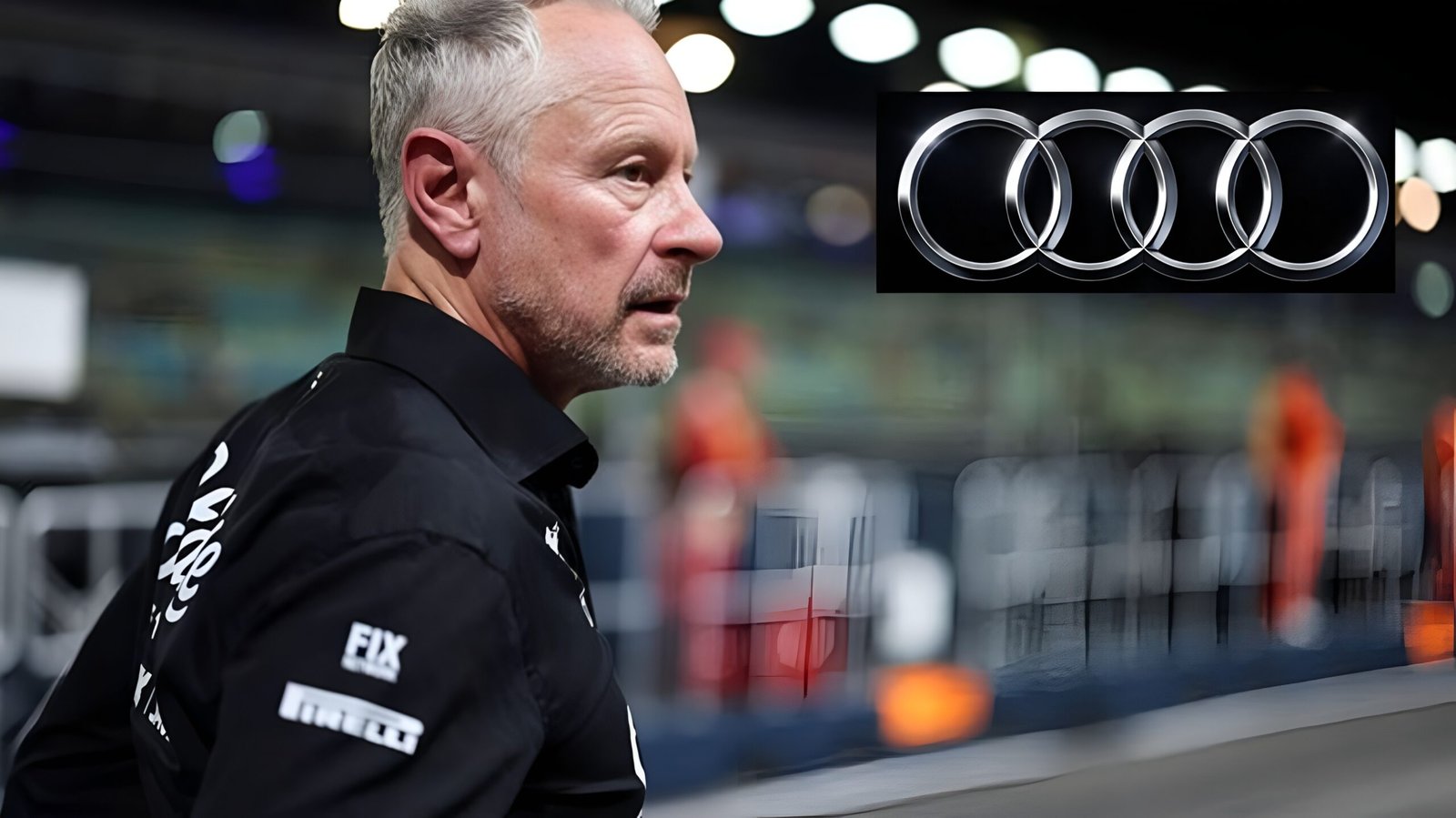
In the high-stakes arena of Formula 1, where engineering precision meets the unforgiving demands of competition, a single weekend can crystallise the vulnerabilities of an entire regulatory framework. The 2026 season, poised to usher in one of the most transformative technical overhauls in the sport’s modern history, has already encountered turbulence that few anticipated so early. Jonathan Wheatley, the newly appointed team principal of the Audi Formula 1 squad, has issued a measured yet pointed warning, drawing explicit parallels between the current challenges and the chaotic introduction of the hybrid era in 2014. His observations, delivered in the immediate aftermath of the Chinese Grand Prix, underscore a growing concern across the paddock: that the ambitious 2026 regulations may prove excessively complex, risking prolonged imbalances and undermining the very spectacle the sport seeks to preserve.
Wheatley’s intervention arrives at a critical juncture. The Chinese Grand Prix, traditionally a showcase of high-speed precision on the Shanghai International Circuit, instead became a stark illustration of systemic fragility. Seven cars—representing nearly one-third of the grid—either failed to start or retired prematurely, exposing deep-seated reliability issues that transcended individual teams and power-unit suppliers. This collective setback has ignited fears of a repeat of the 2014 narrative, when Mercedes’ superior grasp of the new V6 turbo-hybrid architecture propelled the German manufacturer into an unprecedented era of dominance that lasted until 2020. With Audi among the fresh entrants staking its reputation on the forthcoming regulations, Wheatley’s candour carries particular resonance.
Speaking candidly to assembled media, Wheatley described the 2026 rule set as “ambitious” and questioned whether its technical demands might border on the overly intricate. “It does remind me very much of early 2014,” he remarked, acknowledging that while every constructor grapples with its own distinct difficulties, the shared nature of the problems suggests a broader regulatory strain. He stopped short of advocating immediate revisions but emphasised the necessity for collective vigilance to ensure the new framework delivers sustainable, equitable competition rather than fragmented chaos.
The incidents in Shanghai were as varied as they were disruptive. McLaren, currently enjoying strong form with its Mercedes-powered machinery, suffered a double blow when both Lando Norris and Oscar Piastri detected critical power-unit anomalies during the formation lap. The team elected to withdraw both cars, leaving the third row of the grid conspicuously vacant and depriving spectators of what promised to be a compelling midfield contest. Audi’s own entry, driven by rookie Gabriel Bortoleto, failed to leave the pits owing to unresolved mechanical complications, compounding the German manufacturer’s early-season teething troubles.
Williams’ Alex Albon joined the list of non-starters, while Aston Martin encountered acute difficulties once the race began. Lance Stroll and Fernando Alonso both retired within the opening stages, the former citing battery-system failures and the latter battling extreme vibration that reportedly impaired his physical control of the vehicle. Three further retirements, including that of championship contender Max Verstappen, brought the total to seven affected cars. The resulting race, contested by only 15 finishers, served as an uncomfortable reminder that technical reliability remains the bedrock of any successful Formula 1 campaign.
Such scenes evoke vivid recollections of the 2014 season, when the introduction of 1.6-litre V6 turbocharged hybrid power units—coupled with stringent fuel-flow restrictions and advanced energy-recovery systems—exposed glaring disparities in preparation. Mercedes, through meticulous integration of combustion efficiency, electric deployment, and thermal management, achieved a level of performance that left rivals trailing by margins measured in seconds per lap. The result was not merely supremacy but near-total hegemony: Constructors’ Championships from 2014 through 2020, interrupted only by Red Bull’s resurgence in subsequent years. Smaller teams and less-resourced engine suppliers endured years of developmental lag, with some never fully recovering their competitive footing.
The 2026 regulations, while philosophically aligned with Formula 1’s commitment to sustainability, introduce complexities that arguably surpass those of 2014. The mandate for 100 per cent sustainable drop-in fuels demands entirely new combustion characteristics, altering ignition timing, thermal profiles, and material tolerances. Hybrid systems have been re-engineered to deliver significantly higher electric power deployment, necessitating more robust battery architectures and sophisticated energy-management software. Perhaps most visibly, the chassis regulations incorporate active aerodynamics, including driver-controlled movable front and rear wings, which must seamlessly interface with the power-unit’s output curves. These innovations, intended to enhance overtaking and reduce drag, simultaneously multiply the variables engineers must master within compressed development timelines.
Wheatley’s reference to the regulations as “too technical” or “complicated” is not hyperbole but a reflection of the engineering community’s private assessments. The integration of active aero with hybrid deployment requires real-time computational adjustments that push current simulation tools to their limits. Teams must now calibrate not only traditional aerodynamic balance but also manual “override” modes that alter wing angles mid-corner, all while managing thermal loads from the new fuel chemistry. The margin for error has narrowed dramatically, and the pre-season testing window—already curtailed by logistical and financial constraints—has proven insufficient for comprehensive validation.
Yet the situation is not without mitigating factors. Unlike the 2014 transition, the Fédération Internationale de l’Automobile (FIA) has embedded safeguards designed to curtail prolonged monopolies. Power-unit development is governed by strict homologation protocols and token-based evolution limits, while a dedicated cost cap on engine supply aims to democratise access to competitive technology. These measures, coupled with enhanced technical directives and mandatory data-sharing provisions in certain areas, represent a deliberate evolution from the laissez-faire approach that allowed Mercedes’ advantage to solidify unchecked. Whether they prove sufficiently robust remains an open question, but their existence offers a structural counterweight to the risks Wheatley has articulated.
For Audi, the Chinese Grand Prix setbacks carry particular poignancy. The Ingolstadt-based manufacturer entered Formula 1 with the explicit ambition of leveraging its road-car electrification expertise to pioneer the new sustainable era. The failure of Bortoleto’s car to start—linked to hydraulic anomalies—echoes earlier difficulties experienced by team-mate Nico Hülkenberg in Australia. These episodes highlight the formidable challenge of scaling advanced power-unit technology from laboratory to racetrack under the relentless scrutiny of global audiences. Wheatley, whose career trajectory includes pivotal roles in Red Bull’s championship-winning operations, brings a wealth of institutional knowledge to the project. His leadership has been characterised by pragmatic optimism, yet even he concedes that the current phase demands patience and iterative refinement.
The broader implications extend far beyond single-race outcomes. Formula 1’s commercial ecosystem relies on consistent, high-quality spectacle to sustain broadcaster contracts, sponsor engagement, and fan loyalty. A season marred by frequent reliability failures risks alienating audiences accustomed to the precision of recent campaigns. Moreover, the financial burden of repeated component failures falls disproportionately on smaller teams already operating near the cost-cap ceiling. Should one manufacturer achieve a decisive advantage akin to Mercedes in 2014, the competitive landscape could fracture, prompting calls for regulatory intervention that might compromise the very innovation the 2026 rules seek to champion.
Paddock sentiment remains cautiously united in its desire for stability. Senior figures from Ferrari, Red Bull, and Mercedes have echoed Wheatley’s call for measured assessment, warning against premature rule amendments that could destabilise development programmes already consuming hundreds of millions in resources. The April break, traditionally a period of reflection and recalibration, assumes heightened importance this year. Engineers will pore over telemetry from Shanghai, cross-referencing sensor data with computational fluid dynamics models and dyno simulations to isolate root causes. The hope—widely expressed yet tempered by realism—is that the shared adversity will accelerate collective progress rather than entrench division.
From a historical perspective, Formula 1 has repeatedly demonstrated resilience in the face of regulatory upheaval. The transition to hybrid power in 2014 ultimately elevated the sport’s technological credentials, attracting new manufacturers and deepening its appeal to environmentally conscious stakeholders. The 2026 framework aspires to similar legacy status, positioning Formula 1 as a proving ground for sustainable mobility technologies transferable to road cars. Realising that ambition, however, requires navigating the immediate reliability chasm without sacrificing the core DNA of wheel-to-wheel racing.
Audi’s strategic positioning merits particular scrutiny. As one of two new power-unit entrants alongside Cadillac-General Motors, the German marque shoulders the dual responsibility of technical delivery and brand elevation. Its partnership with the former Sauber organisation provides a stable operational base, yet the learning curve remains steep. Wheatley’s public acknowledgement of difficulties serves a dual purpose: it normalises the challenges confronting all competitors while signalling to stakeholders that Audi approaches the project with transparency and resolve.
Looking ahead, the Japanese Grand Prix at Suzuka offers the next litmus test. The demanding high-speed layout will stress both chassis rigidity and power-unit thermal management in ways Shanghai could not. Teams will arrive with incremental upgrades, yet the fundamental questions posed by Wheatley will linger: have the regulations struck the optimal balance between innovation and feasibility? Can the grid converge on competitive parity before the season’s midpoint? And, crucially, will the FIA’s preventive architecture suffice to avert a decade-long imbalance?
In an era when Formula 1 strives to reconcile cutting-edge performance with planetary responsibility, the Chinese Grand Prix has furnished an early, unflinching case study. Jonathan Wheatley’s warning is neither alarmist nor defeatist; it is a seasoned practitioner’s call for clarity and collaboration. The coming months will determine whether the 2026 regulations are remembered as a visionary success or a cautionary tale. For now, the paddock confronts a shared imperative: to transform early adversity into enduring competitive equilibrium.
The sport’s stakeholders—manufacturers, teams, regulators, and fans—must engage with this challenge in the spirit of collective advancement. History has shown that Formula 1 thrives when its technical evolution is both bold and balanced. The 2026 regulations represent precisely such boldness; ensuring balance will test the collective wisdom of an industry that has, time and again, risen to its own ambitions.


