Published by: AutodromeF1 Editorial Team
Audi F1 Leadership Consolidation: Mattia Binotto’s Dual Mandate Ushers in a New Era of Integrated Technical and Operational Command
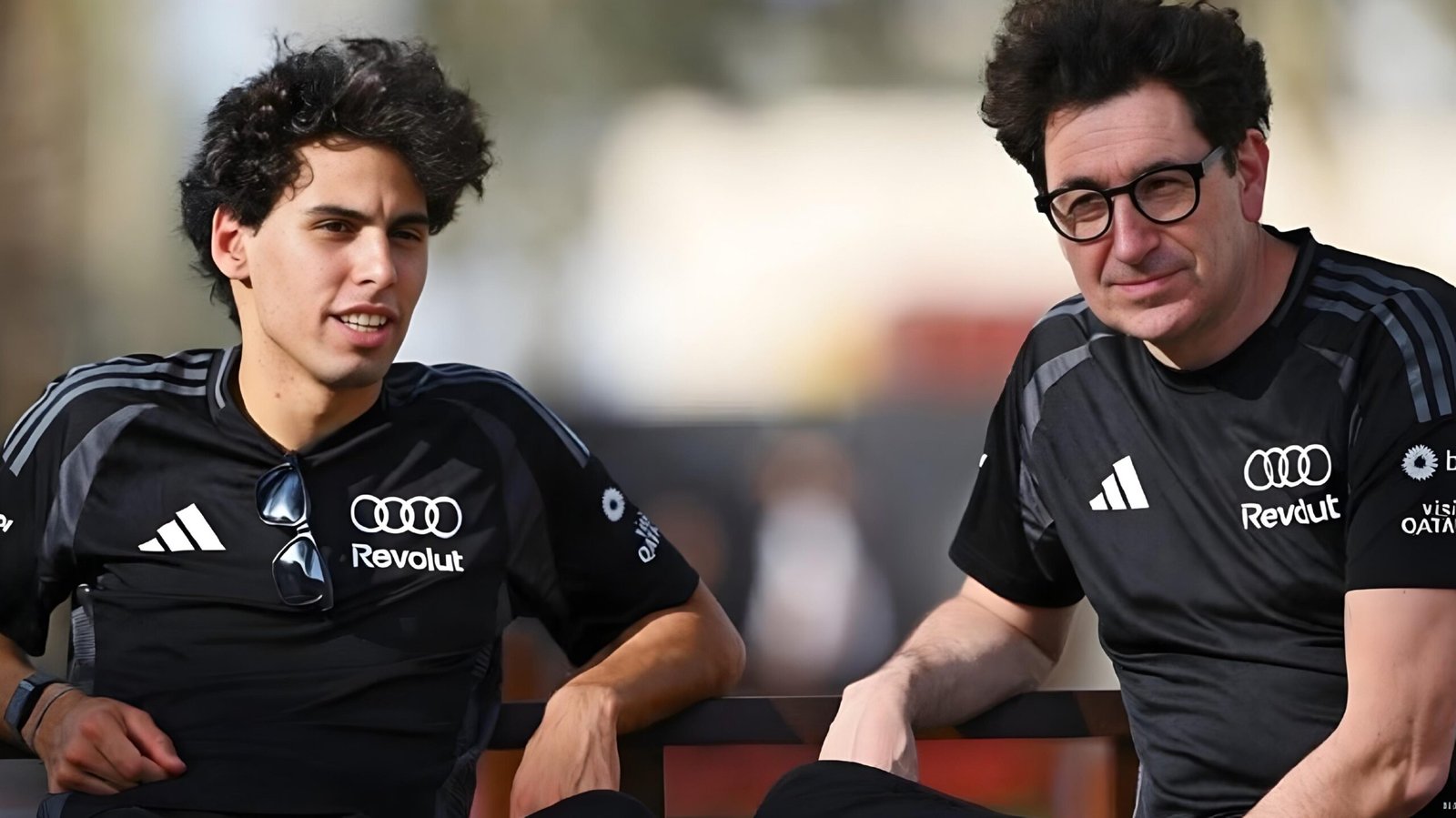
Hinwil, Switzerland – April 4 2026. In a decisive organisational recalibration that underscores Audi’s determination to forge a unified competitive identity in its inaugural Formula 1 campaign, Mattia Binotto has been appointed to the combined role of Head of the Audi F1 Project and Team Principal of the Audi Revolut F1 Team. The transition, effective March 2026, followed the unanticipated departure of Jonathan Wheatley for personal reasons and marks the formal dissolution of the manufacturer’s original “dual-pillar” architecture. What was once a deliberately bifurcated leadership model—separating high-level technical strategy from day-to-day race operations—has now been fused under a single, battle-tested executive whose remit spans two sovereign territories and two distinct engineering cultures.
The move is far from cosmetic. It positions Binotto as the singular point of accountability for every facet of the team’s performance, from the conceptual genesis of next-generation components in the wind tunnel to the split-second tactical decisions on the pit wall. For a project that only weeks earlier celebrated its maiden points-scoring finish in the opening rounds of the 2026 season, the consolidation signals both confidence and urgency: confidence in Binotto’s proven capacity to orchestrate complex, multi-site programmes; urgency to eliminate any residual latency that a divided command structure might introduce as the team navigates the unforgiving debut phase of the new regulatory cycle.
Binotto’s elevation arrives at a pivotal juncture. Audi’s return to Formula 1 as a full works entrant—built upon the foundation of the former Sauber organisation—represents one of the most capital-intensive undertakings in modern motorsport history. The German manufacturer has committed substantial resources to re-establishing its presence at the pinnacle of the sport, with the explicit ambition of progressing from credible newcomer to consistent frontrunner within the shortest feasible timeframe. The Hinwil-based chassis operation, which delivered an immediate points-paying result through the disciplined execution of its aerodynamic and mechanical package, has already demonstrated that the Swiss facility possesses the operational maturity to compete from the outset. Yet the power-unit programme, centred in Neuburg, Germany, remains the beating heart of Audi’s long-term technical differentiation. Binotto’s dual mandate ensures that these two strands—chassis and power—evolve not in parallel but in deliberate, symbiotic alignment.
The architecture that preceded this change was conceived with precision. Audi’s original “dual-pillar” model deliberately mirrored the geographic and functional realities of its footprint. Jonathan Wheatley, whose pedigree included decades of operational excellence at Red Bull Racing, was entrusted with the race-facing pillar: logistics, strategy, driver management, and the relentless tempo of weekend execution. Binotto, meanwhile, retained overarching responsibility for the Audi F1 Project, a role that encompassed power-unit development, chassis integration, regulatory compliance, and the broader technological roadmap. The structure was elegant on paper, designed to prevent any single leader from becoming a bottleneck while allowing each to focus on their respective spheres of mastery.
Yet the early races of 2026 revealed subtle frictions inherent in even the most thoughtfully designed separation of powers. While the Hinwil chassis delivered competitive race pace and reliability from the first lap of the Australian Grand Prix, the need for seamless dialogue between chassis engineers and power-unit specialists became ever more apparent. Minor integration challenges—ranging from energy-recovery system calibration to thermal management under the new 2026 power-unit regulations—demanded rapid, cross-functional decision-making that occasionally tested the bandwidth of a divided leadership. Binotto’s assumption of the Team Principal portfolio therefore represents not a repudiation of the dual-pillar philosophy but its logical evolution: a recognition that, at this embryonic stage of the project, unity of command accelerates iteration without sacrificing depth of expertise.
Operationally, the split-site reality endures, and wisely so. Neuburg continues to house the core of the power-unit programme, where engineers refine the internal combustion engine, hybrid systems, and energy storage solutions that will define Audi’s competitive edge through the remainder of the regulatory cycle. The facility’s dyno cells and test benches operate at a tempo calibrated to the 2026 technical regulations’ emphasis on sustainable fuels and increased electrical deployment. Meanwhile, the Hinwil campus retains stewardship of the chassis, gearbox housing, rear axle integration, and the intricate aerodynamic surfaces that translate power into lap time. The two sites, separated by a relatively short drive across the German-Swiss border, benefit from daily shuttle flights, secure data links, and a growing cadre of engineers who rotate between locations. Nevertheless, the physical distance imposes a discipline of its own: communication must be crystalline, priorities synchronised, and trust absolute.
Binotto has made no secret of his personal emphasis on the power-unit domain. As a powertrain specialist by training and temperament, he views the AFR 26 Hybrid as the cornerstone upon which the team’s championship aspirations will ultimately rest. Yet he is equally cognisant of the demands that race-weekend leadership will place upon his schedule. Insiders describe a deliberate strengthening of the operational bench beneath him—seasoned deputies drawn from both Hinwil and Neuburg, each empowered to act with autonomy within clearly delineated spheres. The appointment of additional trackside strategists and a reinforced performance-engineering group is understood to be under active consideration, ensuring that Binotto’s transcontinental responsibilities do not dilute the team’s weekend responsiveness.
This leadership model carries echoes of successful precedents elsewhere in the paddock, yet remains distinct in its execution. Mercedes’ long-standing integration of technical and racing leadership under Toto Wolff offers one parallel; Red Bull’s centralised authority under Christian Horner another. Audi, however, operates within a unique constraint: a greenfield power-unit programme developed in parallel with an inherited chassis lineage. Binotto’s dual role therefore demands a rare combination of virtues—technical profundity, diplomatic acumen, and the stamina to straddle two national regulatory environments and two distinct corporate cultures. His tenure at Ferrari, where he navigated the transition from technical director to team principal amid intense scrutiny, has equipped him with precisely this repertoire. Colleagues past and present speak of a leader who combines rigorous analytical discipline with an instinctive feel for organisational dynamics, qualities that will prove indispensable as Audi refines its 2027 and 2028 evolutions.
The broader implications for the 2026 season and beyond are profound. By centralising accountability, Audi has signalled to its workforce, its partners, and its rivals that it is prepared to adapt its internal architecture at speed—an attribute often undervalued until it becomes mission-critical. The immediate points scored by the Hinwil operation in the opening rounds have already validated the baseline competitiveness of the chassis; the coming months will test whether the Neuburg power unit can sustain that momentum across varying circuits and climatic conditions. Binotto’s ability to maintain strategic oversight of both pillars while remaining operationally present at every grand prix will be the decisive variable.
Critically, the consolidation also addresses a subtler challenge: the cultivation of a singular team identity. In any multi-site enterprise, there exists a latent risk of silo thinking—Hinwil viewing itself as the “chassis team,” Neuburg as the “engine team.” By placing one individual at the apex of both, Audi has created a structural incentive for holistic thinking. Every design decision taken in Neuburg must now be weighed against its implications for the Hinwil-built monocoque; every aerodynamic tweak in Switzerland must be stress-tested against the power delivery characteristics emanating from Germany. This enforced integration is likely to accelerate the refinement loop, compressing development cycles that might otherwise have stretched across separate reporting lines.
Looking further ahead, the move carries strategic weight for Audi’s recruitment and retention strategy. The Formula 1 talent market remains fiercely competitive, with engineers and managers gravitating toward organisations that project clarity of purpose and stability of leadership. Binotto’s expanded mandate communicates both. It reassures prospective hires that the project possesses a single, authoritative voice capable of translating vision into executable plans. It also reassures existing staff that the manufacturer remains agile enough to refine its operating model in real time—an essential quality when competing against rivals who have enjoyed decades of institutional continuity.
Of course, no organisational change is without risk. The concentration of authority in one individual, however capable, inevitably elevates the consequences of any misstep. Binotto’s workload will be prodigious: power-unit strategy sessions in Neuburg on Monday, chassis sign-off in Hinwil on Tuesday, race preparation mid-week, and the unrelenting cadence of grands prix on the weekend. The team’s ability to furnish him with a robust support matrix—deputies, data analysts, and communications conduits of the highest calibre—will determine whether the new structure becomes a force multiplier or an unintended bottleneck.
Yet early indications are encouraging. The Hinwil squad’s immediate points-scoring performance demonstrated that operational readiness was already at a high level when Wheatley departed. The seamless transition suggests that the underlying processes were sufficiently mature to withstand a change at the top. Binotto himself has emphasised the collaborative nature of the project, framing his expanded role not as a personal elevation but as a collective commitment to coherence. In private briefings, he has stressed the importance of “one team, two sites, one ambition”—a mantra that neatly encapsulates the philosophy now governing Audi Revolut F1.
As the 2026 season unfolds, the eyes of the paddock will remain fixed on Hinwil and Neuburg with heightened interest. Can the consolidated leadership extract incremental performance from an already competitive chassis? Will the power-unit focus yield the reliability and efficiency margins required to challenge the established order? And, most intriguingly, does this model represent a template for future manufacturer entries in an era of ever-more-complex technical regulations?
For now, the verdict remains open, but the direction of travel is clear. Audi has placed its faith in a single, deeply experienced leader to bridge the geographic and functional divide that defines its project. In doing so, it has traded the theoretical advantages of specialisation for the tangible benefits of alignment. Whether that wager delivers podiums in 2026 or world titles in the seasons that follow will depend on the execution that unfolds under Mattia Binotto’s integrated command. The manufacturer has made its move; the stopwatch now runs on its efficacy.


